

This luxurious building, once used to host VIP visitors to the Temple, will soon be open to tourists!
By Nosson Shulman: Licensed Tour Guide of VIP Israel Tours & Authentic Virtual Tours (click here to check out his free trailer videos)
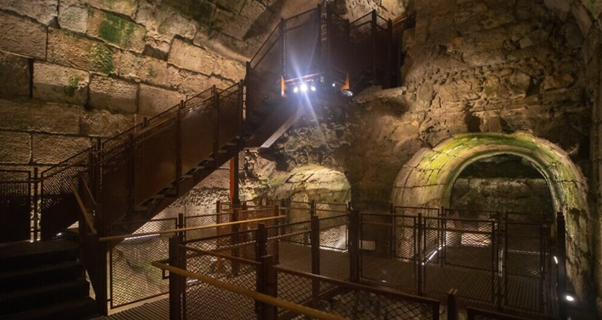
A massive discovery from Jerusalem’s Second Temple Period (also known as the Early Roman Period) has been dug up and revealed to the public, and everyone is excited! While archeological findings from different eras are common in the entire country (Israel is actually one huge archeological site where if you dig anywhere, you are likely to find something ancient), finding complete rooms, still intact from 2000 years ago is extremely rare. However, archeologists digging under Jerusalem’s Muslim Quarter have found two luxurious rooms, connected by a magnificent chamber with an elaborate water fountain.
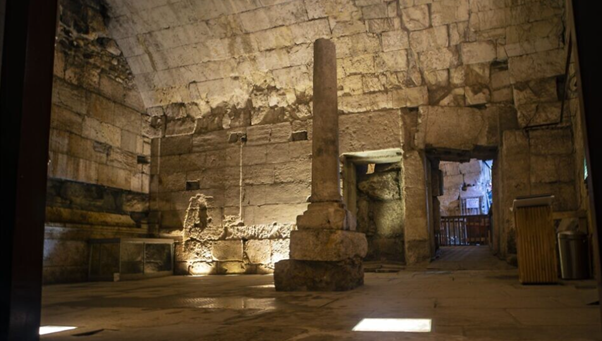
According to archeologists the building was built between 20-30 CE, on the main Jerusalem road that led to the Temple Mount. Due to the size of the room, splendor of the building and location (only 25 meters from the Western (Wailing) Wall) archeologists believe this building was used to host important dignitaries, VIPs from abroad and the local elite before they ascended to the Temple.
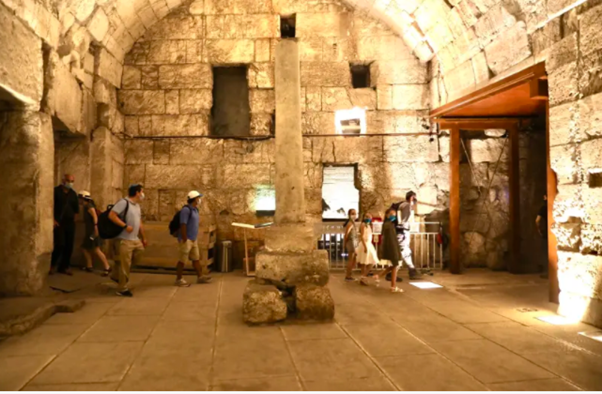
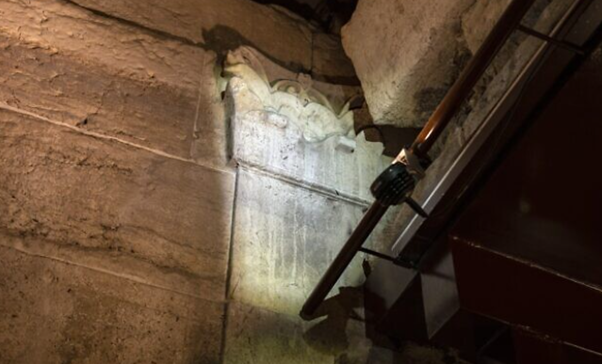
In between the two grand rooms, was a beautiful hallway with an elaborate fountain. Lead pipes brought in the fresh water that gushed out of Corinthian capitals attached to the wall.
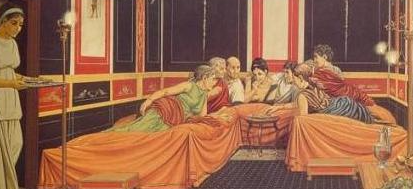
Inside the Banquet room, fancy wooden sofas would have lined the walls where guests would dine (for Roman Nobility, reclining on a comfortable couch to eat was today’s equivalent of eating a fancy meal at a nice dining room table with fine china). Although the furniture is gone, the imprints where the couches were affixed remain.
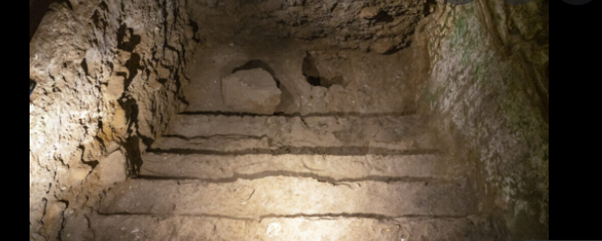
Between 54-55 CE, the floor was a replaced and a Mikveh (ritual bath) was added.
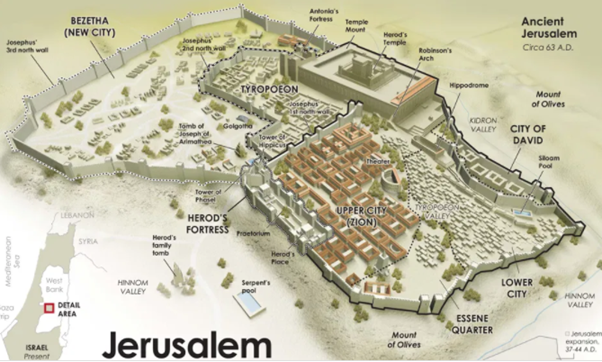
When the building was constructed in the early 1st century, Jerusalem was experiencing a massive boom. New monumental buildings were quickly being built, and older buildings were being renovated. Jewish pilgrims ascended the city three times a year, and tourists from all over the world came to see the beautiful city which contemporary Roman historian (Pliney the Elder) called the “Most illustrious City in the East”. The Roman historians considered Jerusalem to be the second largest city in the empire, after Rome.
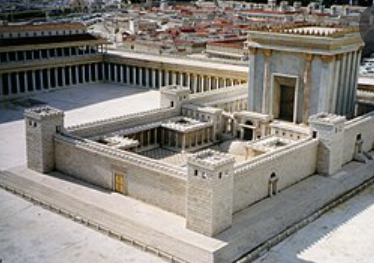
Of course, the centerpiece of Jerusalem was the Holy Temple, which was famous throughout the world. According to Jewish sources, the Holy Temple was the most beautiful building which ever existed. It was not merely its formidable architecture, but anyone visiting the Temple (Jewish and Gentile alike) felt the Divine Presence in an almost tangible way. In fact, so many pagans converted to Judaism after visiting the Temple, that Rome passed a law making it illegal to convert.
Although grand, the great banquet hall did not exist for long. In 70 CE, the Romans destroyed Jerusalem (including this massive building) and built new structures over it. Ironically, this is why the building itself has been so well preserved! Had the Romans simply left it alone, the building would have fallen into decay due to weathering and the removal of its stones for new building projects. In the 1300s, the Muslims built arches above these new, post-Temple Roman Structures (which then became underground cities themselves which can also be visited today). On top of them are the streets and buildings which today comprise the Muslim Quarter.
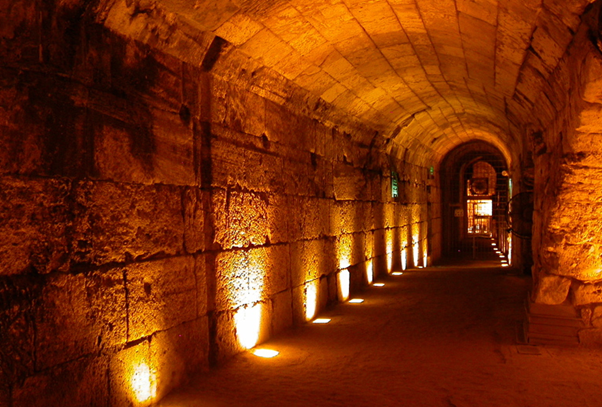
This site’s significance is not only confined to the realm of historical books and documents, but is also currently relevant. In much of the Arab and Muslim world (including the Palestinian Authority), it is common to deny any Jewish connection to Jerusalem. Findings like this (which pre-date the birth of Islam by many centuries), continue to affirm to people throughout the world that the Jewish connection to Jerusalem is as ancient as it is eternal.
Nosson Shulman is a journalist and Licensed Tour Guide in Israel specializing in Biblical tours. To allow tourists to experience Israel during the Corona era, he created the new hit Israel tour video series which brings Israel to the home of viewers by simulating actual tours. To check out his free sneak preview tour videos, click here
 Unique Sites of Israel Blog
2 thoughts on “WOW: Massive Second Temple Era Building Discovered Intact Underground!”