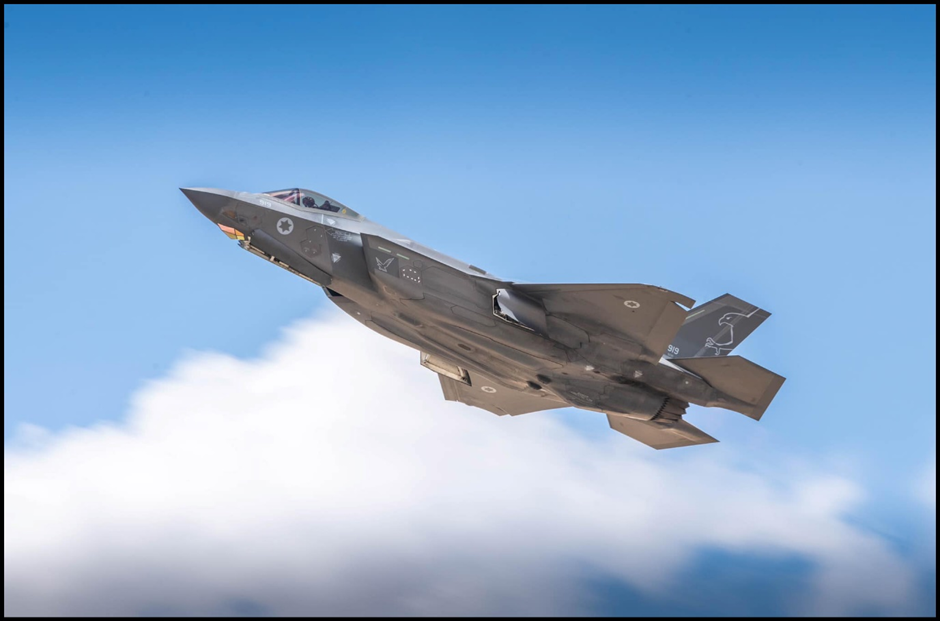
An F-35I “Adir” stealth fighter operated by the Israeli Air Force. The American-built jet, manufactured by Lockheed Martin, has been uniquely modified with Israeli-developed avionics and electronic warfare systems tailored to Israel’s operational needs. Photo Credit: IDF Spokesperson’s Unit
Historic Over Tehran: Israeli F-35I Shoots Down Iranian Jet in World First
In a dramatic first in modern aerial warfare, the Israel Defense Forces confirmed that an Israeli Air Force F-35I “Adir” stealth fighter shot down a manned, Iranian military aircraft over Tehran.
According to the IDF, the Israeli pilot engaged and destroyed an Iranian Yakovlev Yak-130 — a Russian-designed manned combat trainer used by Iran’s air force. Iranian officials have not publicly acknowledged the loss.
A Yakovlev Yak-130 of the Russian Air Force armed with R-73 air-to-air missiles and rocket pods.
The aircraft responsible for the interception was the F-35I “Adir,” a U.S.-built fifth-generation stealth fighter manufactured by Lockheed Martin and uniquely modified for the Israeli Air Force. Unlike other operators of the jet, Israel integrates its own advanced avionics, electronic warfare systems, and operational software — giving the aircraft distinct Israeli capabilities.
Israel has long been a trailblazer with the F-35 platform. In 2018, it became the first country in the world to use the F-35 in actual combat operations. Now, it adds another historic first: the first confirmed air-to-air kill of a manned aircraft by an F-35 anywhere in the world.
The significance is both technological and strategic. Fifth-generation stealth fighters were designed for air dominance in highly contested skies. Over Tehran, that doctrine became reality.
Military analysts note that Israel’s last confirmed air-to-air kill against a manned enemy aircraft occurred in 1985. Nearly four decades later, history has repeated itself — but this time with one of the most advanced fighter jets ever built.
Nearly four decades after its last confirmed air-to-air kill, Israel has once again altered the trajectory of aerial warfare — this time not with fourth-generation fighters, but with one of the most advanced stealth aircraft ever built. In doing so, the Israeli Air Force has not simply made history; it has demonstrated how fifth-generation technology is reshaping the realities of modern combat in real time.
Nosson Shulmanis a journalist andLicensed Tour Guidein Israel specializing in Biblical tours. To allow tourists to experience Israel during the Corona era, he created the new hit Israel tour video serieswhich brings Israel to the home of viewers by simulating actual tours. To check out his free sneak preview tour videos, click here.To view sample tour itineraries or to inquire about private tour opportunities with a personalized itinerary on your next trip to Israel,click here.
“This man would ascend from his city year after year to bow down and to bring offerings to G-d, Master of Legions, in Shiloh (1 Samuel 1:3).”
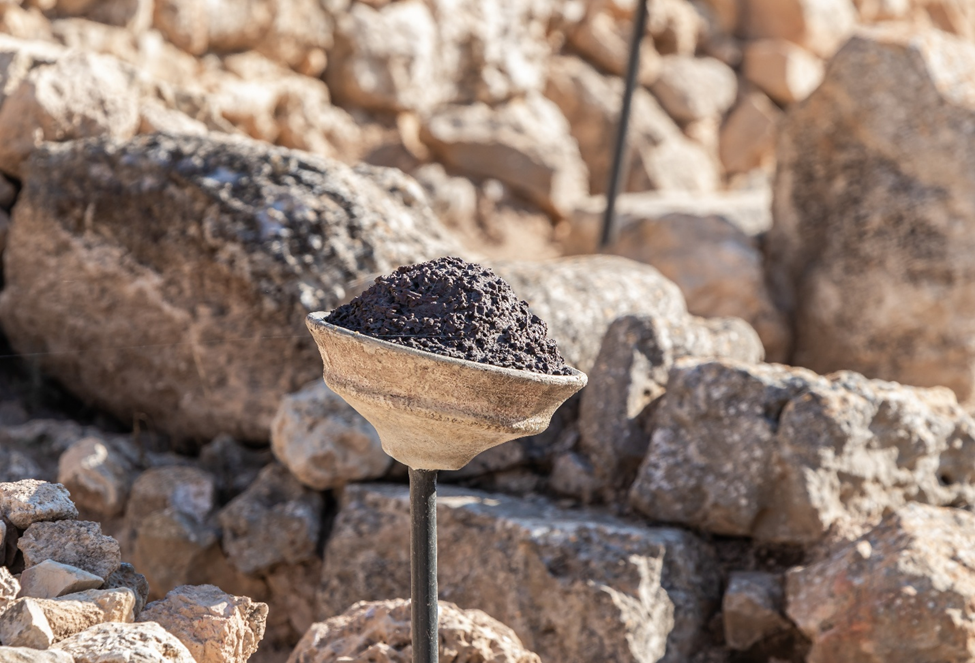
Vessel with incense where visitors can see on display at ancient Shiloh, where the Mishkan (Tabernacle) stood for 369 years—recalling the sacred service and offerings of the Kohanim (Priests). Photo Credit: Shutterstock
Shiloh: The Heartbeat of a Nation
As we saw in Part 1, Shiloh wasn’t just another ancient ruin or a scenic hilltop along an old trade route. It was the spiritual heartbeat of Israel for nearly four centuries. But to truly understand why this place mattered so deeply, we need to step into the biblical era
The location of the holy Mishkan (Tabernacle) where G-d “dwelled” among his people for 369 years. Notice the stone foundations. Photo Credit: Shutterstock
Shiloh: More Than a Structure
When the Children of Israel entered the Land, they brought with them the Tabernacle, the portable sanctuary they had carried and assembled for 40 years through their travels in the wilderness. For the first 14 years in Israel, the Tabernacle continued to be a temporary structure in Gilgal. But in Shiloh, something changed. For the first time, they set down roots—not only in the land but spiritually.
The sacred Aron HaBrit (Ark of the Covenant) rested in the Holy of Holies at the heart of the Tabernacle — a space so sacred that only one person, the Kohen Gadol (High Priest), could enter it, and only once a year on Yom Kippur. Photo Credit: Shutterstock
According to Jewish tradition, when the Tabernacle was established in Shiloh, it rested upon a foundation of stone yet still retained its original fabric coverings. This marked a profound transition toward permanence, while the tent-like roof stood as a powerful reminder that spiritual humility and reliance on God must endure, even in times of stability and settlement. Later, when the Holy Temple was built in Jerusalem, it would be constructed entirely of stone—symbolizing the ultimate establishment of a permanent dwelling for the Divine Presence.
Drawing of the Tabernacle of Shiloh. The Ark of the Covenant was housed in the Holy of Holies in the Western part of the Sanctuary. Photo Credit: Free Bible Images
How the Daughters of Shiloh Saved a Tribe: The Aftermath of the Civil War in Gibeah
Shiloh’s story becomes even more meaningful when we remember what happened after the civil war in Gibeah, Benjamin’s city (see Judges 19–21). The tribe was almost wiped out—only 600 men remained—but the other tribes had sworn not to give their daughters in marriage to Benjamin, a move they later regretted. So how could Benjamin survive? During the festival at Shiloh, young women danced in the vineyards, and the Benjaminites’ were allowed to “grab” wives from among them. Jewish commentators ask: how could these marriages be valid if the women didn’t explicitly agree to it? In Judaism, a forced marriage is invalid—both husband and wife must consent. The answer is that all these marriages were with the women’s consent. When the Torah says “grab,” it means without asking the father first. Although not technically mandatory by Torah Law, at that time, it was considered improper for a man to marry a woman without first seeking her father’s blessing. But here, the fathers stayed silent and did not object, so they were not seen as breaking their oath by giving their daughters away. Interestingly, the Torah mentions “Shiloh” twice in the verse (in Judges 21:21), and the sages explain this as a hint to the girls’ special righteousness—they had grown up near the Tabernacle, surrounded by holiness and purity. Because of this, they were uniquely worthy to help preserve an entire tribe. Today, Tu B’Av, the 15th of Av on the Jewish calendar, celebrates not only love and unity but also the faith and holiness that ensured Israel’s future in the vineyards of Shiloh.
The site of the vineyards surrounding Shiloh, where the righteous young women would dance each year, are still enjoyed by tourists who visit the region Photo Credit: Shutterstock.
Three Times a Year at Shiloh: A Nation United in Faith
Before the Temple was built, Shiloh was the place where the Jewish people came together three times a year for the festivals of Passover, Shavuot, and Sukkot. The Torah commands this in Exodus 23:17 and Deuteronomy 16:16: “Three times a year all (of) you …. shall appear before the L-rd your G-d.” This wasn’t just a trip—it was a powerful experience that brought the whole nation together. Take Elkanah, for example, who faithfully made the journey to Shiloh with his family to offer sacrifices and pray (see 1 Samuel 1). These visits were a chance for Israel to connect with G-d in a real way and renew their commitment to Him. Right from the start, this mitzvah (commandment) of pilgrimage kept the people’s relationship with G-d alive, strong, and full of hope.
Sign honoring the 12 tribes, welcoming visitors at the entrance to this remarkable site. It represents the 12 stones on the High Priest’s breastplate, known as the Urim veTumim, which were used to seek divine guidance and answers. Photo Credit: Shutterstock
One of the most unforgettable figures connected to Shiloh is Hannah, a woman whose heartfelt prayers changed the way we connect with G-d forever. Her story is not just about personal struggle but about the power of sincere prayer and faith in action. Hannah’s words would inspire generations, teaching us that even in silence and pain, our voices matter deeply. But this is just the beginning of her incredible journey in Shiloh.
-To Be Continued…
For a sample tour itinerary which can include experiencing biblical Shiloh,click here.To view his sample Gaza Envelope tour itinerary,click here.
Nosson Shulmanis a journalist andLicensed Tour Guidein Israel specializing in Biblical tours. To allow tourists to experience Israel during the Corona era, he created the new hit Israel tour video serieswhich brings Israel to the home of viewers by simulating actual tours. To check out his free sneak preview tour videos, click here.To view sample tour itineraries or to inquire about private tour opportunities with a personalized itinerary on your next trip to Israel,click here.
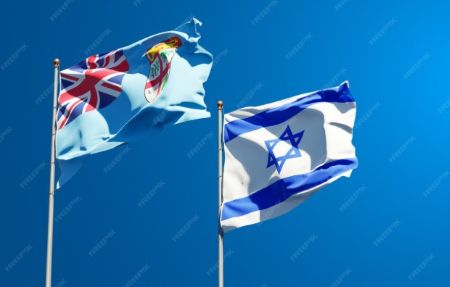
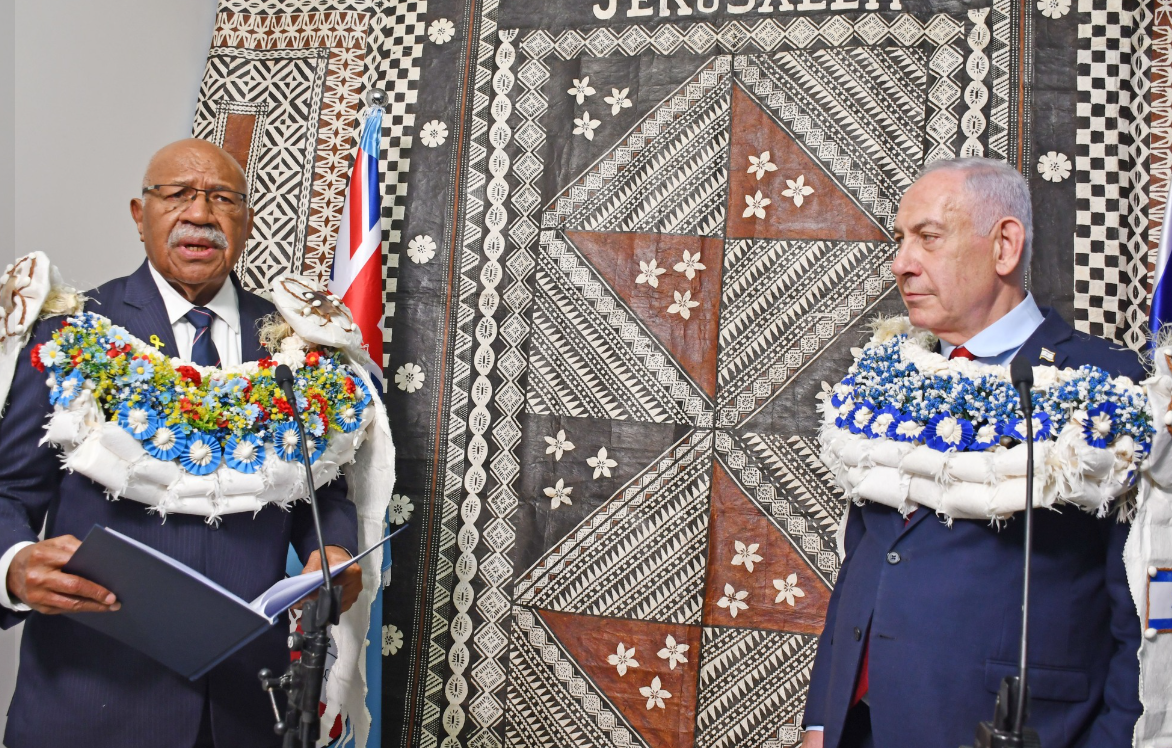
Israeli Prime Minister Benjamin Netanyahu and Fijian Prime Minister Sitiveni Rabuka wearing traditional Fijian attire at the opening of the new Fijian embassy in Jerusalem
A Longstanding Friendship
In a landmark moment for Israel and its friends around the world, Fiji has officially opened its embassy in Jerusalem, becoming the seventh country to do so.
Fiji and Israel share a long and friendly history. Diplomatic relations were established in 1970, and the partnership has grown steadily over the decades. A key milestone came on November 7, 2016, when Prime Minister Josaia Voreqe Bainimarama of Fiji visited Israel and met with Prime Minister Benjamin Netanyahu in Jerusalem, laying the groundwork for deeper cooperation. Later milestones included Israeli President Reuven Rivlin visiting Fiji in 2020 and Fijian President Ratu Wiliame Katonivere visiting Israel in 2022, strengthening ties in technology, agriculture, and food security.
Standing with Israel at the UN
Fiji has long been a reliable supporter of Israel at the United Nations. The Pacific nation almost invariably casts its vote in Israel’s favor (though there have been occasional abstentions), a rarity at the usually hostile, anti-semitic UN General Assembly.
A Celebrated Milestone for the Jewish State
The embassy’s opening was celebrated across Jerusalem as a major diplomatic milestone, following in the footsteps of the United States, Guatemala,Kosovo, Honduras and Papua New Guinea, and Paraguay. Fiji’s government, led by Prime Minister Sitiveni Rabuka, highlighted that the move reflects shared values, mutual respect, and a deep commitment to closer cooperation between the two nations.
The inauguration included traditional Fijian ceremonies, symbolizing warmth, friendship, and mutual respect. Leaders from both countries emphasized that the embassy represents more than a building—it’s a symbol of enduring partnership and mutual support on the global stage.
A Bold Statement Amid Pressure
This move is particularly significant at a time when many countries, most visibly in Western European, are attempting to isolate Israel diplomatically. Fiji’s decision stands in stark contrast, sending a clear message that Israel’s friends are willing to act boldly, recognize Jerusalem as its capital, and strengthen ties despite international pressure.
Cementing a Global Partnership
Fiji’s embassy opening is part of a broader trend of growing international recognition of Jerusalem as Israel’s capital. While only a seven countries have formally opened full embassies in the city, others are taking meaningful steps in that direction. The Czech Republic and Hungary, for example, maintain official diplomatic offices in Jerusalem alongside their embassies in Tel Aviv, and Argentina’s President Javier Milei has pledged to relocate his country’s embassy to Jerusalem by 2026.
Meanwhile, support remains strong among Israel’s Pacific allies. Nations such as Nauru and Vanuatu have also formally recognized Jerusalem as Israel’s capital, underscoring a shared commitment to Israel’s sovereignty and an expanding circle of international partners willing to stand with the Jewish state.
Nosson Shulmanis a journalist andLicensed Tour Guidein Israel specializing in Biblical tours. To allow tourists to experience Israel during the Corona era, he created the new hit Israel tour video serieswhich brings Israel to the home of viewers by simulating actual tours. To check out his free sneak preview tour videos, click here.To view sample tour itineraries or to inquire about private tour opportunities with a personalized itinerary on your next trip to Israel,click here.
🆕 Update – October 25, 2025: Israel’s aviation revival is gaining even more altitude as major airlines return — and new ones join the skies. British Airways and Iberia are both resuming flights to Tel Aviv this week, reconnecting Israel with London and Madrid after extended suspensions. Meanwhile, Sky Express, the Greek carrier, has announced its first-ever route to Israel, launching Athens–Tel Aviv service in December 2025, further strengthening Mediterranean connectivity. American Airlines has also confirmed plans to restart its New York (JFK)–Tel Aviv route in March 2026, marking a significant U.S. comeback to Israel’s skies. Together, these moves highlight growing global confidence in Israel’s safety, stability, and renewed role as a key hub in international travel.
🆕 Update – October 15, 2025: The skies over Israel continue to open wider as more airlines resume and expand service. Air Canada has officially resumed daily flights from Toronto to Tel Aviv as of October 9, with its Montreal route expected in spring 2026. After nearly a 10-year absence, Scandinavian Airlines (SAS) will return to Israel on October 26, launching three weekly flights from Copenhagen. AnimaWings, a Romanian carrier, has re-entered the Israeli market with scheduled service from Bucharest to Tel Aviv, operating three times per week since October 5. Meanwhile, United Airlines will be adding a fourth daily flight on its New York–Tel Aviv route, making it the most frequent nonstop service between North America and Israel to date.
Here is the original Article:
July 27, 2025 — If you’ve been watching the skies over Israel lately, you’ve probably noticed something amazing: airlines are returning — many sooner than expected — now that calm has settled after the great victory against Iran this past June (and the massive hit their proxies in Lebanon, Gaza and Syria have taken).
The war with Iran has ended in victory — and for the first time since the founding of the State, our enemies are at their weakest. Hezbollah is fractured, Syria is in disarray, and Hamas in Gaza is reeling. A new era is dawning in the Holy Land — and with it, a powerful resurgence in travel, security, and hope.
The European Union Aviation Safety Agency (EASA), known for being extremely zealous—often marking Israel as unsafe even when conditions are stable—gave a big green light earlier this month. They officially lifted their warnings against flying to Israel, declaring the airspace safe and reliable.
When EASA says the skies are safe, you can be confident they truly are.
This announcement changed everything.
Airlines that had been cautious, postponing their return, quickly moved their flight schedules forward. Some had planned to come back in September or October but instead decided to start flying to Israel as early as August. It’s a powerful message: Israel is open and safe for travel.
Who’s Back — and When?
Let’s break it down.
United Airlines didn’t wait long. Just days after the ceasefire, they restarted their New York–Tel Aviv flights on July 21 — adding a second daily flight the next day.
Air France resumed daily flights through July, ramping up their schedules.
Hainan Airlines (China) resumed its Shenzhen–Tel Aviv route on June 29.
Our own Arkia and Israir expanded flights after maintaining limited service through the conflict.
Middle Eastern and regional airlines like Flydubai, Etihad, Ethiopian, Aegean, Cyprus, AirEuropa and Azerbaijan Airlines have also returned, welcoming travelers from all directions.
Coming Soon: More Carriers Join the Party
Lufthansa Group airlines, including Lufthansa and Austrian Air, moved their comeback up to August 1.
Bulgaria Air announced they are resuming flights to Tel Aviv on July 31.
Wizz Air accelerated its return to Israel, resuming flights on August 8, 2025, ahead of a planned mid‑September restart.
Wizz Air’s CEO emphasized that Israel is “totally safe and secure” under their monitoring.
Air Brussels announced the resumption of flights on August 13.
SWISS International will restart Tel Aviv flights on September 29, 2025.
🛑 Airlines Delaying or Extending Cancellations
British Airways and Ryanair remain suspended through at least October 25, 2025
easyJet has extended its suspension of Israel flights through March 29, 2026, with no return planned in fall 2025, though that can always change
Whether you’re a tourist, a business traveler, or someone eager to visit family, this boom in flights is fantastic news. It means more choices, better prices, and easier access.
International passenger traffic through Ben Gurion Airport in July has been steadily recovering, with tens of thousands of travelers passing through daily. Though still below pre-conflict levels, the trend is unmistakably positive — signaling confidence returning to Israel’s skies.
Hotels are filling up, conferences are being rescheduled, and visitors are once again making plans to experience the land and culture.
The Sky Is Clear, and the Time Is Now
The Sky Is Clear, and the Time Is Now
EASA’s declaration, especially given their usual zealous caution, combined with swift airline action, signals one thing loud and clear: Israel’s skies are safe again. The country is open, vibrant, and waiting to welcome you.
So dust off your suitcase. Whether you’re dreaming of Jerusalem’s ancient streets, the serene beauty of the Galilee and Golan Heights, the historic Biblical sites of Judea and Samaria, the sun-soaked coastal region, or the breathtaking landscapes of the Negev, 2025 is shaping up to be the year to come home to Israel — or discover it for the very first time.
Safe travels — and welcome back to the skies over Israel!
Disclaimer: This article is for informational purposes only and does not constitute professional travel, legal, or safety advice. While every effort has been made to provide accurate and up-to-date information regarding airline operations and safety assessments, the situation may change rapidly. The author is not an aviation expert or legal authority and does not assume responsibility for the accuracy, completeness, or timeliness of the information presented. Travelers are strongly advised to consult directly with airlines, government travel advisories, and official aviation authorities before making any travel plans to or from Israel.
Nosson Shulmanis a journalist andLicensed Tour Guidein Israel specializing in Biblical tours. To allow tourists to experience Israel during the Corona era, he created the new hit Israel tour video serieswhich brings Israel to the home of viewers by simulating actual tours. To check out his free sneak preview tour videos, click here.To view sample tour itineraries or to inquire about private tour opportunities with a personalized itinerary on your next trip to Israel,click here.
“Then the entire assembly of the Children of Israel gathered at Shiloh, and they set up the Tent of Meeting there. The land was now subdued before them. (Joshua 18:1).”
The site of the Holy Tabernacle in Shiloh, the very place that G-d dwelled amongst his people for 369 years. Photo Credit: Shutterstock
When you visit Israel, it doesn’t take long to feel how alive the Bible is here. Around every corner, there’s a place mentioned in the Torah (Hebrew Bible)—a location tied to the stories of our ancestors. Some of these sites are well known, others quietly tucked away—but each holds a powerful piece of our history. One of the places I feel especially privileged to show tourists is Tel Shiloh, just North of Jerusalem, nestled in the peaceful hills of biblical Samaria which for 369 years was the spiritual center of the universe. It’s where history, faith, stunning views, Geo-politics and well-preserved ancient ruins come together in a deeply moving way. This place also ignited a revolution in prayer practices, establishing a model that remains the gold standard for how Jewish people connect with G-d. Come with me as we journey back in time to this sacred and unforgettable place.
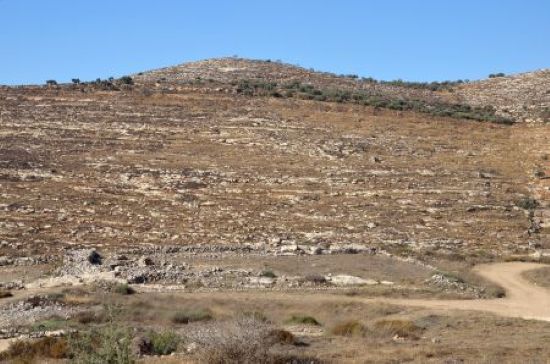
From Tel Shiloh, the sweeping vistas of Samaria’s rolling hills stretch endlessly in every direction, a breathtaking panorama steeped in history and biblical heritage. Photo Credit: Shutterstock
The Geography of Tel Shiloh: A Divinely Chosen Location
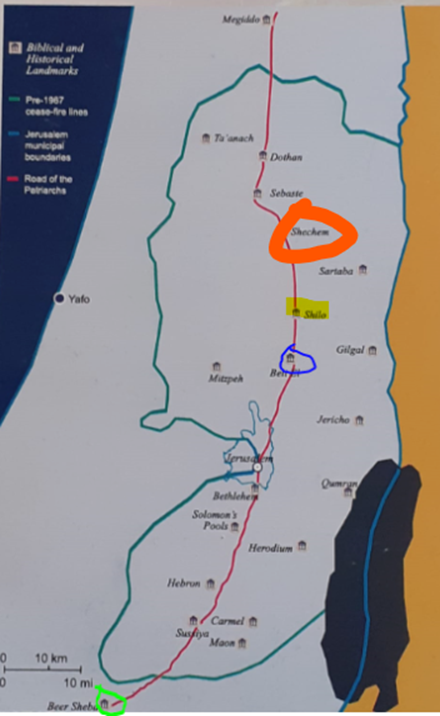
Shiloh sat along the ancient Route of the Patriarchs—what’s now Highway 60—Biblical Israel’s main north-south artery. This key route connected major cities of Judah and Samaria like Jerusalem, Bethlehem, Hebron, Bethel, Shechem, and Beersheba—the region where about 80% of the Bible’s events took place. Shiloh’s prime location may be one reason G-d chose it as the central gathering place for the Jewish people for centuries.
Today’s Highway 60, seen from Tel Shiloh, traces the ancient route used in biblical times. Many of the Bible’s most significant stories unfolded in the towns along this path. Photo Credit: Shutterstock
As a tour guide, I often get the question, “How do we know this is the place?” When it comes to Shiloh, the answer is surprisingly straightforward. Archaeologists had a clear lead because the Bible gives us its exact location. In Judges 21:19, it says:
“Behold, there is a feast of the Lord in Shiloh… which is north of Bethel, east of the highway that goes up from Bethel to Shechem, and south of Lebonah.”
With such specific directions, identifying ancient Shiloh on the modern map was one of the easier tasks in biblical archaeology (we will soon see in part 2 that there is another crucial find which verifies this special location)!
The ancient spine route, also known as Highway 60. The Bible clearly identifies Shiloh’s location (highlighted in yellow) along this path, situated between Beit El (marked with a blue circle) and Shechem (marked with an orange circle) on the highway’s eastern side.
Shiloh: From Canaanite Stronghold to Sacred Sanctuary of Israel
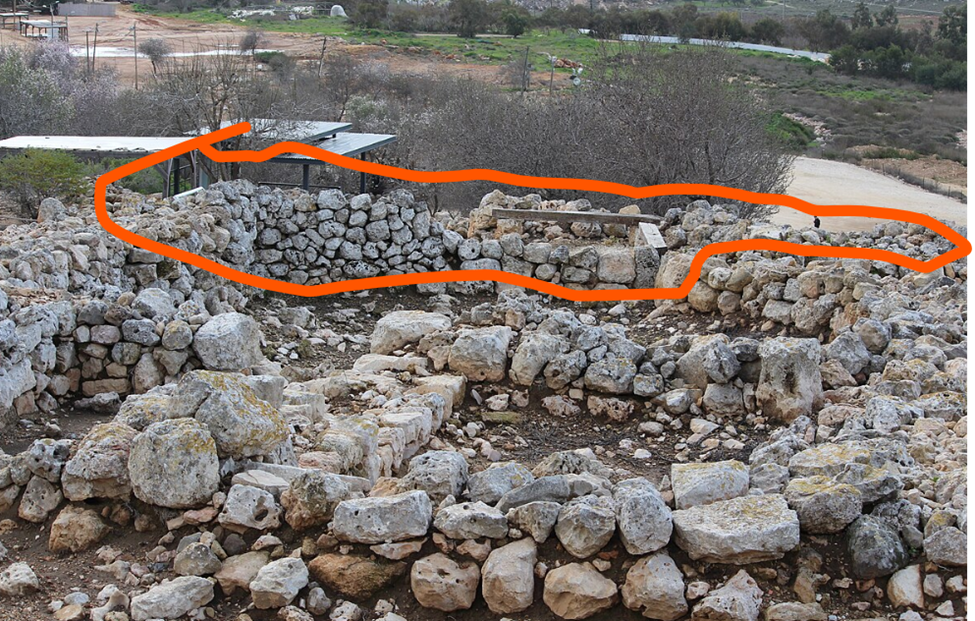
Long before Shiloh became the spiritual heart of Israel, it was a fortified Canaanite city, established around 3,800 years ago—right around the time of Abraham. The Canaanites built strong defensive walls here, much of whose ruins are still standing today for visitors to see with their own eyes.
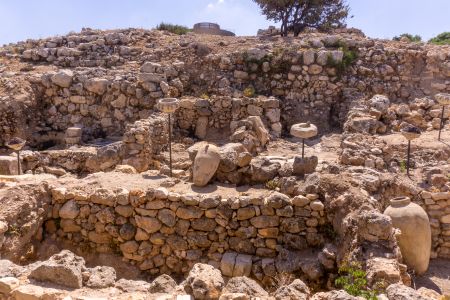
The ruins of the Canaanite city walls (marked in red) still stand strong after 3,800 years. In the foreground, you can see the remains of Israelite homes from centuries later—a powerful glimpse into Shiloh’s long, layered history. Photo Credit: Deror Avi – Wikicommons
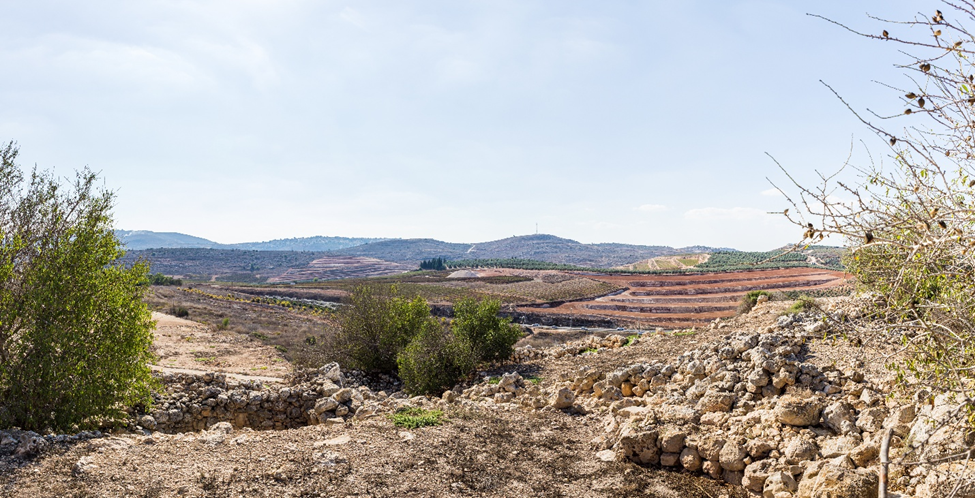
As you stand atop the ancient site of Tel Shiloh, it becomes immediately clear why this place was so cherished in biblical times. More than just a stop along a central highway, Shiloh was blessed with rich, fertile soil—ideal for growing grapes and olives, two of the Land of Israel’s most iconic crops. Remarkably, the same bounty continues today: the surrounding hills are still blanketed with vineyards and olive groves, echoing the agricultural life that once thrived here during the time of the Mishkan (Tabernacle). It’s a powerful reminder that the land’s blessings have never ceased, just as foretold in the blessing Jacob gave to Joseph—whose son Ephraim inherited this very territory—describing a land rich with the “sweetest yield of the sun” and the “best prneoduce of the ancient mountains” whose “land shall be blessed by G-d” (Deuteronomy 33:13–15).
Jewish-owned vineyards surrounding Shiloh continue to thrive, fulfilling the prophecy of Jeremiah 31:4: ‘Again you will plant vineyards on the mountains of Samaria; the planters will plant and enjoy the fruit.’ Photo Credit: Shutterstock.
Of course, when the Jewish people eventually settled in Shiloh, this location was not selected merely because of its convenient location on a major trade route or bountiful fields. Rather this place it was chosen by G-d as the first long-term resting place of the Mishkan (Tabernacle) after the Israelites entered the Land (see Joshua 18:1).
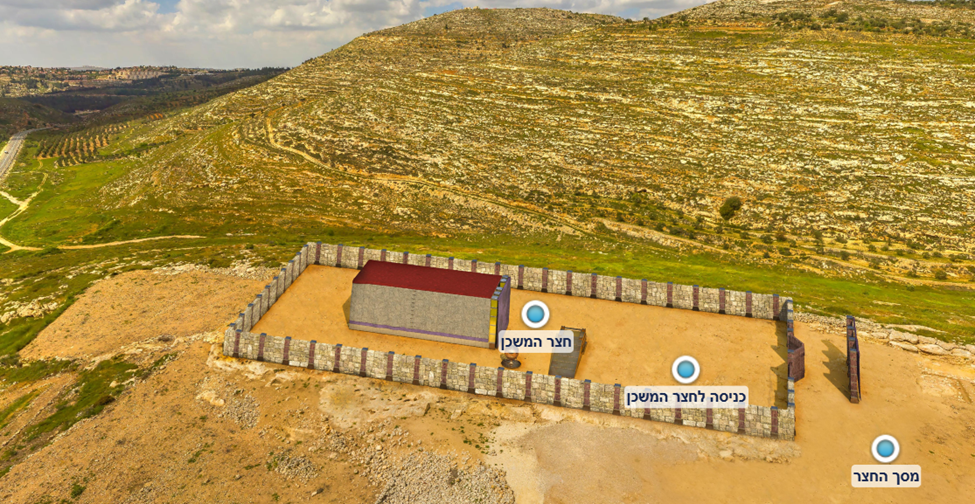
Unlike the portable Tabernacle used during the 40 years in the desert and the 14 years in Gilgal (when the Jews first entered Israel)—which featured collapsible wooden walls and a fabric roof—the Tabernacle in Shiloh was a more permanent structure, built with stone walls while retaining a roof of draperies. Photo Credit: https://a-shiloh.co.il/
Shiloh: Where Heaven Touched Earth and a Nation Found Its Spiritual Heart
After 14 long years of battling the Canaanites, the Israelites were finally nearing the fulfillment of their mission: to reclaim and settle their eternal homeland. Yet, despite all the progress, seven of the twelve tribes had still not received their designated portions of land.
To move forward, Joshua instructed these tribes to survey the remaining territory and return with detailed reports to Shiloh. The plan was to divide the land by drawing lots under divine guidance, and then continue the process of conquest and settlement.
But before any land was measured, divided, or conquered, one crucial act came first: the Israelites built the Tabernacle in Shiloh (see Joshua 18). According to Jewish sources, this sequence is deeply meaningful. The verse’s emphasis on erecting the Tabernacle before the land was fully subdued highlights the true purpose of the conquest. The land wasn’t given to the Jewish people simply as a place to live—it was given to them to create a spiritual center, a home where God’s presence could dwell among them. With the establishment of ‘G‑d’s home’ on earth and the division of the land by lot—formally designating Israel as the eternal homeland of the Jewish people—a spiritual revolution was underway, one that continues to profoundly influence world politics and religion to this day. Also, this set the stage for some of the most dramatic biblical events in history.
For a sample tour itinerary which can include experiencing biblical Shiloh,click here.To view his sample Gaza Envelope tour itinerary,click here.
Nosson Shulmanis a journalist andLicensed Tour Guidein Israel specializing in Biblical tours. To allow tourists to experience Israel during the Corona era, he created the new hit Israel tour video serieswhich brings Israel to the home of viewers by simulating actual tours. To check out his free sneak preview tour videos, click here.To view sample tour itineraries or to inquire about private tour opportunities with a personalized itinerary on your next trip to Israel,click here.
For more on Kever Rochel (Tomb of Rachel), click here
JoinVIP Israel tour guide, creator of Authentic Virtual Israel Tours and radio host Nosson Shulman each week as he leads you on an inspiring, short virtual tour of a different off the beaten track biblical site in Israel. The new series airs live every week on Israel News Talk Radio and is then posted here in video form
Nosson Shulmanis a journalist andLicensed Tour Guidein Israel specializing in Biblical tours. To allow tourists to experience Israel during the Corona era, he created the new hit Israel tour video serieswhich brings Israel to the home of viewers by simulating actual tours. To check out his free sneak preview tour videos, click here.To view sample tour itineraries or to inquire about private tour opportunities with a personalized itinerary on your next trip to Israel,click here.
Let’s begin with a disclaimer: this article does not endorse any political candidates. It is a factual look at former President Donald Trump’s Middle East policy, especially as it relates to Israel. If just hearing the name “Trump” triggers a strong emotional reaction, this article may not be for you. But if you’re open to facts over headlines, keep reading.
Despite a historic record of pro-Israel policies, the media continues to push narratives suggesting that Trump is shifting away from Israel or cozying up to its enemies. These claims are often based on speculation, cherry-picked quotes, or outright distortion. And as with many headlines about Trump since 2016, they will likely turn out to be false too.
Here are the Top 5 Myths being circulated — and why none of them hold up under actual scrutiny.
1. “Trump Has Become Anti-Israel and Isn’t the Same as First-Term Trump”
This myth collapses the moment you examine Trump’s actual policy moves.
Since returning to the political scene, Trump has reaffirmed his support for Israel at nearly every turn. He lifted Biden-era sanctions on Jewish settlers, reversed the arms embargo, and appointed what many call the most pro-Israel cabinet in U.S. history. Key figures include:
Mike Huckabee as U.S. Ambassador to Israel, a longtime advocate for Israel who believes that all of Israel biblically belongs to the Jewish people.
Marco Rubio as Secretary of State, one of the Senate’s strongest voices for Israel and a vocal opponent of Iran’s terror regime.
Pete Hegseth as Secretary of Defense, who has openly supported the rebuilding of the Jewish Holy Temple in Jerusalem.
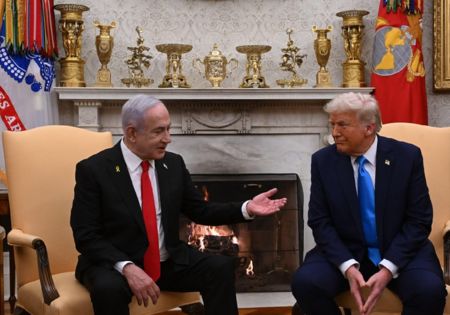
On top of that, Trump gave Prime Minister Netanyahu royal treatment during his recent White House visit, showing the world that the U.S.-Israel relationship under his leadership is stronger than ever. The idea that Trump is somehow distancing himself from Israel is not supported by a single policy action.
2. “Trump Has Been Taken in by the Qataris – Terrorists in Suits”
This accusation ignores strategy and oversimplifies diplomacy.
Yes, Trump visited Qatar recently — and the media immediately jumped to conclusions. But here’s what they left out: Qatar hosts one of the most important U.S. military bases in the Middle East. Trump has long insisted that the U.S. should not fund the defense of foreign nations without return.
The result? Trump reportedly secured a new Air Force One, paid for in part by Qatar, relieving American taxpayers. Even more remarkable, he leveraged that relationship to secure the release of an active-duty IDF soldier — without prisoner swaps, concessions, or payments. That is virtually unprecedented in Israeli history (remember Gilat Shalit was released for 1027 terrorists, 280 of whom were serving life sentences, many of whom would later mastermind October 7).
It’s important to understand a key reality: Qatar is a major player in the Middle East, whether we like it or not. They also hold the strings to Hamas — and Trump has used that leverage to achieve meaningful outcomes for Israel. This isn’t being “taken in” — it’s strategic engagement with eyes wide open, using influence to achieve results others only talk about.
Another major reason for Trump’s trip to Qatar and Saudi Arabia was to close business deals for the U.S. Saudi Arabia has already agreed to invest $600 billion in the U.S., a deal that has the potential to create up to 2 million American jobs. As President, Trump sees job creation and economic growth as top responsibilities — and while pursuing these gains, he continues to keep an eye on these nations to ensure they aren’t engaging in nefarious or terror-related activity.
At the same time, Trump continues to crack down on Qatari influence in American universities, especially in Middle Eastern studies departments. That same week, his administration cut $400 million in federal funds from Harvard over antisemitism and foreign influence concerns.
This is not naïveté. It’s calculated diplomacy — and it’s working.
3. “Trump Not Visiting Israel Means He Doesn’t Care”
This claim is nothing more than speculation dressed as reporting.
The media took one fact — Trump’s decision not to stop in Israel during his Middle East tour — and ran wild with it. But this is nothing more than pure speculation from a press corps desperate for a rift. Trump has not criticized Israel. He’s not distanced himself from its government. In fact, both Netanyahu’s cabinet and Trump’s own team have said there is “no daylight” between the U.S. and Israel right now (if the media has evidence to the contrary, I would love to see it).
So why didn’t he stop in Israel? Security, timing, strategic reasons — we don’t know. But not knowing doesn’t give the media the right to create their own story. And if you actually listened to his full speech in Saudi Arabia, rather than cherry-picked headlines, you’d hear just how deeply Pro-Israel he is. The reality is, Trump’s actions — not a brief travel itinerary — are what matter. And those actions speak volumes.
4. “Trump Is Willing to Talk to Iran – That Means He Doesn’t Get It”
Quite the opposite. Trump gets it — and that’s exactly why he’s dangerous to Iran.
Yes, he’s said he’s open to negotiation — but only from a position of maximum pressure. He scrapped the disastrous 2015 Iran nuclear deal, reimposed harsh sanctions, and took out Qassem Soleimani, Iran’s top terror operative. His goal? A deal that works for Israel, the U.S., and peace — or no deal at all.
Trump’s broader strategy includes isolating Iran by supporting regimes that oppose Tehran. That includes a new leadership structure in Syria that is hostile to Iran — a major blow to Hezbollah, the IRGC, and other Iranian terror proxies. Trump recognizes this new Syrian regime as a tool to weaken Iranian influence on Israel’s border.
He’s strengthening Israel’s neighborhood, not weakening it.
Quite the opposite. Trump gets it — and that’s exactly why he’s dangerous to Iran.
5. “Trump’s Syria Policy Means He’s Rewarding Terrorists”
That couldn’t be further from the truth.
Trump’s engagement with Syria is highly conditional and strategic. The goal is to encourage a post-Assad Syria to normalize ties with Israel and end support for terror — in exchange for carefully phased, limited sanctions relief. And it’s important to note: Trump always builds enforcement into his diplomacy. If commitments are broken, so are the benefits.
This strategy is not about rewarding terror — it’s about creating geopolitical distance between Syria and Iran, and giving Israel a safer, more stable northern border. It’s diplomacy with sharp teeth — not blind trust.
The Bigger Picture: A Pro-Israel Record Like No Other
Here’s what the media won’t summarize for you:
Moved the U.S. Embassy to Jerusalem.
Recognized Israeli sovereignty over the Golan Heights.
Defunded UNRWA and UNESCO.
Cancelled 4,000+ student visas for those hostile to Jews, Israel, or America.
Merged the Palestinian Affairs office into the U.S. Embassy in Jerusalem, placing it under Ambassador Mike Huckabee, who believes in Israel’s full Biblical claim.
Never criticized Israeli settlements.
Bombed the Houthis and reimposed sanctions Biden had lifted.
Cut $400 million from Harvard for antisemitism — the same day he met Qatar.
Actively targeting foreign (Qatari) funding in American campuses.
Allowed Israel freedom of action in Lebanon and elsewhere — no public second-guessing.
Floated relocating Gazans to other Arab nations to reduce long-term conflict.
This isn’t a shift away from Israel. It’s a deepening of a partnership — one backed by policy, not PR.
Conclusion: What the Media Says vs. What Trump Does
The myths being peddled by the media are often based on surface-level assumptions and wishful thinking. Trump’s actual record in the Middle East — especially with Israel — tells a very different story.
One built on historic moves, strategic alliances, and unwavering support.
And once again, just like in 2016, 2018, and 2020… what the media is saying now will most likely turn out to be false too.
Update:
Since this article was first published, a series of major—and once unthinkable—developments have unfolded. In a historic move, President Trump met with Syrian President Ahmad al-Sharaa. Soon after, top officials from Sharaa’s regime held talks with Israeli military leaders, including Maj. Gen. Oded Basyuk of the IDF Operations Directorate, about the possibility of Syria joining the Abraham Accords—the peace agreements Trump originally brokered between Israel and four Arab nations.
Even more surprising, Syria is reportedly softening its long-standing demand that Israel relinquish the Golan Heights, a major sticking point in past negotiations.
Meanwhile, following Trump’s meeting with the UAE, the country’s Foreign Minister made a bold statement: the first step toward peace in Gaza is freeing the Israeli hostages. This clear prioritization of Israeli hostages over broader Palestinian issues is a striking and unprecedented stance in the Arab world.
Nosson Shulmanis a journalist andLicensed Tour Guidein Israel specializing in Biblical tours. To allow tourists to experience Israel during the Corona era, he created the new hit Israel tour video serieswhich brings Israel to the home of viewers by simulating actual tours. To check out his free sneak preview tour videos, click here.To view sample tour itineraries or to inquire about private tour opportunities with a personalized itinerary on your next trip to Israel,click here.
As the 2025 Canadian federal election (on Monday April 28) approaches, voters need to understand where each party leader stands on Israel. With antisemitism on the rise and growing tension in the Middle East, it’s important to know how leaders view Israel and the issues surrounding it. This breakdown looks at the public positions of Canada’s major party leaders — their statements, policies, and actions — and highlights contradictions, especially when it comes to their stance on “Palestinian rights” and human rights violations. This article does not endorse any candidates or take a position on the merits of their economic or social policies. It focuses solely on their statements and actions regarding antisemitism and Israel.
Pierre Poilievre – Conservative Party Leader
Photo Credit: Shutterstock
Strong Support for Israel: Poilievre has always supported Israel’s right to defend itself against terrorism. He has promised to stand up against anti-Israel resolutions at the United Nations and cut funding to organizations like UNRWA that promote hatred or antisemitism.
Tackling Antisemitism: Poilievre has made it clear that antisemitic comments, especially in Canadian universities, should not be tolerated. He has said he would cut funding to institutions that allow hate speech under the guise of activism.
Real Commitment: Poilievre’s personal connection to Israel, through his visits and experiences, shows his strong and consistent support for the country.
Mark Carney – Liberal Party Leader
Photo Credit: Shutterstock
Criticism of Israel’s Actions: Carney has criticized Israel’s military actions in Gaza. His calls for a ceasefire often ignore Israel’s security concerns and the threat posed by Hamas.
Hypocrisy on Human Rights: Carney’s stance on Syria is deeply troubling. Following the fall of Assad’s regime, a new Radical Islamic government has taken power in Syria. Despite reports of widespread atrocities, including massacres of religious minorities such as Christians and Alawites, Carney has remained largely silent on these human rights violations. Worse, he has called for the removal of some sanctions against this new regime, even though it continues to oppress and persecute minority groups. His failure to address these ongoing atrocities, while continuing to criticize Israel’s defensive actions, exposes a troubling inconsistency in his approach to global human rights.
Lack of Action on Antisemitism: Carney has not been vocal in condemning the rising antisemitism in Canada. His criticism of Israel often overshadows the need to address the increasing attacks on Jewish communities within the country.
Yves-François Blanchet – Bloc Québécois Leader
Photo Credit: Shutterstock
Largely Silent on Israel: Blanchet rarely comments on foreign affairs, and when he does, his statements lean toward generic “human rights” platitudes.
Passive Tolerance for Anti-Israel Rhetoric: While not openly hostile, his silence amid the rise of antisemitic protests and hate speech suggests a troubling indifference.
Jagmeet Singh – New Democratic Party Leader
Photo Credit: Shutterstock
One-Sided Criticism of Israel: Singh consistently criticizes Israel’s military actions, often ignoring the role of Hamas in the violence. He is quick to condemn Israel but fails to offer a fair and balanced perspective, which undermines any genuine human rights advocacy.
Selective Approach to Human Rights: Singh is outspoken in defending Palestinian rights and frequently criticizes Israel, often without acknowledging the role of Hamas or the complexities of the conflict. At the same time, he has said little about the persecution of Christians, Alawites, and other minorities under Syria’s new Sunni-led government, raising serious questions about the consistency of his human rights advocacy.
Supports Arms Embargo on Israel: Singh has called for a suspension of arms sales to Israel — a significant policy position that singles out the region’s only democracy, while making no comparable call for sanctions or embargoes on terror-affiliated regimes or countries with some of the world’s worse human rights records.
Defends Anti-Israel Protests: Jagmeet Singh has openly backed anti-Israel campus protests, despite their frequent displays of antisemitic hate, harassment of Jewish students, and chants calling for Israel’s destruction. By cloaking his support in vague appeals to free speech while refusing to denounce the blatant antisemitism on display, Singh comes off as willfully blind — or worse, complicit — in normalizing hate and intimidation under the guise of activism.
Diluted Response to Antisemitism: Singh has spoken against antisemitism in broad terms, but typically in statements lumped together with other forms of hate. This tendency to generalize downplays the unique and rising threats faced by Jewish communities in Canada and abroad.
Elizabeth May – Green Party Leader
Photo Credit: Shutterstock
One-Sided Criticism of Israel: May has been consistent in her condemnation of Israeli military actions and regularly focuses on Palestinian suffering. However, she has remained silent on the ethnic and religious persecution happening under Syria’s new leadership. This selective outrage suggests a narrow, politically convenient approach to human rights.
Supports Arms Embargo on Israel: The Green Party, under May’s leadership, has officially called for an arms embargo on Israel — a harsh and disproportionate measure given Israel’s democratic governance and ongoing security threats. Notably, no similar policy has been proposed for regimes committing widespread atrocities across the region.
Promotes Anti-Israel Activism: May has actively supported and participated in protests and campaigns that are not just critical of Israel, but often openly hostile to its existence. Many of these demonstrations have included extremist rhetoric, glorification of terrorist groups, and blatant antisemitism. By standing with these movements and failing to clearly denounce the hate they often promote, May helps legitimize a toxic environment where anti-Israel sentiment crosses the line into outright antisemitism — and where Jewish Canadians are increasingly targeted and marginalized.
Generic Condemnation of Hate: While she does condemn hate, May rarely singles out antisemitism as a distinct and growing threat. This reluctance weakens the urgency of her message and leaves Jewish Canadians feeling overlooked.
Maxime Bernier – People’s Party of Canada Leader
Photo Credit: Shutterstock
Bernier has emphasized a “Canada First” approach, stating that Canada should avoid involvement in foreign conflicts unless there is a compelling strategic interest. He has expressed a desire to keep Canada out of the Israel-Hamas conflict and has discouraged Canadians from participating in it.
Criticism of Domestic Protests: He has condemned pro-Hamas demonstrations in Canada, particularly those celebrating violence, and has called for a focus on Canadian issues rather than foreign conflicts
Nosson Shulmanis a journalist andLicensed Tour Guidein Israel specializing in Biblical tours. To allow tourists to experience Israel during the Corona era, he created the new hit Israel tour video serieswhich brings Israel to the home of viewers by simulating actual tours. To check out his free sneak preview tour videos, click here.To view sample tour itineraries or to inquire about private tour opportunities with a personalized itinerary on your next trip to Israel,click here.
Since his Inauguration, President Trump has firmly backed Israel’s security with immediate action
Almost every poll of Israelis and supporters of the Jewish State, indicate that President Donald Trump is widely considered the most pro-Israel president ever. Whether it’s informal surveys or more official ones, the results are striking: Trump’s popularity in Israel is through the roof. A 2019 poll even found that 79% of Israelis supported him, with just 10% against him. Comparing that to past administrations—such as Obama and Carter, who were often seen as unfriendly toward Israel, or Clinton and Bush Sr., who, while not exactly anti-Israel, sometimes pushed Israel into tough situations—Trump’s stance stands out (for more on his top 10 Pro-Israel actions during his first term, click here). And now, just a week into his second term, Trump is already making moves with big consequences for America’s most important ally in the Middle East. While his second term is still unfolding, here are five key actions he’s already taken to demonstrate his unwavering support for Israel (and it’s only the beginning):
5) Lifting Biden’s Sanctions on Jewish Settlers
Ma’ale Adumim, the third-largest Jewish city in Judea and Samaria, named after the ancient biblical city that was located here, is home to over 42,000 residents and continues to grow. President Trump does not consider the presence of Jewish families in their ancestral homeland an obstacle to the peace process. Photo Credit: Shutterstock
On only his first day in office, former President Donald Trump took swift action to support Israel by lifting sanctions on Jewish settlers in Judea and Samaria, also known as the West Bank, that had been unfairly imposed by the Biden administration. These sanctions had frozen the assets of many innocent Jewish residents in the region, punishing them for simply living and building in their biblical homeland. With Trump’s intervention, the U.S. Treasury officially removed these sanctions.
Judea and Samaria hold a profound historical and religious significance for the Jewish people, and Trump’s decision to reverse these sanctions was a clear rejection of policies that sought to delegitimize Israel’s presence in their own sacred land.
4) Permanently Cutting Off All Funding to UNRWA
The United States is the biggest financial backer of the United Nations (UN), contributing a massive 22% of its budget. The UN, in turn, regularly turns its back on US interests! One of the most dangerous and controversial UN groups is the United Nations Relief and Works Agency for Palestine Refugees in the Near East (UNRWA). The US gave approximately $350 million each year—around 30% of its funds. But this organization has a dark side that can’t be ignored.
The UNRWA runs refugee camps where millions of Palestinians have lived for decades. They’re stuck in a tragic cycle—Arab host countries won’t let them integrate, and these camps are the only homes they’ve known. Here’s the worst part: UNRWA lets parents pass down their refugee status to their children, something no other group in the world is allowed to do. This creates a never-ending crisis that the UN is largely responsible for.
Even more shocking is the fact that UNRWA controls around 40% of the schools in Gaza, where young kids are fed a dangerous ideology, learning to hate the West and Jews while glorifying violence and jihad. Even worse, many of the higher-ups in UNRWA have ties to Hamas, the terror group responsible for horrific attacks. As an example, Fateh Sherif Abu el-Amin, the president of UNRWA’s Teacher Association, was a top Hamas commander and recruiter, and was killed by Israel in 2024.
It doesn’t stop there. The aid UNRWA claims to provide rarely reaches the people who need it. Instead, staff members often use the funds to run black market operations, profiting off the desperate situation. In his first term, President Trump made a bold move by cutting all US funding to UNRWA, declaring it ridiculous for American taxpayers to support an organization that spreads hatred and supports terrorism.
Former President Biden quickly and unapologetically brought back the funding when he took office. Several months after the October 7 massacre of Jews, it was unsurprisingly revealed that many of UNWRA’s staff members were directly involved in the genocide. This caused Biden to temporarily cut off funding to the terror supporting organization. It appears that Biden was considering the restoration of funding, but the new Trump Administration has now made these cuts permanent.
3) Designating Iranian-Backed Houthis as Terrorists
The Houthis, backed by Iran, are a terrorist group waging war on Israel and targeting U.S. ships in a key oil trade region. Despite their history of attacking Americans, President Biden lifted Trump-era sanctions, but Trump reinstated them upon his return to office. Photo Credit: Shutterstock
President Donald Trump has re-designated the Houthi rebels in Yemen as a Foreign Terrorist Organization, reversing President Biden’s decision to remove the group from the terror list (that first term President Trump had implemented). Despite the Houthis’ well-documented hostility toward the U.S. and its allies, including dozens of missile attacks on U.S. navy warships since 2023, Biden had taken the group off the list, citing concerns that it could hinder humanitarian aid to Yemen. However, Trump’s executive order highlights the severe danger posed by the Houthis, especially their intense hatred toward Israel. Since October 2023, the Houthis have ramped up their aggression, launching drone strikes towards Israel and targeting commercial shipping lanes in the Red Sea, all in support of Hamas, Iran and Hezbollah.
Supported by Iran’s Islamic Revolutionary Guard Corps Quds Force (IRGC-QF), the Houthis have demonstrated a clear commitment to Israel’s destruction. Trump’s re-designation underscores the necessity of confronting this Iranian-backed threat head-on, ensuring the protection of American forces, it’s allies and global stability. With this move, Trump reaffirms his commitment to combating terrorism and protecting U.S. and Israeli interests in the region.
2) Building the Most Pro-Israel Cabinet Ever
President Trump has appointed staunch pro-Israel Congresswoman Elise Stefanik as U.S. Ambassador to the UN, joining a growing group of key administration members dedicated to unwavering support for the Jewish State. Photo Credit: Shutterstock
President Trump has appointed a strong pro-Israel cabinet, reinforcing his administration’s commitment to the Jewish state. Defense Secretary Pete Hegseth recently made headlines for his speech calling for the rebuilding of the Jewish Temple in Jerusalem. Soon-to-be U.N. Ambassador Elise Stefanik has also firmly supported Israel’s rights, stating that Israel has a biblical right to the entire Judea and Samaria (West Bank) region.
Former Governor Mike Huckabee, a longtime advocate for Israel, has been appointed U.S. Ambassador to Israel. Huckabee has consistently backed Israel’s right to annex biblical Judea and Samaria, emphasizing their significance to Israel’s religious and historical identity. He was also a key figure in the celebration of the U.S. Embassy’s move to Jerusalem in 2017. Secretary of State Marco Rubio has also been a steadfast ally, championing stronger U.S.-Israel ties and supporting Trump’s withdrawal from the Iran nuclear deal. With these appointments, President Trump has ensured that his administration will continue to uphold Israel’s security and sovereignty.
1) Urging Jordan and Egypt to Resettle Gaza Arabs
President Trump meets with King Abdullah II of Jordan, reiterating his call for Jordan and Egypt to accept Gazans displaced by the conflict initiated by Hamas. Photo Credit: US Embassy in Jordan
President Donald Trump has suggested the possible mass relocation of Gazans to countries like Jordan and Egypt, with the goal of cleaning up the conflict-ridden area and starting anew. Speaking aboard Air Force One, Trump revealed he had discussed the idea with King Abdullah II of Jordan and planned to speak with Egyptian President Abdel Fattah Al-Sisi about the proposal. Trump estimated that up to 1.5 million Palestinians could be relocated, helping to address the ongoing crisis in Gaza, which he described as a “real mess” with “almost everything’s demolished” due to Hamas’ actions.
Trump praised Jordan for already accepting a number of Gazans and encouraged the country to take in more (Jordan is already 70% Palestinian). He framed the relocation as a potential solution to both the humanitarian disaster in Gaza and the region’s broader instability, suggesting the move could be temporary or long-term. While the idea of relocating Gazans has sparked some international debate, Trump remains focused on working with neighboring Arab nations to find a practical way to bring peace to the area.
Nosson Shulmanis a journalist andLicensed Tour Guidein Israel specializing in Biblical tours. To allow tourists to experience Israel during the Corona era, he created the new hit Israel tour video serieswhich brings Israel to the home of viewers by simulating actual tours. To check out his free sneak preview tour videos, click here.To view sample tour itineraries or to inquire about private tour opportunities with a personalized itinerary on your next trip to Israel,click here.
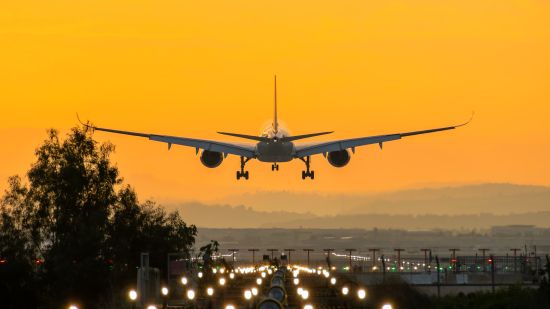
An Airbus A350 lands at Ben Gurion Airport at sunrise. Photo Credit: Shutterstock
Starting January 1, 2025, Israel will introduce new entrance requirements for travelers, specifically the Electronic Travel Authorization (ETA) system.
What is ETA?
The ETA is an online travel authorization that must be approved prior to entering Israel. This is part of Israel’s efforts to modernize border control procedures, while ensuring the safety of both travelers and citizens. Visitors will apply for the ETA via a website or mobile app before their departure, providing essential details about their trip.
Who needs the ETA?
Most travelers from countries that previously did not require a visa for short visits will need to apply for an ETA (i.e. USA, Canada, the EU etc). This includes tourists, business travelers, and other short-term visitors. The system does not apply to travelers who are citizens of Israel or those holding diplomatic or special passports.
2. Provide necessary personal information and travel details.
3. Answer a few questions regarding the purpose of your visit.
4. Pay the required fee (25 shekels) and submit your application.
Exceptions: There may be some exemptions for specific visa holders or for travelers with certain purposes, like diplomatic missions or official government work. Make sure to check the specific details relevant to your situation.
For smooth travel to Israel after January 1, ensure you apply for your ETA well ahead of time and have all necessary documentation ready for a hassle-free entry.
ETA-IL approval will remain valid for up to 2 years, or until your current passport expires – whichever comes first. This means that as long as you receive an ETA-IL authorization to travel, you do not have to reapply during the validity period and can enter multiple times.
Note: The State of Israel reserves the right to change its requirements regarding the obligation to complete the ETA form at any time.
Disclaimer: The author of this article is not an attorney, and this article should not be construed as legal advice or an authoritative source. This article is for informational purposes only and should never be relied upon. The author takes no responsibility for the content or accuracy of this article. It is highly recommended (and the sole responsibility) for anyone wanting to enter Israel to do their due diligence and independently verify that they are indeed qualified to enter the country, and to ensure that they have the appropriate documents to successfully do so.
Sponsored by Rockets Into Roses: Discover the powerful art of an Israeli hero on the Gaza border, transforming rocket fragments into one-of-a-kind masterpieces. His Art, Jewelry and Biblical items, owned by world leaders, including US Presidents, symbolize resilience and support charities aiding Israelis in the Gaza Envelope.
Special Chanukah Offer: Get a free surprise gift valued over $50 with every order! Hurry, this offer ends in just two days—don’t miss out on this meaningful opportunity!
To sponsor our next article or newsletter and have your business seen by thousands of our American pro-Israel subscribers and beyond, please contact us at info@guidedtoursofisrael.com
Nosson Shulmanis a journalist andLicensed Tour Guidein Israel specializing in Biblical tours. To allow tourists to experience Israel during the Corona era, he created the new hit Israel tour video serieswhich brings Israel to the home of viewers by simulating actual tours. To check out his free sneak preview tour videos, click here.To view sample tour itineraries or to inquire about private tour opportunities with a personalized itinerary on your next trip to Israel,click here.


















 Unique Sites of Israel Blog