Academy Award winning actor Jon Voight, visiting Samaria, is presented with first-class wine produced in the Jewish settlement of Har Bracha. Photo Credit: Samaria Regional Council.
Hollywood has always been known for its more liberal views but has become increasingly more intolerant of views different from the “correct” narrative pushed by many in the entertainment industry. Having the “wrong” views can get one blacklisted, and not even the A-list actors are safe from this cancel culture. In this industry, being too pro-Israel is often a career liability. When singers and musicians announce that they will be performing in Israel, much pressure is put on them to cancel their appearances, often with success (as an example Stevie Wonder and Lana Delray pulled out of performing in the Jewish State). Other times, performers refuse to back down despite the backlash (although there is often pressure to at least issue a clarification that they don’t condone certain “Israeli actions)”. Visiting Judah and Samaria is even more taboo, which is why the actions of one acclaimed movie star are particularly noteworthy.
Jon Voight, 83, has unabashed Pro-Israel views and is unafraid to share them, regardless of any potential consequences. In late February of this year, the Oscar winner was in Israel for a 10-day trip to gather material for a biblical film series, geared towards Evangelicals. He spent time in Judah and Samaria, visiting historic and Jewish religious sites in Hebron (the 2nd holiest site in Judaism), Har Bracha (where he was presented with a bottle of wine produced in a local vineyard), and Shiloh (the home of the Tabernacle for 369 years). At many of these sites, he was visibly emotional.
In the media, Judah and Samaria (where between 80-90% of towns and cities mentioned in the Bible are located) are often referred to in the media and UN forums as the “West Bank” (a term invented by Jordan after they annexed the land from 1948-67. “West” meant the (then Jordanian-controlled) territory west of the Jordan River to distinguish this land from the Kingdom of Jordan, which was on the eastern bank of the river). Says the 4-time Golden Globe award winner, “I don’t understand why Judea and Samaria is called the West Bank, when it’s clear that if you look at a map, Samaria is at the heart of the land of Israel.”
When Jon Voight’s new series premieres, the first episode will be dedicated to the journeys of Abraham in the Holy Land.
Nosson Shulmanis a journalist and Licensed Tour Guide in Israel specializing in Biblical tours. To allow tourists to experience Israel during the Corona era, he created the new hit Israel tour video series which brings Israel to the home of viewers by simulating actual tours. To check out his free sneak preview tour videos, click here.To view sample tour itineraries or to inquire about private tour opportunities with a personalized itinerary on your next trip to Israel, click here.
“King David ascended and dwelt in the strongholds of Ein Gedi (1 Samuel 1: 24)”
Although located in an extreme desert with little rain, Ein Gedi is an oasis with abundant water! Photo Credit: Shutterstock
The Oasis of Ein Gedi, a site mentioned many times in the Bible, is one of Israel’s most visited sites. If you have been to Israel, you have probably hiked its desert rocks, swam in its year round water streams, and watched as families of Ibex (antelope) cross your path without warning.
It is very common for visitors to Ein Gedi to spot families of ibexes roaming the desert cliffs. Photo Credit: Shutterstock
Today however, we will venture off the beaten track, and explore one of Ein Gedi’s lesser known sites: the Ancient, Talmudic Synagogue.
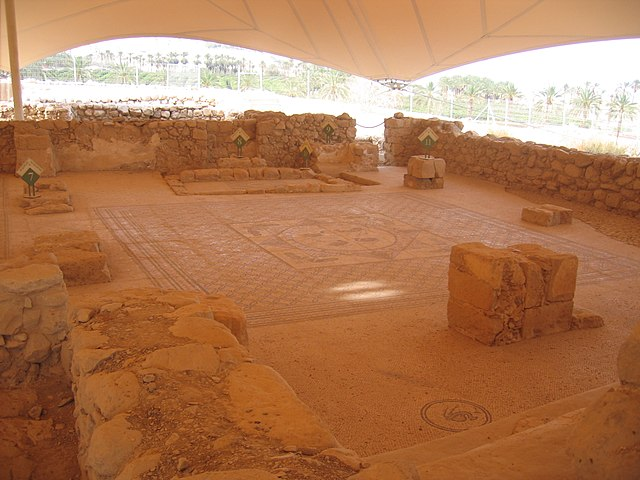
The ancient synagogue of Ein Gedi was in use from the 3rd-6th century.
The Synagogue from Roman/Byzantine times was only discovered in 1965, when workers of nearby Kibbutz Ein Gedi were plowing the field and found a well preserved Mosaic floor. Excavations were started and they soon realized they had found the community synagogue from the 3rd-6th century.
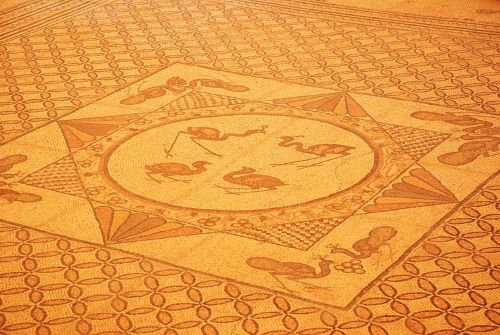
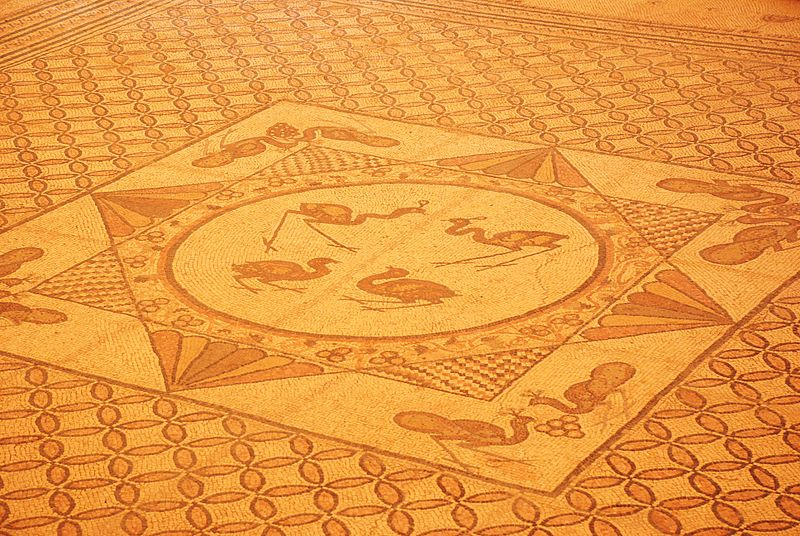
The Mosaics of the Synagogue’s floor are still in mint condition! Photo Credit: Stéphanie Gromann
The designs of the Synagogue testify to the wealth of the community. Several colorful mosaics were found portraying exotic birds such as peacocks and partridges, as well as grapes and the Menorah.
As Jewish law dictates, the synagogue faces northwards towards Jerusalem, where the Aron Kodesh (prayer niche which holds the Torah Scroll) was carved into the wall.
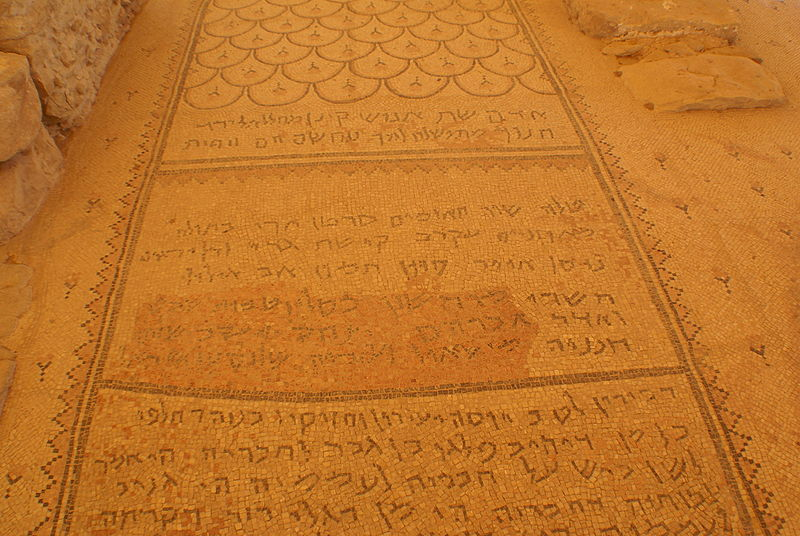
The findings which interested archeologists the most, however, were the several inscriptions found by the entrance. As in synagogues today, it is common to find plaques commemorating the donors. Ein Gedi of 1500 years ago was no different, and the three sons of “Halfi” are praised for building the fashionable staircase “on behalf of the Merciful One”.
Ancient Inscriptions were found in both Hebrew and Aramaic (the common language spoken by he Jews of Israel at that time). Photo Credit: Shlomi Kakon
The most interesting inscription tells the members of the community to keep the town’s “secrets” and curses those who reveal it. What was this secret? Due to Ein Gedi’s unique climate of desert sun and abundant water, they grew exotic trees from which they had secret methods of producing perfumes and spices, which were exported worldwide. They were so well known that years earlier, Cleopatra, the infamous Egyptian Queen, had the land seized for herself.
The community continued to grow until around 530 when the community mysteriously was abandoned. Remains of fire burn marks suggest that the community was attacked and destroyed by unknown invaders.
The community remained abandoned for 1400 years until the establishment of Israel, where a now thriving Kibbutz was established in 1956.
For a sample itinerary which includes the biblical oasis of Ein Gedi, it’s ancient synagogue and it’s surrounding area, click here.
Nosson Shulmanis a journalist and Licensed Tour Guide in Israel specializing in Biblical tours. To allow tourists to experience Israel during the Corona era, he created the new hit Israel tour video series which brings Israel to the home of viewers by simulating actual tours. To check out his free sneak preview tour videos, click here.To view sample tour itineraries or to inquire about private tour opportunities with a personalized itinerary on your next trip to Israel, click here.
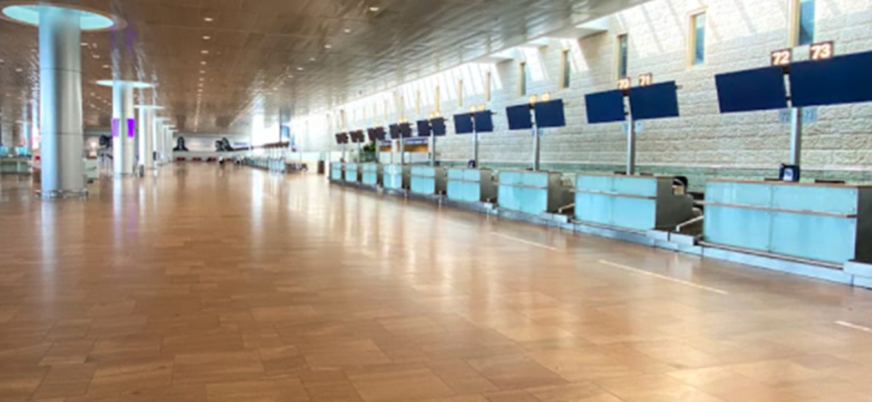
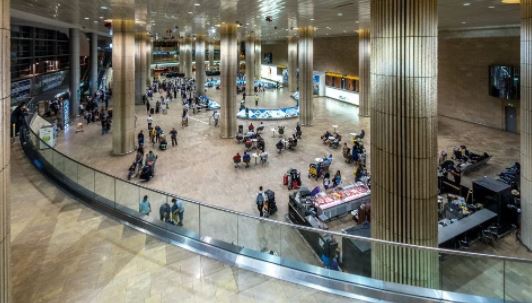
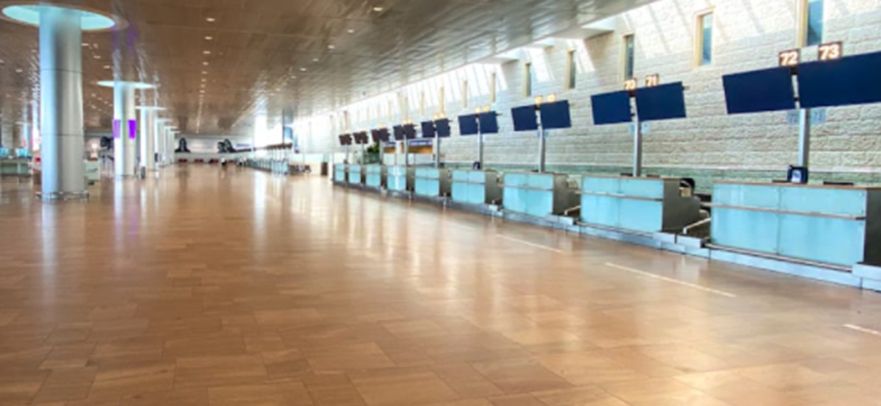
Ben Gurion Airport’s departure hall sits empty in this early 2021 picture. Beginning on March 1, unvaccinated tourists from most countries will be allowed once again to visit the Holy Land
It’s been two (very long) years but starting on March 1, tourists will finally be allowed to travel to Israel regardless of vaccination status, according to a statement made by the Prime Minister’s Office! This decision follows a meeting Sunday between Prime Minister Bennett, Health Minister Nitzan Horowitz, and Minister of Tourism Yoel Razvozov, where it was agreed that both vaccinated and unvaccinated people are to be allowed entry. A negative PCR test, however, before takeoff and after landing in Israel will still be required, at least for now (in addition to the requirement to fill out a pre-flight form within 48 hours of takeoff: https://corona.health.gov.il/en/flight-form-content/)
Additionally, unvaccinated Israeli citizens re-entering the country will no longer be required to isolate for 5 days upon return (although all Israelis will be required to enter isolation until they either get the results of the PCR test taken after landing, or the expiration of 24 hours, whichever comes first). Also, Israelis will no longer be required to take a PCR test to board a plane on route to Israel.
Within the Israeli school system, starting on Thursday February 24, middle school children will no longer be required to perform twice-weekly antigen tests. On March 10, this requirement will be removed for Elementary students.
As tourists will now be allowed to enter the country, it is hoped that Israel will continue once again to be a major tourist destination for people all over the world looking for their unique, one-of-a kind experience! To book your amazing tour, click here.
Disclaimer:
The author of this article is not an attorney, and this article should not be construed as legal advice or an authoritative source. This article is for informational purposes only and should never be relied upon. The author takes no responsibility for the content or accuracy of this article. It is highly recommended (and the sole responsibility) for anyone wanting to enter Israel to do their due diligence and independently verify that they are indeed qualified to enter the country, and to ensure that they have the appropriate documents to successfully do so.
Nosson Shulmanis a journalist and Licensed Tour Guide in Israel specializing in Biblical tours. To allow tourists to experience Israel during the Corona era, he created the new hit Israel tour video series which brings Israel to the home of viewers by simulating actual tours. To check out his free sneak preview tour videos, click here.To view sample tour itineraries or to inquire about private tour opportunities with a personalized itinerary on your next trip to Israel, click here.
3d Image of a human spinal cord. If Israeli scientists are correct, millions of people with damaged spinal cords may soon be able to walk. Photo Credit: Shutterstock
Millions of people around the world are confined to a wheelchair due to Spinal cord injuries (SCI), rendering them paralyzed. There is no known cure. People with SCI are destined to remain in a wheelchair for the rest of their lives, bearing all the social, financial and health related costs of their conditions. That is (perhaps) until now. If Israeli scientists are correct, millions of people will soon be able to accomplish what most people take for granted; the ability to walk again.
Israeli researchers from Tel Aviv university have been conducting research on paralyzed mice, some of whom were recently paralyzed, while others long term. After being given spinal implants from the cells of people, 12 of the 15 were able to walk again without issue. For the mice whose injuries were most recent, 100% of them became fully mobile, while for those with longer term paralysis, 80% were able to walk.
Professor Tal Dvir, head of the research team, believes trials will be able to commence in humans in less than 3 years. He said that since the tests on the mice were conducted with human cells, the process is already in an advanced stage!
The process begins with a small biopsy from the belly. Small fatty tissues are taken from the patients, and the fat cells are separated from other materials such as sugar and collagen. The cells are then reprogramed (using genetic engineering methods) and placed for 30 days into a substance that was made from the non-cellular material from the fat tissues gathered from the biopsy. The embryonic development of the spinal cord is mimicked, producing spinal cord micro-neuron tissue at which point they are implanted into the spinal cord. When applied to human patients, the cells will be taken from their own bodies in order to enable regeneration of the damaged tissue without the possibility of rejection, and to eliminate the need to suppress the immune system of recipients.
The Israeli researchers are confident that this will be successful in humans and believe that the technology can be applied in the treatment of other diseases and injuries including Parkinson’s and brain trauma. If they are correct, this will arguably be the greatest medical breakthrough in human history.
Nosson Shulmanis a journalist and Licensed Tour Guide in Israel specializing in Biblical tours. To allow tourists to experience Israel during the Corona era, he created the new hit Israel tour video series which brings Israel to the home of viewers by simulating actual tours. To check out his free sneak preview tour videos, click here.To view sample tour itineraries or to inquire about private tour opportunities with a personalized itinerary on your next trip to Israel, click here.
“For the children of Naphtali… Migdal-el, Horem, and Beth-‘anath and Beth-shemesh; nineteen cities with their villages (Joshua 19: 32-38)”
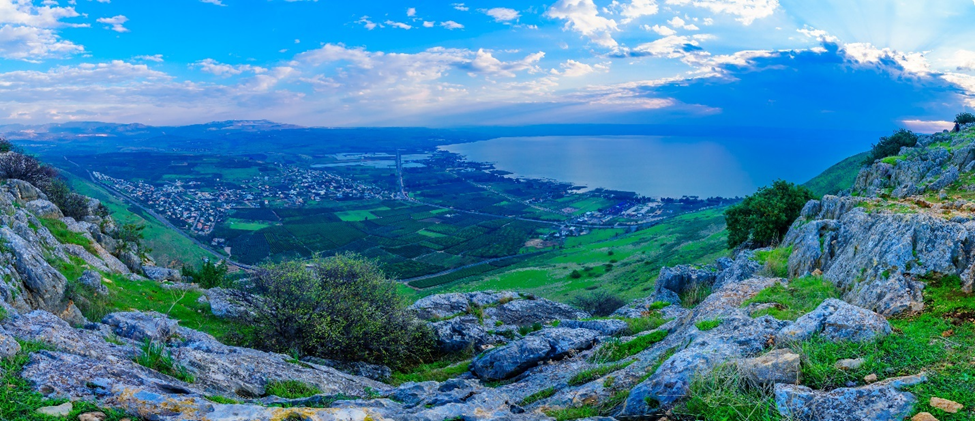
Migdal (Magdala) is beautifully situated on the Sea of Galilee. Photo Credit: RnDmS / Shutterstock
Today, we are visiting one of Israel’s best kept secrets! Ancient Migdal (Magdala) is as beautiful as it is historic. In 2021 this sleepy town (pop. 2000) just north of Tiberias, was in the news for an exciting (and very rare) find, revolutionizing the way researchers understood an entire time period (more on that shortly). During the Second Temple period, Migdal was an important city and the unique findings we will see here more than substantiate this! Today’s Migdal, is just across the highway from ancient Migdal.
The ancient town of Migdal is believed to have had 40,000 people at its peak (a huge population for that time) with advanced infrastructure (circa 1st century BCE to 1st Century CE). Photo Credit: pokku / Shutterstock
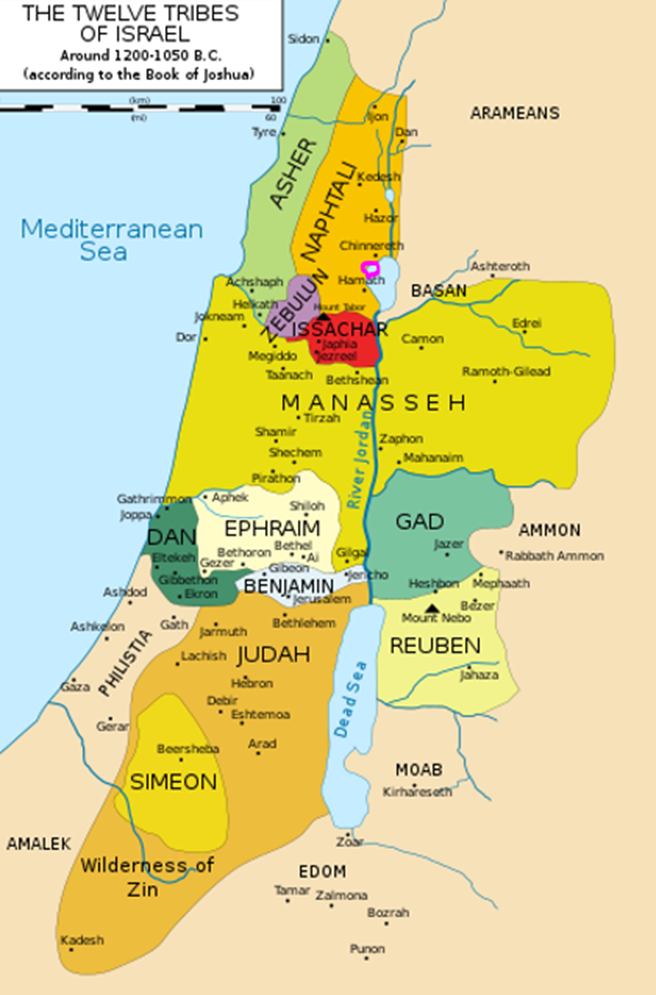
Migdal (along with the entire western coast of the Sea of Galilee) was given to the tribe of Naphtali.
Migdal was on the north-western coast of the Sea of Galilee (see purple circle) within the territory of Naphtali. Photo Credit: “File:12 Tribes of Israel Map.svg” by 12 tribus de Israel.svg: Translated by Kordas 12 staemme israels heb.svg: by user:12 יוסי staemme israels.png: by user:Janz derivative work Richardprins (talk) is licensed under CC BY-SA 3.0
Magdala (often referred to in ancient sources by its Greek name “Taricheae”) became an important city in the Hellenistic period. Besides its strategic location on a crossroads (today’s highway 90 and 807) the surrounding area was super fertile (more on that in an upcoming article) and filled with springs. In addition, because this part of the Sea of Galilee has a huge abundance of fish, a major fishing industry sprang up here (the Greek name of the town can be translated as “The industry of pickling fish”).
Red Belly Tilapia (popularly known as St. Peter’s fish) can be found in abundance in the Sea of Galilee and are a popular dish at many of the excellent seafood restaurants that dot the waterfront. Photo Credit: SuperJew – CC BY-SA 3.0
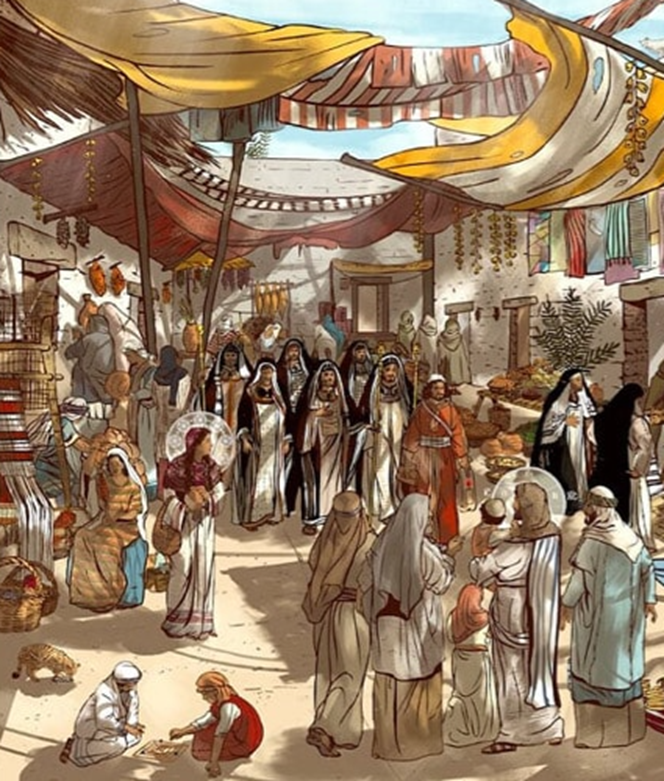
The city reached its Zenith in the early Roman period (circa 1st century BCE) and was very financially successful (one early historian called it a place “contributing a wagon-load of taxes” to the economy). The wealth of its inhabitants is evident in the mansions that were found here, and the well-designed marketplace where each store (due to the abundance of water) had their own technologically advanced plumbing system, connecting the shops with access to fresh water. Amazingly this system is in such good shape, that it’s still functional today! Also found in the market were plastered pools of different sizes, which held fish that the customers could select for their dinner.
Artist’s rendition of the ancient marketplace of Migdal. Many of the shops sold high quality fish from the sea (located just a few feet away). Photo Credit: Magdala Archeological Park
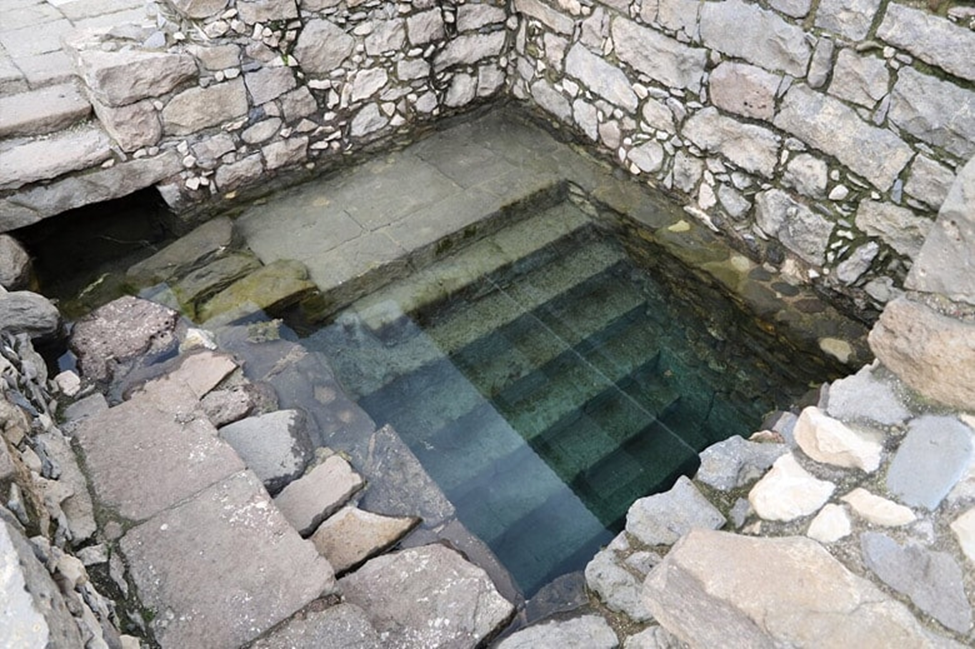
The city was entirely Jewish, with a well-established religious infrastructure. Several well preserved Mikvehs (religious baths) were found, that even today are in pristine condition.
One of the many Mikvehs discovered in Migdal still in mint condition! Photo Credit: Magdala Archeological Park
In 2009, the oldest synagogue in the Galilee (only 1 of 7 found from the Second Temple period in the entire country) was discovered (circa 50 BCE-67 CE). The Synagogue was massive (120 square meters or 394 feet) and clearly well-funded, replete with mosaics, frescos, and elaborate ornaments.
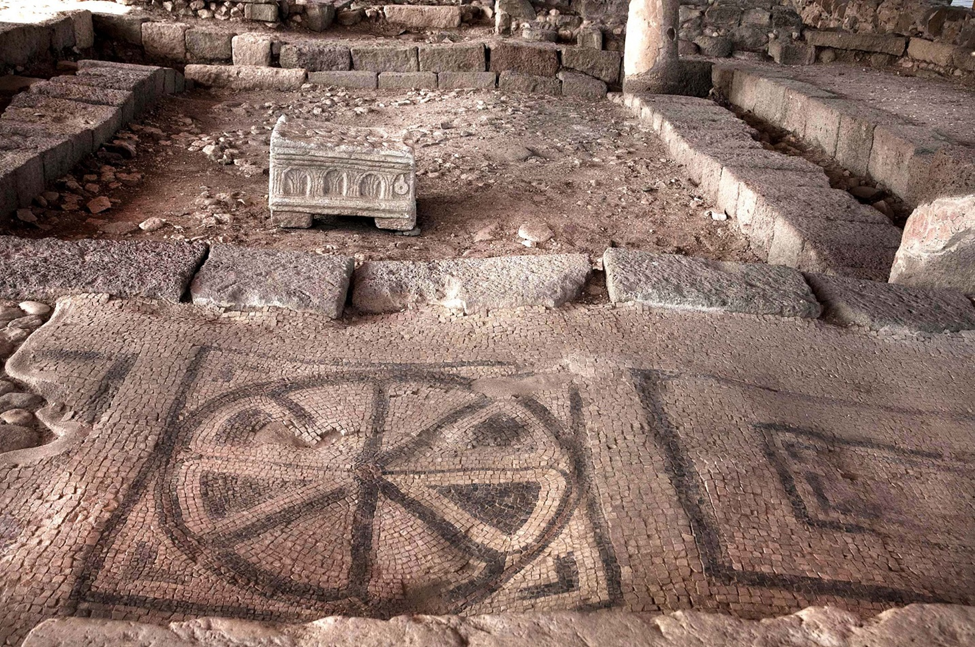
A mosaic with a large rosette pattern inside the main hall of the synagogue. Photo Credit: גל עמוס – CC BY-SA 4.0
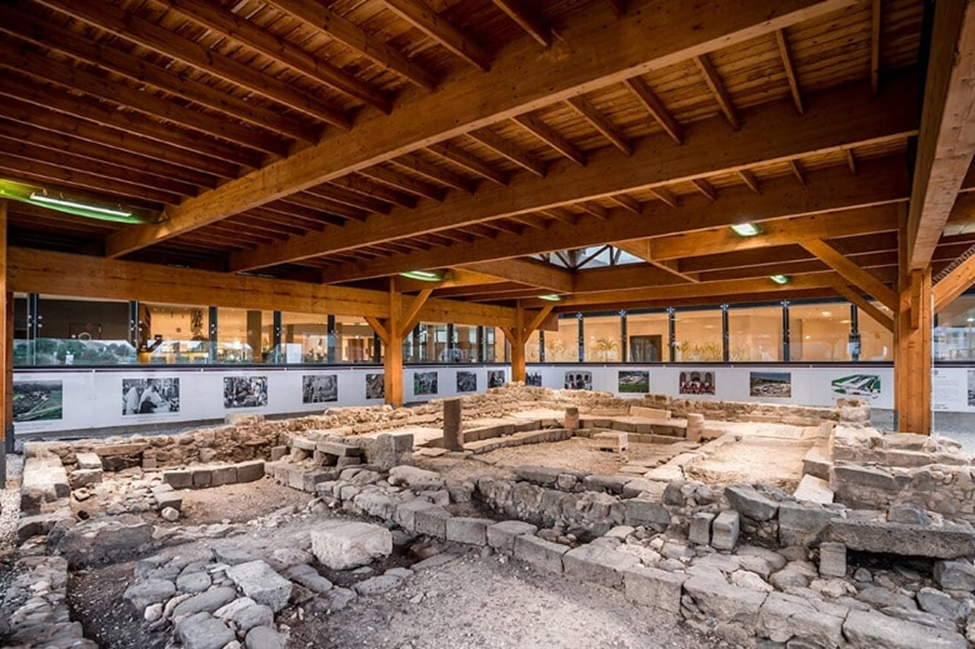
The main hall had built-in stone benches that went around the floor on all sides. There was also a side room.
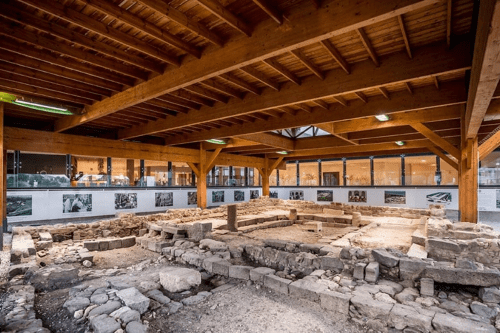
A wooden roof was built on top of the Second Temple Synagogue to protect it from the elements. Photo Credit: Magdala Archeological Park
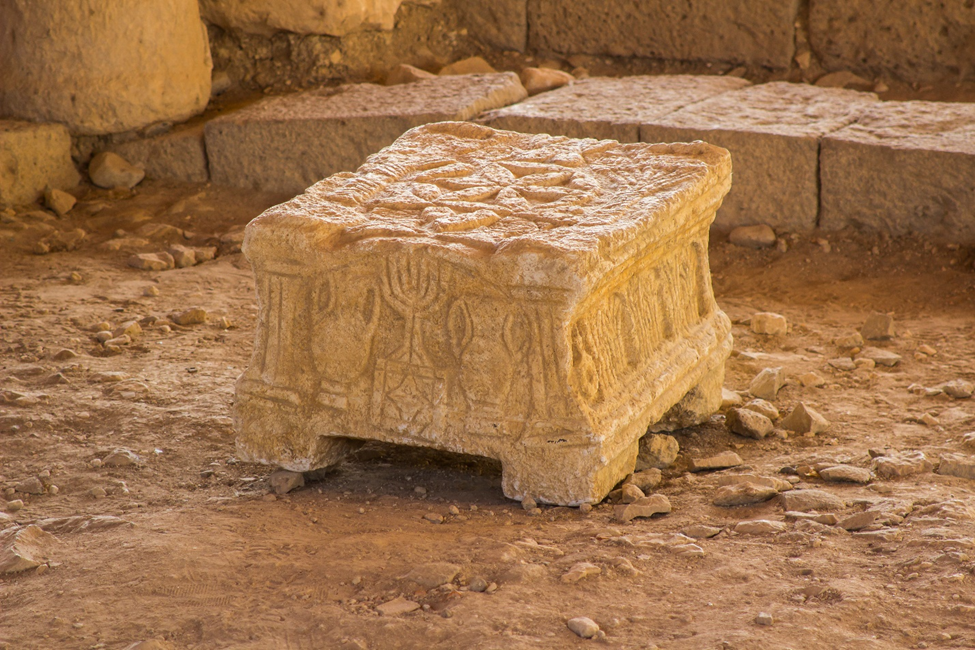
The most important, one of a kind find in the synagogue was the now famous Magdala stone. This was a table used for reading the Torah during synagogue services and is the earliest one ever found. The stone table had beautiful carvings of images from the holy Temple in Jerusalem, including the Menorah (the earliest known depiction of it). At the time the Temple stood, Jews had a Torah obligation to ascend to Jerusalem three times a year. Thus, it can be safely assumed that whoever carved these images had seen the Temple himself!
The earliest known stone table used for Torah reading ever excavated. One can easily see the high-quality depictions of holy items found in the Temple. Photo Credit: Shutterstock
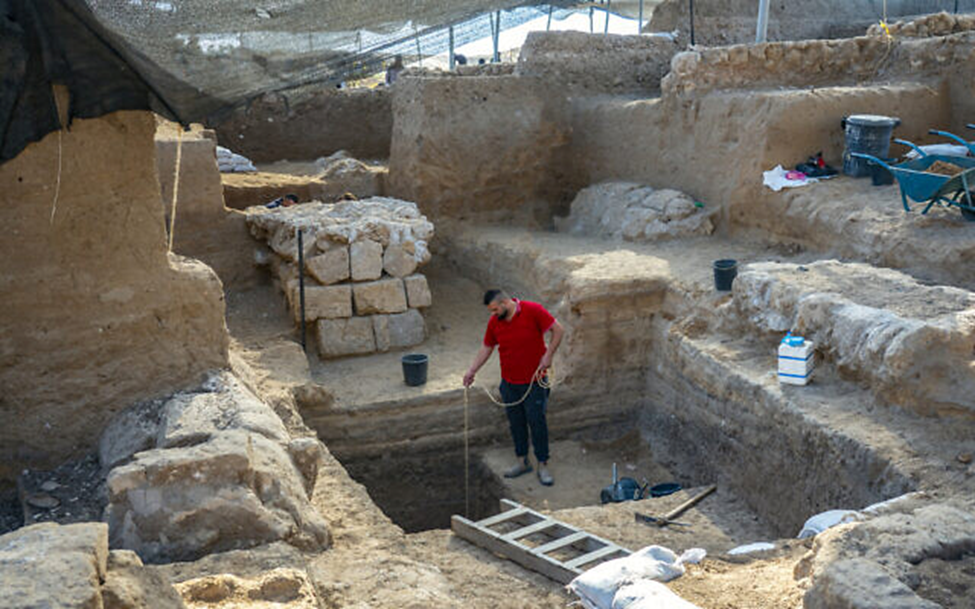
In 2021 a revolutionary find was discovered, which archeologist had not expected. During the widening of Highway 90 (Israel’s longest route) another Second Temple synagogue was discovered (the first time two synagogues were found during this period in the same location). Despite a plethora of ancient Jewish texts mentioning that synagogues were part of mainstream Jewish life even when the Temple stood, many (secular) academics still claimed that synagogues were not overly important in daily life, as few synagogues from this period were found. Now that two synagogues were found located a mere 200 meters from each other, and since only about 10% of the ancient city has been excavated thus far (it’s plausible there were more) several academics are now hypothesizing that synagogues were indeed an important part of the social fabric at the time (for more on this, click here)!
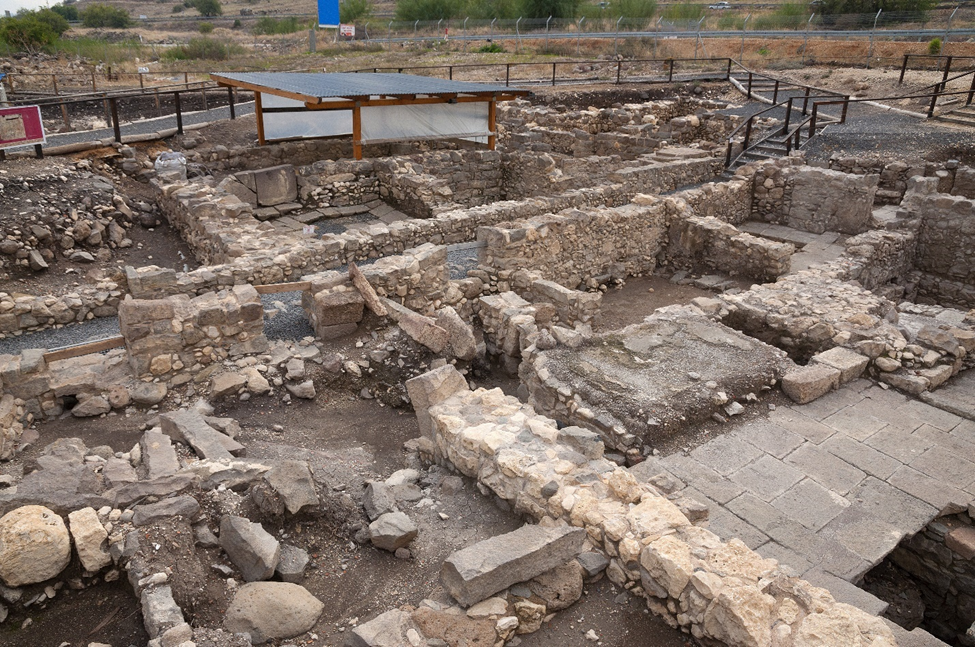
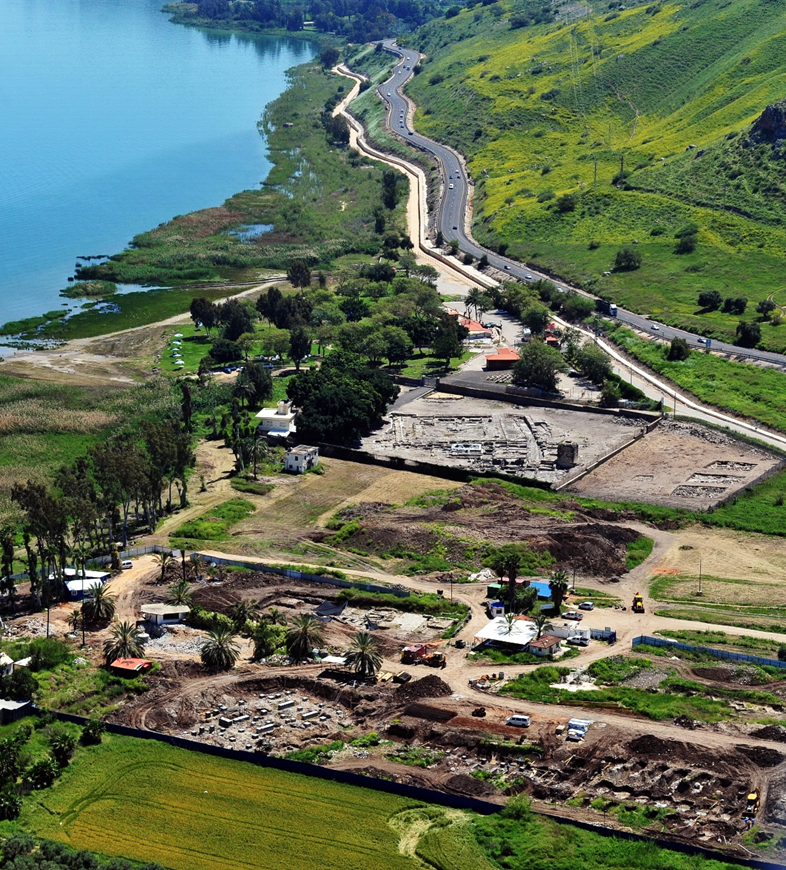
An aerial shot of ancient Migdal. The ruins visible are believed to be only 10% of the ancient city. Photo Credit: AVRAM GRAICER -CC BY-SA 3.0
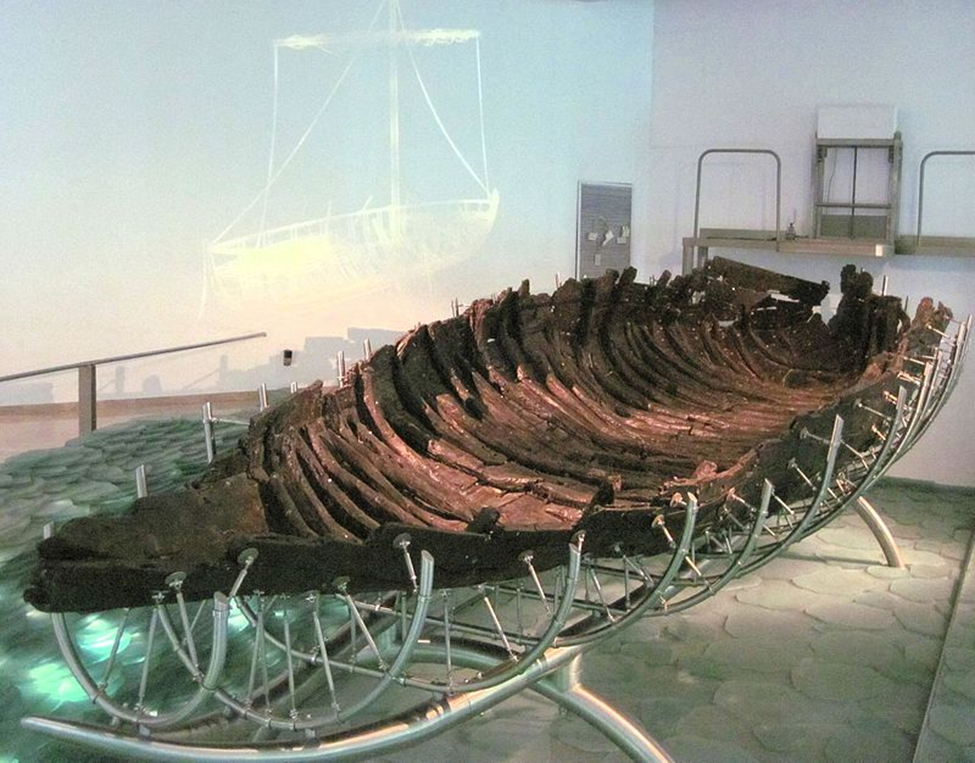
In 18 CE, Herod Antipas built Tiberias (slightly to the south) in order to honor then Roman Emperor Tiberias. Migdal then lost much of its importance, although it remained prominent in the fish industry. In 66 CE, Jews from around the country began to revolt and Migdal was fortified with a wall (many of the rebels from other towns also gathered here). After a long siege, the Romans broke through the walls in 67 CE and thousands of rebels fled on their fishing boats into the Sea of Galilee. The Romans gave chase, slaughtering thousands of rebels at Sea and then destroying the city. One of the fishing boats from that era (which may have been also used in the rebellion) was discovered in 1986.
This ancient fishing boat from Migdal was discovered in 1986 when the Sea of Galilee’s water level receded, thus exposing it. It is now on display at nearby Kibbutz Ginosar. Photo Credit: Travellers & Tinkers – CC BY-SA 4.0
Afterwards, the city became small and insignificant (although the Byzantines did build a monastery here). In 1910, land was bought nearby by Jewish pioneers from Russia who started the agricultural settlement of Migdal, a beautiful town which continues to flourish today.
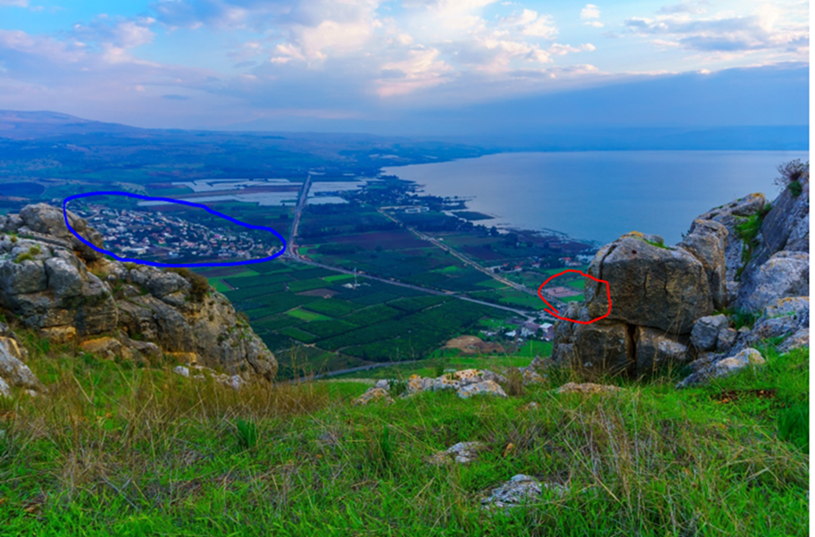
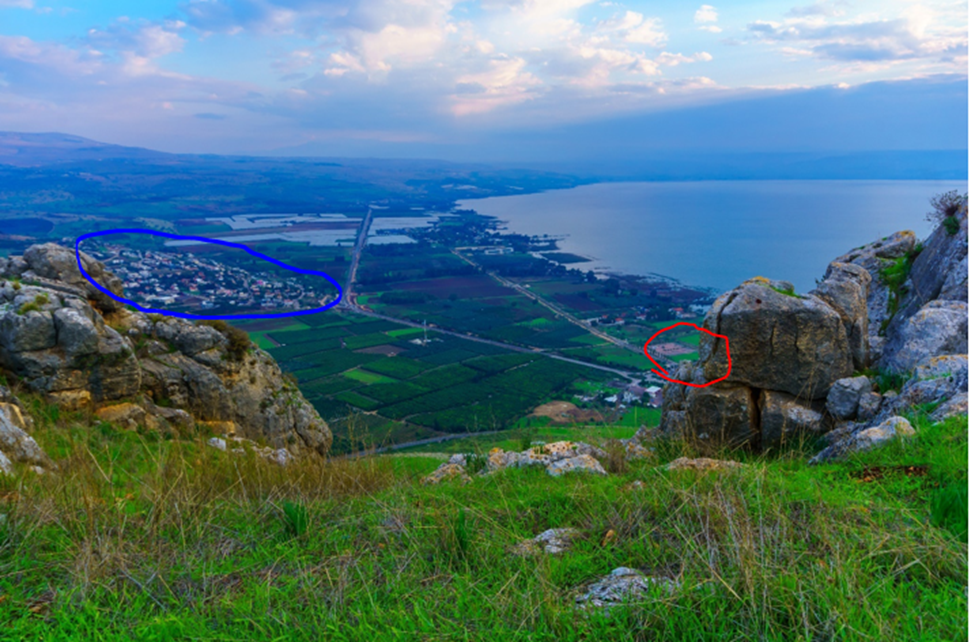
View of the modern town of Migdal (in blue) and its ancient location (in red). Photo Credit: Shutterstock
On your next visit to Israel, a trip to Migdal is certainly worth including on the itinerary!
Nosson Shulmanis a journalist and Licensed Tour Guide in Israel specializing in Biblical tours. To allow tourists to experience Israel during the Corona era, he created the new hit Israel tour video series which brings Israel to the home of viewers by simulating actual tours. To check out his free sneak preview tour videos, click here.To view sample tour itineraries or to inquire about private tour opportunities with a personalized itinerary on your next trip to Israel, click here.
In January 2021, archeologists discovered 3 strands of the royal purple dye (called “Argaman” in the Bible) in the Timna valley. In ancient times, this was the world’s most valuable dye. Photo Credit: Israel Antiquities Authority
Israel is one huge archeological site! Since just about any location in the country could literally be on top of buried ancient treasure, there is a strictly enforced law. Prior to developers building anything (or before the government can add new infrastructure like widening a highway) archeologists must first excavate the site in order to see what lies beneath the ground. Additionally, because of the sheer volume of archeological sites in Israel (including several not yet discovered) it’s not unusual for major archeological finds to be made by individual hikers, and even children during family outings. Besides these finds at previously unknown locations, many sites are already known to be rich with archeology, and when funding for digs (which are very expensive) are secured, sites are dug with the expectation that major finds will be unearthed.
The year 2021 was another fruitful year for archeological discovery. Hundreds of finds were discovered, many quite revolutionary in our understanding of past biblical and historic events. While all of these findings deserve their own articles, I have narrowed down the list to what I believe were the top 10 finds:
Two major Yavne finds:
a) First-ever First Sanhedrin-era building ever to be found in Yavne (circa 1st century CE)
Archeologists excavating the ancient cemetery of Yavne Photo Credit: Yaniv Berman / Israeli Antiques Administration
Yavne is best known to Jews as the first location of the Sanhedrin (the central Rabbinical Supreme Court) after the destruction and exile from Jerusalem. When Israel’s eternal capital was under siege by Roman General (and future emperor) Vespasian, Rabban Yochanan ben Zakkai (then head of the Sanhedrin) left the city to meet him. General Vespasian was so impressed with his knowledge that he granted him three wishes, one of which was to allow the restoration of the Sanhedrin in Yavne (which became the world’s most important Jewish spiritual center for several decades) in addition to the guaranteed safety of its sages (circa 1st century CE). This may have been the most important (and defining) event in Jewish history and Torah observance in the last 2000 years! With the destruction of the Temple, there were many Torah laws which were now unclear, which the Sages of Yavne clarified. The sages of this great city ensured the continuation of the Jewish people in a post-Temple world!
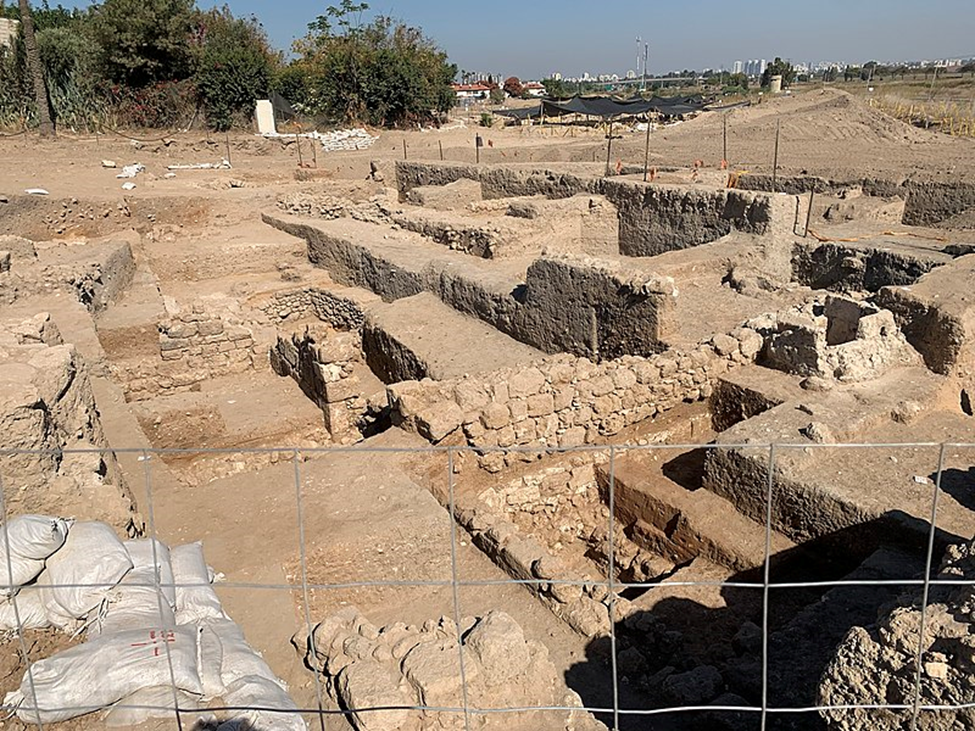
In 2021, the first ever building found from the Yavne-Sanhedrin era was discovered by chance due to development work on the city’s expansion. Inside the building, religious vessels such as “measuring cups” were found entirely made of stone (according to Jewish law, stone vessels do not retain impurity) showing the high level of Torah observance (in ritual purity) practiced in the community. In addition, a cemetery (with elaborate tombs which were carefully spaced out at set distances, suggesting an official body responsible for burial) was discovered outside the city (as is required by Jewish law). Some believe that these tombs may even belong to some of the famous sages known to have been buried in Yavne.
During excavations of Tel Yavne, a massive 1500-year-old winery was discovered, believed to be the largest from the Byzantine era. In this complex were five magnificent wine presses, (each covering an area of 225 m2) four large warehouses for aging and marketing the wine, and kilns for firing the clay amphorae. The winepresses were adorned with decorative niches (which showed the wealth of the factory owners). It is believed that this complex could produce 2 million liters of wine per year (around 2,666,667 bottles). This is even more impressive, considering that the whole process was conducted manually! This wine was considered very prestigious in the ancient world, and excavations in other countries have discovered wine jars from this winery.
2) Crusader Sword (Mediterranean Sea)
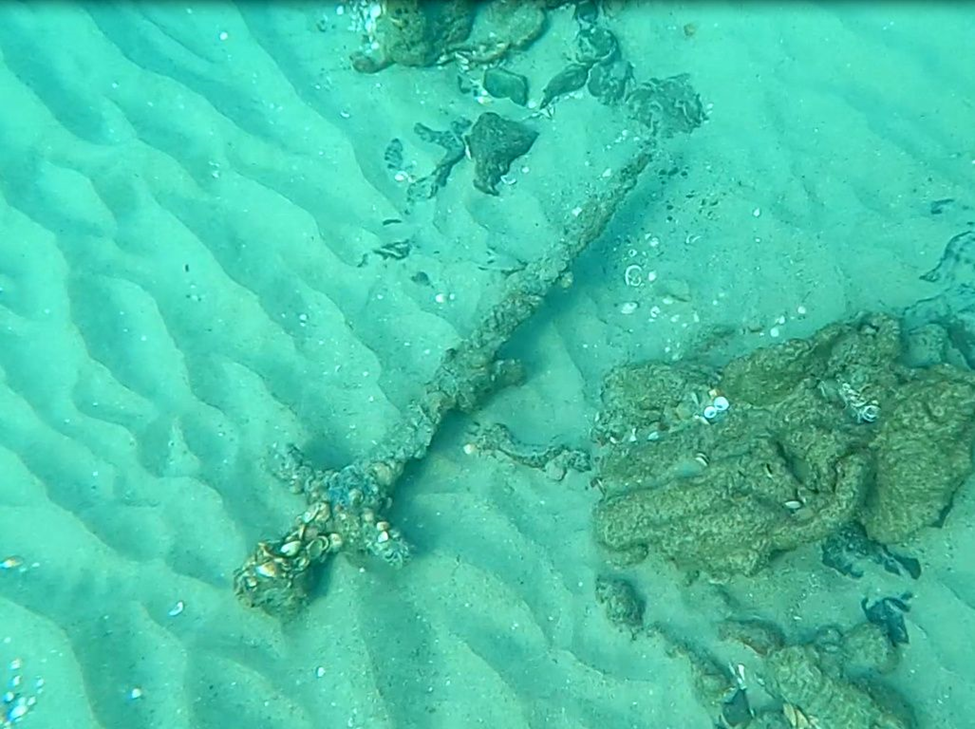
900 year old sword which belonged to a mighty knight! Photo Credit: Shlomi Katzin
In October, Shlomi Katzrin was scuba diving near the beaches of Haifa and noticed something unusual. Upon closer look, he saw that it appeared to be an ancient sword, which he handed over to the Israeli Antiquities Authority (as is required according to Israeli law). Examination revealed that they had found a Crusader sword which had belonged to a knight. The sword, sporting a 30 cm hilt and one-meter-long iron blade, was found in perfect condition (although it was encrusted in marine life). He also discovered some ancient metal anchors and pottery.
According to experts, the area (a natural cove near the port city of Haifa) was used as a storm shelter for ancient merchant ships for centuries (leaving behind a rich array of archeological treasures). According to the Israel Antiquities Authority (IAA) the plan is to clean the sword and then display it at a museum.
3) Well-preserved fortress connected to the Chanukah Story (Lachish Forest)
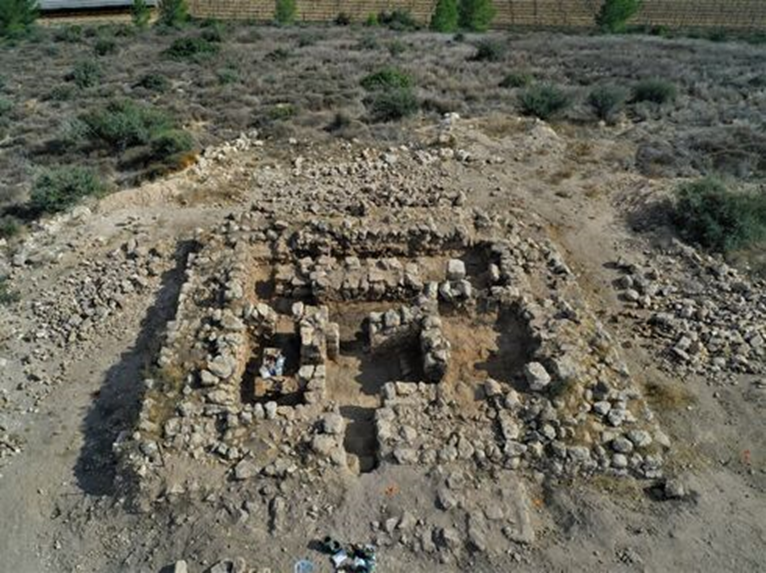
This well-fortified structure was destroyed by the Maccabees (circa 112 BCE) and is connected to the Jewish holiday of Chanukah. Photo Credit: Israel Antiquities Authority
From the time of Alexander the Great (circa 332 BCE) until 167 BCE, the Hellenist Greeks occupied Israel, oppressing the Jewish inhabitants, and trying to force them to abandon the Torah. They even desecrated the holy Temple, turning it into a temple for Zeus. This led to a rebellion led by a small band of pious brothers (all priests) known as the Maccabees who miraculously retook the Temple and purified it in 164 BCE (this rededication of the Temple is celebrated annually by Jews during the 8 days of Chanukah).
After regaining the Temple, the Maccabees expelled the Greeks from the land, gaining the upper hand over the following decades. To protect the important Greek metropolis of Maresha in south central Israel (for more on this world heritage site, click here) a series of forts were built. One of them was discovered and excavated in the Lachish fortress, revealing a well-fortified building 15 x 15 meters (49×49 feet) with a massively thick exterior wall 3 meters (10 feet) wide, sloped in order to prevent scaling. Astonishingly, the ruins are still well preserved to an exceptional height of 2 meters (6.5 feet). It is believed that the original height was 5 meters. As a symbolic bonus, this find was revealed to the public mere days before Chanukah 2021. For more on this incredible find, click here.
4) 2000-year-old coin minted by the Temple Mount Plaza (Jerusalem)
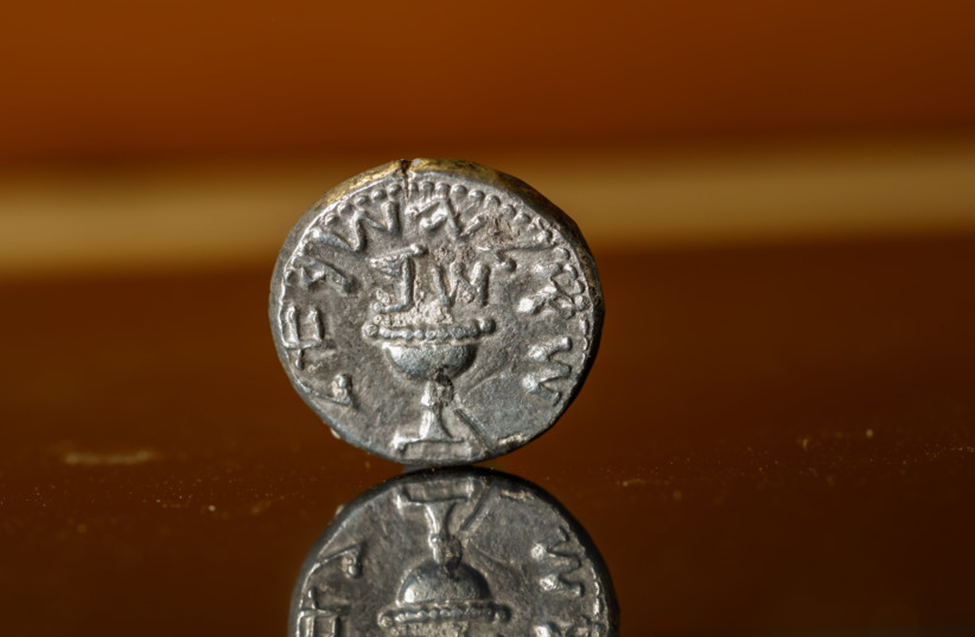
The extremely rare silver coin (likely minted by the Temple) was found by an 11-year girl. Photo Credit: ELIYAHU YANAI/CITY OF DAVID
One of the sites I really enjoy visiting with my tourists is the Emek Tzurim sifting project in Jerusalem. In 1999, the ancient treasures of the Temple Mount were loaded onto trucks and dumped in the Kidron Valley by the Muslim Waqf who control the site. As the dirt taken from the holiest site in Judaism was highly likely to contain important archeological finds, a sifting project open to tourists was initiated to salvage the archeology, giving children and adults alike the opportunity to find earth shattering discoveries!
In November 2021, an 11-year-old girl, Liel Krutokop, sifted through the dirt and found an (almost) 2000-year-old coin made out of pure silver. Weighing 14 grams, it is believed that the coin was minted by Kohanim (priests) using the large silver reserves of the Second Temple in the second year of the Great Jewish Revolt (circa 67-68 CE) against the Romans. This is when the Jews briefly expelled the Romans and gained independence for a very short time. Minting currency was one way to assert sovereignty. One side of the coin has an engraving of an image of a cup with the inscription “Israeli Shekel” and the Hebrew letters of “Shin” and “Bet” which is shorthand for “second year”. The other side has an engraving of the headquarters of the High Priest and the words “Holy Jerusalem”. Ultimately, the rebels were defeated by Rome and the Temple was destroyed in 70 CE.
According to archeologists, this is one of the only items found which was manufactured at this Holy site. For a sample itinerary which includes the sifting project, click here.
5) One of the world’s oldest toilette bowls ever found (Jerusalem)
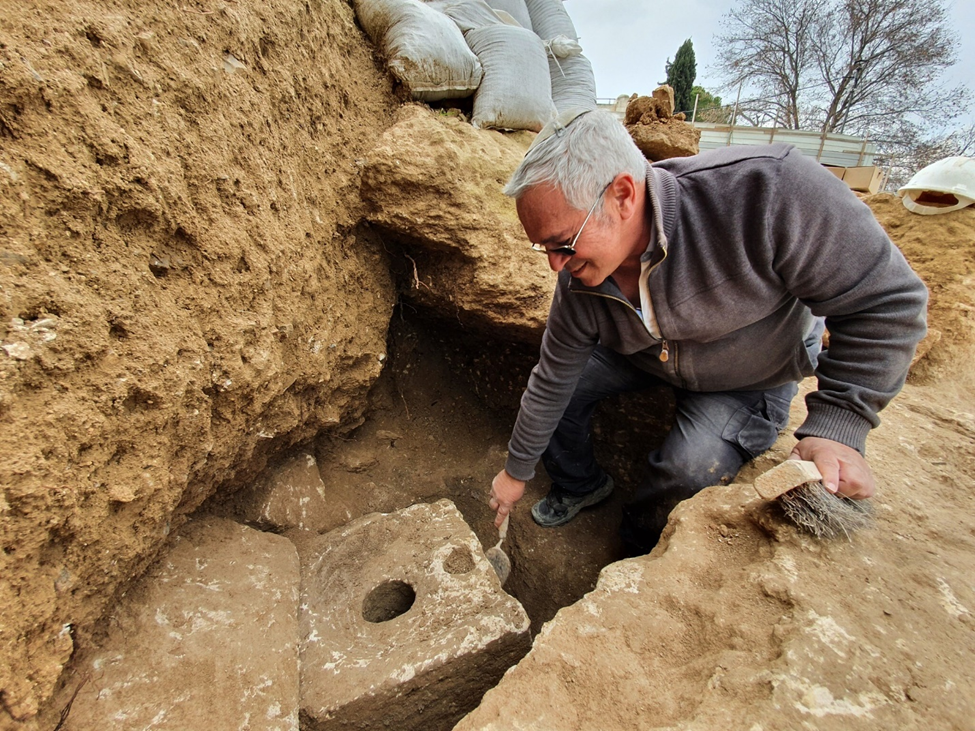
The 2700-year-old toilette may have belonged to one of the Biblical kings such as Hezekiah or Josiah. Photo Credit: Israel Antiquities Authority (Yoli Schwartz)
Archeologists excavating the ruins of a Biblical era Royal palace were stunned when they found an (extremely rare) item which illustrated the immense wealth of its ancient owner, a private bathroom. Inside, a carved limestone toilette was found with a hole in the center, positioned over a deep septic tank. Evidence was also unearthed that a luscious garden with fruit trees and other plants surrounded the toilette (although unfathomable to westerners today, toilettes were such a status of wealth, that making its surroundings beautiful made sense). This is all the more astounding when one considers that even today (according to UNICEF) 60% of the world’s population does not have access to proper toilet facilities.
6) Second Synagogue from 2nd Temple period era in Migdal (Magdala)
View of the modern town of Migdal (in blue) and its ancient location (in red) where a rare Second Temple era synagogue was unearthed. Credit: Shutterstock
Over the years during excavations of ancient Jewish settlements that existed in Israel post-Second Temple (70 CE and onwards) many, many synagogues have been discovered (several a must see for tourists). Synagogues from the Second Temple period however, are extremely rare and only 7 have ever been found (including at Masada, Herodium, Etri, Gamla, Modiin, Kiryat Sefer and Migdal (Magdala)). Despite the plethora of ancient Jewish texts stating that synagogues were a fact of life even when the Temple stood, many modern-day (secular) archeologists overlooked these sources. They assumed that when the Temple stood, synagogues didn’t play a large role in daily life, being that very few synagogues from this period were found.
In 2021, during the widening of highway 90 (Israel’s longest highway) a second temple era synagogue was found in Magdala, making this the first time that two synagogues from this period were found in the same town (the first was found in 2009. I highly recommend anyone visiting Israel to explore this awesome site). The fact that they were a mere 200 meters from each other (one in a residential area, the other industrial) is now making several academics hypothesize that synagogues were indeed an important part of the social fabric at the time!
7) New Dead Sea Scrolls Unearthed (Judean Desert)
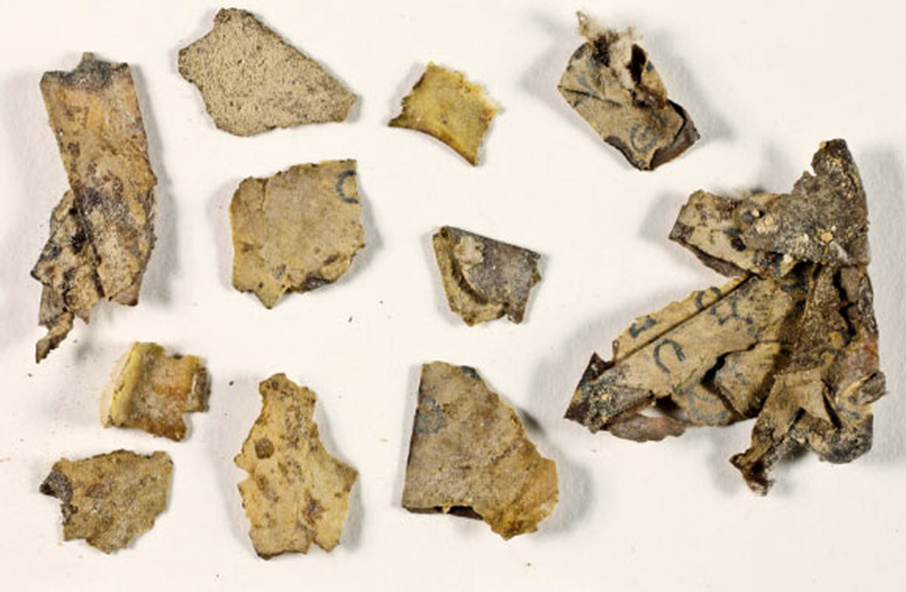
The first “new” Dead Sea Scrolls discovered since 1956 were Biblical verses from the Book of Zechariah and Nahum. These scrolls were written in Greek. Photo Credit: Shai Halevi, Israel Antiquities Authority.
Since the Dead Sea scrolls were discovered in 1947, it can be argued that no other archeological findings have captured the public imagination quite like these ones. In fact, the Indiana Jones series was loosely based on a real-life adventurer named Vendyl Jones whose life work revolved around finding treasures mentioned in one of the scrolls. Between 1947 and 1956 many ancient scrolls were discovered, including the entire book of Isaiah, the oldest complete Biblical scroll ever found. While archeologists were exploring the caves of Qumran, local Bedouins were also hard at work finding scrolls to be sold for a fortune on the black market (often, official digs would uncover empty jars standing side by side with Bedouin pickaxes, with the scrolls long gone). After more than a half a century of digs failing to unearth any new scrolls, new discoveries were not expected to be made again.
Recently, excavations began in a cave at Nachal Hever (which is only accessible by rappelling 80 meters down a sheer cliff). Due to its inaccessibility to potential looters, it was hoped that new scrolls would be found. In 2021, it was announced that two scroll fragments were located. One was from Zechariah 8:16-17, and the other Nahum 1: 5-6. In addition, one of the world’s oldest woven baskets was found in near perfect condition. For more on these incredible finds, click here.
8) Biblical Era “Royal Purple” Dye (Timna Valley)
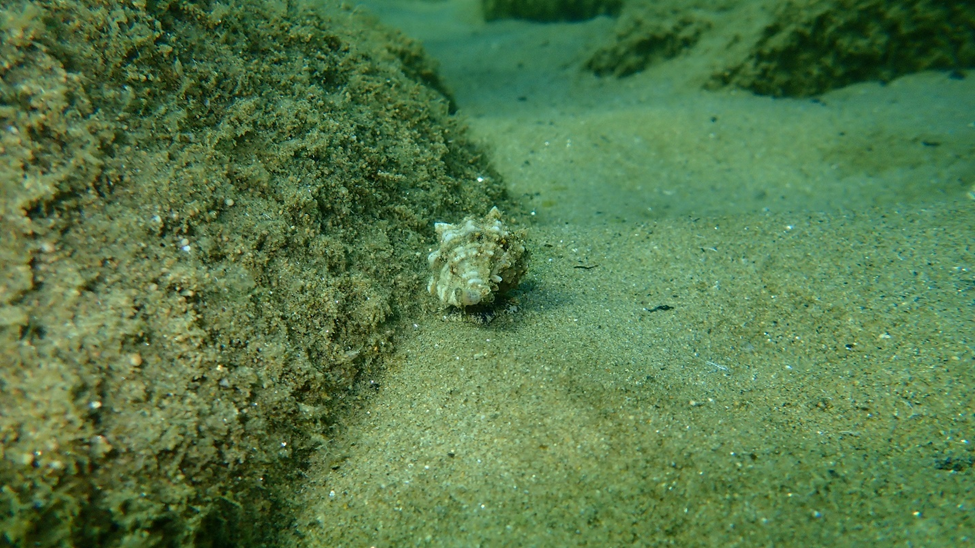
A banded Murex, one of the ocean snails used in the production of the valuable “Argaman” dye mentioned several times in the Bible. Photo Credit: Shutter Stock / Alexey Masliy
For the first time ever, the famous “Argaman” royal purple dye (mentioned several times in the Bible) has been found from the times of King David and Solomon. Prior to this, the earliest finds had only been from the Roman Period, approximately 1000 years later. Archeologists digging the famous “Slave Hill” in the Timna Valley (near Eilat) came across three textile scraps with the dye that only the wealthiest could afford (considerably more valuable than gold). Indeed, its Biblical references are usually used in connection with royalty and nobility (see Song of Songs 3:10, Proverbs 31:22, Esther 1:6, and Ezekiel 27:7). This dye was also used to dye curtains in the Tabernacle (see Exodus 25-27).
The purple dye is pigment from the mucus of three species of Murex snails found in the Mediterranean Sea. Archeologists believe that the discovery was made possible due to the dry desert heat in the arid Timna Valley.
9) Inscription of well-known Biblical Prophet (Judean Lowlands)
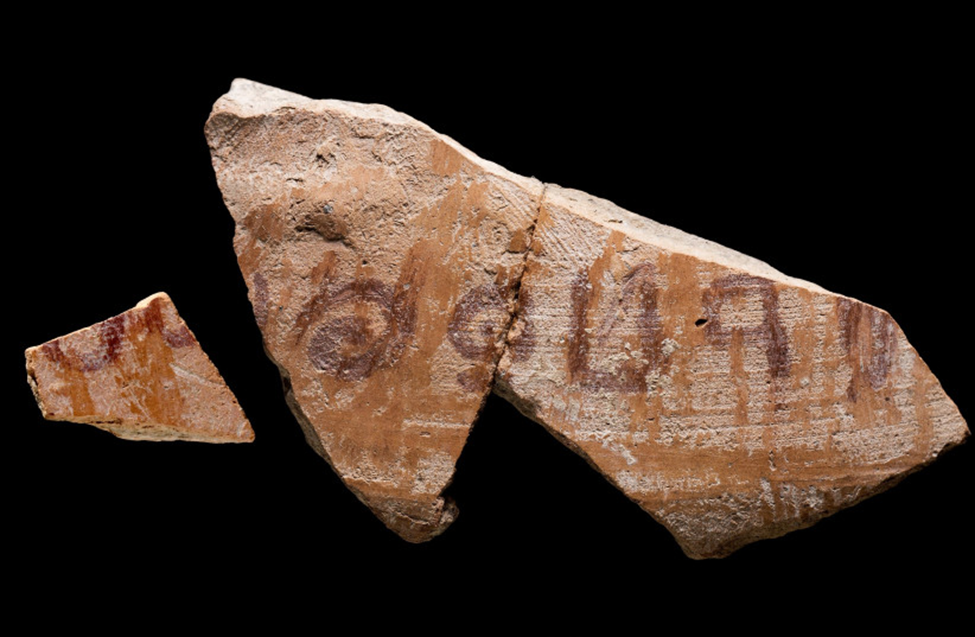
The 3100-year-old inscription was written on a jug in ink, using ancient Canaanite letters. Photo Credit: DAFNA GAZIT/ISRAEL ANTIQUITIES AUTHORITY
Even in Israel where archeologically significant finds are common, ancient inscriptions from the times of the biblical Judges are exceedingly rare. Recent excavations however, unearthed a name belonging to an important Biblical hero (and prophet).
On a jar more than 3 millennia old, the name “Jerubbaal” was inscribed, another name for the Biblical judge Gideon (it was common for ancient Israelites to have more than one name) who led the Israelites for 40 years and gave them quiet from their enemies (see Judges 7:1 and 8:28).
The million-dollar question is, was this “Jerubbaal” indeed Gideon? Obviously, no one can say with absolute certainty, but archeologists seem convinced that it is a very distinct possibility. Except for in the Bible, “Jerubbaal” has never been found anywhere until this discovery, suggesting that it was an uncommon name. It is also dated from around the time of Judges when Gideon led Israel. For more on this fabulous find, click here.
10) Evidence of Biblical Earthquake Discovered in Jerusalem (City of David)
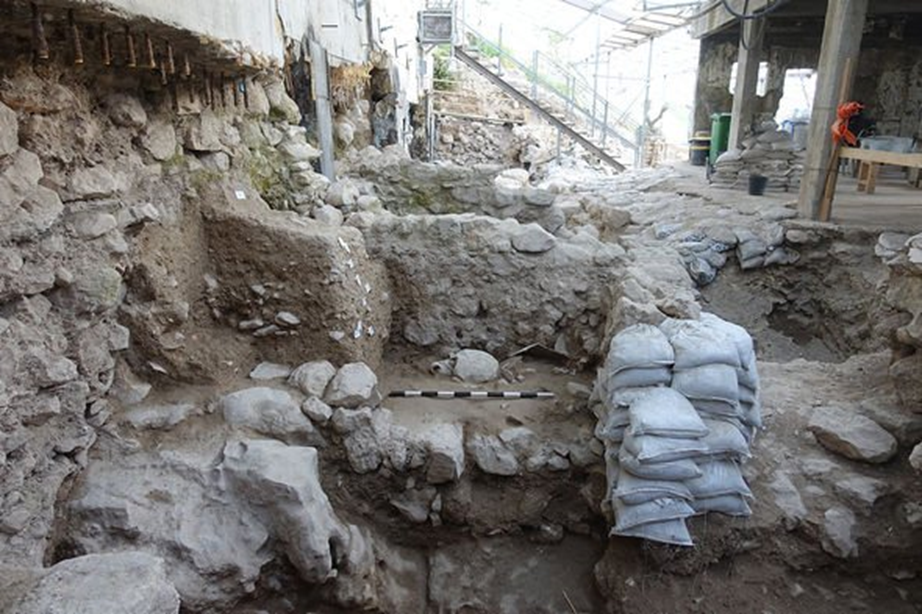
Recent digs in Jerusalem’s City of David uncovered an 8th century BCE destruction layer, caused by an earthquake mentioned in the Bible. Photo Credit: Joe Uziel, Israel Antiquities Authority
For the first time ever, archeological remains of a catastrophic earthquake mentioned in the Bible were discovered in Jerusalem.
An 8th century BCE destruction layer was unearthed with a smashed building, and a row of shattered vessels. While destruction layers have been found in Jerusalem, especially in connection with the Babylonian destruction of Jerusalem in 422 BCE (some historians say 586 BCE) all of them had burn marks, which suggested destruction by fire. This one had only collapsed walls, suggesting that it was not deliberate, but rather caused by natural forces. Archeologists were stunned and decided to consult the Bible to see if such an event was mentioned. They soon found references to a massive earthquake mentioned in both Amos 1:1 and Zechariah 14:5 as having taken place during the reign of King Uzziah (indeed, the destroyed building is dated to that period). For more on this incredible discovery, click here.
Nosson Shulmanis a journalist and Licensed Tour Guide in Israel specializing in Biblical tours. To allow tourists to experience Israel during the Corona era, he created the new hit Israel tour video series which brings Israel to the home of viewers by simulating actual tours. To check out his free sneak preview tour videos, click here.To view sample tour itineraries or to inquire about private tour opportunities with a personalized itinerary on your next trip to Israel, click here.
“And Solomon built Gezer and the lower Beth-horon. And Baalath and Tadmor in the desert in the land. (1 Kings: 9: 17-18)”
“And the southern side is from Tamar until the water of Meriboth Kadesh to the stream [that falls] into the Great Sea; this is the southern side. (Ezekiel: 47: 19)”
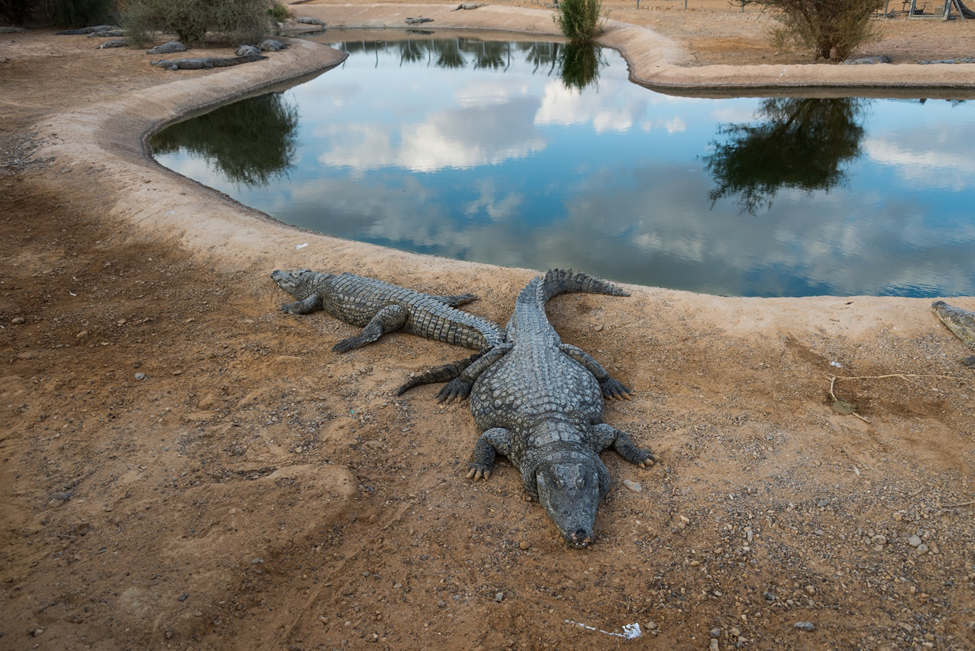
Today, we are visiting a fascinating biblical site with well-preserved ruins from various time periods. Biblical Tadmor (aka Tamar) is an incredible site, in a region which seldom sees visitors. Even amongst Israelis, this region is usually just known as an area to pass through to get to Eilat. There is, however, much to do in this area and those who make the effort to visit Biblical Tamar are rarely disappointed. As a bonus, Israel’s oldest tree is located here, and there is also a crocodile farm!
The Jujube tree of Hatzeva is believed to be well over 1000 years (some say it may be close to 2000 years). Photo Credit: Ariel Palmon and Ronly Konwieser –Creative Commons Attribution 3.0
Nile Crocodiles are bred at this location Photo Credit: Shutterstock
Biblical Tamar is next to Ein Hatzeva (with a population of 50 residents). Ein Hatzeva is a town located in the Aravah (in Israel’s deep south) which is an extreme desert, having only about an inch of rain per year. The land mass of this desert is huge (making up a whopping 17% of Israel’s total land mass) yet sparsely populated (around 7000 people or 0.00077% of its population). Even so, the region is an agricultural powerhouse (for example 85% of Israel’s peppers are grown here) due to Israel’s high-tech agricultural methods and state-of-the-art greenhouses.
Homes in the town of Ein Hatzeva, a small town of about 50 people.
The first to build here was King Solomon (see 1 Kings 9:17) who built a fortified settlement. How could people survive in an area with almost no rain? Until recently, this town was an oasis with a large freshwater spring (which no longer can be seen because the water is continuously channeled for agricultural use in the surrounding towns). Strategically, Tamar sat on the crossroads of two important routes. One of them (today’s route 227) connected the Kingdom of Edom (who were potential invaders) and Israel’s Negev desert to important coastal cities like Gaza. The other guarded the route (today’s highway 90) from the North and Center until biblical Etzion-Geber and its twin city Elath (today’s Eilat) which was an important port city for trade (see 1 Kings 10:22) and a naval base (see 1 Kings 9:26).
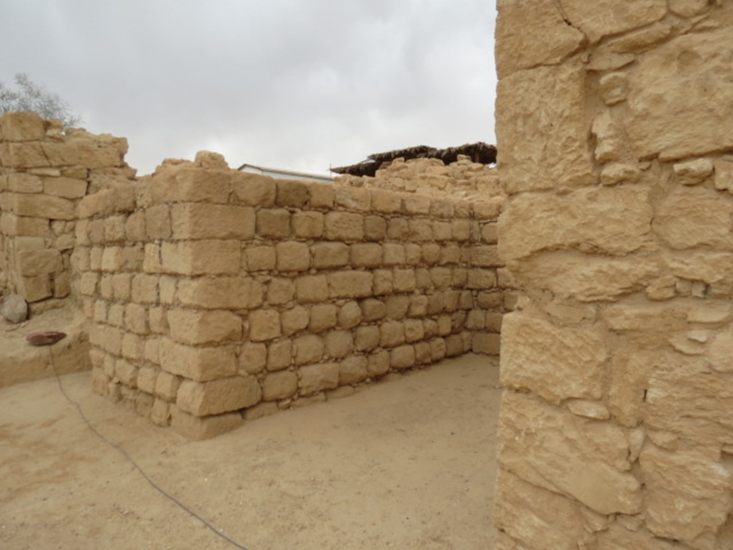
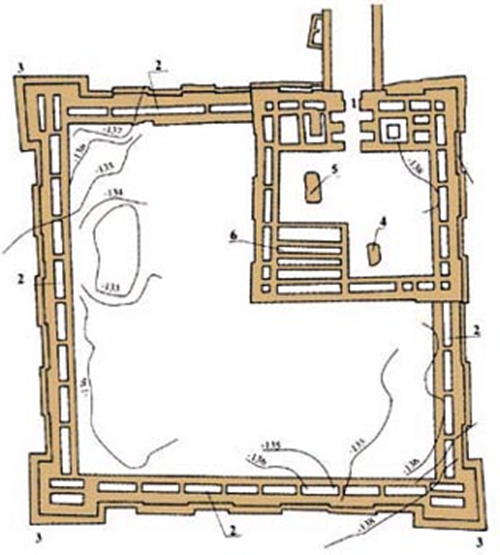
The originally Solomonic fortress was tiny (see inside red circle). After his reign, one of the Judean Kings built a much larger fortress (the pristine walls seen in the background) and used Solomon’s fortress within the structure as a partial foundation. Photo credit: Bukvoed – CC BY 3.0
Within a few decades Solomon’s fortress was considered inadequate to serve its purpose, and a new, larger (50 x 50 meters) fortress was built. A few years later, an even larger fortress was built (100 X 100) which incorporated the (50 x 50) fortress into the structure, turning it into a fortress within a fortress. It was used as a storage room and silo, packed with lots of food in case of siege (even if most of the city were to be conquered, the inner fortress represented a defensive “second chance”).
The biblical fortress after it was enlarged (notice the older fortress on the righthand top) which was incorporated into the larger structure. Photo Credit: MFA of Israel
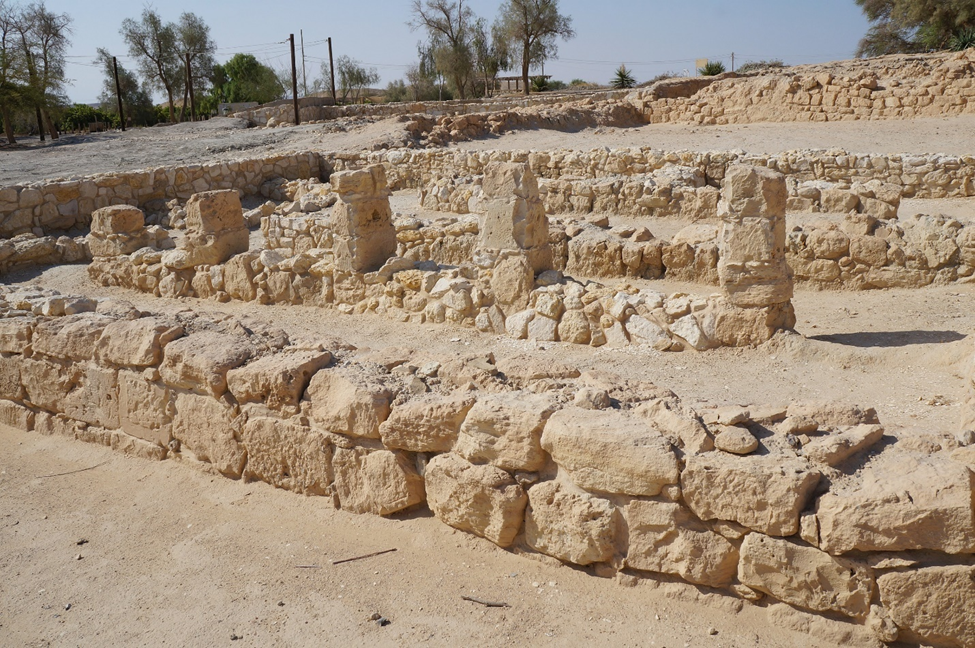
One of the largest and most impressive from this era, the fortress was surrounded by mighty walls, (about 3 meters thick with dirt packed in between them) three protruding towers, and a powerful 4 chambered gate. As it continued to be on the main road from Edom (and Arabia) to Gaza’s port, this city became a way station for travelling traders of valuable goods. Who built this amazing structure? There are four possibilities:
King Jehoshaphat who unsuccessfully attempted to rebuild commercial links with the city (see 1 Kings 22:49-50)
King Amaziah who fought the Edomites (see 2 Kings 14)
King Uzziah (son of Amaziah) who built up Elath (Eilat) and also “Towers in the Desert (see 2 Chronicles:26)”
King Amaziah who built the first (50 x 50 meters) fortress, while his son Uzziah was responsible for expanding it to 100 x 100 meters.
In the days of King Uzziah, a major earthquake caused severe damage to the city (see Amos 1:1 and Zechariah 14:5. For more on this major event and recent findings connected to it, click here). Afterwards, it was rebuilt considerably smaller than before. This fortress was destroyed by Assyrian King Sennaherib during the days of the righteous King Hezekiah, although ultimately G-d performed miracles and Judah was saved from the Assyrians (see 2 Kings 19 and 2 Chronicles: 32).
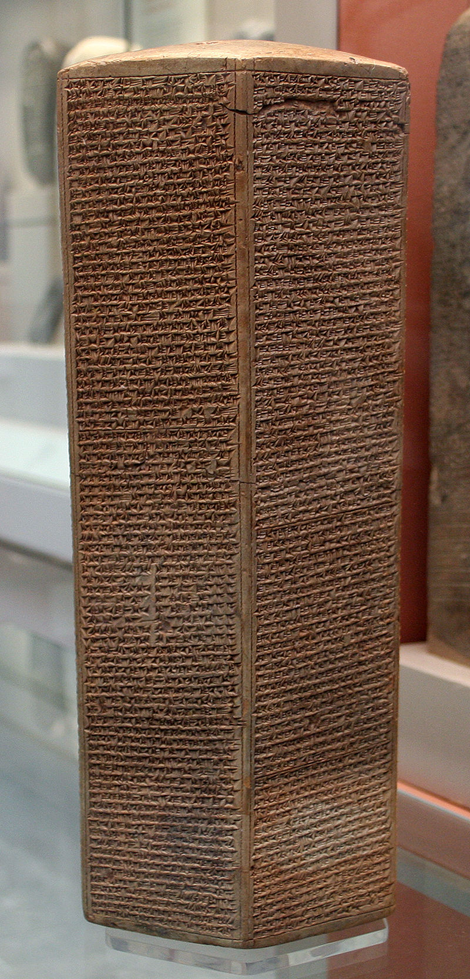
Today the Sennacherib Prism (found in his ancient palace), where he explains his loss to the Jews, is housed in the famous British Museum.
Although the city remained destroyed, an open-air Edomite cultic site emerged here (this was close to Edom and merchants from that nation would stop here on route to Gaza, using it as a rest stop). During excavations, Archeologists discovered smashed Edomite idols and icons, believed to have been destroyed by the pious King Josiah during his campaign to eradicate temples and objects of idol worship throughout Israel (see 2 Kings: 23).
This Edomite cultic site was destroyed by King Josiah during his campaign against idol worship. Photo Credit: Shutterstock
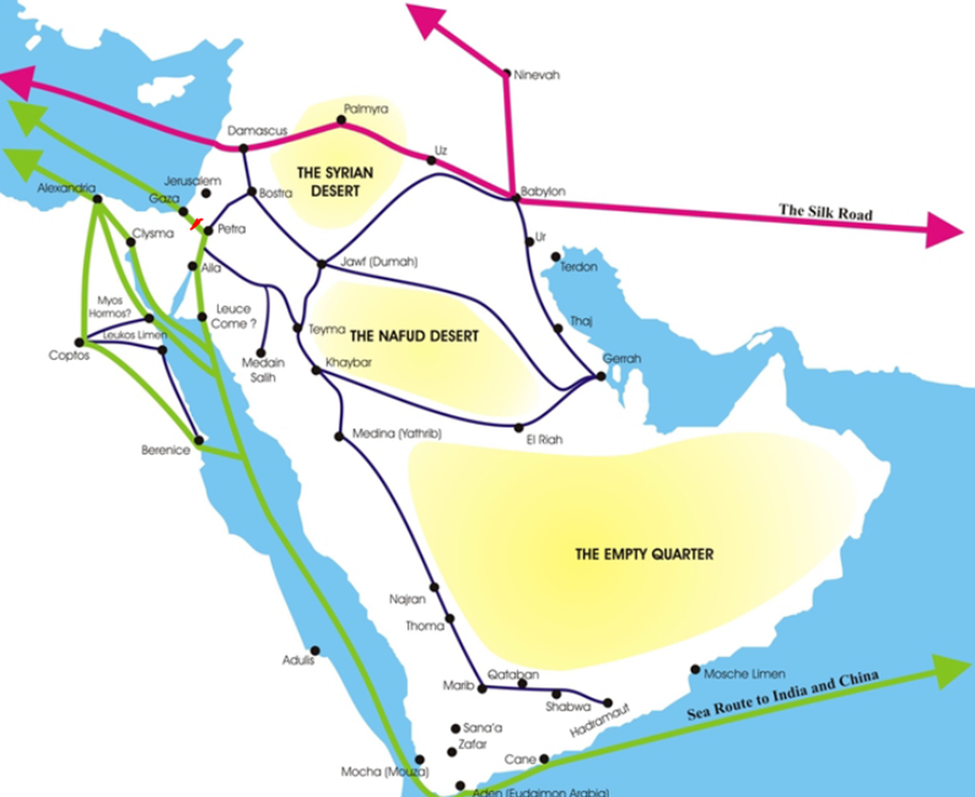
For the next couple of centuries, the semi-nomadic (and super wealthy) Nabateans (who famously built Petra as their capital city) used this site as a way station. The story of the Nabateans is one of the most fascinating in history. They originated from the deserts of Arabia and Yemen as nomads, trading in valuable spices and perfumes which they brought to the Port in Gaza. They then exported them to Europe, where they were in high demand among the wealthy. Throughout most of history venturing deep into the desert was dangerous, as water was almost non-existent. Desert life, however, was all the nomadic Nabateans knew and they became adept at finding natural water sources (sometimes underground) and building structures that collected and stored almost every drop of the little rainfall that fell. The fastest way to go from Yemen to Gaza was in a straight line (which passed through the inhabitable Arabian deserts). However, throughout most of history traders had to go the long way from Yemen to Iraq, then Southern Turkey to Syria, and then on to Israel. This obviously took a long time but to go through the desert would have been a death sentence. The Nabateans, however, could take the desert shortcut which became known as the Spice Route. To go even faster, they placed inns throughout the spice route at certain intervals (usually at a distance equivalent to 12 hours of walking). They would then pass on the goods to another team who would continue the journey, while the original transporters would return home. This system proved to be very effective and unprecedentedly lucrative (they yielded a profit of 16 times what they paid for it. This wealth allowed them to build cities like Petra). During the Nabatean period, Tamar was one of these inns.
Map of the Nabatean spice route, which made them fabulously wealthy. The red marker is added to show the approximate location of Tamar on the route. Photo Credit: Gibson’s book: Qur’anic Geography- Creative CommonsAttribution-Share Alike 4.0 International
Towards the end of the 1st century CE, the Romans (who controlled most of Judea, but not Arabia) wanted to take control of the Nabatean lands, in order to be able to tax this lucrative trade. Rather than fight with the Nabateans (who unlike the Romans could just run back to the desert) the Romans went to the Nabatean King Rabbel II Soter and told him that they could remain independent during his lifetime, but that upon his death, his kingdom would be annexed to the Roman Empire. Upon his death in 106 CE, the Romans annexed the territory and turned it into the Roman province of Arabia. As this was the frontier of the Roman Empire (and to protect the profitable spice trade which passed through here) they built a new and stronger fortress on top of the Nabatean one.
During the second half of the 3rd century (probably in the days of the Roman Emperor Diocletian) the Romans greatly expanded the fortress with strong walls and 4 protruding towers.
Outside of the fortress, a caravanserai (inn) for travelers was built. In addition, an impressive bathhouse was unearthed here. Why was such a large bathhouse needed for a small village in the desert? Because bathhouses were a major component of Roman culture, most towns (no matter how small) had to have a bathhouse (similar to how in present day, most European and North American towns have at least one bar or pub).
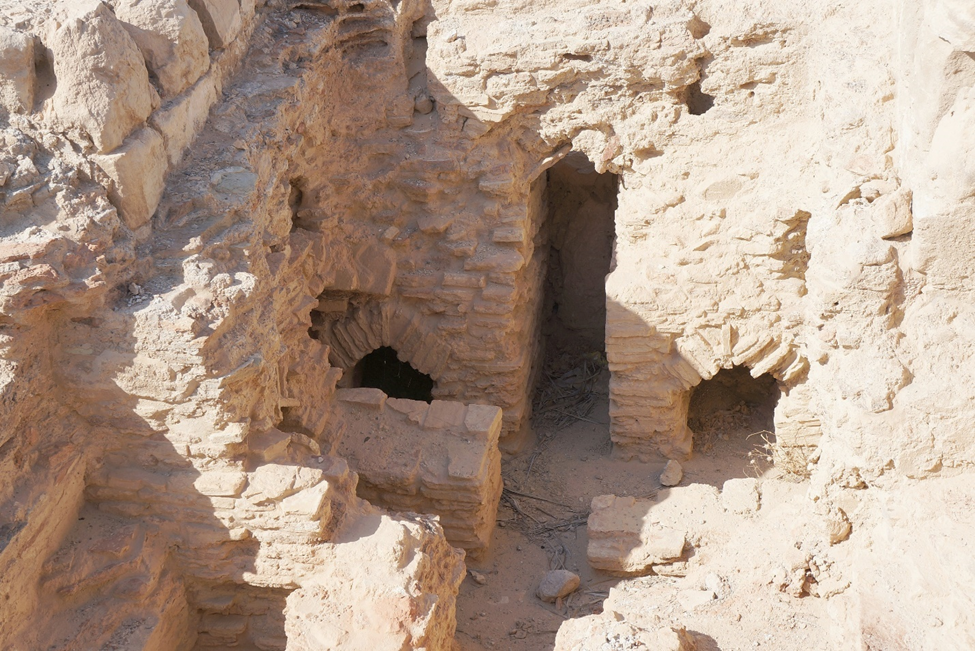
Remains of the Caldarium (hot room of the Spa). The brick arches seen in the background were stoves that heated the hot water baths above. Photo Credit: Shutterstock
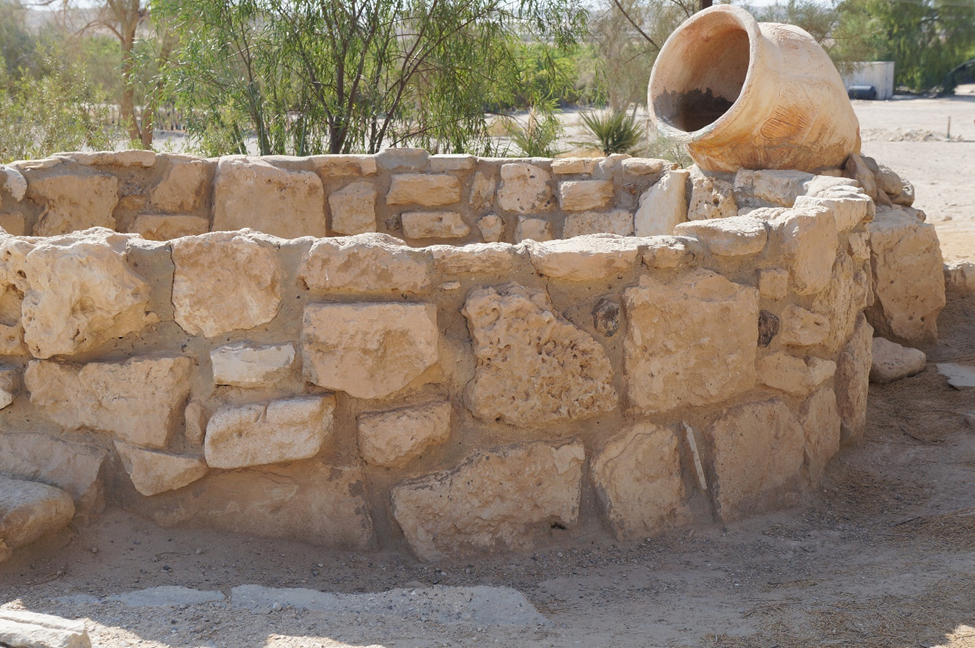
In 363 CE, the fortress was destroyed by one of Israel’s most destructive earthquakes (major cities like Petra, Sepphoris, Jericho and much of Jerusalem were destroyed as well). The fortress was never rebuilt, although the Byzantines had a small military outpost here. In the early Islamic period (circa 6th and 7th century) a small agricultural farm was located here and later abandoned. The site would remain uninhabited until the 1930s when a British Mandate police station was built for a Camel squad unit (officers here rode on camels, instead of horses). The British also built a water pump and well which can still be seen by tourists in its pristine shape.
This well was built by the British in the 1930s Photo Credit: Shutterstock
During the 1948 war of independence the IDF captured the police station, and in 1960 the town of Ein Hatzeva was founded. On your next trip to Israel (and especially Eilat) I highly recommend taking the time to visit some of the great sites of the Aravah desert (of which there are many) including the beautiful ruins of Biblical Tamar!
Nosson Shulmanis a journalist and Licensed Tour Guide in Israel specializing in Biblical tours. To allow tourists to experience Israel during the Corona era, he created the new hit Israel tour video series which brings Israel to the home of viewers by simulating actual tours. To check out his free sneak preview tour videos, click here.To view sample tour itinerariesor to inquire about private tour opportunities with a personalized itinerary on your next trip to Israel,click here.
“Gather the sons of Benjamin from the midst of Jerusalem, and in Tekoa sound the shofar, and over Beth-hakerem raise a standard, for evil is visible from the north and a great calamity (Jeremiah 6:1).”
“Malkijah the son of Rechab, the prince of the district of Beth Hakkerem, repaired the Dung Gate; he built it and erected its doors, its locks, and its bolts (Nehemiah 3:14)”
The exquisite archeological remains found at Kibbutz Ramat Rachel. Archeologists have located ruins here from almost all of the different biblical eras when the city was called “Beth-HaKerem.” Photo credit: Shutterstock
Today we are visiting a wonderful treasure, right in the heart of Jerusalem. Although surrounded by Jerusalem neighborhoods on all sides, it is not officially part of the Holy City’s municipality but rather is its own independent Kibbutz. Now called Ramat Rachel, many archaeologists have concluded that this was the site of Biblical Beth-HaKerem (in Biblical times this site was a major administrative center). In addition to the beautiful archeology, the Kibbutz also has unique outdoor artwork, enchanting olive orchards, and one of the best panoramic views of Jerusalem and Bethlehem.
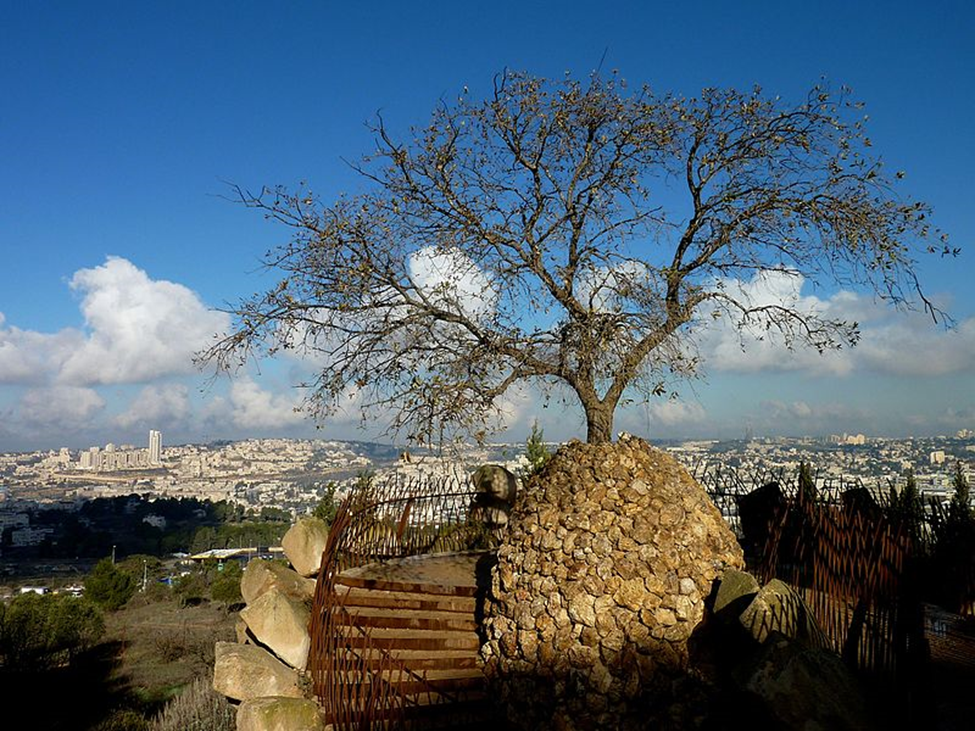
Arguably the most impressive lookout point in the Jerusalem area, one can see a majority of the city (including the Temple Mount and other old city buildings). The sculpture with the tree growing out of the rock was designed by the world-famous Israeli artist Ran Morin. It is dedicated to Yair Engel, an IDF flotilla soldier from the Kibbutz who was killed in a diving accident. Photo Credit: DYKT Mohigan – Creative CommonsAttribution 2.0 Generic
Archeologists say that the first to build here was the righteous King Hezekiah, who built a small fortress and administrative center (circa 560 BCE) at the summit of this hill for strategic reasons. Why this particular location? Firstly, it was equidistant from both Bethlehem and Jerusalem’s Old City (3-4 km’s from each) overlooking both. It also stood above the main ancient highway (today’s highway 60) which went through Judah and Samaria. During excavations 164 pottery handles were discovered, having impressions stamped with the words “L’Melech (meaning “To the King”). In the days of Hezekiah, taxes were collected in these jars all over Israel in the form of olive oil, grain, produce, and wine.
One of the “L’melech” jar handles discovered during excavations. In the days of King Hezekiah these jar handles were connected to jugs which held the taxes paid by residents of the region, including Jerusalem.
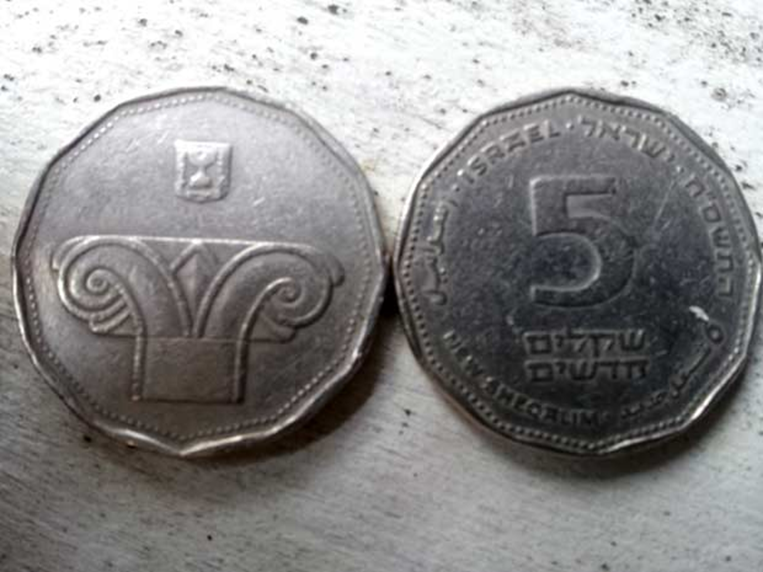
In the next phase of the hill (Circa 6th-5th century) the palace expanded into what world famous archeologist Gabi Barkai called “The finest structure ever unearthed from the First Temple period.” It was luxurious, its architectural features well ahead of its time. Eleven (11) Proto-Ionic capitals (out of 16 all together in Israel, including the City of David, Hatzor, Megiddo, and Samaria) were found here. Because these Ionic capital designs are reminiscent of the Judean Monarchy, the modern Israeli Government chose it as the design on the 5-shekel coin today.
The “tails” side of today’s 5 Shekel coin is a design of the Proto-Ionic column
The palace was surrounded by both an outer and inner casement wall (two parallel walls with some space in between them which can be filled with small stones in between to strengthen the wall from battering rams).
The inner walls which surrounded the biblical palace. The section in between, sandwiched between the blue and red (casement) walls were used as chambers. The path going through the wall was added by the Romans (circa 3rd Century CE). Photo Credit: Bukvoed- CC-BY-4.0
Once entering the walls, one entered a large ceremonial courtyard (still well preserved) paved with whitish crushed limestone. The courtyard led to all of the rooms of the palace.
Blueprints of how the palace looked.
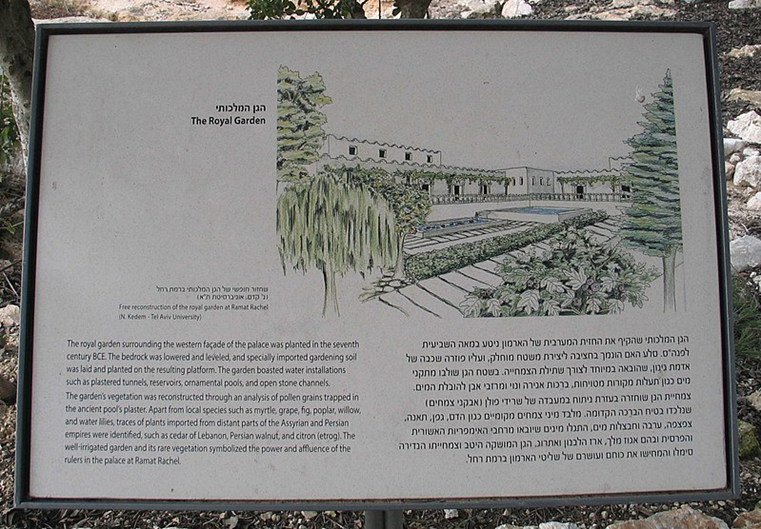
The palace had a luxurious and super advanced garden (some of the trees were imported from as far away as Persia and Lebanon). The elaborate pool and water reservoir system can still be seen today.
Artist reconstruction of the King’s garden. Photo Credit: Bukvoed- CC-BY-4.0
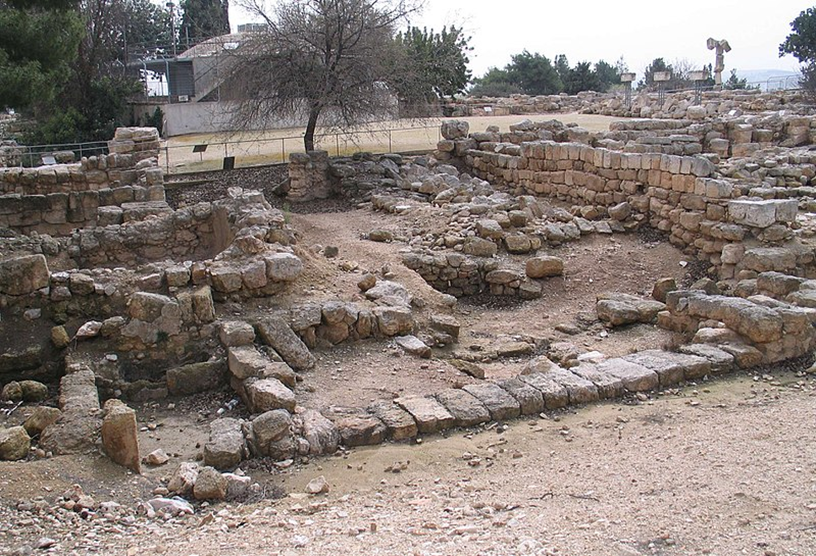
The palace rooms were built with high quality masonry. The shaped stones were built with such an exacting cut, that no mortar was needed to bind them together.
Remains of the residential section of the palace. A visitor to this site is treated to the fine masonry which has continued to hold even today! Photo Credit: Bukvoed- CC-BY-4.0
Elaborate window balustrades were also found here. Based on these findings and the period when the palace was built, the archeologist who excavated the site (Yohanan Aharoni) posited that it was built by the wicked King Jehoiakim. Jeremiah criticized the wicked King Jehoiakim by saying “Woe to him who builds his house without righteousness and his upper chambers without justice, who makes his fellowman work without wages and his hire he does not give him. Who says, “I will build myself a wide house with spacious upper chambers, and he cuts out windows for himself, and it is ceiled with cedar and painted with vermilion (Jeremiah 22:13-14)”. According to Aharoni, this criticism is referring to this palace.
One of many elaborate window balustrades found here perhaps alluded to in Jeremiah. Photo Credit: MFA of Israel
During the mid to late 5th century, the Babylonians began to take over Israel. As they approached Jerusalem, Jeremiah told the people of Beth-HaKerem (today Ramat Rachel) to raise the standard (either a flag or banner) for “evil (the Babylonians) is visible from the North and a great calamity” (see Jeremiah 6:1). According to Jewish sources, the purpose of this standard was to gather the troops and fight for their lives, and raising the banner of war from a place where it could be seen in all Jerusalem would make sense. Ultimately the Babylonians took over Israel and destroyed Beth-HaKerem and the first Temple of Jerusalem in 422 BCE (some historians say 586 BCE). The Babylonians were only in control for a few decades until the Persians took over and allowed the Jews to return and rebuild Judea and Jerusalem. Archeology shows that the Persians expanded the palace and made Beth-HaKerem an imperial administrative center (see Nehemiah 3:14 which confirms that this city continued to be the seat of an administrative district and that its residents rebuilt the Dung Gate of Jerusalem).
Artist’s Rendition of the Persian Palace. Photo Credit: MFA of Israel
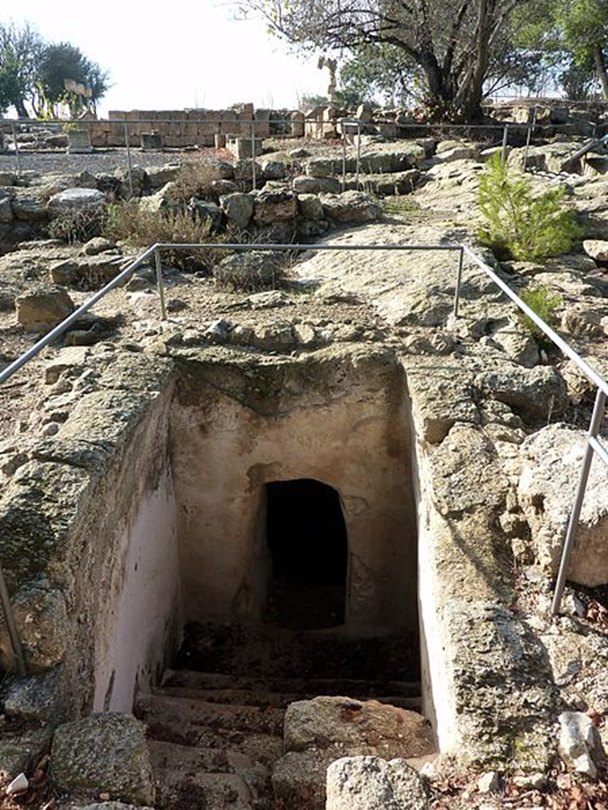
Soon after, Alexander the Great conquered the Persian empire and the Hellenist Greeks continued to use Ramat Rachel as an administrative center. In the middle of the 2nd century BCE, the Jewish Maccabees took over Israel, and at this site built many Mikvaot (ritual baths) for the masses of Jewish pilgrims who were commanded to come three times a year (Passover, Sukkot and Shavout). To ascend to the Temple, a Jew had to be ritually pure. As this was on the main road to Jerusalem from anyone coming from the South, this would be a convienient location to have them (at least 10 have been found here so far, though more likely existed).
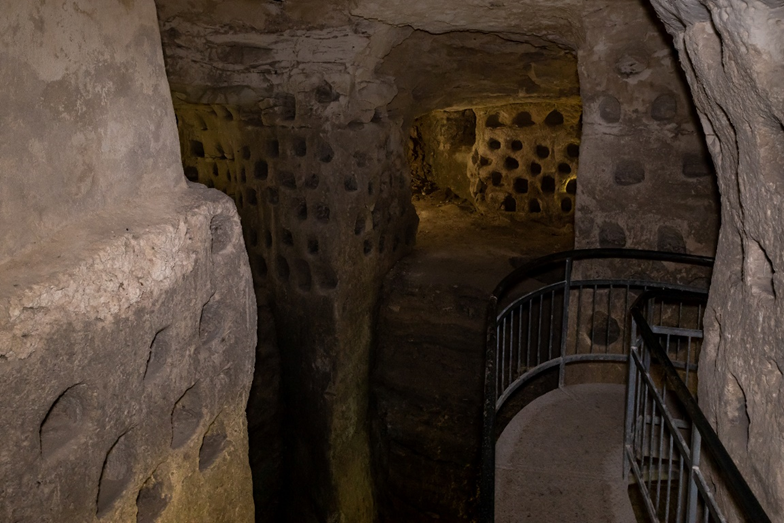
During the later Second Temple period (when the Romans first took control of the land) this site continued to be a Jewish city. A columbarium (dove cove) was unearthed here. Doves were in high demand at this time for consumption, the excellent fertilizer they produced, and for sacrifices in the Holy Temple in nearby Jerusalem.
2nd Temple period Columbarium for the raising of Doves at Tel Maresha (notice the niches where the doves lived). A similar (though smaller) one was found at Ramat Rachel from the same time period. Photo Credit: Shutterstock
During the Great Jewish Revolt, Ramat Rachel was destroyed, and the Hill was abandoned until the 3rd Century CE when the Romans built a ritzy town here. The remains of a Roman Villa and a bathhouse with mosaic floors were found here.
Remains of the Roman villa which may have belonged to a high ranking official. Photo Credit: Bukvoed- CC-BY-4.0
In Byzantine times, the city grew to an estimated population of 5000 people and hosted a large monastery.
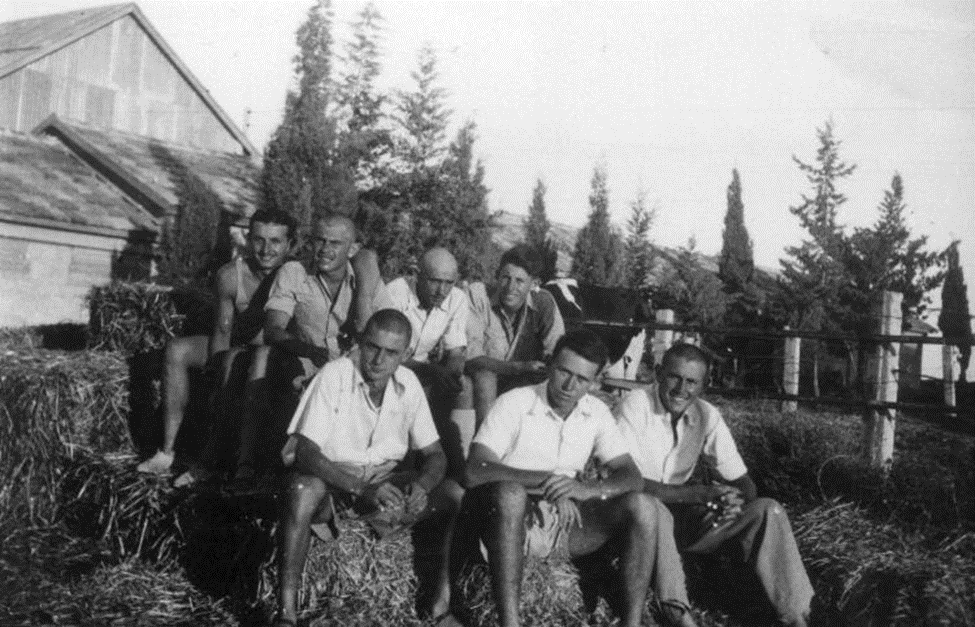
In the early Islamic period (circa 7th and early 8th century) the city began to dwindle in importance, until was all but abandoned. It would remain so for more than a millennium, until 1926 when a group of Jewish pioneers came to this deserted land and formed a Kibbutz. The next year, Menachem Ussishkin (one of the most prominent early Zionists) visited here and saw the Tomb of Rachel in the distance (for more on that tomb, click here), calling it Ramat Rachel (which literally translated means the Heights of Rachel). In the summer of 1929, the Arabs infamously rioted against the Jewish population nationwide, killing scores of Jews (67 in Hebron alone). All of the Ramat Rachel homes were burned to the ground, and a Jewish resident was killed. They returned the next year and rebuilt their homes.
Residents of Kibbutz Ramat Rachel pose for a picture in 1944.
Kibbutz Ramat Rachel was the scene of some of the fiercest and most important battles in the 1948 War of Independence when the town switched hands 6 times in a 4 day period (May 21-24). Control here was important because this hill was standing in the way between the Egyptians advancing from the South and the Jordanians coming from the East. The Jordanians met with their Egyptian allies at this spot and rather than fighting together as a cohesive unit, they bickered over who would ultimately control this hill. This infighting would cost them dearly in a matter of days. The women and children were evacuated from the Kibbutz and on May 21, this site was poorly defended by the Jews (about 100 lightly armed locals, 40 Irgun fighters and a few Hagana fighters) while the Arabs had the newest and best weapons and advanced artillery. The fighters asked to be evacuated but Prime Minister David Ben Gurion refused, saying that this hill was all that stood in the way of Jerusalem. After heavy fighting, the Egyptians won and raised their flags in victory (this was the furthest north the Egyptians would ever get). The next night, the Jewish fighters returned and after more heavy fighting, they miraculously recaptured the hill. The next morning, the Egyptians returned and re-captured the hill, though in battles that night, the Jews recaptured the hill. The next morning, Egypt captured the hill for the last time. That night, the Palmach (the elite Hagana strike force unit) entered and recaptured the town, although by now, most of the kibbutz had been destroyed. As a result, the Egyptians gave up on Jerusalem and the Kibbutz members rebuilt their homes. All together, 20 Jews died defending this strategic location while the Arabs are believed to have lost more than 100 fighters. Although the Kibbutz was now firmly in Israel’s hands, the next hill over was taken over by Jordan who built a massive base on this hill called Mar Elias and would often shoot at civilians at Ramat Rachel. In 1956, a major archeological conference was held here and (prior to the many trees here that now exist) the Jordanians had a clear view of the gathering and opened fire, killing 4 civillians and injuring 16 more.
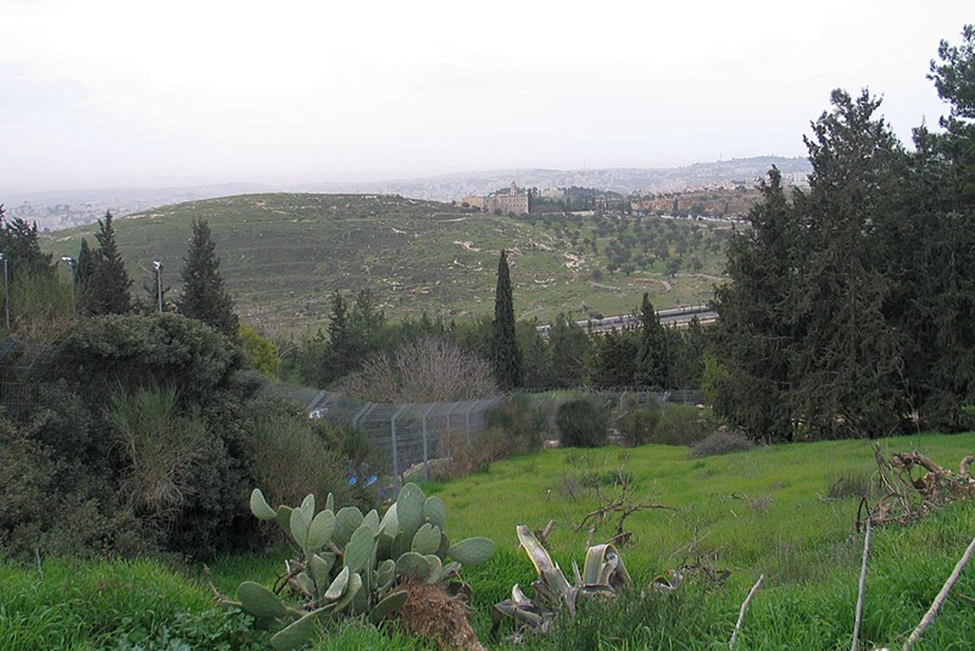
Mar Elias as seen from the Kibbutz. The road in the valley served as the border between Israel and Jordan between 1948-67 (i.e. the infamous “Greenline” is between them). Photo Credit: Bukvoed- CC-BY-4.0
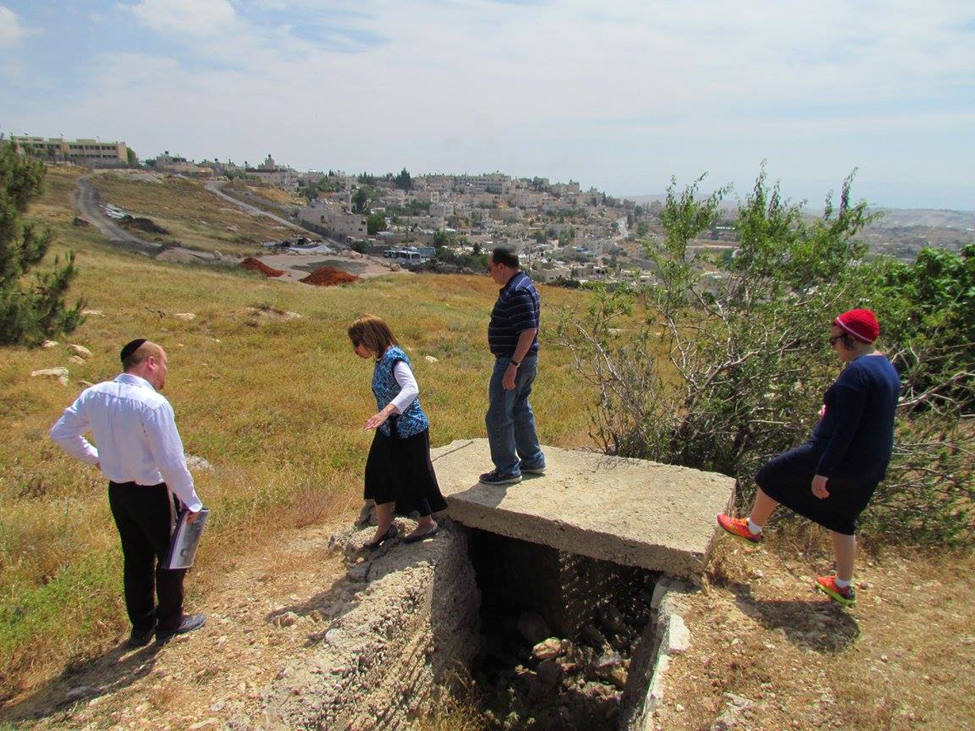
Since this was the border, Israel heavily fortified the hill overlooking Mar Elias. The bunkers and trenches can still be seen by tourists.
In this picture, I am giving a tour of Israel’s (1948-1967 border) fortifications.
The Kibbutz grew produce and fruit here but by the 1980s, like many kibbutzim around the country at this time, they struggled financially and were one of the poorest in the country. In the 1990s they sold 20 percent of their land to developers, allowing new Jewish neighborhoods to be built (which today are very expensive). This turned the Kibbutz into perhaps the richest in the country. The Kibbutz now operates a widely successful hotel (where I have personally stayed) a convention hall and is also a popular wedding venue. They also own a sports center and large pool, and can be rented out for events. Organic crops are now grown (many of which are used to make liqueurs) and they even produce high-tech agricultural products, widely used around the world.
The Olive orchard of the Kibbutz is a beautiful sight to behold, especially at sundown. Photo Credit: Shutterstock
As the Kibbutz is now so affluent, in 2002 they developed the beautiful archeological park with their own funds (they were one of the country’s first private institutions to do so without subsequently charging an entry fee). The Kibbutz (still collectively owned) is centrally located, waiting for you to visit on your next trip to Israel!
Nosson Shulmanis a journalist and Licensed Tour Guide in Israel specializing in Biblical tours. To allow tourists to experience Israel during the Corona era, he created the new hit Israel tour video series which brings Israel to the home of viewers by simulating actual tours. To check out his free sneak preview tour videos, click here.To view sample tour itineraries or to inquire about private tour opportunities with a personalized itinerary on your next trip to Israel, click here.
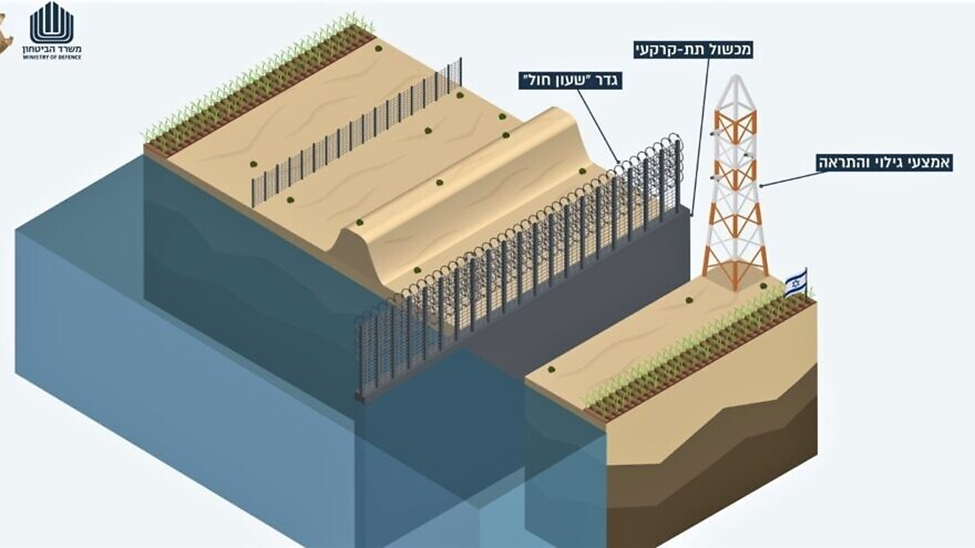
The new IDF security barrier has many layers of protection (both above ground and deep below) including sensors, cameras, high fences, and walls. Photo Credit: Israeli Ministry of Defense
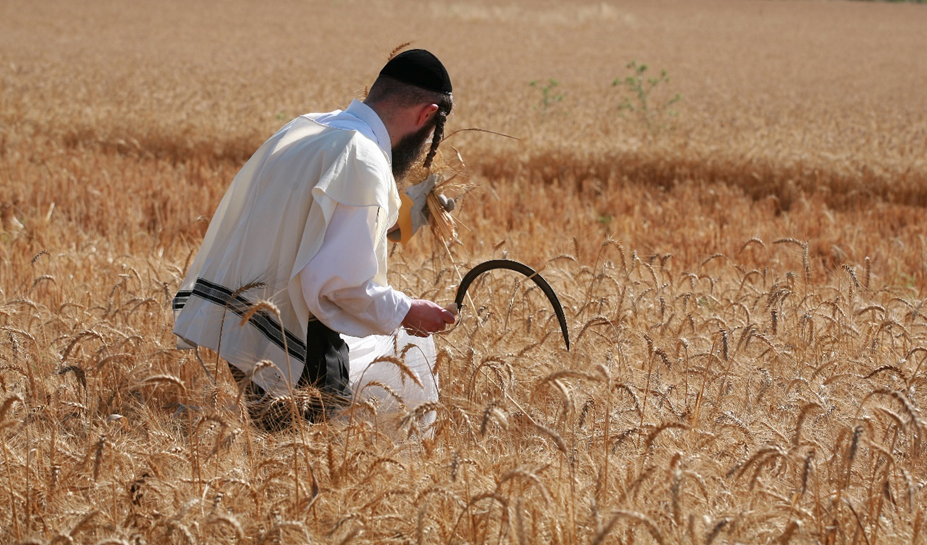
During the summer of 2014 during the Gaza war, a great miracle occurred! Thirteen heavily armed terrorists entered a secret tunnel (that they dug themselves) in Gaza, which led across the border into Israeli-controlled territory. The tunnel led to a wheat field in Kibbutz Sufa (carefully selected because its thick crops made it an ideal place to hide out of sight). At the same time, Rosh Hashana (the Jewish new year) was soon to commence, which would be the start of the Shmitta year. The Shmitta is the biblical commandment (every 7 years) not to sow the fields or plant crops anywhere in Israel for a year, letting the land rest. That meant that the grain required for the Torah commandment of Matzah (for the Jews of Israel) needed to be harvested in the summer (for two years’ worth). For religious and practical reasons, a certain type of field was needed, extremely rare to find at this time of year. Rabbi Aharon Samet (who was responsible for the production of Matzah for much of Israel) searched the whole country for a field that fit the criteria and by Divine Providence, he finally found it at Kibbutz Sufa. Despite the war, with constant sirens and missiles landing in the area, he and his team did not hesitate to fulfill this holy commandment! The field was completely harvested, and he and his team went back to their homes. Two days later, the 13 terrorists emerged from the tunnels into the fields and were shocked to find that they were totally exposed. They were spotted by the IDF who bombed the 13 terrorists, killing them all. Throughout the war, other IDF soldiers weren’t as lucky, and many were killed by terrorists emerging from tunnels. To this day, Hamas still holds the body of one soldier (smuggled by tunnel into Gaza) and they use it as a bargaining chip. Since then, Israel has destroyed many of the tunnels, but the threat of new ones being built (or existing ones going undetected) represented a major threat to all of Israel’s citizens and needed to be neutralized. With the completion of the new, state of ark, high-tech (including deep underground) security barrier, the threat appears to have been completely removed (at least for now)!
Torah Observant Jews harvesting grain which will then be processed and turned into Matzah. Photo Credit: Shutterstock
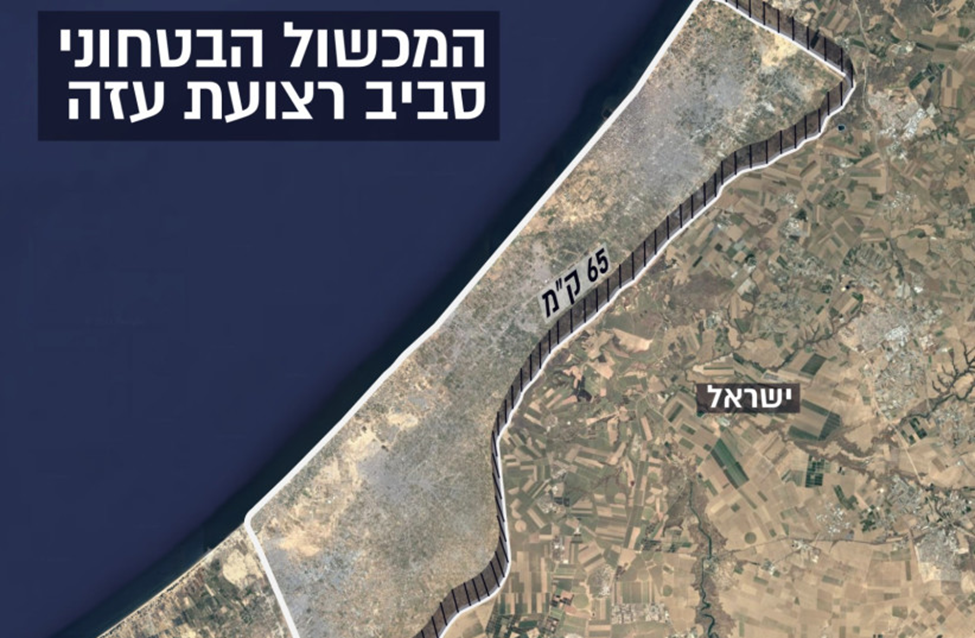
The new 40 Mile (65 KM) barrier lies along the entire Gaza border, and even extends into the sea to prevent infiltration and the digging of underwater tunnels which has been previously attempted.
The barrier now juts into the water to prevent infiltration of terrorists via the sea. Photo Credit: Israeli Ministry of Defense
The new wall includes many components such a “smart” steel fence 20 feet (6 meters) high, hundreds of cameras, radar, super sensors, remote controlled weapons systems, command, and control rooms. It also has (according to IDF Brig. Gen. Eran Ofir) the world’s only underground barrier (all reinforced concrete) which goes very deep into the ground and has advanced sensors which can detect tunnels being dug (for security reasons, the IDF has not released the depth of this wall). At a cost of 3.5 billion shekels (approximately $1.1 Billion US) the wall took 3.5 years (and 1200 workers) to build and used 140,000 tons of steel and concrete (enough to build a road from Bulgaria to Israel).
Map of new border fence with Gaza. Photo Credit: IDF SPOKESPERSON’S UNIT
The fact that cross-border tunnel infiltrations did not occur during the deadly 2021 Gaza War clearly illustrates the effectiveness of the wall (The IDF attacks on tunnels frequently mentioned in the news at that time were not cross border tunnels but rather contained within the Gaza Strip). Says General Ofir (who has led every major barrier construction project in recent years), “I can sign off on the fact that there is a big, significant system that is meant to ensure that no tunnels enter the State of Israel. There is no 100 percent sign-off on anything in life, but we believe that this underground wall gives a very good solution to this issue.” With this wall complete, Israel is looking to build a similar “smart” wall along the Lebanese border where Hezbollah previously built an extensive network of terror tunnels (with financial backing from Iran).
This wall is an enhancement from a pre-existing security barrier that existed here since 1994 and has been built upon several times over the years. Because of the existence of a wall here, during the height of the intifada in the early 2000’s (when suicide bombings were daily news) only one bomber successfully crossed the border to commit an act of terror (at the Ashdod Port in 2004). It was due to the overwhelming success of this wall in preventing the movement of would-be terrorists that Hamas came up with the idea to tunnel underneath it (a threat which this new, upgraded security barrier is meant to neutralize).
Nosson Shulmanis a journalist and Licensed Tour Guide in Israel specializing in Biblical tours. To allow tourists to experience Israel during the Corona era, he created the new hit Israel tour video series which brings Israel to the home of viewers by simulating actual tours. To check out his free sneak preview tour videos, click here.To view sample tour itineraries or to inquire about private tour opportunities with a personalized itinerary on your next trip to Israel, click here.
As reported here 2 weeks ago, Israel reopened to certain vaccinated and recovered foreign tourists (for more details, scroll down to see the original article). At that time, we reported that tourists with a third booster shot could only enter Israel if the shot had been administered within 180 days of the trip. It appears (at least for now) that a person who has received a third booster shot (from a recognized vaccine) can enter Israel, even if the third shot was administered more than 180 days before the trip.
In addition, due to the ever changing (and often confusing) rules, the Ministry of Tourism has launched an English website designed to aid tourists and travelers in entering Israel, with (supposedly) updated information on entry requirements, local corona guidelines, and documents needed in real time. To visit the site, click here.
To view the original article, scroll down. To book a tour, click here.
Disclaimer:
The author of this article is not an attorney, and this article should not be construed as legal advice or an authoritative source. This article is for informational purposes only and should never be relied upon. The author takes no responsibility for the content or accuracy of this article. It is highly recommended (and the sole responsibility) for anyone wanting to enter Israel to do their due diligence and independently verify that they are indeed qualified to enter the country, and to ensure that they have the appropriate documents to successfully do so.
ORIGINAL ARTICLE:
HUGE ANNOUNCEMENT: Israel to Allow Vaccinated and Some Recovered Foreign Tourists to Enter the Country Starting January 9!
This follows almost two years of total closure of the Jewish state to all but a select few!
Ben Gurion Airport’s departure hall sits empty in this early 2021 picture. Beginning January 9th, fully vaccinated tourists from most countries will be allowed once again to visit the Holy Land.
In mid-March 2020, Israel closed its borders to almost all foreigners and its booming tourism industry came to a screeching halt overnight with no known end date in sight. It has remained that way ever since (with the exception of several weeks in November) but there now finally appears to be some light at the end of the tunnel!
Starting Sunday January 9, foreign (vaccinated and certain recovered) tourists will finally be able to enter the country, providing they meet certain conditions. The criteria (issued by the Israeli government) are that foreign tourists must not be from a red country (as of this writing no country is any longer considered red by Israel).
Only those who have been vaccinated or are considered recovered are allowed to come into the country without a permit. Who is considered vaccinated or recovered:
Anyone who has recovered from the virus within the last 180 days and has a digital recovery certificate which must have a QR Code (so far, only recovery certificates from the EU or UK will be honored. Recovered individuals without a vaccine from other countries may not enter at this time).
Vaccinated, with either the second or third shot within 180 days (with at least 14 days having elapsed since that shot). Recognized vaccines include: Pfizer, Moderna, AstraZeneca, Sinovak, Sinopharm, and Covishield. A Vaccine certificate must be presented.
Vaccinated, with a single Johnson & Johnson shot within the last 180 days (with at least 14 days having elapsed since that shot). A Vaccine certificate must be presented.
Vaccinated with either the second or third shot of Sputnik V within 180 days (with at least 14 days having elapsed since that shot). For this vaccine, a serological test in Israel is necessary.
Tourists coming to Israel will be required to present a negative PCR within 72 hours of the flight (another one will be administered for a fee at Ben Gurion airport upon arrival. One can schedule a test beforehand at https://testngo.femi.com/en/sign-in ). All foreign tourists will be required to either quarantine for 24 hours or receive a negative PCR test result (whichever comes first). Tourists will be exempt from this requirement if they have a positive PCR test to show which was taken between 11 days to 3 months before their flight).
For borderline cases and questions, travelers are encouraged to contact the Health Ministry hotline at +972-8-624-1010 (English menu is available).
As tourists will now be allowed to enter the country, it is hoped that Israel will continue once again to be a major tourist destination for people all over the world looking for their unique, one-of-a kind experience! To book a tour, click here.
Disclaimer:
The author of this article is not an attorney, and this article should not be construed as legal advice or an authoritative source. This article is for informational purposes only and should never be relied upon. The author takes no responsibility for the content or accuracy of this article. It is highly recommended (and the sole responsibility) for anyone wanting to enter Israel to do their due diligence and independently verify that they are indeed qualified to enter the country, and to ensure that they have the appropriate documents to successfully do so.
Nosson Shulmanis a journalist and Licensed Tour Guide in Israel specializing in Biblical tours. To allow tourists to experience Israel during the Corona era, he created the new hit Israel tour video series which brings Israel to the home of viewers by simulating actual tours. To check out his free sneak preview tour videos, click here.To view sample tour itineraries or to inquire about private tour opportunities with a personalized itinerary on your next trip to Israel, click here.
































 Unique Sites of Israel Blog