Tomb of Joseph

By Nosson Shulman: Licensed Tour Guide of VIP Israel Tours Authentic Virtual Tours (click here to check out his free trailer videos)
And Jacob came safely [to] the city of Shechem, which is in the land of Canaan, when he came from Padan aram, and he encamped before the city. And he bought the part of the field where he had pitched his tent from the sons of Hamor, the father of Shechem, for a hundred kesitas. (Genesis 33: 18-22)”

And the bones of Joseph, which the children of Israel had brought up out of Egypt, they buried in Shechem, in the parcel of ground which Jacob bought from the sons of Hamor the father of Shechem, for a hundred pieces of money (Joshua 24:32)

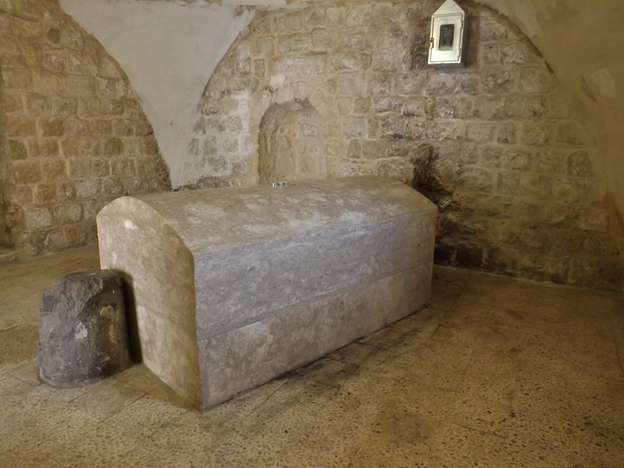
Joseph’s Tomb in Biblical Shechem
Photo Credit: “Joseph’s Tomb” by young shanahan is licensed under CC BY 2.0

Today we are visiting a site so off the beaten track, that Jews (and often Christians) can only safely visit here once a month!  Not only does the Tomb of Joseph (located in the Arab city of Nablus) have major religious, historical, and political significance, but is also mentioned explicitly many times in the Bible!

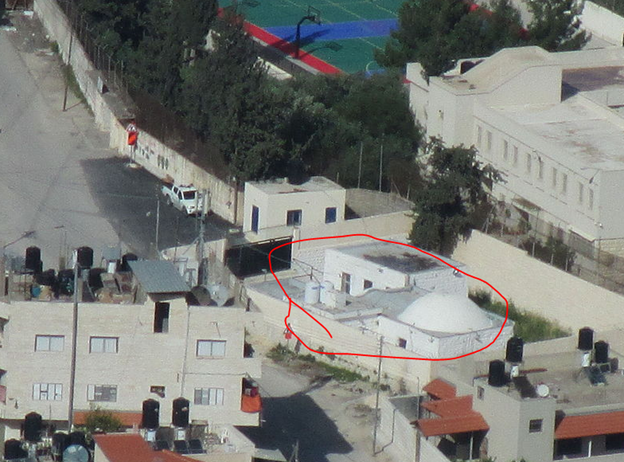
The tomb of Joseph is located in Nablus, currently under the control of the Palestinian Authority
(PA). Photo Credit: עדירל “Joseph’s Tomb” under CC Attribution-Share Alike 4.0 International

In Biblical times (and still today colloquially among Hebrew speakers) the city of Nablus was called Shechem and is one of the world’s oldest cities.  It was here where G-d first appeared to Abraham after he entered the land of Israel, telling him that that it would be given to his descendants (see Genesis 12: 6-7).

The route Abraham took from his hometown of Ur Kasdim to Israel. The first recorded place in Israel where G-d spoke to him was in Shechem.
Photo Courtesy of https://biblemapper.com/

Two generations later Jacob, who had spent 20 years in Haran (today southern Turkey) working for his father-in-law Laban, returned to Israel with his wives and children.  Along the way, he crossed the biblical Gilead Mountains and Jabbok River (today in Jordan).  (For more on these two great biblical sites, click here).  He then entered Israel, on route to Shechem (roughly today’s highway 57) .  Once there he bought a field (see Genesis 33:18-19) and on his deathbed gave it to Joseph (see Genesis 48:22).  

The likely route Jacob took to get to Shechem, after returning to Israel with his family after a 20-year absence.
Photo Courtesy of https://biblemapper.com/

On Joseph’s deathbed, he had his brothers promise that when their descendants would leave Egypt, they would take his bones with them (see Genesis 50: 24-26). According to Jewish sources, after his death the abundant material blessings that came to Egypt in the merit of the very righteous Joseph had ceased. In order to bring blessings to the Nile River (whose yearly overflow made Egypt the breadbasket of the ancient world) they put his body in an iron coffin and sank it into the Nile.

The Nile is the longest river in the world and has made Egypt a world breadbasket for Millenia. In order to bring abundant blessings to the river, Egyptian magicians sank Joseph’s coffin into the depths of the river.
Photo Credit Ewa Studio / Shutterstock

When it was time for the Children of Israel to leave Egypt, Moses went to retrieve Joseph’s bones from the river (see Exodus 13:19). According to Jewish sources, he used the divine name to bring up the coffin from the river’s depth.

When the Children of Israel crossed into Israel, they buried Joseph in the field that his father had purchased in Genesis 33 (see Joshua 24:32).   It is interesting to note, that the verses in Genesis and Joshua both mention that Jacob bought and paid for the land.  Why is that important to mention, and why did Jacob purchase something which G-d had promised him for eternity?  According to Jewish sources, there are three biblical places where the Jewish people bought the land (even though G-d had given it) so that no one should later claim that they were stolen (as many in the UN claim today):  The Cave of the Patriarchs in Hebron (for more, click here), the Temple Mount, and Joseph’s tomb.

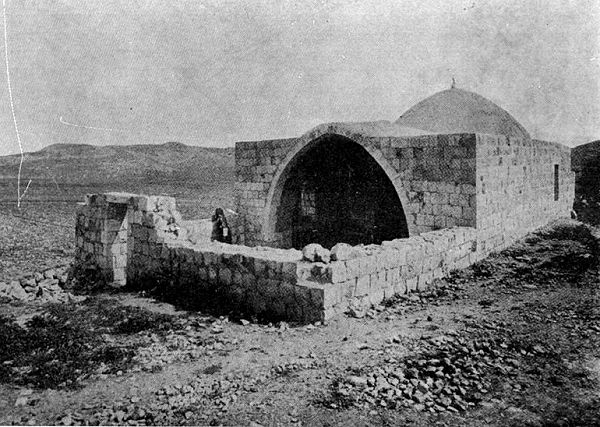
For the next few Millenia Joseph’s tomb became an important holy site, where Jews from around the world came to pray.  In 1868 the British consul in Damascus gave the money to build the domed building over the grave, which we see today.

The Tomb of Joseph (circa 1900)

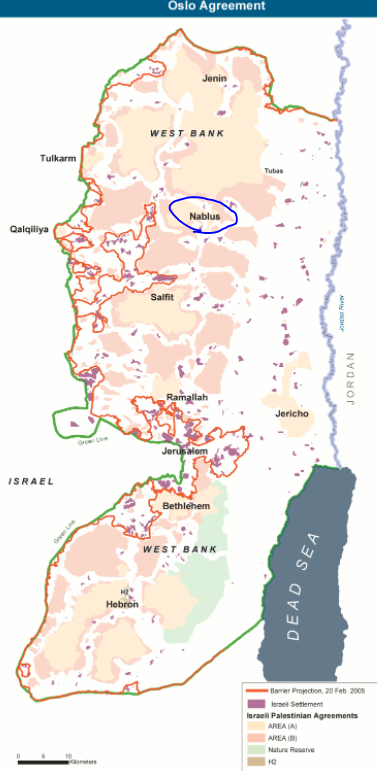
Between 1948-67 Jordan controlled Shechem, and Jews were prohibited from visiting.  After the 6-day war, the site once again became accessible to Jews, and in 1984 a full time Yeshiva (Academy of advanced Torah and Talmudic studies) opened at this site.  In 1995 Israel gave control of Nablus and its surrounding environs to the Palestinian Authority (PA), although the IDF retained control of this holy site.

Map of Judah and Samaria after the 1995 “Oslo” 2 Accords.  This is where Israel gave full or partial control of certain territories to the PA, including Nablus (see blue circle) and much of the surrounding area.

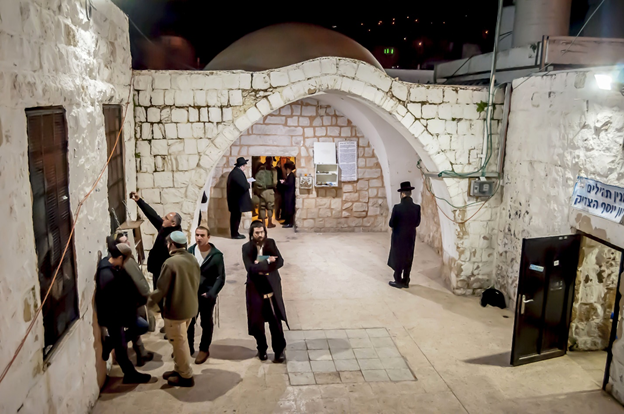
In October 2000 with the start of the intifada and major disturbances in the Nablus area, the IDF banned Israelis from visiting the site.  It was then handed it over to the PA police, where the site was immediately torched, the Yeshiva burnt down, and Jewish holy books were torn to shreds.  For the next decade, Jews continued to be banned from visiting.  Thanks to the hard work and dedication of Jewish activists (including many from the Chassidic Breslov movement) Israel began to allow Jews to return once a month, in the middle of the night, with an army escort in bullet proof buses (during this time, renovations were also done to fix much of the damaged building). The rest of the time, it is off limits.

Organized Jewish groups, in full coordination with the IDF, visit Joseph’s tomb (usually) once a month.                                 Photo Credit: Roman Yanushevsky / Shutterstock.com

The tomb of Joseph is certainly well worth the visit for anyone looking for an uplifting experience.  For those who do not have the opportunity to join an IDF-protected group, the tomb can still be safely viewed from nearby (and stunning) vistas.  That being said, it is considered dangerous for individuals and groups to enter this site without coordinating with the IDF.   In the absence of an organized IDF escort, NO ONE should enter this site.

Nosson Shulman is a journalist and Licensed Tour Guide in Israel specializing in Biblical toursTo allow tourists to experience Israel during the Corona era, he created the new hit Israel tour video series which brings Israel to the home of viewers by simulating actual tours. To check out his free sneak preview tour videos, click here. To view sample tour itineraries or to inquire about private tour opportunities with a personalized itinerary on your next trip to Israel, click here.
Nosson Shulman

AWESOME: Once Again, Israeli Wins Nobel Prize!

Professor Joshua Angrist of MIT is Co-Winner of the 2021 Nobel Prize in Economics

By Nosson Shulman: Licensed Tour Guide of VIP Israel Tours Authentic Virtual Tours (click here to check out his free trailer videos)

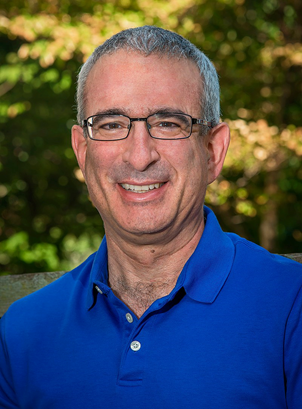
Professor Josh Angrist
Photo Credit: MIT Economics CC BY-SA 4.0

For the 13th time in history, an Israeli citizen has won the Nobel Prize, this time in Economics. Professor Josh Angrist (along with his co-winner Professor Guido Imbens) is being acknowledged for his ground-breaking research and conclusion on the effects of unintended (or natural) experiments in the labor force. In other words, his research proved that data from non-controlled, real-world experiments can show causation in the economy (this was not believed to be the case beforehand). This can assist decision makers in producing improved economic policies, based on observed cause and effect. As an example, the effects of minimum wage on the job market or the benefits/liabilities of extended compulsory education on society, in situations where randomized controlled trials are not practical or ethically possible.

Professor Angrist was born to a Jewish family in Columbus Ohio and studied economics at Oberlin College. In 1982, at the age of 22, he made Aliyah (immigrated to Israel) and served for three years in the IDF as a paratrooper. After his service, he received his MA and PHD from Princeton University and began teaching at Harvard. Later, he returned to Israel as a senior lecturer at Hebrew University. Currently, he has tenure at MIT.

The first Israeli to win a Nobel Prize was prolific author Shmuel Yosef Agnon, who won in the field of Literature in 1966. Over the next few decades, Prime Ministers Menachem Began (1978), Yitzchak Rabin (1994) and Shimon Peres (1994) would each go on to win the Nobel Peace Prize. In 2002, Daniel Kahneman became the first Israeli to win the prize in the field of Economics, as did Professor Robert Aumann in 2005. Between 2004 and 2013, six Israelis won in the field of Chemistry.

In ranking countries by Nobel laureates per capita, Israel ranks 11th of all time, beating out scientifically advanced nations like France, Germany, Canada, the US, New Zealand, and Australia (when looking at only the last 20 years, Israel ranks much higher). Looking at world Jewry as a whole (which currently makes up only 0.2% of the world’s population) 22% of all Nobel Prizes winners have been Jewish.

Nosson Shulman is a journalist and Licensed Tour Guide in Israel specializing in Biblical toursTo allow tourists to experience Israel during the Corona era, he created the new hit Israel tour video series which brings Israel to the home of viewers by simulating actual tours. To check out his free sneak preview tour videos, click here. To view sample tour itineraries or to inquire about private tour opportunities with a personalized itinerary on your next trip to Israel, click here.

Nosson Shulman

SHOCKING NEWS:  Central American Country Recognizes Jerusalem as Israel’s Capital in a Revolutionary Way!

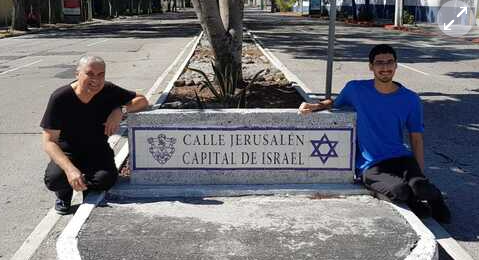
Guatemala has inaugurated streets in 27 cities with the name “Jerusalem the Capital of Israel”

By Nosson Shulman: Licensed Tour Guide of VIP Israel Tours Authentic Virtual Tours (click here to check out his free trailer videos)

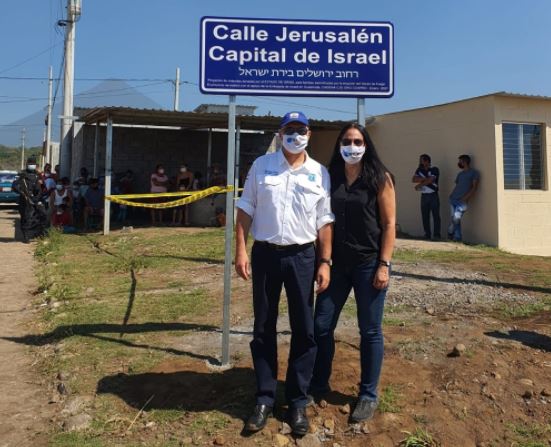
One of the 27 streets in Guatemala officially named “Jerusalem the capital of Israel Street”

There is no doubt that the people of Guatemala have developed a special relationship with Israel.  The Jewish state has played a huge role in helping the third world country develop its economy by providing humanitarian aid, disaster relief, clean water resources, agricultural training, medicine, and technological know-how.  The goodwill of the Guatemalans towards Israel is also reinforced by the fact that more than 50% of its population is Evangelical.

In turn, the Guatemalans have been a reliable friend.  In addition to being a staunch ally of the Jewish State in the UN (they vote against almost all anti-Israel resolutions), on May 16, 2018 they became only the second country to move their embassy to Jerusalem after the US (who had done so only two days prior).  Being the second country to recognize the Holy City as Israel’s rightful capital was big news in itself, but now the Guatemalans have taken it to the next level, not just merely recognizing the truth but proclaiming it loudly for all to hear!

In an unprecedented move, 27 cities in the country have officially named a street in their municipality as “Jerusalem the Capital of Israel”, including Guatemala City (the country’s capital). Matanya Cohen, Israel’s Ambassador to Guatemala, believes that by next summer, 34 cities (10% of all cities in the country) will have a street bearing this name.

While Guatemala is the first country to take this initiative, Israel’s ambassadors in several countries are hopeful others will follow in their footsteps. 

Nosson Shulman is a journalist and Licensed Tour Guide in Israel specializing in Biblical toursTo allow tourists to experience Israel during the Corona era, he created the new hit Israel tour video series which brings Israel to the home of viewers by simulating actual tours. To check out his free sneak preview tour videos, click here. To view sample tour itineraries or to inquire about private tour opportunities with a personalized itinerary on your next trip to Israel, click here.
Nosson Shulman

Breaking: Serbia to Open Trade Office in Jerusalem

This move is contrary to EU policy, which refuses to recognize the Holy City as Israel’s capital.

By Nosson Shulman: Licensed Tour Guide of VIP Israel Tours Authentic Virtual Tours (click here to check out his free trailer videos)

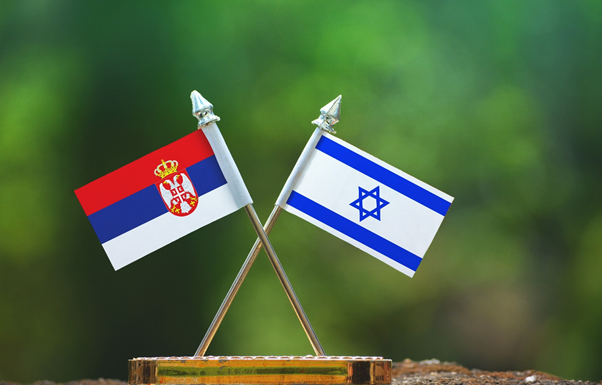
Flags of Serbia and Israel. Serbia has promised to eventually move their full Embassy to Jerusalem.
Photo Credit: Shutterstock / Aritra Deb

Serbia, a candidate to join the EU, will be opening a trade office in Jerusalem in November.  The European country’s chamber of commerce recognizes Israel as a “Highly technologically advanced Country” and is tasked with the mission of reaching a free trade agreement.  The Serbians are particularly interested in working with Israel’s IT sector, start-up consulting, healthcare, agriculture, and food industry, in addition to the Military industry, cyber, ICT services, wastewater treatment and tourism.   They are clearly interested in tapping into Israel’s booming economy and potential (there are only 6 other countries where Serbia has set up such an office).

In September 2020, then US President Donald Trump did what was once thought impossible, brokering an economic normalization agreement between the two, longtime warring nations of Serbia and Kosovo.  Part of the deal included both countries recognizing Jerusalem as Israel’s capital and moving their respective embassies.  In February, Kosovo became the first Muslim and European nation to open their embassy in Jerusalem (for more on Kosovo’s historic move, click here).  Serbia has yet to do so, though moving their trade office is often the first step for countries wishing to re-locate their embassies.

The EU (vehemently against recognizing Jerusalem as Israel’s capital before a final status agreement is reached between the Jewish State and the Palestinians) was less than happy with this move.  When the deal between the two Balkan countries and Israel was announced, the European Union implied that they were putting their membership in the EU as risk, although this year two current EU members, the Czech Republic and Slovakia (for more on this, click here) defacto recognized Jerusalem as Israel’s capital by opening up official branches of the embassies in the Holy City.  Hungary (another EU member) also opened an official diplomatic mission in Jerusalem.

Four countries have already fully moved their embassies to Jerusalem: US, Guatemala, Kosovo, and Honduras. Other countries, including Malawi, Equatorial New Guinea, Brazil (who has already opened a trade office in the capital city), and the Dominican Republic have pledged to do so, although no date has been set.

Nosson Shulman is a journalist and Licensed Tour Guide in Israel specializing in Biblical toursTo allow tourists to experience Israel during the Corona era, he created the new hit Israel tour video series which brings Israel to the home of viewers by simulating actual tours. To check out his free sneak preview tour videos, click here. To view sample tour itineraries or to inquire about private tour opportunities with a personalized itinerary on your next trip to Israel, click here.
Nosson Shulman

Biblical Anathoth (Anatot) and Ein (Spring) Prat

By Nosson Shulman: Licensed Tour Guide of VIP Israel Tours Authentic Virtual Tours (click here to check out his free trailer videos)

The words of Jeremiah son of Hilkiah, of the priests who were in Anathoth in the land of Benjamin (Jeremiah 1.1)

And the word of the Lord came to me a second time, saying: Take the girdle that you bought and rise, go to Prat (Spring) and hide it there in the cleft of a rock (Jeremiah 13.3)”

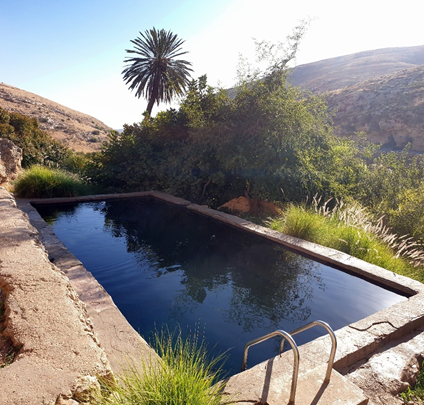
Natural Swimming Pool in Ein Prat National Park.
Photo Credit: Yair Aronshtam/Shutterstock

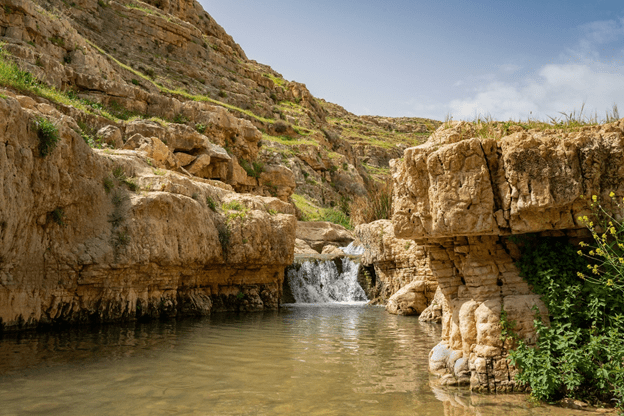
Today, we are visiting two special biblical sites in the Judean Desert, as stunning as they are historic. The first is the town of Anatot (Anathoth) and the second is Ein Prat, a desert oasis found in a picturesque canyon (and a great hiking spot)! While these sites are one-of-a-kind and a mere 10 to 15 minutes (drive) from Jerusalem, only a small fragment of tourists visit here.

Even though located in the extreme desert, there are several swimming holes for tourists to choose from on the Ein Prat Hike
Photo Credit:  Moshe EINHORN / Shutterstock

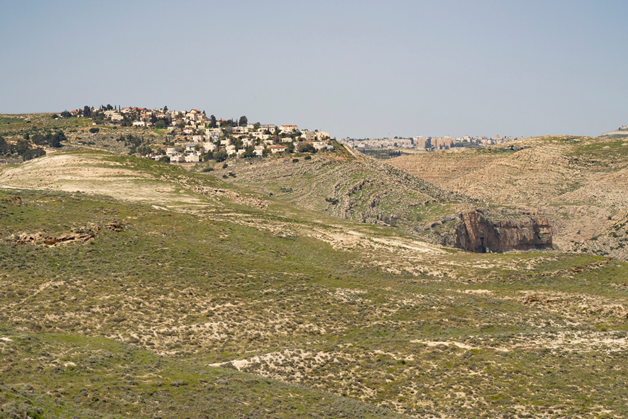
Our first stop is the town of Anatot (Anathoth) a Jewish town in Judea & Samaria (West Bank). Founded in 1982 (though the town also existed in Biblical times) the settlement (surrounded by gorgeous rolling hills as far as the eyes can see) currently has 1546 people living there and is still growing. The stunning views, pastoral quiet and abundance of green space makes this an ideal place to raise a family!

The Jewish town of Anatot, nestled among the rolling (biblical) hills of Judah & Samaria. Note the deep Ein Prat canyon on the righthand side of the picture. At the bottom of the wadi natural pools are found.
Photo Credit: Moshe EINHORN / Shutterstock

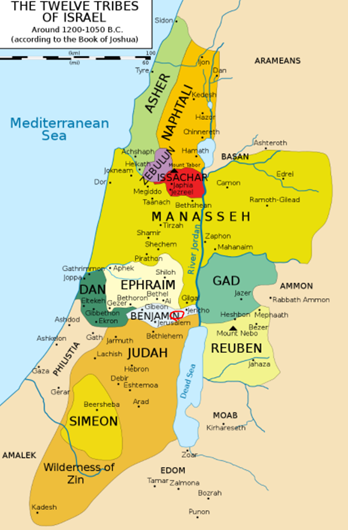
In Biblical times, Anathoth was one of 48 cities given to the Levites (see Joshua 21:18).

The Levite city of Anathoth (in red circle) was located in the heart of the tribe of Benjamin (See Joshua 21: 17-18).
Photo Credit: “File:12 Tribes of Israel Map.svg” by 12 tribus de Israel.svg: Translated by Kordas 12 staemme israels heb.svg: by user:יוסי 12 staemme israels.png: by user:Janz derivative work Richardprins (talk) is licensed under CC BY-SA 3.0

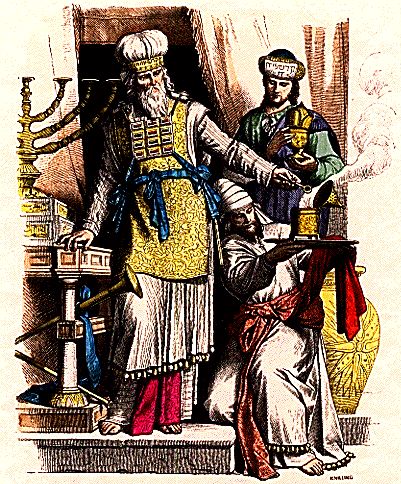
During his reign, King David had 30 generals. One of his generals (Abiezer) was from Anathoth (see 2 Samuel 23:27). He later appointed Abiathar (from Anathoth) as the High Priest. When Solomon was about to take the throne, his half-brother Adonijah tried to usurp the throne and was supported by Abiathar. When King Solomon was inaugurated, rather than putting him to death, he dismissed him from serving in the Temple, telling him to return Anathoth (see 1 Kings 2:26). According to Jewish sources, this was in fulfillment of the prophesy to his ancestor, Eli the High priest, that the high priesthood would soon be removed from his family (see 1 Samuel 2).

Artist’s rendition of the High Priest serving in the Temple.

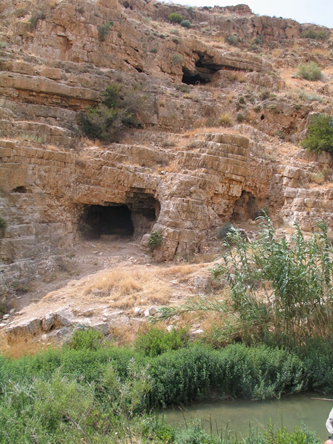
Most significantly, Anathoth is the hometown of Jeremiah the Prophet (see Jeremiah 1:1). Not only did he live here, but it is in this vicinity that G-d spoke to him. This is where G-d told him to go to Prat (the Spring found in the canyon just below the town) and to take a linen belt with him. He was to hide it in the clefts of a cave (indeed, one who hikes this trail is treated to the views of many natural caves which have formed in the Ein Prat valley). After some time, G-d told him to return the cave to retrieve the belt which was now rotten, an allusion to the impending destruction of Jerusalem and exile if the people didn’t repent at the level expected of them. As a side note, several Bibles written in English translate the Hebrew word “Prat” as the Euphrates River, today in modern day Iraq. To be sure that mighty river is also called “Prat” in the Holy Language, but according to Jewish sources “Prat” in this case is referring to Ein Prat. They suggest that is proof that G-d likely wouldn’t have sent Jeremiah (who was based in Jerusalem and nearby Anatot) to Iraq twice to retrieve the belt. Rather, since Jeremiah was based near the “Prat” in Israel, it was likely this “Prat” location.

Natural caves dot the canyon walls of Ein Prat. In one of these caves, Jeremiah hid the linen belt as G-d commanded!
Photo Credit: File:Ein-Prat-to-Ein-Mabua-739.jpg” by Bukvoed is licensed under CC BY 4.0

Jeremiah received news of impending exile here, and later was to receive news of future redemption connected to this site. When the prophet was imprisoned in Jerusalem, his cousin Hanamel asked him to purchase his field in Anathoth. Jeremiah knew through prophecy that G-d wanted him to buy this field, so he complied and bought it. The question arises, why would Jeremiah buy a field when he was aware of impending exile? This would seemingly be a bad investment. The answer is that because G-d wanted His people to know that although they may soon be exiled, they would one day return to their homes and fields. Jeremiah was investing his own money to prove that this was true (“Putting his money where his mouth is”). He then gave the deed to his scribe Baruch, the son of Neriah, and told him to store it away in a protected place. (see Jeremiah 32).

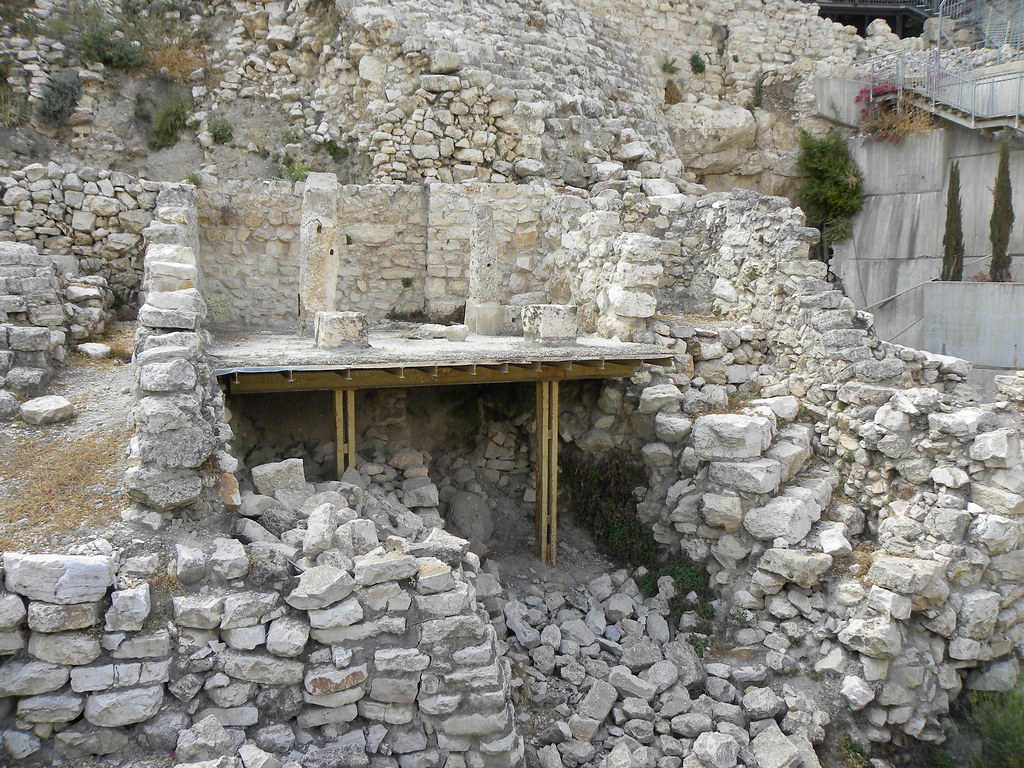
The House of Ahiel
The ruins of the building where official documents were kept during the days of Jeremiah. It is likely that the deed he gave to Baruch, son of Neriah, was stored here. In fact his name was discovered during excavations, on a stamp which sealed official documents, like this deed. Photo Credit: “The House of Ahiel-ViewB” by Ian W Scott is licensed under CC BY-SA 2.0

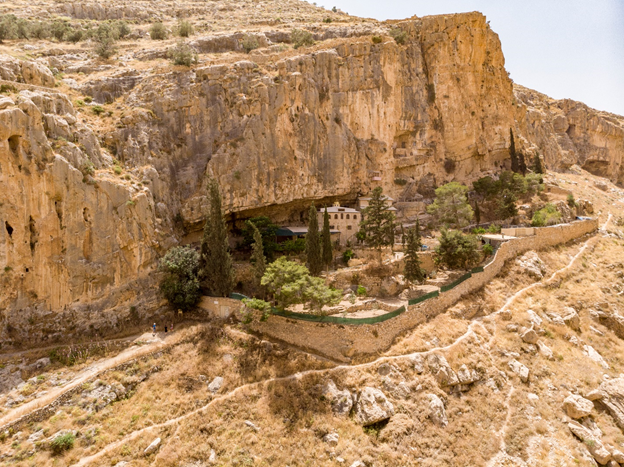
A few decades after, the Jewish people returned to re-establish Anathoth, just as Jeremiah had prophesized (Nehamia 11:32). After the great Jewish revolt (circa 66-73 CE) and especially after the Bar Kochba revolt (circa 132-135 CE) the Jewish cities in this area, including Anathoth, were destroyed and its Jewish inhabitants exiled. In the 4th century CE (circa 330 CE) a monastery complex (one of the world’s oldest) was built inside one of the caves, with the building protruding from the mountain rocks. Although destroyed by the Persions in 614 CE, it was rebuilt as a Russian Orthodox Monastery at the of the 19th century where it remains today.

The Chariton Monastery in Ein Prat.
Photo Credit:  Altosvic/Shutterstock

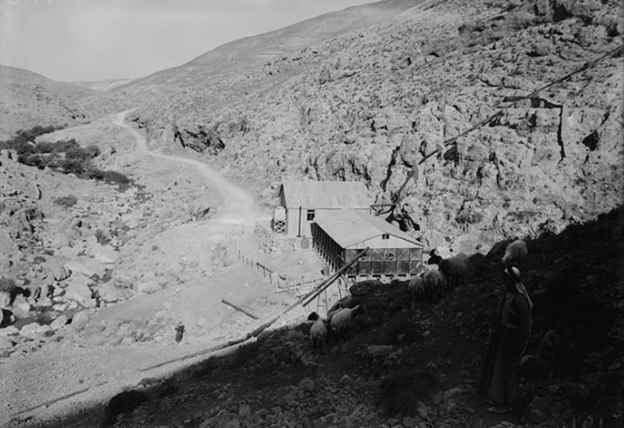
By the mid 1920s much of Israel had running water, but Jerusalem itself did not. Almost all drinking water came from collecting rain in cisterns (which was unreliable and often unsafe for consumption). This changed in 1925, when the British built a system of pumps and pipes to bring water to the Holy City from Ein Prat. The pumps would continue to supply water to the Eastern and Northern parts of Jerusalem until 1970, when the Israeli government shut it down. These buildings, though abandoned and no longer in use, can still be seen by visitors of the Ein Prat National Park.

Picture of the British pump station (circa 1926). Though no longer in use, visitors can still see the old, abandoned pump stations.

In the last few decades, Jews have been returning to this area on mass. The nearby city of Maale Adumim is the third largest Jewish City in Judah and Samaria. As G-d had promised through Jeremiah, the area is flourishing (see article on this desert area becoming the new shopping capital of Israel). On your next trip to Israel, if you are looking to visit a site rich in biblical history, gorgeous, natural beauty, and beautiful waters to swim in, consider including this site on your itinerary!

To see a sample Israel (day trip) tour itinerary of the area, click here

Author’s note: The nature park (where the pools and trails are) is generally considered safe, but some of the beautiful trails do leave the nature park at some point. Although disturbances are rare, it is recommended to check in with the park at the time you wish to visit and to be aware of your surroundings if you choose to do the full hike.

Nosson Shulman is a journalist and Licensed Tour Guide in Israel specializing in Biblical toursTo allow tourists to experience Israel during the Corona era, he created the new hit Israel tour video series which brings Israel to the home of viewers by simulating actual tours. To check out his free sneak preview tour videos, click here. To view sample tour itineraries or to inquire about private tour opportunities with a personalized itinerary on your next trip to Israel, click here.

Nosson Shulman

HUGE: In a major blow to Hamas, Sudan Seizes Vital Assets

Up until recently, the African Muslim country was a safe haven and major ally of the terror organization

By Nosson Shulman: Licensed Tour Guide of VIP Israel Tours Authentic Virtual Tours (click here to check out his free trailer videos)

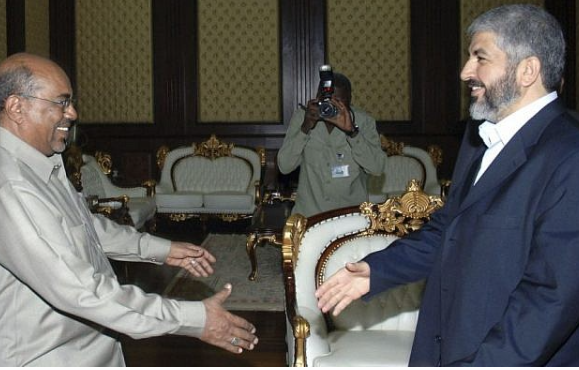
Then-Hamas leader Khaled Mashaal (right) meeting with then-Sudanese president Omar Al-Bashier in Khartoum, Sudan’s capital, in 2008

The impossible happened! Sudan, until December considered by the US to be one of the world’s leading sponsors of terrorism, has dealt a stunning and surprising blow against Hamas (until recently its earnest ally). The north African country has seized several (multi-million dollar) businesses linked (and subsequently laundered) to the terror organization including a property firm, high-rise luxury hotel, a money transfer company, and an agricultural entity.

For Hamas, this could not come at a worse time.  The cash-strapped Islamic terrorist organization was already struggling to provide for the residents of Gaza, whom they rule with an Iron fist.  Due to Hamas policies, Gazans have only 4-12 hours of electricity and little access to fresh drinking water (although the Hamas ruling elite live in luxury high-rises with air conditioning and 24-hour electricity, paid for predominately with foreign aid meant for its citizens).  Almost 65% of Gazans are unemployed and the economy is 80% dependent on international aid.  Despite the poverty, 55% of Hamas’ budget is spent on its military infrastructure and 35% of fuel donated by countries like Qatar, earmarked solely for poor civilians, is instead sold by Hamas to buy weapons to use against Israeli civilians.  As a result, many countries (including many wealthy Arab nations) have designated them as a terror organization with heavy sanctions, making it illegal to do any business with them and cutting them off from banking systems, leaving Hamas with little hard cash left.  Hamas not only has been unable to provide for its citizens but are increasingly unable to pay their own employees (many of their civil servants have been fired and others have had their pay cut by 50%).  Hamas had become increasingly fearful of it’s oppressed (and discontented) subjects.  Having its “cash cows” in Sudan suddenly taken away from them is a big deal.

Their loss of Sudan as an ally has repercussions that extend deeper than these companies. Hamas got preferential treatment in tenders, tax forgiveness, and were allowed to transfer to Gaza with no limits. Because of the banking sanctions levelled against Hamas, Sudan acted as a vital middle man between the terror organization and countries like Iran, giving them one of their few access points to hard cash.

Sudan has a long history of supporting terror. In 1989, General Omar Al-Bashir (an Islamic extremist) led a bloody military coup and proclaimed himself president. He was a brutal dictator who cruelly murdered his opponents and was responsible for the infamous ethnic cleansing committed by his Sudanese Arab allies against the Black population of Darfur. Hundreds of thousands of civilians were killed and millions were displaced and/or left homeless. The former Head of State was a boon for terrorist organizations like Al Qaeda, Islamic Jihad and Hamas, and issued passports to thousands of them including former Hamas’s head Khalid Mashaal. He even allowed Osama Bin Laden to live openly in Khartoum, the capital.

In 2019, the citizens rebelled against Al-Bashir and the military arrested him (he has been imprisoned ever since). The new leaders of Sudan wanted a fresh start to rebuild their economy (although oil-rich, the country is one of the least developed in the world). In order to remove the sanctions and be able to do business with the rest of the world, it was essential for them to get the US to agree to remove them as a sponsor of terrorism. With these changes, then President Donald Trump saw a unique opportunity. He agreed to remove the sanctions if Sudan would make peace with Israel and take a tough stance against terror. They also agreed to pay hundreds of millions of dollars to the victims of Bin Laden’s terror attacks (Bin Laden partially planned them while living there). In order to prove to the US that they were serious, they immediately suspended more than 3000 passports that were issued to non-Sudanese terrorists (including Khalid Mashaal) and it seems they are taking other actions as well. If Sudan continues to abide by their commitments, Islamic terrorist organizations have just lost a major supporter!

Nosson Shulman is a journalist and Licensed Tour Guide in Israel specializing in Biblical toursTo allow tourists to experience Israel during the Corona era, he created the new hit Israel tour video series which brings Israel to the home of viewers by simulating actual tours. To check out his free sneak preview tour videos, click here. To view sample tour itineraries or to inquire about private tour opportunities with a personalized itinerary on your next trip to Israel, click here.

Nosson Shulman

BREAKING NEWS: Arizona Becomes Second State to Take Official Action Against Unilever’s Boycott of Israel!

Ben and Jerry’s parent company stands to lose $143 million in the Grand Canyon State alone

By Nosson Shulman: Licensed Tour Guide of VIP Israel Tours Authentic Virtual Tours (click here to check out his free trailer videos)

Picture of a fake ice cream flavor, meant to mock the anti-Semitic nature of Ben & Jerry’s boycott of Israel.

Arizona has become the second state to take official action against Unilever (the parent company of Ben & Jerry’s) after July’s shocking announcement that they will no longer do business (beginning in 2023) with the Jewish State! Due to the Grand Canyon State’s strict anti-boycott laws, the international conglomerate stands to lose a lot of money!

The last few years have seen the rise of the radical, anti-Semitic BDS (Boycotts, Divestments, Sanctions) movement which seeks to harm (and in many cases eradicate) the Jewish State through economic isolation. Some of their tactics include pressuring companies that do business with Israel, pushing Universities (and professors) to blacklist Israeli academic institutions, and coercing non-profit organizations to divest their money from investment funds which work with Israel (some officially target “only” Judea and Samaria and the Golan Heights, but the majority of them openly target the entire state). In order to combat this disgraceful movement, 35 states have passed Anti-Boycott laws prohibiting their government from doing any business with (or awarding/renewing) contracts to companies who blacklist Israel. From them, 21 states explicitly include Judea & Samaria (aka the West Bank) in their laws, and 12 (including Arizona) require their state to remove companies that engage in boycotts from state employee retirement investment funds (the latter of which experts say is far more damaging than simply ending contracts for goods and services)!

Started in 1978, Ben and Jerry’s became one of the most popular ice cream brands in the world. Its founders were known for their (often extreme) leftwing views. Though primarily a for-profit company, the company often involves itself in (non-business related) political issues. In 2000, they sold the company to the giant British conglomerate Unilever (who also own many huge companies including Dove, makers of soaps, shampoos, and several other products). Unilever claims that when they bought the company, they agreed to the founder’s stipulation that Ben and Jerry’s retain a board of directors who would remain independent from its parent company. Although the original owners are supposedly not involved in company decisions, they wrote an op-ed in the New York Times saying they are “proud” of the company for taking such a “brave” stance (although the company continues to do business with China despite its actions against Hong Kong and Taiwan, while staying silent on the country’s genocide (and forced slave labor) against the Uyghur Muslims).

Arizona’s pension fund currently has a whopping $143 million invested in Unilever. Already, the
company has pulled out all but $50 million of it. On September 21, they will take out the remainder. In addition to the immediate loss, experts say it will negatively impact the company’s stock prices. They will also be prohibited from buying Unilever products for Government institutions (many states for example have lucrative contracts with Unilever to supply hygienic products to its prison population).


Unilever is protesting the decision, claiming that they are the victims because their hands are tied to stop this. They argue that it is unfair to hold the entire company liable for the actions of one of their subsidiaries. Arizona State Treasurer Kimberly Yee, however, sees it differently. She wrote,

As Arizona Treasurer, I’ve divested all state funds from Ben & Jerry’s for boycotting Israel…I will not allow taxpayer dollars to go towards anti-Semitic, discriminatory efforts against Israel. Arizona will not do business with companies that are attempting to undermine Israel’s economy and blatantly disregarding Arizona’s law.


The Treasurer added she understood that Ben & Jerry’s independent board had the ability to make a boycott decision over Unilever’s objections, but the fact remained that the company was in violation of Arizona law.

Arizona is not the first to pull the trigger. As reported here last month, Florida also took official action against Unilever (for more on that, click here). In addition, six other states are currently weighing similar steps including New York, New Jersey, Rhode Island, Illinois, Maryland and Texas.

Authors note: For Israel, a lot more than ice cream is at stake here. Many corporations are currently facing pressure to cease doing business with the Jewish State and are closely watching to see how this is played out. Everyone can do their part to counter the BDS movement by raising awareness (including by reaching out to Unilever and the stores that carry their products). Let them know what it means to you as a customer, share your concerns with local (and national) politicians, talk to your friends and/or congregations and share this (and similar) articles that discuss the threats posed by BDS!

Nosson Shulman is a journalist and Licensed Tour Guide in Israel specializing in Biblical toursTo allow tourists to experience Israel during the Corona era, he created the new hit Israel tour video series which brings Israel to the home of viewers by simulating actual tours. To check out his free sneak preview tour videos, click here. To view sample tour itineraries or to inquire about private tour opportunities with a personalized itinerary on your next trip to Israel, click here.

Nosson Shulman

NEW: Cable Cars Become Essential Part of the Transportation Infrastructure of a Major Israeli City

The Cable Cars will consist of 6 stations, connecting Haifa’s two universities and central bus station.

By Nosson Shulman: Licensed Tour Guide of VIP Israel Tours Authentic Virtual Tours (click here to check out his free trailer videos)

Map of Haifa’s new cable car system (represented by the broken green line).  The navy-blue line represents the location of Haifa’s metro system (currently the only one in Israel).

Anyone driving through Haifa (Israel’s third largest city) at various parts of the day have surely noticed the heavy traffic that blankets the industrial city.  Haifa is home to two of Israel’s major ports, one inaugurated only last week while the other has been the gateway to about 50% of Israel’s imports up until now.  There are also two major universities (including Technion, the highest ranked university in the Middle East and recipient of many Noble prizes), not to mention factories and a high-tech center (Google and Intel both have a major presence here).  It is clearly no wonder that Haifa is bustling with motorists!  The issue is compounded by the topography of Haifa, built on the steep slopes of Biblical Mount Carmel (for more on this special mountain, click here).  In order to help alleviate traffic, a creative solution has been found; building a cable car system as part of the public transportation infrastructure.

The Haifa cable car system, built at a cost of 330 million shekels (103 million US), will be fully operational by October.  Every 30 seconds, a car will leave from the station carrying up to 10 people at a time, and there is to be 150 cars altogether.  The cable car will connect Haifa University, Technion University, the Central Bus Station and one of the city’s train stations.  This will mean that train passengers coming from outside the city will be able to access these locations, which were largely inaccessible, without a car.  The entire ride from beginning to end (assuming travel through all 6 stations) will only be 19 minutes, and the route will be 4.4 kms altogether (2.75 miles).  All cable cars will be fully accessible by bus and are expected to be used mainly by students.

Cable cars leaving Haifa’s Central Bus Station on the first manned ride in August 2021.

This is not Haifa’s first attempt at finding a creative solution for mass public transit.  Already, the city hosts Israel’s only current underground Metro system (the world’s smallest with only 6 stations).  The Tel Aviv light rail, currently in construction, will also have a Metro component to it when completed.

Although this will be Israel’s first mass transit cable cars system (the others at Masada, Rosh Hanikra, and elsewhere are used only for tourism purposes only), it is not to be the last.  Currently, a similar system is being built in Jerusalem, which will connect the Old City to some of its surrounding neighborhoods.

Nosson Shulman is a journalist and Licensed Tour Guide in Israel specializing in Biblical toursTo allow tourists to experience Israel during the Corona era, he created the new hit Israel tour video series which brings Israel to the home of viewers by simulating actual tours. To check out his free sneak preview tour videos, click here. To view sample tour itineraries or to inquire about private tour opportunities with a personalized itinerary on your next trip to Israel, click here.
Nosson Shulman

Biblical House of the Shunamite Woman

By Nosson Shulman: Licensed Tour Guide of VIP Israel Tours Authentic Virtual Tours (click here to check out his free trailer videos)

Elisha went as far as Shunem, and there was a prominent woman who prevailed upon him to eat a meal…whenever he would pass, he would stop there to eat a meal. She said to her husband, “Behold… a holy man of God, who passes by us regularly. Let us make a small walled upper chamber, and place there for him a bed, a table, a chair, and a lamp; and it will be that when he comes to us, he will turn into there (2 Kings 4: 8-10)”

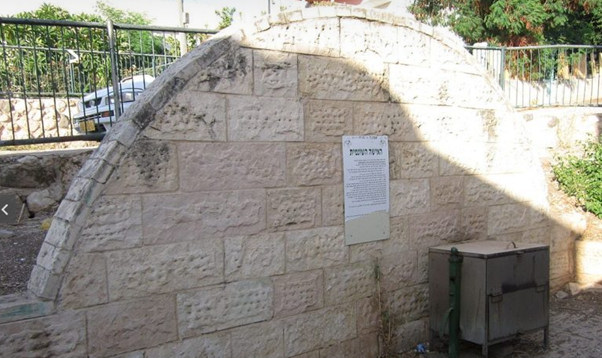
Modern stonewall marking the exact spot where the entrance to the Shunamite woman’s house is believed to have been.
Photo Credit: מפוכח – Creative Commons Attribution-Share Alike 3.0 Unported

Today, we will be visiting a holy site where miracles occur regularly even today!  This site is so off the beaten track, that most tour guides and Israeli geographical experts are not aware of it and there is very little information found online.  With that being said, let’s explore this wonderous location together!

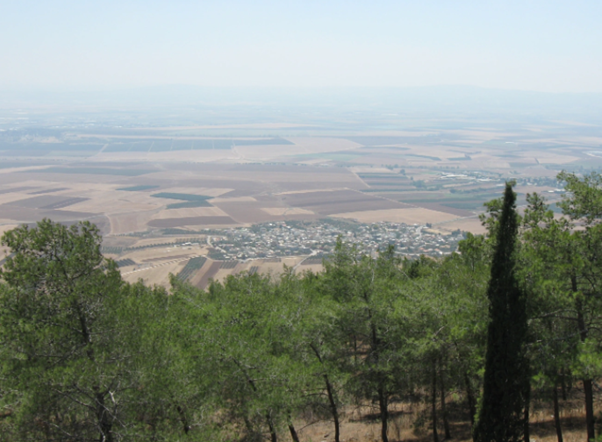
The “House of the Shunamite Woman” is located in today’s northern Arab-Israeli village of Sulam.

The town of Sulam, nestled in Israel’s northern Jezreel Valley.

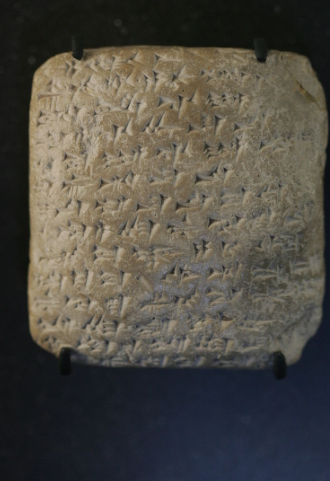
The town (historically called Shunem) has a long history, going back to the Canaanite times.  It is mentioned in ancient Egyptian documents as one of the towns overtaken by Pharoah Thutmose III (circa 1450 BCE) when he conquered Canaan.  He successfully took over Israel, and the Egyptians ruled the land for several centuries (he allowed the 31 Canaanite city-state kings to retain their rulership, so long as they pledged loyalty to their Egyptian overlords).

Ancient Egyptian document (written in ancient coniform letters) which mentions Shunem.
Photo Credit: Rama –  Creative Commons Attribution-Share Alike 2.0 France

The town is mentioned several times in the Bible.  When the Philistines waged war against King Saul at Mt. Gilboa, they encamped at Shunem (see 1 Samuel 28: 4).  The Philistines were victorious in this battle and King Saul was slain (for more on this fateful battle at Mt. Gilboa, click here. For the aftermath, click here).

A Philistine Soldier.  In King Saul’s final battle, he was slain by the Philistines who were encamped at Shunem.

In King David’s final years, he had a beautiful female companion named Abishag who came from Shunem (see 1 Kings 1:3).  The predominant story here of course, occurred during the days of Elisha the Prophet, a student of Elijah (see 2 Kings 4).  He would travel through the land teaching people and encouraging them to repent.  On these journeys he would often pass by Shunem, which was close to an important crossroads junction (the nearby city of Afula is still a major crossroads junction).  In the town lived a wealthy, pious woman who was married but childless for many years.  Whenever Elisha passed through the town, they would invite him for a meal.  One day she told her husband that since he was a man of G-d, they should set up a place for him in the house where he could sleep while in the area (according to Jewish sources, her husband actually built a very strong stone structure so that he would have maximum privacy).

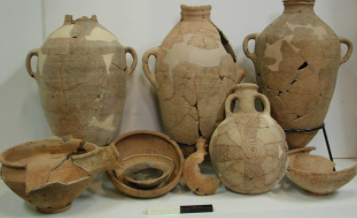
Pottery vessels found in digs of ancient Shunem.

The next time he was in town, he took her up on her offer to stay over (according to Jewish sources, it was Rosh Hashana, the Jewish new year).  As he lay down to sleep, he said to his attendant Gehazi (who usually traveled with him) to ask the woman if there was anything he could do for her in order to show his gratitude for her kind hospitality.  Being a pious woman, she asked for nothing, implying that she was content with everything G-d had already given her (she wasn’t hosting Elisha for any ulterior motives or to receive a reward).  Elisha still wanted to reward her and asked Gehazi if he had any ideas on what he thought she could use.  As the couple were an older, childless couple (according to Jewish sources, she was past childbearing age), Gehazi suggested a blessing for them to have a child.  The prophet then called in the woman and told the overjoyed, soon to be mother that she would have a child in one year (according to Jewish sources, that child was none other than the future Prophet Habakkuk whose prophesies were recorded in the Bible).

The grave of the Prophet Habakkuk in the Galilee. According to Jewish sources, Habakkuk was the baby born to the Shunamite Woman.

The child grew, and one day was helping his father in the fields when he complained of head pains. He was brought home and died in his mother’s lap.

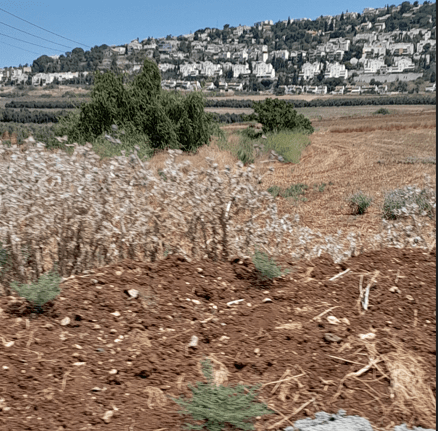
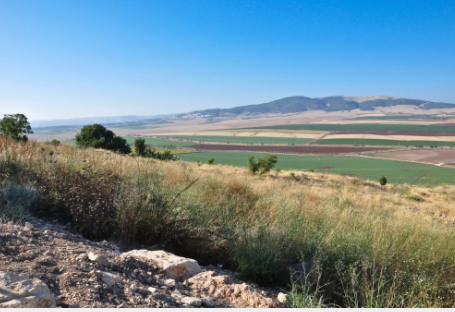
The fields surrounding Sulam, the site of biblical Shunem. In the fields, the woman’s son became ill and subsequently passed away in his mother’s home.
Photo Credit: Ori~

She brought her son to the room she had built for the prophet and laid his lifeless body on the bed. She then saddled her donkey to head off to Mount Carmel to find Elijah the prophet (for more on this Biblical mountain, click here).

Route taken by the Shunamite Woman to see Elisha who was at Mount Carmel at that time

When she arrived at Mount Carmel and saw Elisha, she ran to him and grasped his legs and told him about her son, saying that she would not leave unless Elisha came with her.  When they arrived back at her house in Shunem, the prophet went to his room and saw the body.  He shut the door behind him, prayed to G-d and went on top of the boy, “Placing his mouth upon his mouth, his eyes upon his eyes, and his palms upon his palms (2 Kings 4:33)”. He then got up and paced back in forth, deep in heavy prayer. He then laid on top of him again and suddenly the boy sneezed 7 times and opened his eyes!  The prophet then summoned the Shunamite Woman, who was overjoyed to see that her son was miraculously alive again!

In 2 Kings 8, the bible relates another story involving the Shunamite Woman. Elisha (who was staying at her house) warned that a 7-year famine was coming to Israel. As result, she went to the land of the Philistines. When she came back, she found she had been robbed of her property and her house occupied by strangers. She went to the King to ask for the return of her property. When she arrived to the palace, the King was in conversation with Gehazi (Elisha’s attendant) about the miracle Elisha performed for her (according to Jewish sources, it was divine providence that this discussion was taking place the moment she arrived). The King then asked her to verify the story, after which he ordered that everything be returned to her (including payment for the crops the squatters had illegally grown on her property for seven years).

A view of the fields surrounding Shunem from Jezreel (where the King of Israel lived)

Today, all that exists of the house is a wall marking the spot where the entrance once stood. Although little information exists about this site online and few have even heard of it, it is well known to Rabbi Chaim Kanievsky, zt”l, one of the leading Torah sages of our generation. His father, the Steipler Gaon (a major Torah sage of the previous generation), had told him that due to the miracles that took place here, the site was still very much infused with holiness and was an opportune place to pray for children. Subsequently, Rabbi Kanievsky led a delegation of childless couples (all of whom doctors had said there was no hope for them to have children) to the site for intense prayers. Within a short time, almost all of them women who were there became pregnant. Since then, he encourages all childless couples to make the effort to pray at this amazing site. As well, a Yeshiva (academy of advanced Torah and Talmudic studies) was established nearby.

If you are looking for something off the beaten track on your next trip to Israel, I highly recommend you visit here!

Nosson Shulman is a journalist and Licensed Tour Guide in Israel specializing in Biblical toursTo allow tourists to experience Israel during the Corona era, he created the new hit Israel tour video series which brings Israel to the home of viewers by simulating actual tours. To check out his free sneak preview tour videos, click here. To view sample tour itineraries or to inquire about private tour opportunities with a personalized itinerary on your next trip to Israel, click here.
Nosson Shulman

© 2023 All Rights Reserved – Unauthorized Duplication is prohibited

UNBELIEVABLE: World’s Largest Nursery of Deep-Sea Sharks Discovered off the Coast of Tel Aviv!

Until this discovery, this section of the Eastern Mediterranean Sea was thought to be a desolate ocean desert.

By Nosson Shulman: Licensed Tour Guide of VIP Israel Tours Authentic Virtual Tours (click here to check out his free trailer videos)

Hundreds of Deep-sea sharks, and what is thought to be the largest concentration of blue-water shark eggs were shockingly found off the coast of Tel Aviv!

In a shocking discovery, the largest ever nursery of deep-sea sharks was found off the coast of Tel Aviv. Located among the lowest layer of the ocean just above the seabed, thousands of shark eggs were found, along with hundreds of sharks! According to scientists, this discovery has major worldwide implications for both the study of blue water marine life, and its preservation!

For marine biologists this revelation is earth-shattering, as the consensus was that the Eastern Mediterranean was a desolate ocean desert.  As a result, little research was done there until about 10 years ago when the world’s most well-known oceanographer, Dr. Bob Ballard (among his many achievements, he discovered the location of the Titanic in 1986) was visited by his long-term, Israeli research partner Prof. Zvi Ben-Avraham.  Together they promoted deep sea research off the coast of Israel, then non-existent.  University of Haifa’s Charney School was founded, and the program was so successful that it became a state-of-the-art deep sea research center (it even developed technological techniques which were instrumental in the discovery and likely to be invaluable to biologists around the world).

As with so many of the world’s greatest discoveries, this was found by accident. The University, in collaboration with other top Israeli institutes, was studying the effects of “climate change” underwater when they happened upon this shark mating area.  Far from being desolate, this small underwater desert oasis (several hundred meters long) is a biologically diverse paradise with a rich food web-based on methane.  While it was only recently discovered, Charney School’s Professor Dr. Yitzhak Makovsky believes it has been there for thousands of years “right under our noses”.  The exact type of sharks found have yet to be announced, but deep-sea sharks in the Mediterranean include Gulper Sharks, Kitefins, and Little Sleepers.  Although these creatures have extremely sharp teeth and have been known to bite into deep-sea optical fiber cables (which enable, among many things, long distance telecommunications) they are not considered dangerous to humans due to the depth at which they are found.

Close up of one of the deep-sea sharks discovered. The exact species of shark has yet to be revealed.

While the discovery itself was a shock, the fact that a previously unknown underwater entity could exist without anyone knowing of it comes as no surprise. The Oceans (compromising about 71% of our planet) are the last largely unexplored frontiers on Earth.  According to scientists, more than 80% of our underwater world has never been mapped, explored or even seen by humans.  Discoveries of new creatures (some of them gigantic), habitants and previously unknown mega-deep depths are very common.

Nosson Shulman is a journalist and Licensed Tour Guide in Israel specializing in Biblical toursTo allow tourists to experience Israel during the Corona era, he created the new hit Israel tour video series which brings Israel to the home of viewers by simulating actual tours. To check out his free sneak preview tour videos, click here. To view sample tour itineraries or to inquire about private tour opportunities with a personalized itinerary on your next trip to Israel, click here.