Prime Minister Netanyahu greeted President Hernandez on the latter’s visit to Jerusalem in 2015
In a major diplomatic victory for Israel, Honduras is set to move their embassy to Jerusalem after decades of operating in Tel Aviv. At the same time, Israel will open a diplomatic office in Tegucigalpa, the capital of Honduras.
In recent years, Honduras has emerged as a reliable ally to Israel in international forms. At the UN, the Spanish-speaking country often votes against anti-Israel resolutions. In 2019, Honduras officially recognized Jerusalem as Israel’s capital, and in 2020 labeled Hezbollah as a terrorist organization.
The Latin American country has also benefitted tremendously from its strong relationship with Israel, including the receiving of humanitarian aid and thousands of vaccines donated by the Jewish state.
This moving of the embassy is all the more incredible when one considers that Honduras has the second largest “Palestinian” population in Latin America, except for Chile (the name is a misnomer because there has never been an independent state called Palestine, nor has there ever been a distinct “Palestinian” culture or dialect. The Arabs living in Judea & Samaria are culturally and linguistically Jordanian, while those in Gaza are culturally Egyptian ).
Honduras becomes the fourth country to make the move, following in the footsteps of its bordering neighbor Guatemala, the United States, and Kosovo. Several other countries have pledged to move their respective embassies in the future including the Czech Republic, Serbia, Brazil, Malawi, Equatorial New Guinea and the Dominican Republic.
Nosson Shulmanis a journalist and Licensed Tour Guide in Israel specializing in Biblical tours. To allow tourists to experience Israel during the Corona era, he created the new hit Israel tour video series which brings Israel to the home of viewers by simulating actual tours. To check out his free sneak preview tour videos, click here
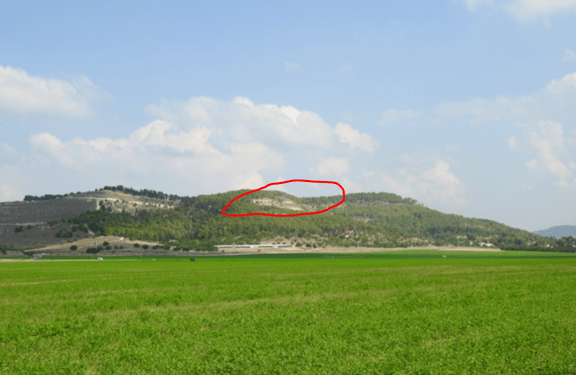
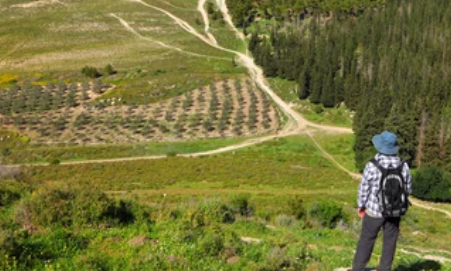
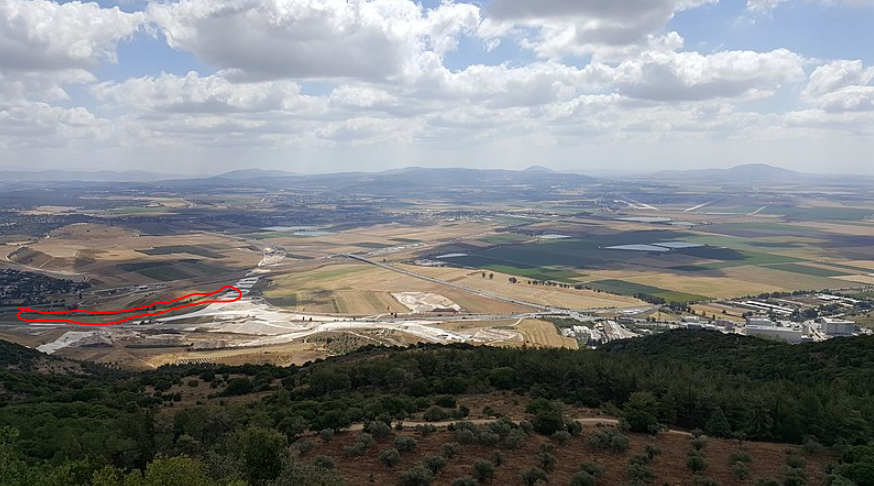
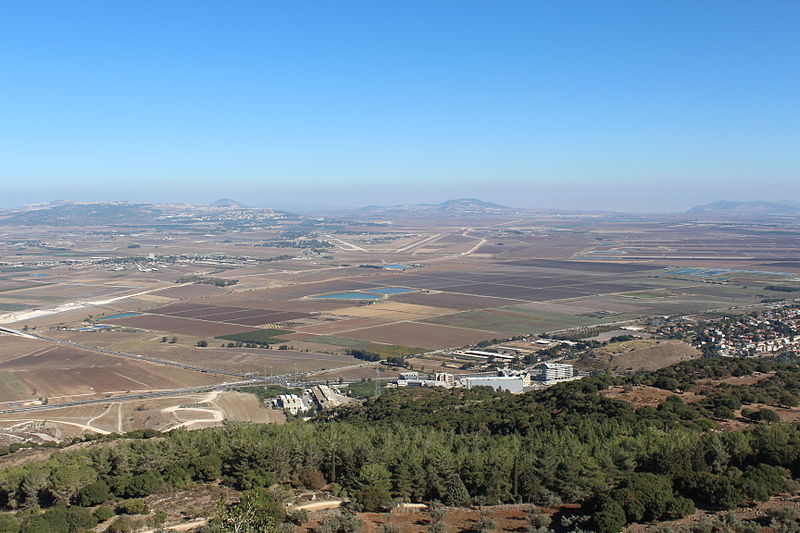
Today, we are going to visit a special Biblical site that few people are aware even exists. It is close to my residence, and I am able to see it from several spots in my neighborhood. This site, nestled in the tranquil, hand planted President’s Forest, has stunning views from the top!
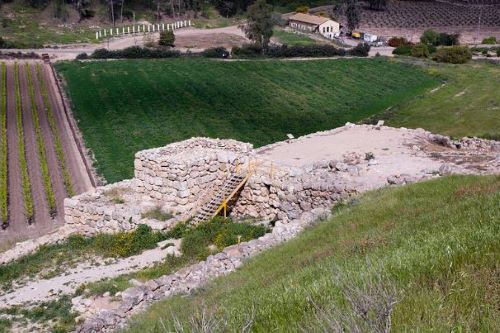
View from the agriculture fields of Zorah. Historically the people lived on the hills, while the farming was done in the fertile fields below.
When the children of Israel entered the Holy Land, the country was divided by the tribes, according to divine lottery. Zorah was given to the Tribe of Dan (Joshua 19:41).
Zohar was the hometown of Samson, the strongest man who ever lived. His righteous mother was barren, constantly praying for a child. As she was sitting in the field just outside the town, a man (an angel, unbeknownst to her) appeared and told her that she was to have a child. This child would save the Jewish people from the hands of the Philistines, who at that time were oppressing them. She then quickly ran home to tell her husband Manoah about what had just happened. Manoah prayed that G-d would send the man again, so he could ask him how G-d wanted his son to be raised (although he did not know he was an angel, he knew he was a man of G-d, perhaps a prophet, who would be able to communicate G-d’s will to him.
The field where the angel appeared to Manoah and his wife. Photo Credit: Shutterstock
When the angel reappeared to his wife, she ran to get Manoah who asked the “man” how G-d wanted him to raise his son. The angel told him his son should never cut his hair or eat anything which comes from the Grapevine (Nazarite).
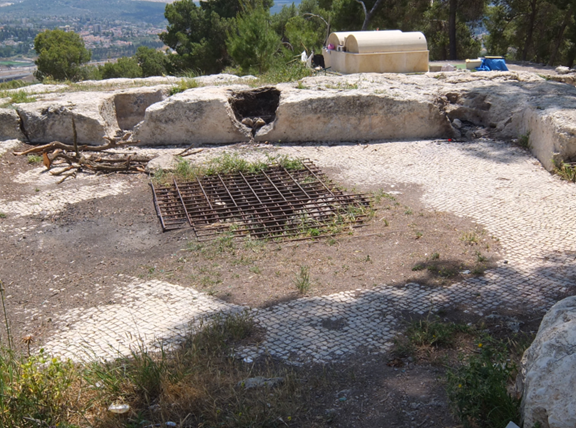
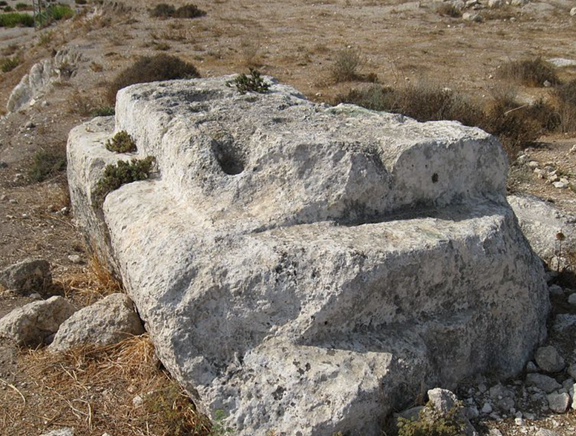
Manoah wanted to thank the “man” for the good news and asked him to join them for a meal. The Angel said that he would not be able accompany them, suggesting instead that Manoah should offer it to G-d as an elevation offering. Manoah made an altar and offered the sacrifice (although according to Torah law, it is forbidden to bring a sacrifice on a private altar when either the Temple or the Tabernacle of Shiloh existed, in individual cases a prophet or angel could command a person to privately offer a onetime sacrifice, in which case it was permitted).
The “Altar of Manoah” can still be seen today.
Upon the offering a miracle happened, and a flame rose from atop the altar to the heavens and consumed the “man”, whom they now knew was an angel. The couple went on to name their newborn son Samson (Judges 13).
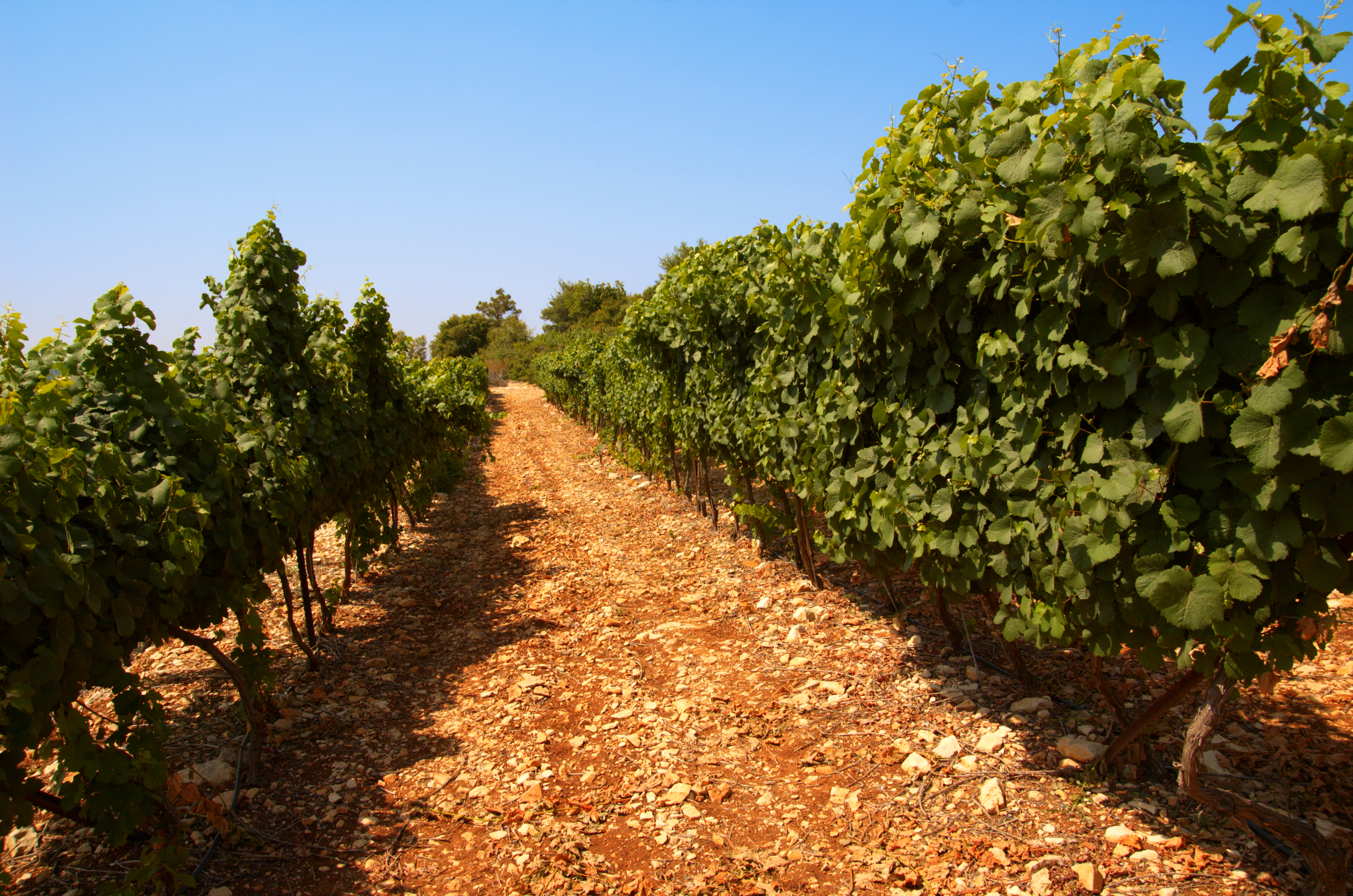
One of the most exciting stories in the Bible occurred in the valley directly below Zorah. Samson was out walking with his parents when they arrived at a vineyard. Since drinking wine was forbidden to him, he did not even want to go through the vineyard, choosing instead to walk around it while his parents went through it. As Samson was walking, a lion attacked him (Lions used to be abundant in Israel, for more on exotic animals which used to roam the Holy Land, click here). Samson ripped the beast apart with his bare hands (Judges 14: 5-6) .
The place where Samson was attacked is still an active vineyard. Tourists can visit the winery and sample some of Israel’s finest wines. Photo Credit: Shutterstock
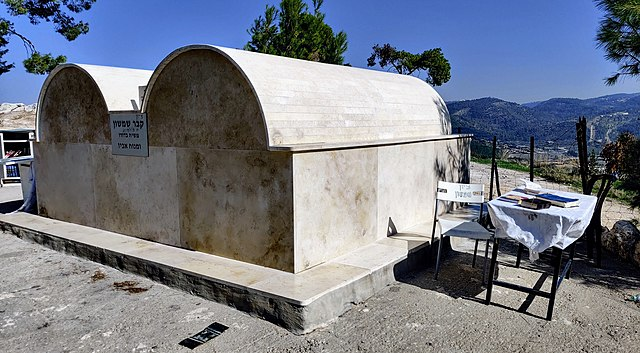
When Samson died in Gaza, his body was taken and buried by Zorah in the same burial plot as his father (Judges 16: 31). Interestingly, Jewish sources mention that Samson was lame in both legs. Coincidentally, ground penetration radar was recently used at the Tomb, and the bones were indeed found to be that of a lame person.
Centuries later, King Rehoboam (son of Solomon) fearing invasion from the north, fortified many of his cities including Zorah (2 Chronicles 11:10).
In 422 BCE, the Jewish people of the Kingdom of Judah were exiled by the conquering Babylonians, who brought them to modern day Iraq. Fifty years later, the Babylonian Empire was conquered by the Persians under King Cyrus the great, who allowed his Jewish subjects to return to Israel and even rebuild the holy Temple in Jerusalem. Under Jewish leaders Ezra and Nehamiah, 50,000 Jews moved back to Israel, with some of them settling in Zorah (Nehemiah 11: 29).
In 1948 near the ancient ruins of Zorah, Kibbutz Tzora (Hebrew for Zorah) was founded and today is thriving with several successful wineries and businesses!
Kibbutz Tzora
Due to its central location (between Tel Aviv and Jerusalem), enchanting beauty, and the fact that it is so accessible to many other nearby sites of interest, a stop here can most definitely enhance a visit to Israel!
By Nosson Shulman – Licensed Tour Guide and Trip Organizer in Israel who specializes in History, Tanach (Bible) and Adventure Tours. For more itinerariesclick here. Check out our new Virtual tours including free sneak preview videos.
The Director of the Czech Parliamentary Israel Allies Caucus blows the Shofar in Parliament
In a huge move, the Czech Republic and Slovakia celebrated Jerusalem day (the anniversary of Israel’s liberation of Jerusalem in the 1967 Six Day War) thus becoming the first European Union countries to do so in their respective Parliaments.
Although the EU officially refuses to recognize the Holy City as Israel’s capital, and even actively discourages other countries from doing so, these two EU members decided to break rank and chart their own foreign policy.
High ranking politicians from both countries participated in the ceremonies, touting the shared Judeo-Christian values between these great nations. In November, an active Pro-Israel caucus made up of influential Czech MPs was formed to strengthen legislative support for the Jewish State.
The Israeli ambassadors to these two central European Nations were invited to participate, as were several Jewish and Christian community leaders.
The Czech Republic and Israel have a long-shared history. During Israel’s War of Independence in 1948, Czechoslovakia played a major role in Israel’s victory. When Arab countries attacked, most of Israel’s “Allies” refused to sell any weapons to the fledging state, leaving Israel vulnerable to annihilation. The Czech Republic stepped in, secretly supplying Israel with the equipment needed for victory.
At the UN, the Czech Republic is a reliable vote against anti-Israel resolutions. They have recognized Jerusalem as Israel’s capital, promising to eventually move the Embassy (they have already opened a cultural center and diplomatic mission in the Holy City).
Nosson Shulmanis a journalist and Licensed Tour Guide in Israel specializing in Biblical tours. To allow tourists to experience Israel during the Corona era, he created the new hit Israel tour video series which brings Israel to the home of viewers by simulating actual tours. To check out his free sneak preview tour videos, click here
“And Joshua passed on from Libnah, and all Israel with him, to Lachish, and encamped against it, and fought against it. And G-d delivered Lachish into the hand of Israel; and he took it on the second day, and smote it with the edge of the sword, and all of the souls that were in it (Joshua 10: 31-32)”
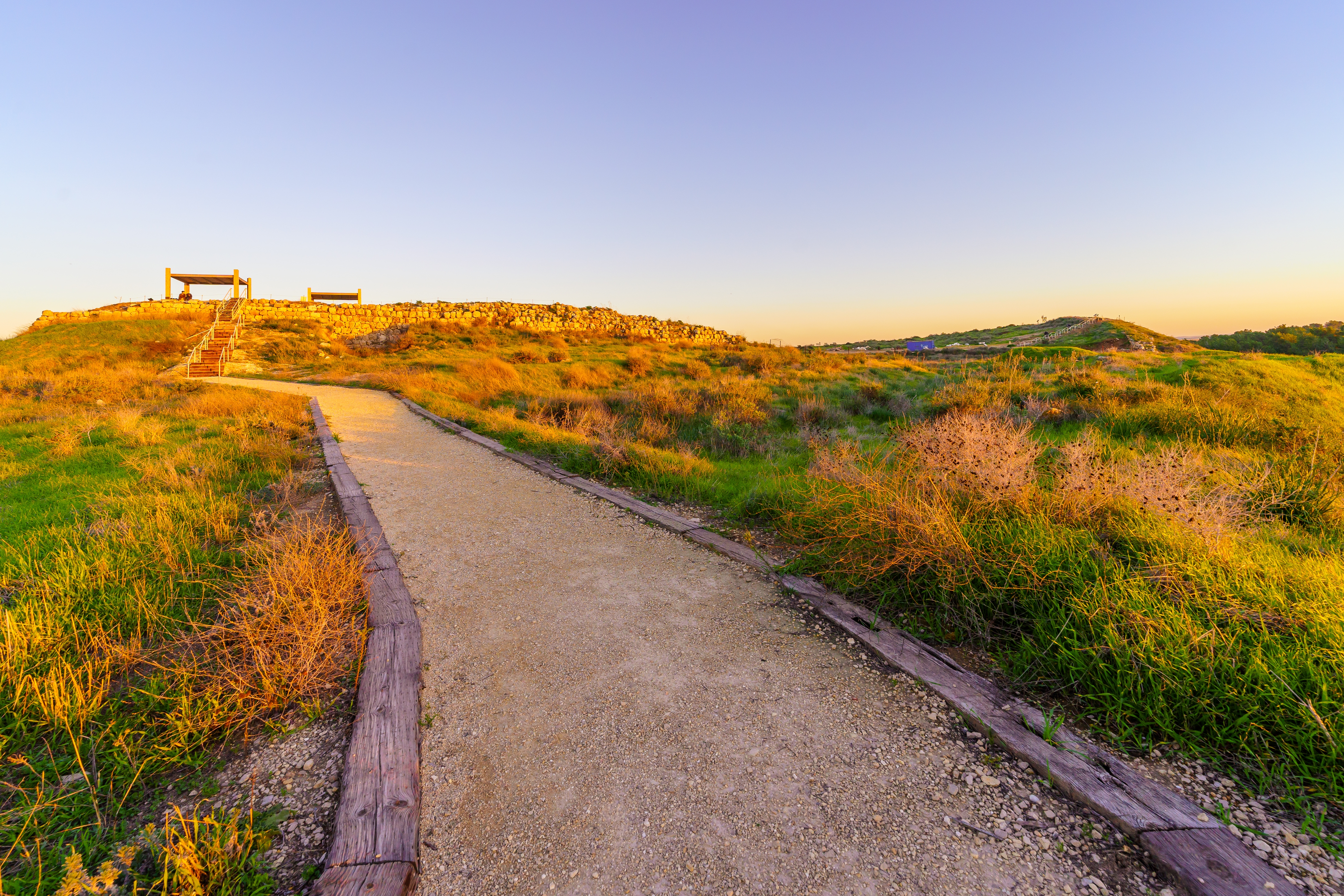
One of the main trails at Tel Lachish, one of Israel’s largest, but seldom visited archeological sites. Photo Credit: Shutterstock
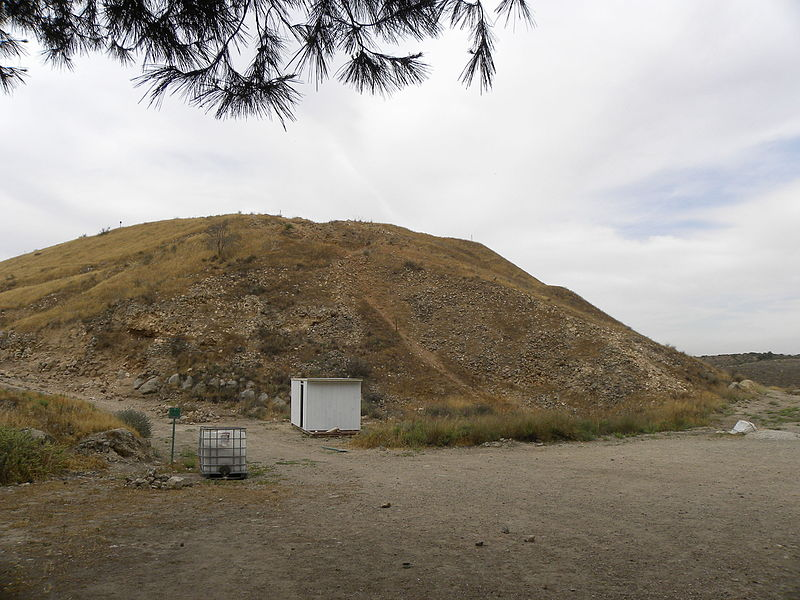
Today we will explore a unique biblical site called Lachish. This site, though not widely known, was actually Israel’s largest city during the biblical First Temple era (aside from Jerusalem). Unlike Jerusalem which hosts millions of tourists a year, Lachish almost always stands empty, even during the busiest tourist season. Allow me to explore this breathtaking gem with you now!
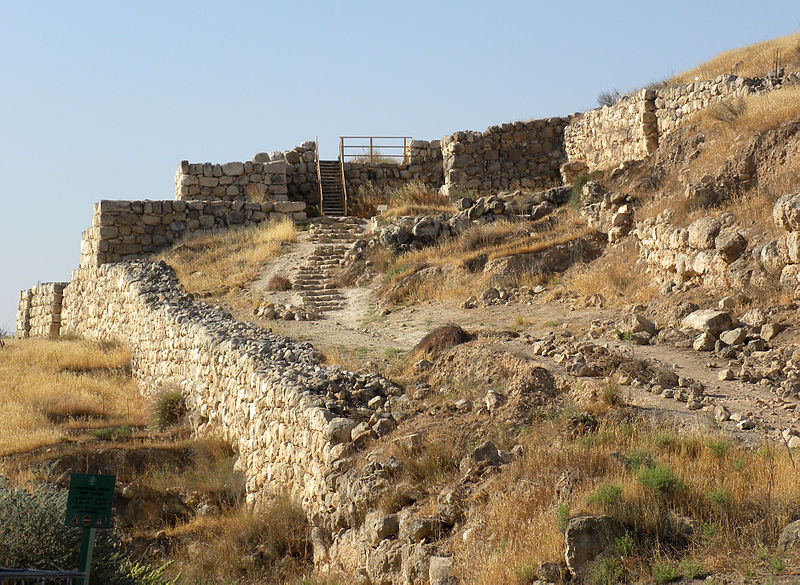
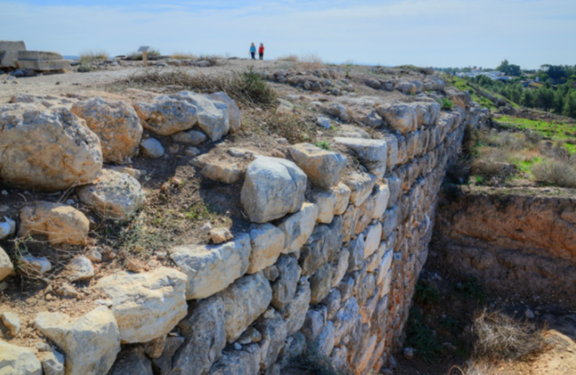
Ancient fortress walls of Lachish. If these walls could talk, they would tell of the fascinating and volatile events that took place here over hundreds of years! Photo Credit: Wilson44691- Creative CommonsAttribution-Share Alike 3.0 Unported
The city was one of the most powerful of the Canaanite cities with its own King. It controlled much of the surrounding territory.
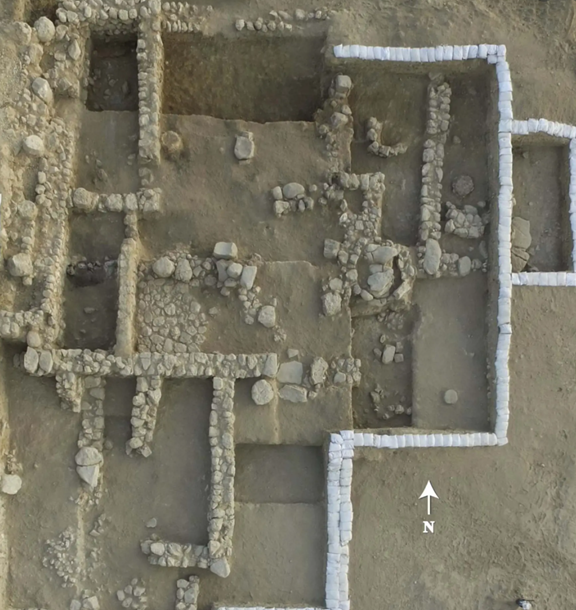
Remains of a 12th century BCE Canaanite Temple recently excavated. The building was destroyed by Joshua and his army.
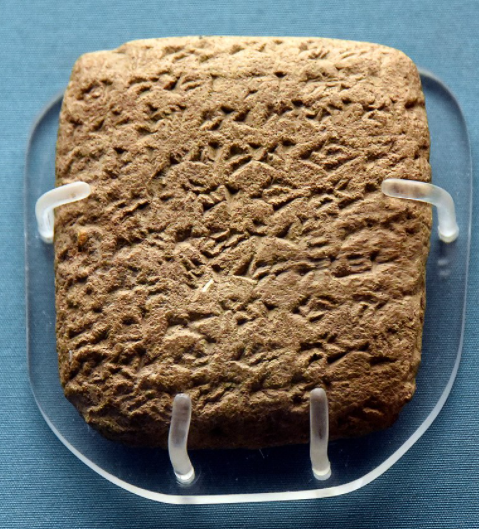
Circa 1500 BCE, Israel was taken over by Egypt where they ruled for about 300 years (during the time the Children of Israel were enslaved). Egypt allowed the Canaanite Kings to keep their position as long as they stayed loyal to the Pharaoh. Lachish flourished during this time.
Al Amarna letter written in ancient cuneiform (the international language of that time) where the King of Lachish assures Pharaoh of his loyalty to him. Photo Credit: Osama Shukir Muhammed Amin FRCP(Glasg) – CC BY-SA 4.0
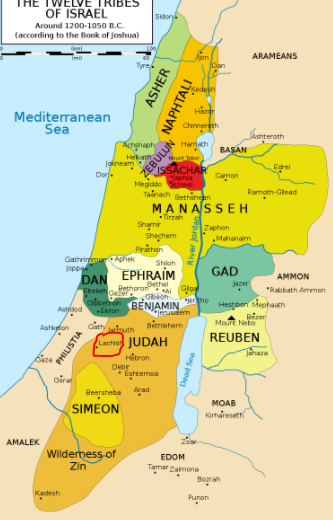
When the Children of Israel entered Israel, they waged war with 31 Canaanite city kings. After Jericho and Ai were conquered, the city of Gibeon decided it was better to make an alliance with Israel. Five kings, including Lachish, heard that the Gibeonites were seeking peace with Israel and were afraid that other City states would do the same. In order to prevent this, Lachish and the four other cities attacked Gibeon. Joshua then came to their aid, and G-d caused the five kings to immediately be confounded and flee. The Children of Israel then captured the Kings, along with their armies, and executed them (see Joshua 10). Soon after, Joshua entered Lachish itself and destroyed the city. Lachish was then given to the tribe of Judah (Joshua 15:39).
Lachish, located in the red circle, was given to the Tribe of Judah. Photo Credit: Richardprins – CC BY-SA 3.0
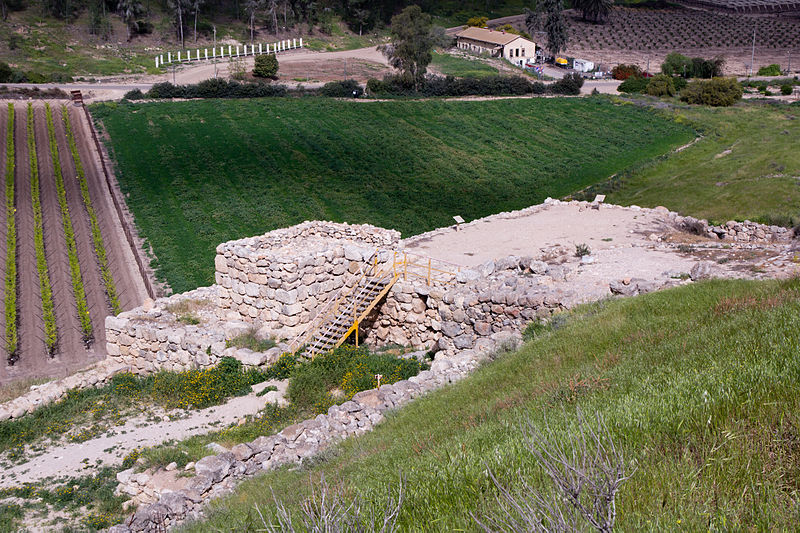
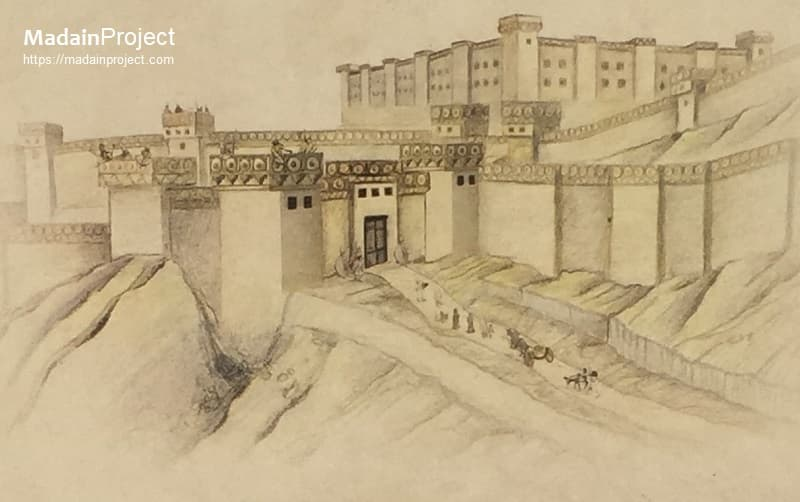
Israelite Lachish became an important city, partly due to its location on an important Ancient Highway (the road to Hebron or Jerusalem from Egypt went through here). Its fortifications were massive, and Lachish soon became the second biggest city in the Kingdom after Jerusalem.
One of many towers which protected the well-fortified city. Tourists may climb to the top, where they are treated to an amazing, panoramic view! Photo Credit: Oren Rozen – Creative CommonsAttribution-Share Alike 3.0 Unported
Artist rendition of ancient Israelite Lachish. Photo Credit; MadainProject
Lachish became a regional capital city, which meant it had its own Governor. The Governor’s home was the largest palace ever found from Ancient Israel.
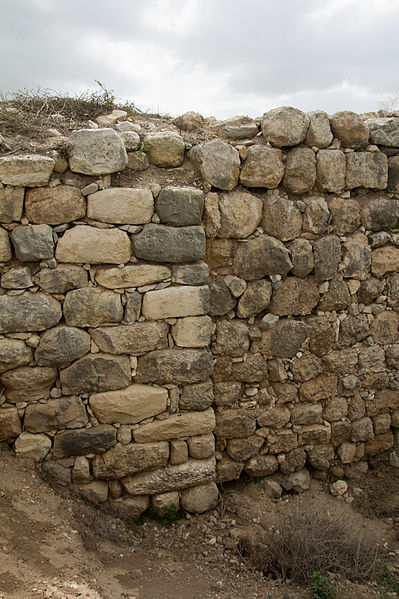
After Solomon’s death, his son Rehoboam became King. Under him, the Kingdom split into two, with Rehoboam retaining control of Judah, the southern kingdom. Fearing an invasion from the Northern Kingdom of Israel he fortified his cities, including Lachish which will still in his possession (2 Chronicles 11:9).
Remains of a monumental building, probably built by King Rehoboam.
Circa 600 BCE, the Assyrian Kingdom of Northern Iraq became the world’s superpower. They had never lost a war or battle and were quite ruthless. They quickly conquered the Northern Kingdom of Israel. Under Assyrian King Sennacherib, King Hezekiah’s Kingdom of Judah was attacked, and Lachish was under siege (2 Chronicles 32:9).
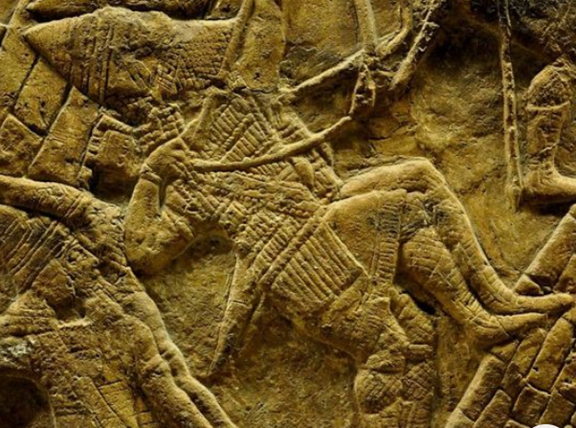
The “Lachish Relief”( today in the British Museum) was found covering the walls of Sennacherib palace and tells the story of the Lachish battle. In order to enter the city, a siege ramp was built. In this picture, Assyrian soldiers are climbing the siege ramps they built.
During the siege, Assyrians built siege ramps to enter the city.
From Lachish, Sennacherib laid siege to Jerusalem with 185,000 troops. G-d created a miracle, and an angel came down and smote Sennacherib’s entire army. This destroyed Assyria’s threat to Judah, which continued to remain independent for close to 150 years (for more on the giant miracle in Jerusalem, click here).
Assyria had never lost a battle, but because of G-d’s miraculous intervention, the Assyrians had no choice but to bypass Judah (in red circle). Photo Credit: Nigyou – Creative CommonsAttribution-Share Alike 3.0 Unported
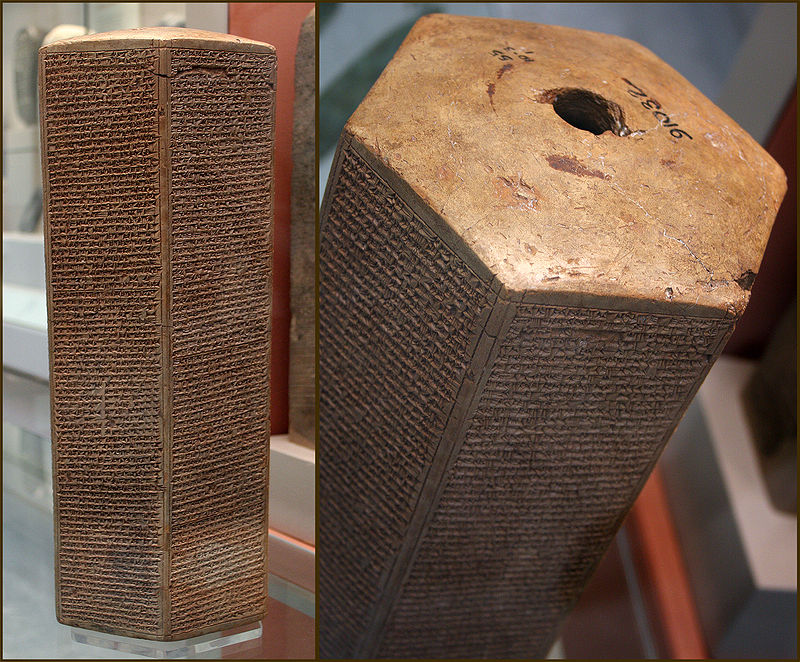
The only one left alive was Sennacherib himself, and when he returned he documented his version of the story (which does not contradict the Biblical account). Throughout his palace, he bragged about conquering various capital cities. Only in Judah, did he boast about conquering a non-capital city, that of Lachish. As for Jerusalem, he said “He caged it like a bird” (basically saying that he failed to get the job done). Had he been able to conquer Jerusalem, it is almost guaranteed he would have bragged only about the capital city and not Lachish.
The Sennacherib Prism (today in the British Museum) is Sennacherib’s account of his ultimately failed attempt to conquer Judah. Photo taken from Public domain
After the Assyrians left Judah, Lachish was rebuilt, once again remaining the second largest city in the Kingdom.
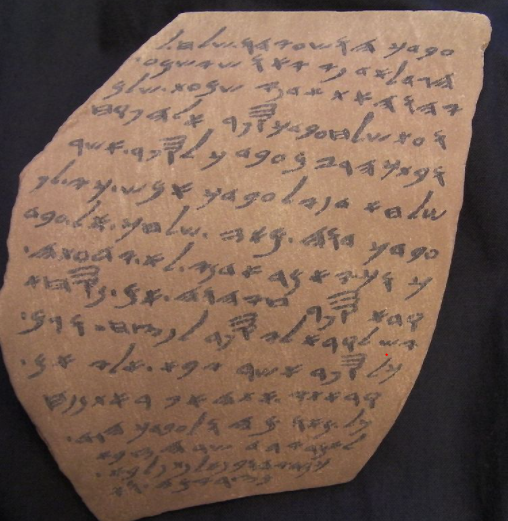
When the Babylonians conquered Judah, the last three cities holding out were Azekah (for more on this city click here), Lachish and Jerusalem (Jeremiah 34:7). Millenia later when archeologists dug inside the city gate, they found 20 letters between Hoshayahu, probably a commander of an outpost by Lachish to his superior Yaush during the Babylonian siege.
The Gate complex where the letters were found. Photo Credit: Shutterstock
In one letter, Hoshayahu says “We’re watching for the signals of Lachish, according to all the indications… for we cannot see Azekah”. In other words, just as in Jeremiah, the letter mentions Lachish, Azekah and Jerusalem as being the last three cities left.
One of 20 letters from Lachish written during the Babylonian siege (taken from the Public Domain)
Ultimately, Lachish was destroyed, and its inhabitants exiled. With only a couple of exceptions, Lachish has laid in ruins since then.
Although tourists seldom come here, this site is beautiful with well preserved archeology, and the views alone warrant the visit! The quiet and pastoral setting of this site has a calming effect on tourists and on your next trip to Israel, this is a site I would most highly recommend.
By Nosson Shulman – Licensed Tour Guide and Trip Organizer in Israel who specializes in History, Tanach (Bible) and Adventure Tours. For more itinerariesclick here. Check out our new Virtual tours including free sneak preview videos.
Walter Bingham ( 97) in his office. In the background are pictures of him with some of the world leaders whom he has covered during his 7-decade career.
In 2004 Walter Bingham, a Torah observant British Jew and well-known journalist who had just made Aliyah (immigrated to Israel), went to apply for a job with a well-known radio station. Despite his resume spanning half a century, they said he wasn’t right for the job. The reason? He was 80 years old. Not to be discouraged, he set out to prove that he could still get the job done. A few weeks later, he landed a job with Israel National Radio. Now at age 97, he has two popular radio shows, and still writes articles regularly for the Jerusalem Post!
Born in Germany in 1924 just before the rise of the Hitler, יש”ו, in 1938 he fled to England on the famous Kindertransport program, where England allowed 10,000 child refugees to enter without their parents. Very few of those kids ever saw their parents again, though his mother survived and joined him after the war (his father died in the Warsaw Ghetto in 1943).
In 1944, Walter joined the British Army and stormed the beaches of Normandy on D-Day. After the war, he worked in intelligence where he interrogated high level Nazi War Criminals to collect evidence against them for the infamous Nuremberg trials. One of the people he interviewed was German foreign minister Joachim Von Ribbentrop who denied all knowledge of the Holocaust (In the trials he was the first German to be convicted, sentenced to death, and eventually hung).
Remaining in England he found a radio job, eventually also branching out into journalism. In his spare time, he earned degrees in Political Science and Philosophy, got his pilot’s license, and even modeled! He also acted in small parts in movies, including two of the Harry Potter movies playing a wizard. In 2018, he was awarded the French Legion of Honor, France’s highest honor.
When his wife passed away, he decided to live his dream and make Aliyah. He was later joined by his daughter, now in her 70s, grandchildren and great grandchildren.
Though Walter Bingham was recognized by the Guinness Book of World Records as the world’s oldest active journalist, it was not the first time he broke a record. In 2017, he was recognized as the world’s oldest radio host, and in 2018 he became the oldest Israeli to skydive (something which he says he plans to do again at 100)!
When asked how he feels at his age, he answers, “On a good day, I feel like I’m 40, on a bad day 50”!
Nosson Shulmanis a journalist and Licensed Tour Guide in Israel specializing in Biblical tours. To allow tourists to experience Israel during the Corona era, he created the new hit Israel tour video series which brings Israel to the home of viewers by simulating actual tours. To check out his free sneak preview tour videos, click here
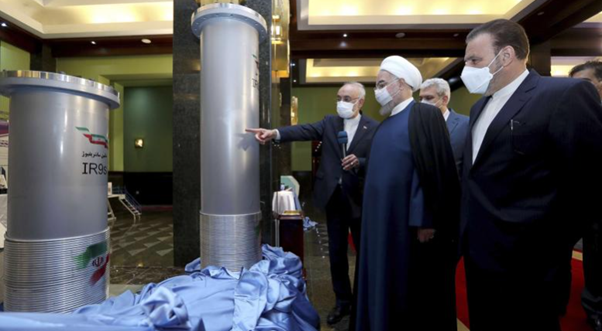
Iranian President Hassan Rouhani visits the Natanz plant one day before Israel attacked it.
Iran, months away (or even weeks according to some) from producing its first nuclear weapon, recently suffered a severe setback. This was the near total destruction of its flagship nuclear enrichment facility in Natanz. Iran, constantly threatening to “wipe Israel off the map”, has had their nuclear ambitions set back at least 9 months, if not more. Israel has vowed not to let Iran develop a nuclear weapon.
This comes against the backdrop of reports that the Biden administration is planning to unfreeze 7 billion dollars in Iran’s assets (in addition to the removal of crippling sanctions) in order to return to Obama’s 2015 failed nuclear accords.
Israel has had much experience in preventing hostile nations from receiving the bomb. In 1981, Israel destroyed Iraq’s nuclear reactor. In 2007, Syria’s secret nuclear reactor was also destroyed. In both of those cases, the countries had concentrated their nuclear power in one location, all above ground. Iran tried to learn from their neighbors’ mistakes by building below ground facilities in fortified bunkers in several locations throughout the country, forcing Israel to get creative.
In 2007 Iran’s program was set back many years by the famous stuxnet virus, which Israel planted into its central computer system. Iran then decided that it was too dangerous to have all of its nuclear program controlled by one vulnerable computer, so the system was decentralized with multiple computer systems. Even so, Iran had one major vulnerability; the plant received its electricity from outside powerlines. The electricity is used to spin the thousands of centrifuges, which converts uranium gases into nuclear fuel. If the electricity had been cut while the centrifuges were spinning at high speeds, the sudden loss of power would cause the fast-moving machines to lose balance, spin apart into shrapnel, and destroy all of the machines with a domino effect.
Iranian centrifuge machines which enrich the uranium needed to build a nuclear bomb.
To protect itself, Iran built an underground battery system which would allow the centrifuges to continue running in case of a power failure. In a daring operation, not only did Israel knock out the power above ground, but a bomb was somehow successfully planted on the battery below ground (in one of Iran’s most secure locations). When the power from above ground was out, the bomb was denotated underground and two thirds of the facility was completely destroyed, while the other third was severely damaged. This followed the assassination of Iran’s chief nuclear scientist, as well as Israel’s stealing of the country’s most secure nuclear documents, which Israeli agents spirited out of the country. Subsequently, Prime Minister Netanyahu presented these documents on live television to a stunned world, proving that Iran’s nuclear program was never intended for the peaceful purposes they claimed it would be.
As much as this was meant to be a strong message to Iran, Israel was also sending a message to the Biden administration (currently trying to get Iran to “abide” by the terms of the 2015 deal). While President Obama did not take Israel’s fears into consideration, he at least kept Israel informed at all stages of the negotiations. Since Israel publicly opposed the deal (with the Prime Minister actively lobbying Congress to oppose the Obama plan) Biden thought it would be easier if Israel wasn’t provided information with which they could “harm” the process. This attack was a warning to the administration that if Israel was not included in the process, Israel would not hesitate to act alone. According to reports, the attack has led the US to return to briefing Israel on Iranian negotiations.
Nosson Shulmanis a journalist and Licensed Tour Guide in Israel specializing in Biblical tours. To allow tourists to experience Israel during the Corona era, he created the new hit Israel tour video series which brings Israel to the home of viewers by simulating actual tours. To check out his free sneak preview tour videos, click here
“Ahab sent among the Children of Israel and he gathered the prophets to Mount Carmel. Elijah approached all the people (1 Kings 18: 20-21)”
The Carmel Mountains are one of the few natural forests in Israel remaining (most others were handplanted in the last 70 years). Photo Credit: Gideon Pisanty – Creative CommonsAttribution 3.0 Unported
Today we will visit one of Israel’s most beautiful and off the beaten track sites, the Carmel Mountain range. Although the majority of tourists pass alongside the mountain, only a few actually enter. Historically, due to its sloped hillsides and deep caves, the Carmel has been sparsely populated and a great place to hide out from the authorities. It was here that Jewish refuges hid from the Romans (contemporary historian Josephus wrote that the Romans would not enter here).
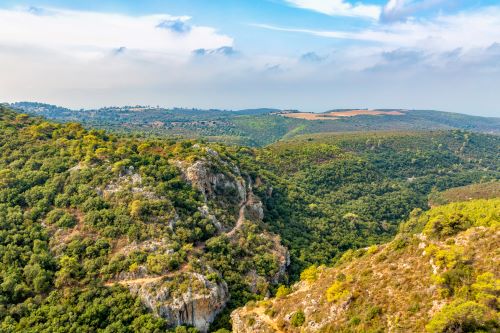
The Carmel Mountains are filled with steep cliffs that made this mountain an ideal place to stay safe from invaders. Photo Credit: Shutterstock
Those making the effort to come here are seldom disappointed. The area boasts some of the best hiking in the country, and its natural beauty and panoramic views are second to none. This is one of the few remaining places where Israel’s natural forest (filled with oaks and laurels) can be seen. In the late 19th/early 20th century, the Turks destroyed most of the forests to build railroads and factories. Most of Israel’s dense forests have been handplanted in the last 70 years!
This area is known as “Little Switzerland”. Photo Credit: Shutterstock
“Carmel” means the Vineyard of G-d. The majesty of this beautiful Mountain is referenced in the Bible (Song of Songs 7:6). In Isiah 35 when mentioning the end of days, it says the deserts will blossom like the majesty of the Carmel!
Although there are several biblical references to Carmel, one story (arguably the most well-known in the entire Hebrew Bible) stands out. That is the story of Elijah challenging the false prophets of Baal.
The exact spot on the Carmel Mountain where Elijah is believed to have challenged the false prophets.
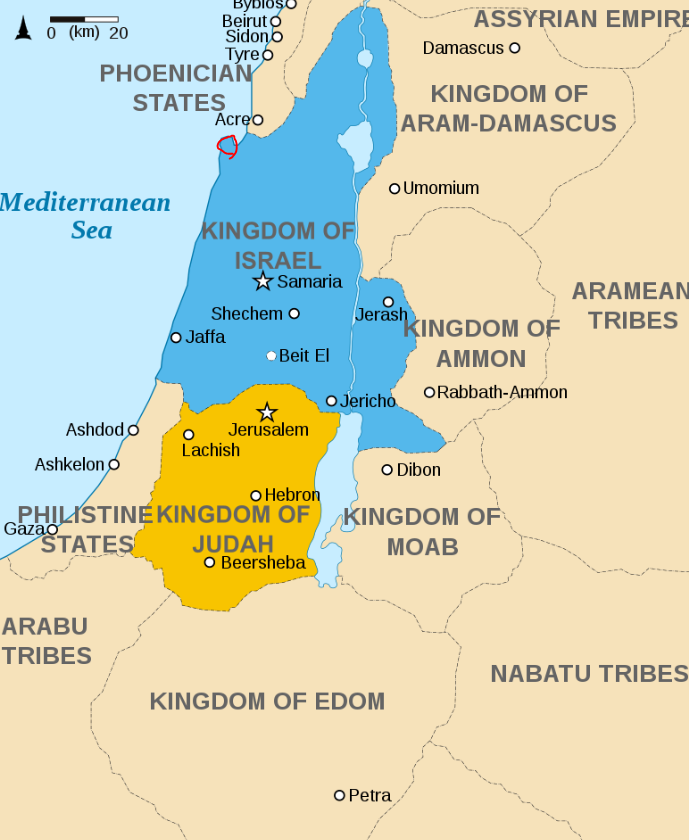
At that time, the land was divided into two Kingdoms, Israel in the North and Judah in the South. The Northern Kingdom of Israel was ruled by the evil King Ahab and his wicked wife Jezebel.
Map of the divided kingdom. Mount Carmel is located within the red circle. Photo Credit: Oldtidens_Israel_&_Judea.svg: – CC BY-SA 3.0
When Ahab married Jezebel (a non-Jewish Sidonian princess) she brought the Baal, a form of idol worship, to Israel thus influencing the King to join her. At her own expense, hundreds of false prophets were supported, and in order to rid the land of true prophets, she began to slaughter them. The prophet Ovadia, at great risk to his own life, hid 100 prophets, saving them.
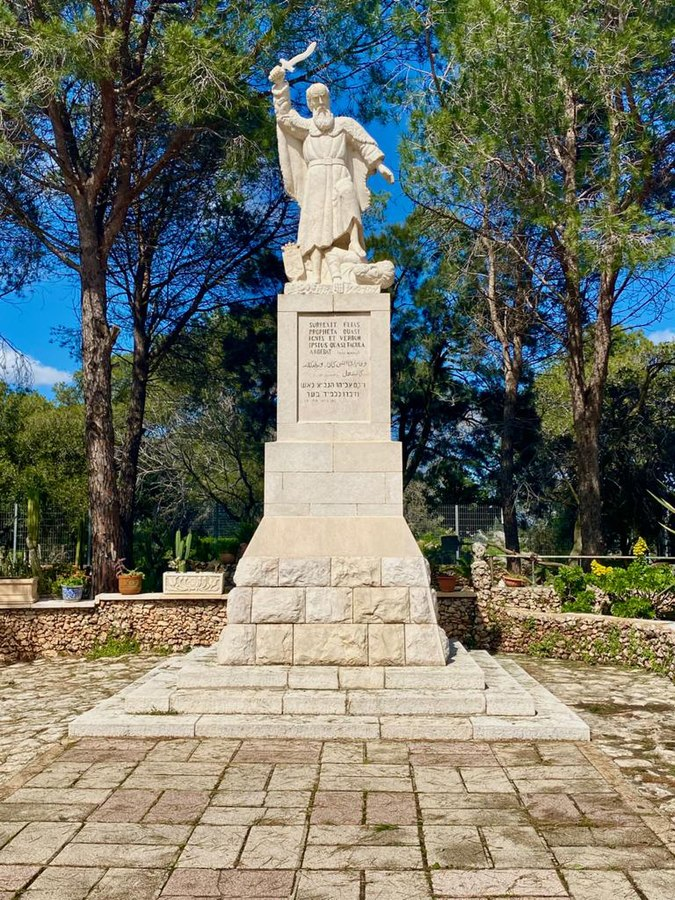
A statue of Elijah at the site believed to be the location of the story from 1 Kings 18. Photo Credit: שליאן פלג פלג – Creative Commons Attribution 2.5
Elijah spoke out against the King’s idol worship. G-d then commanded him to go into hiding in a cave, where Ravens brought him food daily. According to Jewish sources, the ravens brought the food from the King and Queen’s table. After three years had passed, G-d told Elijah to leave the cave and confront Ahab. Upon meeting him, he challenged Ahab to gather together the false 850 prophets to Mount Carmel, to see who was really the true G-d. Ahab was so convinced of the Baal idols superiority, that he invited the Children of Israel to come and watch the test.
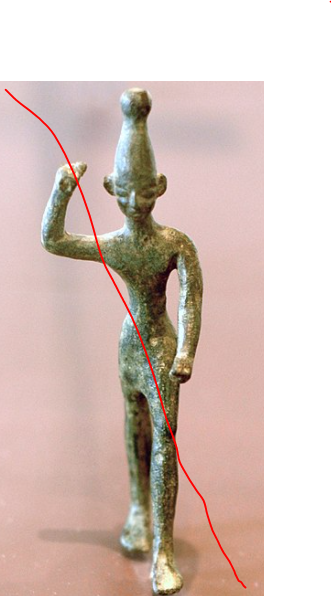
A statue of the false baal idol. Photo Credit: Public domain
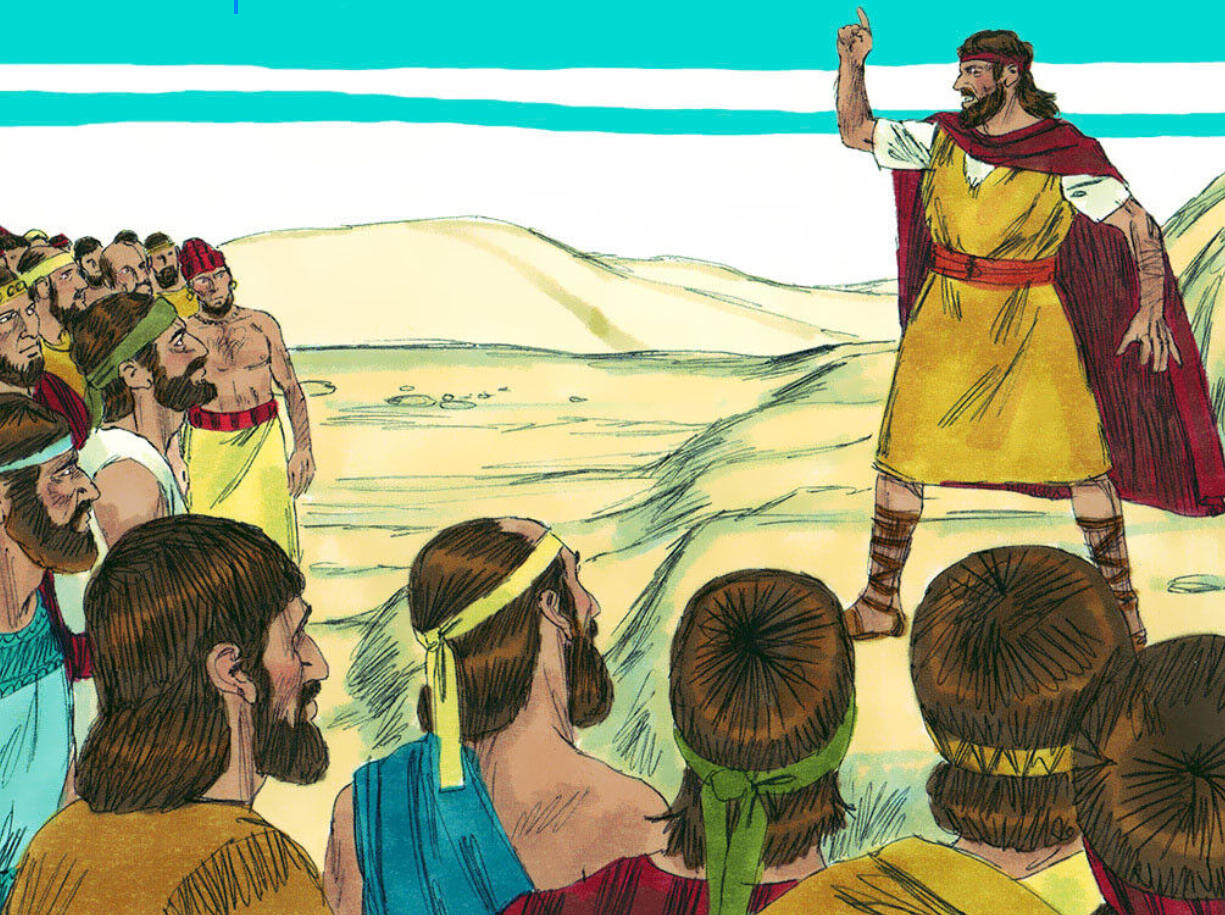
Elijah admonished the gathered people saying, “How long will you dance between two opinions? If Hashem is G-d, go after Him and if Baal, go after it. (1 Kings 18:21)”. Historically at that time, opinions were seldom held that it was “all or nothing”. A person could believe in G-d, but the temptation for idol worship was so strong that people would fall into temptation and bow to it, even though they felt intellectually that G-d was in charge. According to Jewish sources, G-d made idols very spiritually appealing, addictive even, in order to test people and allow them to grow spiritually by resisting them. The ability to resist idol worship took extreme will power and inner strength. This was especially hard when the King, many influential people and the society at large were encouraging this behavior, even persecuting those speaking out against it!
Why do people not feel the urge to bow down to weird looking statutes today? At the beginning of the Second Temple period (after the Babylonian exile) the Jewish sages were concerned that the traumatized nation was no longer at a level where the majority could resist these painful urges, so they prayed to G-d to remove the evil inclination of Idol worship, which He did. However (prophesy, the positive counter balance to idol worship) was also removed which is why we do not have prophets or the urges to bow down to statues today.
For the test, Elijah said that both the “prophets” and he should each take a bull, cut it up and put it on an altar without applying fire. He allowed them to pick the bull they wanted first, so they would not later blame him for their impending failure. He then told them to call out in the name of their gods while he would call in the name of Hashem. Whoever was successful in getting G-d to consume the sacrifice with fire, would prove to be the true prophet. The onlookers responded that this proposal was good (1 Kings 18: 24). Although the baal prophets knew that they were false, since the challenge was publicly made, they could not back down.
From morning to noon, they called out to their gods but there was no response. They tried yelling loudly, dancing and frantically cutting themselves to let blood, but all to no avail. According to Jewish sources, someone hid under the alter and was going to light it from underneath to make it look like this sacrifice was accepted by fire, but G-d sent a poisonous snake to kill him!
Elijah then asked the assembled to “Draw near” to him. He then built the altar, prayed to G-d to accept his sacrifice, and a heavenly fire came and consumed it. The people then fell on their faces saying “Hashem-He is the G-d, Hashem-He is the G-d” and the entire nation repented.
Elijah said to “Seize the prophets of Baal! Let none of them escape (1 Kings 18: 40). They were brought down to the Kishon Brooke, just underneath the mountain, and slaughtered.
Kishon Brooke, as seen from the top of Mount Carmel where the baal prophets were killed (in red circle). Photo Credit: Ovedc
Currently there is a small church on the site dedicated to Elijah. Tourists are able to go onto the roof to see (arguably) Israel’s greatest panoramic view!
On a clear day one can see from the roof, Israel’s coast (and sea), Biblical Jezreel Valley, Samarian mountains, the Galilee and the snowy peaks of Mount Hermon
On your next visit to Israel, be sure to make a quick stop here!
Relive the biblical Mount Carmel with Nosson Shulman on your very own private luxury Israel tour. To experience Israel from the comfort of your own home see our new Virtual Tours including our new released Hebron Tour.
By Nosson Shulman – Licensed Tour Guide and Trip Organizer in Israel who specializes in History, Tanach (Bible) and Adventure Tours. For more itinerariesclick here. Check out our new Virtual tours including Jerusalem: free sneak preview videos.
For the third consecutive year, the Sheba Medical Center in Ramat Gat (just north of Tel Aviv) has made Newsweek’s prestigious “Top 10 hospitals in the world ranking”.
Originally founded in 1948 by Prime Minister Ben Gurion as a military hospital to treat casualties of the War of Independence, it became a civilian hospital in 1953. Today the Sheba Medical Center includes an acute care hospital, one of the world’s largest rehabilitation centers, a woman’s hospital, PTSD clinic for soldiers, children’s hospital, eating disorder clinic, a cutting-edge laboratory division, academic campus and more!
The hospital is one of the world’s premier medical tourism destinations, where people from all over the world, including the ruling elite from Arab countries (some of which don’t have official relations with Israel) pay top dollars to be treated. The Sheba Medical Center is also at the forefront of humanitarian efforts across the globe, setting up state of the art clinics in third world countries like Uzbekistan, Ivory Coast, Equatorial New Guinea, and Mauritania, in addition to providing medical support to Cambodia, Rwanda, Armenia and Sri Lanka.
The top-ranking hospital in the world is currently the Mayo Clinic in Rochester, Minnesota. The Newsweek list is based on data which includes recommendations of medical experts, patient surveys and medical KPI’s (such as patient waiting times, bed occupancy rates, cancelled appointments, readmission rates, average hospital stay, medical equipment, etc.).
Nosson Shulmanis a journalist and Licensed Tour Guide in Israel specializing in Biblical tours. To allow tourists to experience Israel during the Corona era, he created the new hit Israel tour video series which brings Israel to the home of viewers by simulating actual tours. To check out his free sneak preview tour videos, click here
The Rock Hyrax is still found in abundance in several nature sites in Israel (see Leviticus 11:5 and Psalms 104:18). Photo Credit: “File:Rock hyrax israel.jpg” by Yael & Amihay is licensed under CC BY 2.0
In part 1, we saw 5 exotic animals which surprisingly roamed the land of Israel in recent times, but no longer do. However, amazingly many of the most beautiful animals mentioned in the Bible can still be seen in Israel today! Some of them never actually went extinct (in Israel). Others did, but were later successfully reintroduced into the wild.
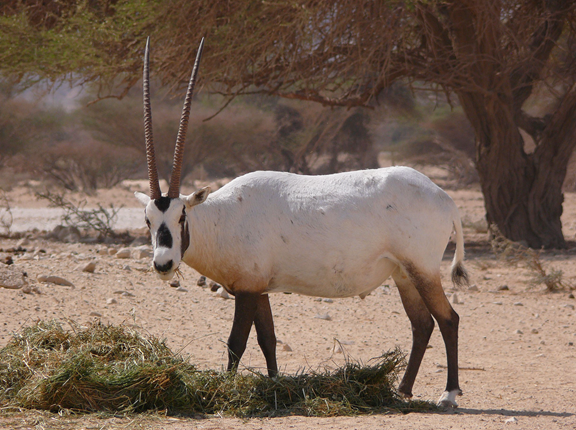
The desert Hai Bar is an enclosed desert space mimicking the natural habitat of certain animals (such as the Arabian Oryxes in this picture) where they are trained to live in the wild. Photo Credit “Scimitar Oryx (Hai-Bar Yotvata)” by Zachi Evenor is licensed under CC BY 2.0
In order to reintroduce animals into the wild, Israel has set up two controlled areas in the country called Hai Bars. One is in the biblical Carmel mountains, which mimic the habitant of animals who thrive in the Mediterranean climate of northern and central Israel. The other is in the desert, for animals that thrive in the arid climates of southern Israel (which tourists may visit).
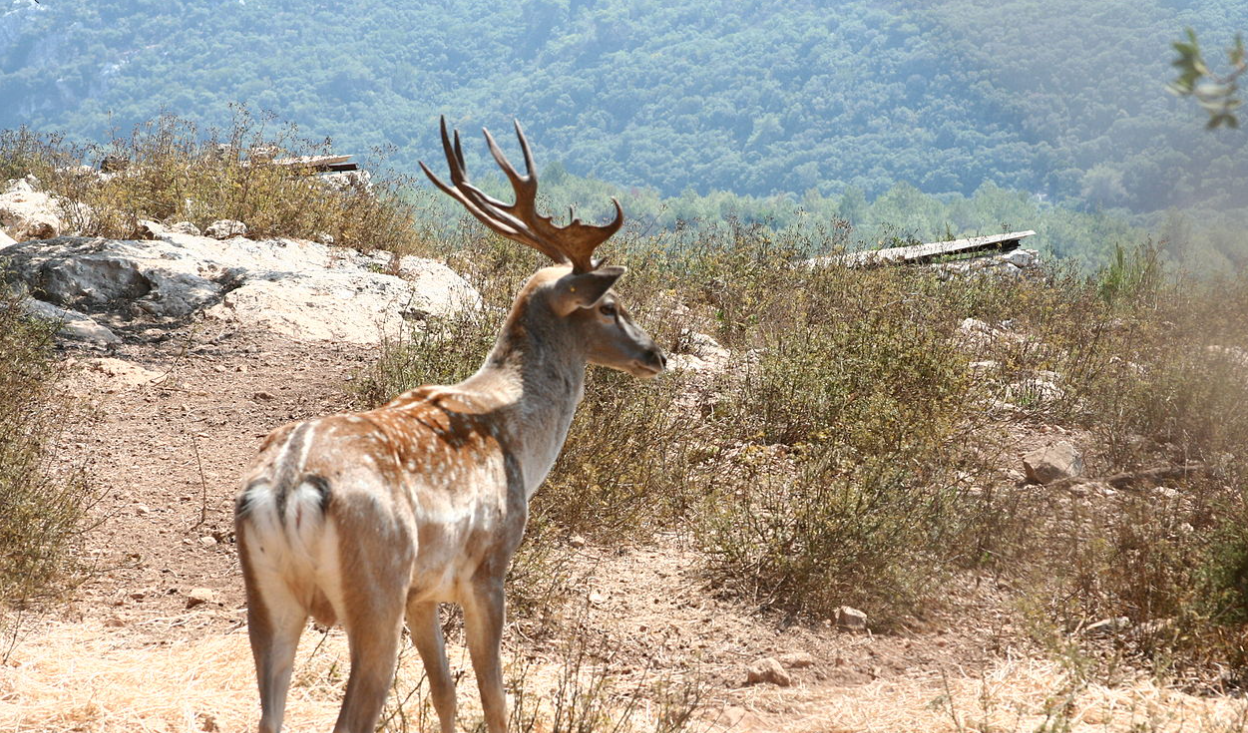
Within the 1500 acres of the Hai Bar Reserve in the Carmel mountains, animals of the Mediterranean forest climate, such as the Persian fallow deer (pictured), have been successfully reintroduced into Israel’s wild.
Below are five beautiful animals which can be found in Israel today:
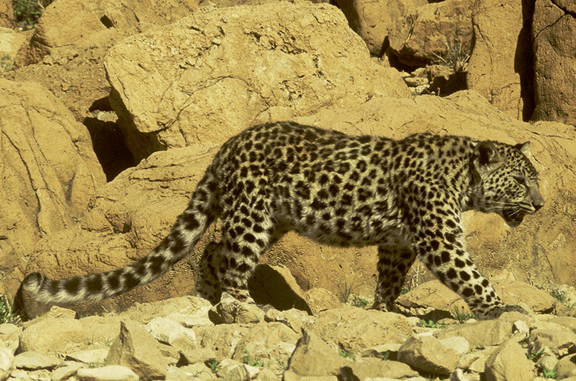
1) Leopard– “A wolf shall live with a lamb, and a leopard shall lie with a kid (Isaiah 11:6).”
Picture of a wild Arabian Leopard taken at Ein Gedi national park. Photo Credit: יוסי אוד CC BY 2.5
People are often surprised to hear that Israel still has wild leopards, currently the largest felines in Israel. At the beginning of the 20th century, the Arabian leopard was a common sighting throughout Israel. As the years went by the Bedouins hunted them, almost to extinction. The last one in Northern Israel was killed in 1965, and there are believed to only be 6 left in all of Israel (and only 200 Arabian leopards in the world) all living in the Negev desert of Israel’s south.
The last confirmed spotting of this stunning cat was in 2012 on IDF surveillance cameras in Northern Samaria.
2) Hyena – “And one company turned to the road leading to Beth-horon, and one company turned to the road leading to the border, which overlooks the valley of the Hyenas, toward the wilderness (1 Shmuel 13:22)”
Striped Hyenas play an important, “cleanup” role in nature due to the fact that they eat left over carcasses of other predators, which would otherwise just remain there. They can be found in several locales in Israel’s wild (except the coastal region) where they live in packs. Although not that rare, people do not usually see them due to their nocturnal lifestyle, but their “laughter” can be heard at times by campers in the desert.
3) Antelope (Arabian Oryx) – “These are the animals that you may eat…Antelope (Deuteronomy 14:4-5)”
In 1978 using 4 imported specimens, the Arabian Oryx was reintroduced into Israel, and its numbers are steadily growing in the wild! Photo Credit: CC BY-SA 3.0
In the 1970s, the Arabian Oryx became extinct (in the wild) worldwide. Israel purchased four of them from a zoo which still had them in Phoenix, and by 1982 the first batch were ready to be reintroduced into the wild. Today, more than a hundred live in the wild and their population continues to grow. In addition, Israel continues to breed and release more antelopes from the Hai bar (about 6 on average annually) adding to its numbers.
4) Persian Fallow Deer – “These are the animals that you may eat…fallow deer (Deuteronomy 14:4-5)”
Two Persian Fallow Deer couples were brought to Israel on the last EL Al flight to ever leave Iran in 1979 and their reintroduction was a smashing success! Today hundreds live in the wild, mainly in the Western Galilee! Photo Credit: Eyal BartovCC BY-SA 3.0
Though common in the Middle East during the early 19th century, due to rampant poaching, they went extinct worldwide (both in the wild and captivity). Or so the world thought! In the 1950s, a small herd was surprisingly discovered in Southwestern Iran.
For two decades, Israel tried to convince the Shah of Iran to give two deer to Israel. They even invited his brother (an avid hunter) to Israel to hunt Ibexes (although the Ibex is a protected species, the Agriculture minister made an exception in this case). Eventually, the Shah’s brother agreed to give the deer. General Avraham Yoffe (the founder and driving force of Israel’s animal reintroduction program, including the hai bars) immediately flew to Tehran to take possession of them, but upon landing he suffered a heart attack, and the project was put on hold.
In December 1978 with the Iranian revolution taking place, the Shah called the Israeli government to come pick up the deer before it was too late. The Mossad (Israel’s secret service) was dispatched to Tehran but by the time they arrived, the Shah and his family had fled to the US and they were now on their own to find the deer. Miraculously, the agents managed to locate the deer and put 4 of them on the last El Al flight to ever leave Iran (since 1979, Iran has refused to recognize Israel’s right to exist).
Today, 400-500 live in Israel’s wild and can be seen by tourists in Nahal Ksiv, Nachal Soreq (outside of Jerusalem) and the Carmel Mountains. Outside of Iran, Israel is the only country in the world to have Persian Fallow Deer currently living in the wild.
5) Griffin Vulture – As a nesher (Griffin Vulture) awakens its nest, hovering over its fledglings, it spreads its wings, taking them and carrying them on its pinions (Deuteronomy 32:11)”
The bird translated as “Eagle” in English translations of the Bible is believed by zoology experts to be the Griffin Vulture. Photo Credit: “Griffon Vulture” by Lennart Tange is licensed under CC BY 2.0
When reading Biblical translations, words often get lost in translation. This majestic bird is a great example. The Hebrew word “Nesher” (see Exodus 19:4 and Proverbs 30:19) is often translated into English as “Eagle” but it really means “Griffin Vulture”.
Fifty years ago, this bird of prey lived in almost all parts of Israel, but their numbers declined to the point where they went extinct in the North and only a few lived in the south. Today the birds are protected and monitored, and their numbers are growing (though they still remain critically endangered). They have even been reintroduced into the Golan Heights. The best place in Israel for tourists to view them is at the Gamla National Park, also home to one of the most fascinating archeology sites. Gamla also boasts Israel’s largest waterfall!
Nosson Shulmanis a journalist and Licensed Tour Guide in Israel specializing in Biblical tours. To allow tourists to experience Israel during the Corona era, he created the new hit Israel tour video series which brings Israel to the home of viewers by simulating actual tours. To check out his free sneak preview tour videos, click here. To view sample tour itineraries or to inquire about private tour opportunities with a personalized itinerary on your next trip to Israel, click here.
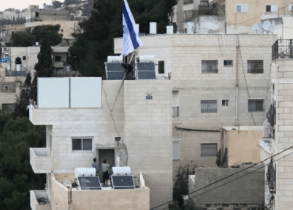
An apartment building housing Jewish families, surrounded by Arab owned buildings filled with often hostile residents.
Last week after 87 years, 15 Jewish families returned to the homes in Shiloach (the Hebrew name for Silwan) where they had been forcibly evacuated during the Great Arab Revolt between 1936-39. They joined 22 Jewish families already living in the neighborhood as well as more than 20,000 Arabs. In addition, the nearby Jewish neighborhood of Ma’ale Zeitim (located within the Arab neighborhood of Ras al-Amud) has 106 families.
At one time, walking a few minutes from one neighborhood to the next involved significant risk (in both Ras Al-Mud and Silwan intense anti-Semitism is rampant). With these homes once again in Jewish hands, there is now an unbroken continuum between all of the Jewish families.
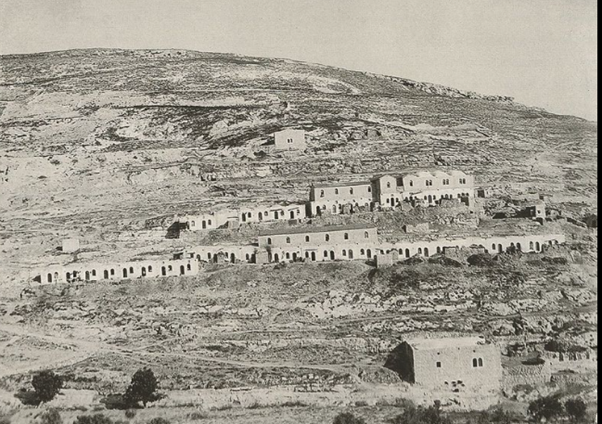
The Shiloach neighborhood was started in the early 1880s by devout Yemenite Jews who sold everything they had to immigrate to Israel in 1881. They believed that it was their duty to settle the land of Israel in preparation for the coming of Messiah. Impoverished and without a home in Jerusalem, they had no choice but to sleep in ancient burial caves. Having mercy on them, the Jewish world came together to build new houses for the families, and in time the community grew to the point where they were 160 families and five synagogues.
Old picture of some of the homes built by generous, Jewish philanthropists for the poor Yemenite Jews of Jerusalem.
In the late 1930s with the encouragement of the pro-Nazi, Grand Mufti (a close friend of Hitler) local Arabs rioted throughout the country in order to kill Jewish inhabitants and get the British, who ruled the land, to limit Jewish immigration. In response, the British issued the infamous White Paper which almost entirely cut off legal Jewish immigration to Israel at a time when Jews were trying desperately to escape from Europe. In Shlioach, the Jewish families were forcibly evacuated by the British and their homes were taken over by Arab Squatters.
When Israel liberated Jerusalem in 1967, many attempts were made by the Jewish community to retrieve their stolen property. In the court the wheels of justice moved slowly (some cases are still pending) likely due to fear of international pressure. In many cases, the Jews had to rebuy their own land from the squatters. In other cases, the courts ruled the Jews were legal owners but that the Arab families had the right to continue living there as long as they paid a token amount of rent (often the equivalent of only about $60). Many refused for years to pay, stating that the Israeli courts were illegitimate, which eventually led to their evictions.
In 2015, one of the Synagogues was returned to the Jewish community, and today houses the Ohel Shlomo Synagogue and a small Yeshiva (place of intense Torah study). Though the community faces hostility regularly (only last week firebombs were thrown onto some of their properties with young kids) community life is rich, and those living there would never consider leaving. They live with purpose and see it as their mission to make sure Jerusalem is never divided.
Nosson Shulmanis a journalist and Licensed Tour Guide in Israel specializing in Biblical tours. To allow tourists to experience Israel during the Corona era, he created the new hit Israel tour video series which brings Israel to the home of viewers by simulating actual tours. To check out his free sneak preview tour videos, click here
















 Unique Sites of Israel Blog

![[1]](https://commons.wikimedia.org/wiki/File:Striped_hyena_(Hyaena_hyaena).jpg)