
Prime Minister Netanyahu speaking at the entrance sign of the new community in June 2019, shortly after the US recognized Israel’s sovereignty over the Golan Heights.
Last week the Bieber family moved into Trump Heights, becoming the first residents of Israel’s newest town in the Golan Heights, with more families expected to arrive in the coming days. Altogether 110 homes have already been completed, or in the process of being built.
The Golan Heights famously overlooks Israel’s main water sources, as well as populated areas. From 1948-1967, Syria controlled the Heights and would shoot into civilian communities without provocation. During the 1967 Six Day war, Israel liberated the Golan Heights, ending the nightmare for the Israeli schoolchildren and farmers who were easy targets for Syrian Snipers.
Topography map of the Golan Heights, showing the height advantage the Golan Heights has over northern Israel and the Sea of Galilee, Israel’s main drinking source. During the Syrian occupation, many efforts were made to contaminate the vital water source.
In 1981 Israel legally annexed the Golan Heights, applying civilian law, although most countries did not recognize it. Many countries pressured Israel to return the Golan Heights to Syria. Had Israel complied with these demands, today Al Qaeda, ISIS and Iran would be meters away from Israel’s northern communities and water.
On March 25, 2019, the US officially recognized Israel’s rightful possession of the land, citing Israel’s survival as a nation being largely dependent on permanent control of the Golan. Even so, the historical Jewish connection to the land goes deeper than security. In the Bible, this land was given by G-d to the Jewish tribe of Menashe. In Byzantine-Roman times, roughly 200 years before the advent of Islam, 34 ancient synagogues from that time have been found, though many more are believed to exist.
Today there are approximately 50,000 people living there, with close to half being Jewish and the remainder Druze. With the US’s recognition of Israel’s right to the land, many US investors, previously weary of investing in a “disputed” zone, are sinking money into the local economy. Israel’s goal is to have 100,000 Jews living in the Golan Heights within the next 10 years, which most consider to be an attainable goal.
Former President Trump was not the first sitting president to have a town named after him during his administration. In 1949, Kfar Trumen was established in Israel, near Israel’s airport, in honor of President Harry Trumen being the first world leader to recognize the State of Israel, which he officially did 10 minutes after Prime Minister Ben Gurion declared independence.
Nosson Shulmanis a journalist andLicensed Tour Guidein Israel specializing in Biblical tours. To allow tourists to experience Israel during the Corona era, he created the new hit Israel tour video serieswhich brings Israel to the home of viewers by simulating actual tours. To check out his free sneak preview tour videos, click here.To view sample tour itineraries or to inquire about private tour opportunities with a personalized itinerary on your next trip to Israel,click here.
“Jericho was completely sealed before the Children of Israel, no one left and no one entered. Hashem (G-d) said to Joshua, “See I have delivered into your hand Jericho and it’s King and mighty warriors (Joshua 6: 1:2)”
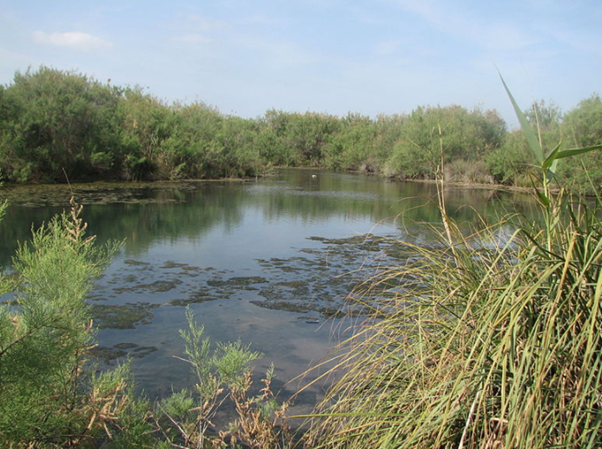
View of Jericho from Vered Yericho
Today, we are exploring perhaps the world’s oldest city, Jericho. This famous, millennia old city may be well known to the majority of people around the world, yet the majority of visitors to the Holy Land do not visit here. As it is run by the Palestinian Authority, Israelis are forbidden by law to enter. None the less, we will be visiting Vered Yericho, a picturesque Jewish settlement where we will get a perfect view of this ancient, biblical wonderland!
This is from one of my tours of Jericho from the Vered Yericho lookout, a stunning Jewish town in Judea and Samaria. The beauty of this town makes it a worthwhile stop, even without the view!
Since Jericho is in the barren Judean Desert, many of my tourists have wondered how this city was able to flourish for Millenia, well before the days of piping water from afar. I have explained that Jericho is an oasis (living place in the desert) with an abundance of natural (and historically very sweet) water. Due to current conditions, drinking the water is not recommended and may even be dangerous. Also, Jericho is the lowest inhabited city on Earth at 240 meters (787 feet) below sea level. The combination of water, unlimited sun, and thick atmosphere make this city particularly conducive to farming and cultivation. In fact, the Bible calls Jericho the “City of Dates (Deuteronomy 34:3)”
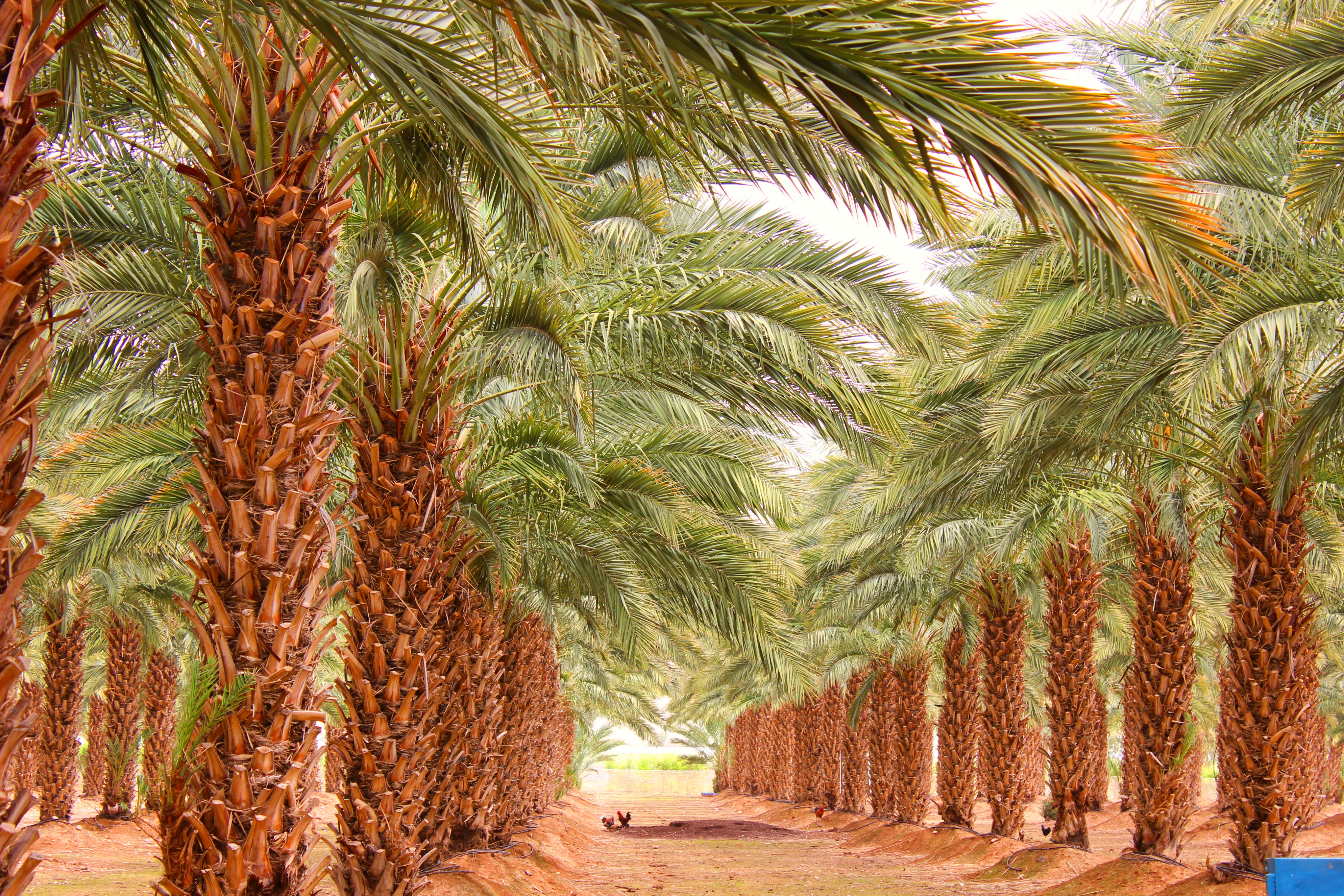
Even in 2021, Dates are still being cultivated in the Jericho area on a mass scale. Photo Credit: Shutterstock
After 40 years in the desert following Exodus, the Children of Israel entered the land (which G-d had promised their forefathers) by crossing the Jordan River (for more on the river and miraculous crossing, click here). Their point of entrance was opposite Jericho (Joshua 3:16).
The Jews crossed through the Jordan River (see Red Circle) opposite Jericho. As Jericho sat on ancient highways leading deeper into Israel, the Jews would have to first go through Jericho.
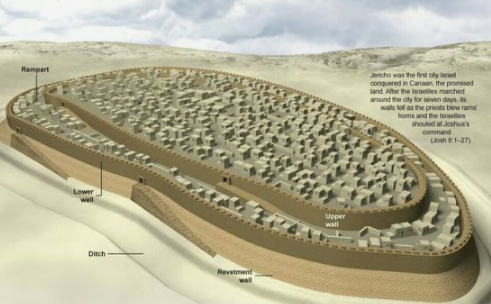
Jericho was famous for its formidable city walls which were considered “impenetrable”. By natural means, trying to conquer the city would not have been a worthwhile endeavor because it would be doomed to failure. In order to win this battle, G-d’s intervention would be necessary. Indeed, G-d promised Joshua victory (Joshua 6).
G-d commanded Joshua and his army, along with 7 Kohanim (priests) carrying Shofars (Ram horns which are used as an instrument) and the Ark of the Covenant, to incircle the city, one time each, for the next 6 days. On the 7th day the (priests) and the army encircled the city seven times. After the 7th roundabout, the priests blew the Shofar, and the Children of Israel screamed out and the walls sunk into the ground, which easily allowed the Jewish people to conquer and destroy the city. According to Jewish sources, the reason it sank deep into the ground (as opposed to tumbling down) was because the walls were so large that had they fallen above ground, the ruins would still act as a barrier to the Jewish army. Therefore G-d caused it to sink deep into the ground.
The Kohanim (priests) blowing shofars while encircling Jericho. Photo Credit: Sweet Publishing / FreeBibleimages.org – CC BY-SA 3.0
After the conquest, Joshua put a curse on any Jews who would either rebuild it or build a new city elsewhere and call it Jericho. He said, “Cursed before Hashem be the man who rises up and rebuilds this city, Jericho; with his firstborn (child) he will lay it’s foundation and with his youngest he will set up its gates (Joshua 6: 26)”. However, there is no Jewish law today which prohibits Jews from living in Jericho. Indeed, throughout the last few millenia Jericho has had Jewish populations for much of its existence. According to Jewish sources, once Jericho was rebuilt, in violation of Joshua’s curse, the city was no longer forbidden for Jews to settle in. Hundreds of years later, Hiel from Beit El rebuilt the city, though his children started dying off during construction, as the curse promised, and his youngest son died when the gates were completed (Kings 16:34).
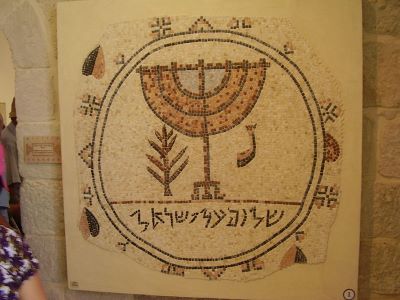
Replica (from the nearby Inn of the Good Samaritan museum) of the mosaic on a Synagogue floor found in Jericho, circa late 6th century CE. Once Jericho was rebuilt, there were no prohibition on Jews to live there and Jericho for much of its history had an active Jewish community. Photo Credit: צילום:ד”ר אבישי טייכר CC BY 2.5
After Elisha became the spiritual leader of the Jewish people (immediately after his Rabbi, Elijah the prophet was taken alive to heaven on a chariot by the Jordan River) he entered Jericho, where the residents of the city complained that the water of the city had turned bad and was very unsafe to drink/bathe. Elisha told them to bring him a new jar and put salt in it. He then went to the spring, threw the salt into it and said, “Thus said Hashem, I have cured this water, there shall no longer be death from it (2 King 2:19-21)”.
The city continued to be important until the Babylonian conquest and the destruction of the Temple in 422 BCE, when the Jewish inhabitants of Israel (including Jericho’s residents) were exiled. When the Jews returned to Israel under Ezra and Nehemiah, Jericho was reestablished (Ezra 2:34). During the days of the Hasmonaeans (the Maccabees) and especially in the days of King Herod (who reigned from 37-4 BCE) Jericho became an important city where their winter palaces were located. When King Herod died, his funeral took place in Jericho.
Hasmonaean (Maccabee) winter palace circa 100 BCE
After the Roman destruction of Jerusalem circa 70 CE, Jericho’s significance dropped dramatically. However, during parts of the Byzantine empire there were short growth spurts in the city, and several beautiful synagogues were built. When the Muslims took over for several centuries, Jericho was poorly tended to, and became somewhat of a wasteland. When Rabbi Ovadia M’Bartenura came to Jericho in 1488, he wrote that the city of dates has no more dates. In 1956, in a dramatic and risky operation in Iran and Iraq, date trees were brought back to Israel and replanted, thus bringing the historic date culture back to the region. Today, Date Palms can be seen in abundance around Jericho!
Nosson Shulmanis a journalist and Licensed Tour Guide in Israel specializing in Biblical, adventure and historical tours. To allow tourists to experience Israel during the Corona era, he created the new hit Israel tour video series which brings Israel to the home of viewers by simulating actual tours. To check out his free sneak preview tour videos, click here.To view sample tour itineraries or to inquire about private tour opportunities with a personalized itinerary on your next trip to Israel, click here.
“Pharaoh, King of Egypt, had come up and conquered Gezer and burnt it in fire, and killed the Canaanite who lived in the city. He gave it as a wedding present to his daughter, Solomon’s wife, and Solomon then build up Gezer (1 King 9:16)”
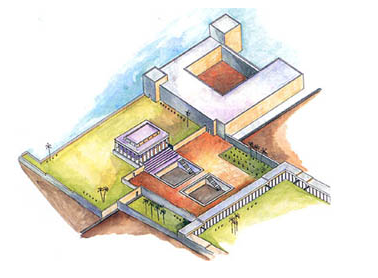
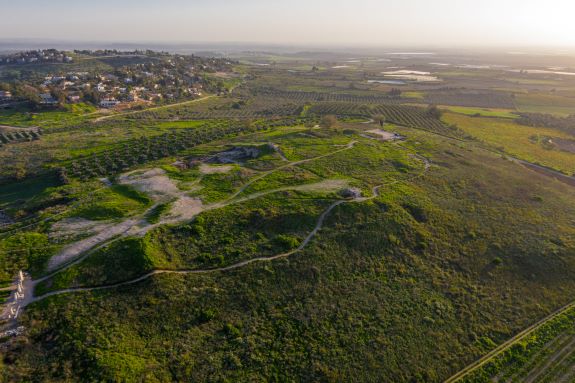
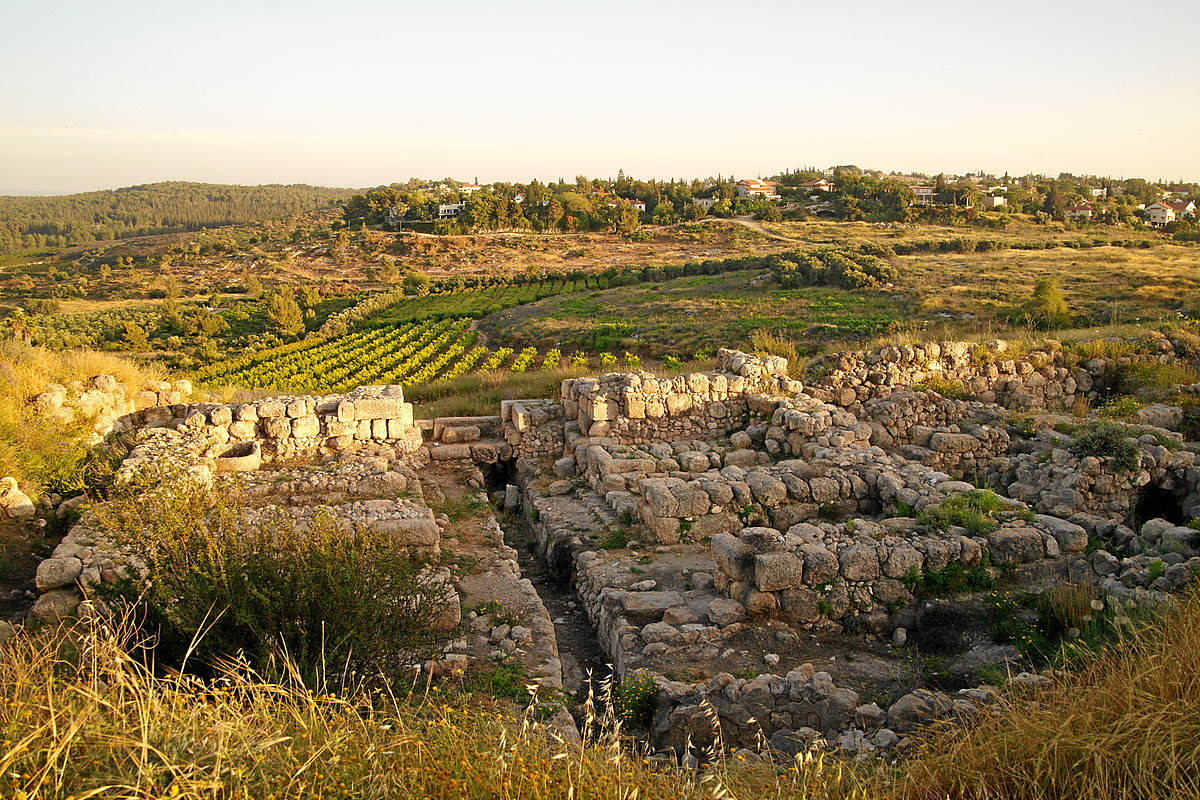
Today we visit Tel Gezer, an exciting biblical site that tourists seldom visit. From afar it seems to be a non-descriptive desolate hill, but those who choose to enter this historic wonder are immediately treated to an abundance of stunning Biblical archeology!
Although Tel Gezer looks like a barren hill, the walking trails seen in the picture are filled with wonderful examples of archeology as far as the eye can see. The panoramic views at this site, including the skyscrapers of faraway Tel Aviv, are pleasing to the senses! Photo Credit: Shutterstock
In Canaanite times, Gezer was a major city-state with its own King.
The remains of a 4000-year-old, Canaanite Guard tower, one of 25 which guarded the city. Photo Credit: Shutterstock
Gezer’s importance was largely due to its location on an important trade route junction.
Gezer, circled in yellow, was situated on both the Port of Jaffa-Jerusalem Road and the most important international highway (red line), which connected Egypt and Mesopotamia (Iraq), the two leading ancient super-powers. Photo Credit: JewishVirtualLibrary.org
The city’s infrastructure was quite advanced for its day, including a sophisticated water system.
Entrance to the ancient water system. If you look carefully, you can see stairs in the picture (which were built into the structure thousands of years ago, to allow the Canaanites to enter) Photo Credit: Shutterstock
When the Children of Israel entered into the Holy Land after 40 years in the desert, they waged war with the 31 Canaanite city-states. The King of Gezer and his army fell in battle against Joshua, though they failed to capture the city (Joshua 10:33), which was designated a Levite city (Joshua 21:21). The city remained in Canaanite hands until the times of King Solomon.
Remains of one of the largest Canaanite cultic sites. This type of worship (erecting a pillar) is explicitly forbidden according to Torah (Hebrew Bible) law (see Leviticus 26:1). Photo Credit: Shutterstock
Many generations later, Pharoah (not the same one from Exodus) conquered Gezer and destroyed the city by fire. When his daughter married King Solomon, Pharoah gave Gezer to his new son in law as a wedding gift . Solomon rebuilt and fortified Gezer (and many other cities) making it a regional capital.
Several hundred years later during the Assyrian invasion of Tiglath-Pileser , Gezer was captured and destroyed.
During the Hellenistic wars against the Jewish Maccabees (of Chanukah fame circa 167-142 BCE) Gezer was rebuilt as a fortress and utilized by the Hellenists as one of their main military headquarters. This was until the Maccabees captured Gezer and ultimately won the 25 year war, declaring Jewish independence in Israel once again (which lasted until the Romans seized the country in 63 BCE). During this time Gezer became a small, insignificant farming town and eventually abandoned.
Since the early 1900s, several major archeological excavations took place, which yielded important finds including the “Gezer Calendar”, the oldest (according to some historians) Hebrew inscriptions ever found anywhere!
The “Gezer Calendar” is inscribed with perhaps the world’s oldest Hebrew inscriptions.
Although few visit this site, the tourists I have brought here very much enjoyed seeing it! I highly recommend including it on your itinerary for your next visit!
Nosson Shulmanis a journalist andLicensed Tour Guidein Israel specializing in Biblical tours. To allow tourists to experience Israel during the Corona era, he created the new hit Israel tour video series which brings Israel to the home of viewers by simulating actual tours. To check out his free sneak preview tour videos, click here.To viewsample tour itineraries or to inquire about private tour opportunities with a personalized itinerary on your next trip to Israel, click here.
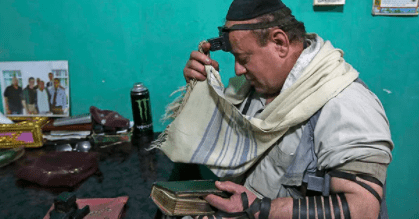
Zablon Simintov, the last Jew of Afghanistan, praying in the country’s last remaining synagogue of which he is the caretaker. In this picture, he is wearing Tefillin (the straps and boxes seen on his arm and head) which Jewish males wear every day (except Shabbat) and tallis (prayer shawl).
The end of an era is approaching. Afghanistan’s ancient Jewish community (once numbering as high as 40,000) is about to come to an end when its last Jew, Zablon Simintov makes Aliyah (emigrates to Israel) after the High Holidays this coming September/October.
Simintov’s announcement of his imminent departure has left many people worldwide in shock, as he is infamous for being the last Jew in the country since 2005! His resilience for staying under the most trying of circumstances have made him somewhat of an international figure. Although his wife and two daughters have lived in Israel since 1998, he himself refused to leave saying, “I don’t speak Hebrew, I am Afghani”.
The 61-year old’s life in Afghanistan has seen many ups and downs. He was at one time an extremely successful carpet trader and restauranteur, but when the Taliban came to power in 1996, his life drastically changed. Being a Jew, the Taliban seized his rug business, including $300,000 worth of carpets, severely beat him multiple times, and stuffed him into third world jail cells at will. His home was destroyed, forcing him to live in one of the rooms of the last remaining Synagogue. The country’s last Torah scroll was seized by the government, never to be returned. Despite the oppression, he refused to leave, saying “I don’t want my Jewish heritage erased. My father was a rabbi, my grandfather was a rabbi. We were a big, religious family in Afghanistan”.
In 2014 due to a reduction of NATO troops, the streets of Kabul (Afghanistan’s capital city) became even more dangerous. The locals were afraid to venture out of their homes for leisure and dining, thus causing him to close his once successful Kebab business. Since then he has become impoverished, living on donations from Jewish communities around the world.
Even through all of the difficulty, Zablon Simintov has remained a devout religious Jew. He keeps strictly Kosher (he learned how to ritually slaughter chickens for himself according to Jewish law), keeps Shabbat and dons tefillin daily (as seen in the above picture). For Passover, he receives packages from the Afghan Jewish community of New York. Though there are very few Jewish visitors every year to the country, those that do come to visit him bring kosher food and religious items for his needs.
As decades of suffering from his family’s absence, secure livelihood, and physical safety were not enough to chase him out of the country, his announcement comes as a major surprise that few saw coming. Why is he leaving now? According to Simintov, with the promised withdrawal of US troops in the country and the threat of another Taliban resurgence, he has finally had enough.
Like most Muslim countries, Afghanistan has a rich Jewish history with a presence which predates the arrival of Islam. According to local tradition, the first Jewish arrivals came after the destruction of the First Temple in 422 BCE (some say 586 BCE). In 1870, the country passed anti-Semitic laws which led to 35,000 Jews emigrating. By 1948 when Israel was established, 5000 Jews called Afghanistan home, with the vast majority living in Herut, today the country’s third largest city. Most of the remaining population left in the 1960s. By 1970 only 300 remained, the majority of whom left after the Soviet invasion in 1979.
Nosson Shulmanis a journalist and Licensed Tour Guide in Israel specializing in Biblical tours. To allow tourists to experience Israel during the Corona era, he created the new hit Israel tour video series which brings Israel to the home of viewers by simulating actual tours. To check out his free sneak preview tour videos, click here.

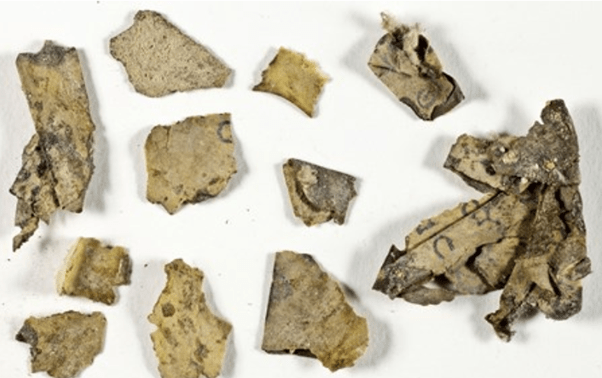
Scroll Fragments written in Greek from the Books of Zechariah and Nahum
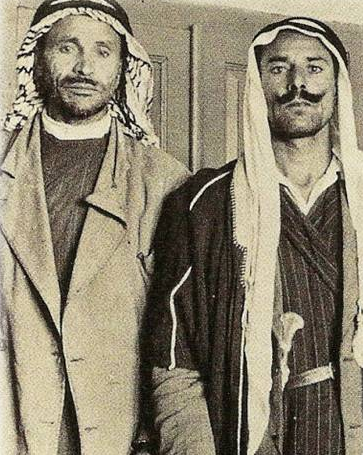
In 1947 Muhammed Al-Dib (a Bedouin Sheppard) was tending his sheep, when one of them wandered into a cave. As the cave was pitch black and filled with bottomless pits, the young shepherd wanted to know how deep the cave was before he ventured in. He took a rock and threw it into the cave, hoping the sound of the thud would give him an approximate answer, but instead he heard a shattering sound. Three days later, he returned with a torch and found an ancient jar filled with old scrolls. As he was unable to read them, he did not realize the magnitude of what he had just found, the oldest Biblical scrolls in the world! However, history remembers him as the man who made arguably the most important archeological discovery of the 20th century! For the next several years there were more digs and excavations, and more earth-shattering fragments were found. The last findings were dug up in 1956 , and no further discoveries were made. Until now!
Muhammad Al Dib (on the left) discovered the Dead Sea Scrolls
The first scrolls were sold to Israeli Professor Eleazar Sukenik of Hebrew University in the 1950’s for $250,000, a huge fortune in those days. Because of the value, at the same time that official digs were being conducted, illegal digs were conducted by local Bedouins, hoping to strike it rich by finding the scrolls first and then selling them on the black market. In order to increase their profits, they would often cut up the scrolls and sell them to different buyers, thus causing damage to the almost 2000-year-old scrolls. Often times, empty jars stood side by side with Bedouin pickaxes that were found in the caves, but the scrolls were long gone. After more than a half a century of digs failing to unearth any new scrolls, new discoveries were not expected to be made again.
A book of Isaiah scroll, discovered in the late 1940’s, was found entirely intact from beginning to end. This biblical treasure is currently on display at the Israel Museum in Jerusalem.
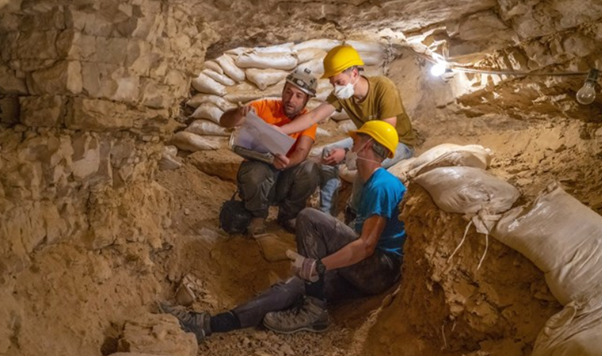
In 2017, new excavations began in a cave in Nachal Hever in the Judean Desert. Today, the cave is only accessible by rappelling 80 meters down a sheer cliff. Due to its inaccessibility to potential looters, it was hoped that new scrolls would be found.
The cave where the new scrolls were discovered is only accessible by rappelling by rope 80 meters (260 feet)
During the digs two scroll fragments were found, all written in Greek. One was from Zechariah, chapter 8:16-17 and reads “These are the things you are to do: Speak the truth to each other and in your gates judge with truth, justice and peace; do not think evil against each other in your hearts, and do not love false oaths. For all these I hate- The word of G-d.” The other is from Nahum 1: 5-6 and reads “Mountains quake because of Him and the hills melt. The earth smolders from before Him, The world and all that dwell within it. Who can stand before His fury? Who can rise against His burning wrath? His wrath is poured out like fire, and rocks become shattered because of Him.”
It is believed that these scrolls were hidden during the Bar Kochba Revolt against the Romans between 132-135 CE (For more on the Bar Kochva Revolt, click here). In addition, a stash of Bar Kochba era coins were found, suggesting that whoever hid them was killed by the Romans before they could return.
Bar Kochba era coins featuring Jewish symbols (circa 132 CE)
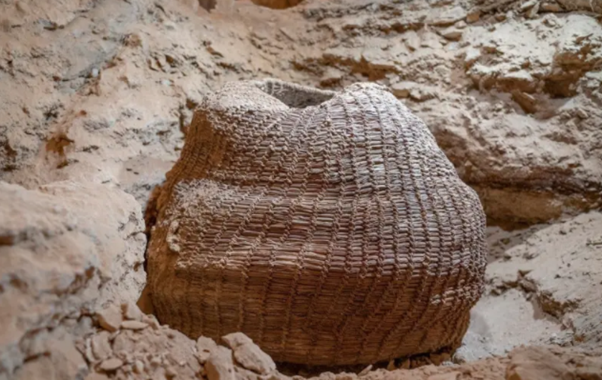
Also found was a millennia old, woven basket in great condition, believed to be the oldest one ever found in the world.
The world’s woven oldest basket was discovered in the cave, along with the scrolls and coins.
Once again, digs in Judea and Samaria (West Bank) continue to prove the Jewish presence in the land centuries before the advent of Islam.
Nosson Shulmanis a journalist and Licensed Tour Guide in Israel specializing in Biblical tours. To allow tourists to experience Israel during the Corona era, he created the new hit Israel tour video series which brings Israel to the home of viewers by simulating actual tours. To check out his free sneak preview tour videos, click here.
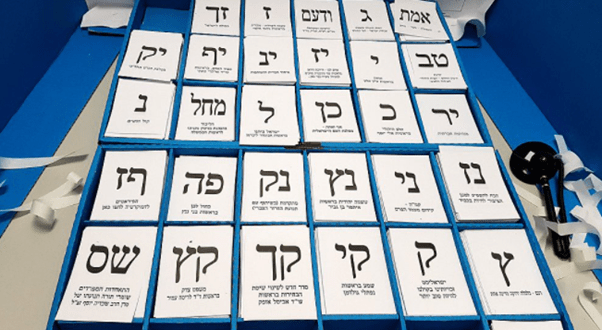
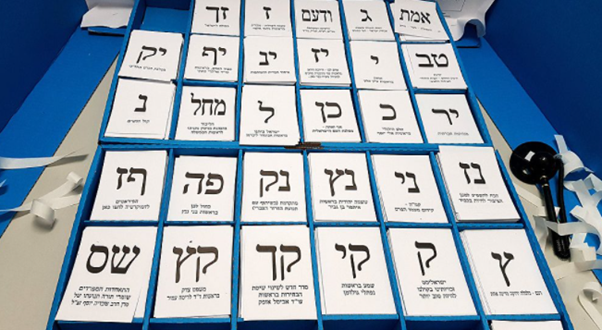
Printed election ballots, each representing a different party. In order to cast a ballot, the voter takes the ballot of the party they wish to vote for, puts it in an envelope and drops it into the ballot box.
Israel’s electoral system is fascinating! Although Israel is a country of 9 million people, in each election approximately 30 parties run, and between 8-12 parties win enough votes to have seats in the Knesset, Israel’s legislature. Compare this to the U.S., which has 330 million people but only two parties of significance. To understand Israel’s electoral system, there are 10 things you need to know
1) Israel’s electoral system is based on Proportional Representation
Chart explaining the difference between the Canadian, US, and UK electoral system (First past the post) vs Israel’s (Proportional representation)
In the U.S., Canada, and the United Kingdom (UK), the system is a “First-past-the-post-system” and divided into districts. Residents vote in the district they reside in for the candidate they wish to choose. The one with the plurality of votes is the winner, and the other votes do not count towards anything. It is possible to have a candidate win with only 30-40% of a vote because they got more than any other candidate. A party can also win the popular vote, but if another party has more seats nationwide, that party takes power.
In Israel, if 20% of the country votes for a party, that party gets 20 percent. Also, there are no districts, rather all of the country’s votes are combined. For example, people voting in Eilat (Israel’s southernmost city) have their ballots counted together with the residents of Haifa in Israel’s north.
2) Israel’s electoral system encourages people to vote for smaller parties
The heads of the different political parties who won enough seats to have representation after the 2015 election
Canada, the U.S., and the U.K. suffer from “wasted vote” syndrome. As an example, in Canada if one supports the Conservative party but lives in the district where only the Liberals and the NDP party are the vast majority, there is a healthy chance that person will not vote conservative, but rather for the party seen as the lesser of two evils. If one lives in the U.S. and is a staunch environmentalist they may technically support the Green, but most will vote for the Democrats, as voting for the Green party is a wasted vote.
In Israel, there is no wasted vote (see below for the one exception). If for example one supports the National Religious party in an area where that party is not particularly powerful, their vote still counts so there would be no need to have to vote for one of the two largest parties.
3) A party needs at least 3.25% of the national vote to be counted
In 2019, Naftali Bennet’s New Right Party (now-defunct) only got 3.24% of the vote and therefore got no seats in that election (though he would later become Prime Minister for a brief period in a subsequent election)
A party that has less than 3.25% of the national vote does not make it into the Knesset. The reason for this threshold (in theory at least) is to prevent fringe extremist parties who have minimal support from getting into the Knesset. If a party one supports polls below that number, they may be discouraged to vote for them as not to waste their vote. However, smaller parties often have a way of getting around this:
4) Parties often merge for elections in order to pass the threshold
Bezalel Smotrich of National Union and Itamar Ben-Gvir of Otzma Yehudit have formed a joint party for the upcoming elections.
This happens in every election. In order to increase their chances of getting into the Knesset, they run on a joint ticket, often splitting after the election is done.
A good example of this are the Arab parties. When, not long ago, the threshold was only 2%, four major Arab parties would run alone. In the last few elections, they merged together, even though many of them are ideological opposites and not particularly fond of each other. The parties range from Communist (Hadash party) to Islamist (Ra’am party) and only merged to not waste any votes. The smaller religious Jewish parties often merge together for the same reason.
5) Israel never had a majority government, thus smaller parties have disproportional power in the Knesset
Netanyahu posing with members of the other parties which made up his coalition after the 2015 elections
In Israel, there are 120 seats available in each election. A party needs a minimum of 61 seats to rule the country, although that has never happened. In 1949 Prime Minister David Ben Gurion had 52, and since then no one has come anywhere close! Prime Minister Netanyahu’s party, Likud, is currently the largest with 37 seats. Therefore, the largest party needs the smaller parties to join with them in exchange for supporting many of the smaller party’s policies. In addition, cabinet positions such as Foreign Minister, Defense Minister, etc., are shared with coalition partners. The more seats a party has, the more they can demand as a prerequisite for them joining the coalition.
It should be noted that sometimes the second largest party ends up controlling the Government. In 2009, Tzipi Livni of the now-defunct Kadima party had 28 seats while Netanyahu had only 27, but because Netanyahu was able to form a coalition of at least 61 seats, he became Prime Minister.
6) In Israel, all citizens are automatically registered to vote and need to produce ID before they can vote
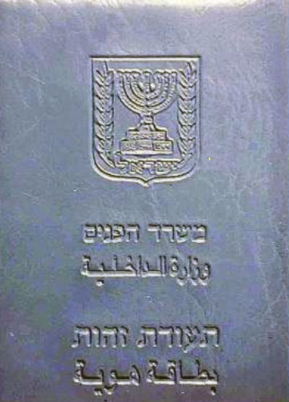
The traditionally blue cover of an Israeli ID card. To receive a ballot, you must produce ID.
In Israel prior to the election, citizens receive the exact address where they are registered to cast their ballots, and the voting can only be done at that assigned station. A passport, or Teudah Zehut (Israeli ID card) is required to vote.
7) A person can support one candidate for Prime Minister even though they are voting for a different party
A Shas party campaign poster from 2019 which encouraged Netanyahu supporters to vote for them over the Prime Minister’s party because his party will nominate Netanyahu for the top Job
In Israel there are no direct elections for Prime Minister, though generally only two (sometimes three) people in each election will realistically have a chance to become Prime Minister by building a coalition. One may support (as an example) Benjamin Netanyahu for Prime Minister, but vote for Shas and United Torah Judaism, two parties which have pledged to support Netanyahu for the position.
If these voters want Netanyahu to be Prime Minister, why wouldn’t they just vote for his Likud party? This is because they feel that he is the best person to run the country, but they support the policies of these parties, and want them to have as much clout as possible in influencing Netanyahu’s decision making.
8) Although Elections in Israel are for 5 year terms, in practice elections tend to be every 3 years
Since 1996, Israelis have gone to the polls every 2.3 years on average
As coalitions are formed by competing parties with often differing agendas, it is difficult to keep coalitions together for a long time. If they fall apart and the Prime Minister no longer has 61 MK’s (Knesset Members) supporting him, elections are called within three months.
This week’s election will be the 24th in Israel’s less than 73 years as a country, and the 4th in two years.
9) There are no term limits for Prime Minister
Former Prime Minister Netanyahu is often dubbed the “Magician” by Israeli media because of his ability to create coalitions and stay Prime Minister. He is the longest serving Prime Minister in Israeli history
As long as a politician has 61 people willing to support them, he/she can stay on forever. In the 6 elections which proceeded last year’s election, former Prime Minister Netanyahu was able to stay at the helm because he was able to form coalitions (polls say he will likely return to being Prime Minister in this week’s election). A sitting Prime Minister retains his seat until another candidate can convince at least 61 other MKs that they are the candidate who can best deliver their constitution’s priorities.
10) Not all Arab Israelis vote for Arab parties
Ayoob Kara, an Arab Israeli, is one of the most rightwing, Zionist MKs
In Israel, all citizens have the right to vote whether they are Jewish or Arab. The Arab parties, none of whom officially support Israel as a Jewish state, receive the largest percentage of the votes of those who show up to the ballots (many Arabs, perhaps the majority, choose not to vote though they are legally allowed and encouraged to do so). However, many Arabs feel that parties with a traditionally Jewish support base represent them better. Many Arabs in the Galilee vote for Shas, an Ultra-Orthodox Sephardi Jewish party, because of the party’s fighting for funding for poor communities in the periphery. Likewise, Druze Israelis, who make up 2% of Israel, tend not to vote for Arab parties, but for “Jewish parties” across the left-right Spectrum. Most parties in Israel have some Arab members running on their slate.
Nosson Shulmanis a journalist and Licensed Tour Guidein Israel specializing in Biblical tours. To allow tourists to experience Israel during the Corona era, he created the new hit Israel tour video series which brings Israel to the home of viewers by simulating actual tours. To check out his free sneak preview tour videos, click here.To view sample tour itineraries or to inquire about private tour opportunities with a personalized itinerary on your next trip to Israel, click here.
“They journeyed and encamped on the other side of Arnon…that juts out from the border of the Amorite; for Arnon is the border of Moab…Israel sent emissaries to Sihon, king of the Amorite, saying, “Let me pass through your land; we shall not turn off to (the) field or vineyard…until we pass your border. But Sihon did not permit Israel to pass, and…assembled his entire people and went out against Israel. Israel smote him with the edge of the sword and took possession of his land, from Arnon to Jabbok (Numbers 21: 13-24)”
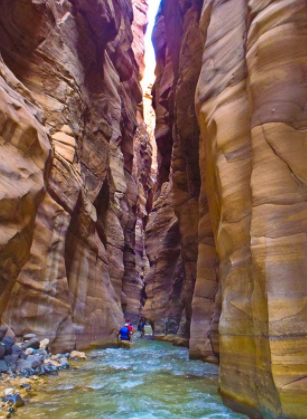
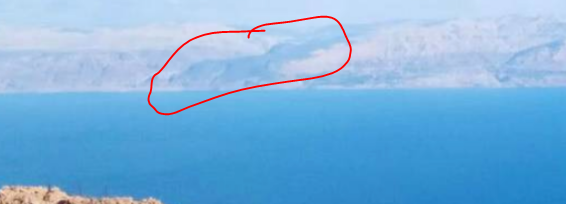
Arnon River canyon in Jordan as seen from Israel
When speaking of spectacular biblical sites in Jordan that can be experienced from Israel, the Arnon River is one key site that is often overlooked. One of the greatest miracles in world history took place here, and that is why one of the only ten songs recorded in the Hebrew Bible was sung here.
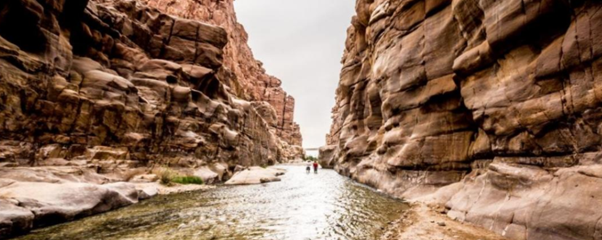
Nachal Arnon in Jordan. The Arabs call it Wadi Mujib.
After the exodus from Egypt, the Children of Israel wandered the Sinai Peninsula. They then crossed Ezion Geber (today’s Eilat) and walked along the Eastern border of Edom (in Jordan today). They then asked the King of Edom permission to cross over their territory to get to Israel (Numbers 20) and promised to stay on the main road the entire time and pay them for the food and water they would need on the journey. The King of Edom sent his army to their border as a show of force against Israel. G-d had forbidden Israel from attacking Edom (Deuteronomy 2) so they had no choice but to continue Northwards on their route until they reached the Eastern border of Moab.
From Ezion-Geber (today’s Eilat), the Children of Israel went northwards (see Yellow). They asked for passage through Edom which was refused (territory in red), they also asked to enter via Moab and were refused. They continued northwards until they got to Arnon River (yellow circle)
The Children of Israel asked the King of Moab for permission to cross his territory to get to Israel. The King refused this request, and because G-d had also commanded the Jews not to attack Moab, they continued North until they got to the Arnon River, the northern border of Moab and the Southern border of the Amorites.
While on their journey to Arnon, the giant Sihon, King of the Amorites made war with Moab and captured much of their northern territory (Numbers 21:26). While seemingly unrelated to the Children of Israel, according to Jewish sources, G-d wanted this territory to belong to Israel. When the land was controlled by Moab, Israel had been commanded not to attack them, but now that it was controlled by the Amorites, when Israel attacked, they also gained this newly captured territory (formerly of Moab).
The Jews entered the narrow Arnon canyon, now entirely within Sihon’s borders. When the Amorites heard that the Jews would be crossing this narrow canyon of Arnon, they planned a special ambush.
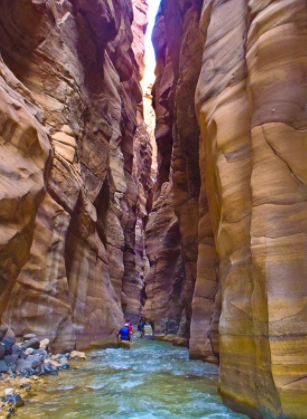
When the Jews crossed the Arnon River, above them on both sides of the canyon lay the Amorite ambush.
Unbeknownst to the Children of Israel, on the ledges above them lay the Amorites who were planning to annihilate them. Under attack, there would be nowhere for them to run. According to Jewish sources, the northern side of the valley had many rocks jutting out, while the southern side was filled with caves. G-d moved the protruding rocks of one cliff into the caves on the other side, and thus the soldiers of the Amorites were crushed to death. Their blood turned the Arnon red, and only then did the Jews discover how G-d had saved them from an attack that they had no idea was about to take place.
Once on the other side, the Jews captured the Amorite territory and found themselves in the plains of Moab, opposite the Jordan river & Jericho, ready to enter the land which G-d had promised them (to continue the story of the Children of Israel entering the Holy Land, click here).
Relive the miracle of the Arnon River with Nosson Shulman on your very own private luxury Israel tour. To experience Israel from the comfort of your own home see our new Virtual Tours including our new released Hebron Tour.
By Nosson Shulman – Licensed Tour Guide and Trip Organizer in Israel who specializes in History, Tanach (Bible) and Adventure Tours. For more itinerariesclick here. Check out our new Virtual tours including Jerusalem: free sneak preview videos.
The flags of Israel and Kosovo, along with the US which brokered the deal in September 2020
In a historic move, Kosovo (a Muslim majority nation) has officially opened its Jerusalem embassy, thus joining the US and Guatemalan embassies which currently reside in Israel’s capital!
In September of 2020, the Trump administration brokered a deal, underreported in the media, between Serbia and Kosovo, bringing an end to the decades long and often bloody saga which famously killed tens of thousands of innocent civilians. As part of the peace deal, Serbia and Kosovo both agreed to recognize Jerusalem as Israel’s capital.
As part of the move, Israel has recognized Kosovo’s declaration of independence from Serbia, which was made in 2008. Currently 98 countries, roughly 51% of the world’s nations, recognize Kosovo.
Other countries who have pledged to move their embassies to Jerusalem in the near future include Serbia, Malawi, Equatorial New Guinea, and Honduras.
In other news, last week the Czech Republic opened a branch of its embassy in Jerusalem, joining Brazil and Hungary who have done the same.
Nosson Shulmanis a journalist and Licensed Tour Guide in Israel specializing in Biblical tours. To allow tourists to experience Israel during the Corona era, he created the new hit Israel tour video series which brings Israel to the home of viewers by simulating actual tours. To check out his free sneak preview tour videos, click here.
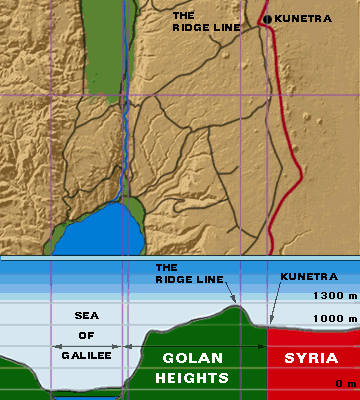
Image from the South Park clip shows Covid-19 vaccine shipments “arriving” from Israel
For the second time in a month, a longstanding TV series has referenced Israel in their latest episode. Unlike last month’s Saturday Night Live (SNL) skit deemed by many to be anti-Semitic, where Israel was falsely accused of vaccinating only its Jewish population at the expense of its Arab citizens, this time the reference was made in a positive light!
Israel is currently the undisputed world leader in vaccinating its citizens. According to data released by the Ministry of Health, 5.1 million (or 55%) of Israelis have received at least their first shot, with 44.5% having received both. This success has allowed Israel to begin opening up its economy at a time where other first world countries like those in western Europe or Canada struggle to contain the disease and economic fallout.
Now in season 24, the second episode of the popular cartoon series, based in the small town of “South Park” Colorado, deals with Covid 19, the vaccine and restrictions. In one scene, mask wearing, town residents wait in a long line to receive their shot. When two men are prevented from entering by a security guard, the first claims “It’s ridiculous we can’t get in” and the other adds “In Israel, they vaccinate everyone, Israel is way cooler than this lame place”. When the security guard replies “So go to Israel”, the man responds “I tried, I couldn’t get in”.
In a tweet praising South Park, Ambassador Gilad Erdan, Israel’s ambassador to both the UN and US, lampoon’s SNL’s anti-Semitic clip by writing: “Hey nbcsnl: this is how you do pandemic humor when it comes to Israel. Watch and learn from SouthPark
— Ambassador Gilad Erdan גלעד ארדן (@giladerdan1) March 11, 2021
Later in the episode, the town is saved by a shipment of vaccines from Israel. In a tweet with the video clip, Prime Minister Netanyahu writes “Even in South Park they already know – in Israel they are coming back to life!”
South Park, ranked by TV guide in 2013 as the tenth greatest cartoon of all time, has a history of satirizing taboo political issues of the day. The creators of the show (Matt Stone and Trey Parker) have made it their mission to poke fun at political correctness and cancel culture, without necessarily being dismissive of it.
Nosson Shulmanis a journalist and Licensed Tour Guide in Israel specializing in Biblical tours. To allow tourists to experience Israel during the Corona era, he created the new hit Israel tour video series which brings Israel to the home of viewers by simulating actual tours. To check out his free sneak preview tour videos, click here.

It happened after the death of Moses…that G-d said to Joshua… “Moses, My servant has died. Now, arise, cross this Jordan (River), you and this entire people, to the land that I give to them, to the Children of Israel (Joshua 1: 1-2)
Giving a tour by the Jordan River. The other side, with people sitting on steps, is in today’s country of Jordan
Recap: Last week, we visited Mount Nebo (click here to learn more) where G-d buried Moses. After his death, the Children of Israel, who were encamped in the plains of Moab, mourned for 30 days, after which G-d told Joshua, their new leader, that in 3 days they would cross the Jordan River.
After 40 long years in the desert, the Jews were finally ready to enter the land G-d promised their forefathers to give them. Joshua first sent two spies to scout out Jericho. When they returned, the spies said “G-d has given the land into our hands, and all the inhabitants of the land have even melted because of us (Joshua 2:24)”. Now it was time to cross and the trajectory of history was about to change forever.
Today we are visiting one of my favorite sites: Qasr El Yehud (Arabic for break through point of the Jews) on the Jordan River, by far the most mentioned body of water in the bible (181 times). According to tradition, this is the exact spot where Joshua and the Children of Israel entered the holy land. The Bible mentions that they crossed “opposite Jericho (Joshua 3: 16).” Indeed, this section of the river is exactly opposite the historic city.
The red circle is believed to be the exact location where the Jews, led by Joshua, crossed into Israel
The roughly 200 km river (which does not include the Jordan river section which starts at Mt. Hermon and ends at the Kinneret) flows from the Sea of Galilee to the Dead Sea.
The night before the miraculous events, while encamped on the Jordanian side of the river, Joshua told his people “Prepare yourselves, for tomorrow, G-d will do wonders in your midst (Joshua 3:5)”. How were they supposed to prepare? According to Jewish sources, they were supposed to prepare themselves spiritually because G-d was about to do a wonderous miracle for them and the people needed to be worthy of it.
Joshua will command the Kohanim (priests) to enter the river carrying the Ark of the covenant.
Joshua telling the Kohanim (priests) to enter the river first
Once they did, the water descending from upstream (from the north) stood still and they rose up in one column, and the water that was descending to the Dead Sea (southwards) continued to flow downstream until there was dry land and everyone could cross (Joshua 3: 15-17).
Once everyone was safely on the other side, Joshua commanded 12 men, one from each tribe, to return to the dry riverbed and to each take a stone from it. The stones would later be set up at Gilgal as a testimony to the miracle which G-d brought about. One the Kohanim (priests) were no longer in the river, the waters continued flowing naturally towards the Dead Sea.
Centuries later, at this location, Elijah the Prophet ascended alive to heaven on a chariot of fire (2nd Kings 2)
When taking tourists here, many wonder why such a miracle at this place was even necessary? While standing at Qasr El Yehud, one sees a river which is only a few feet wide. Its depth is shallow enough where a person could cross, in water, by foot without being totally submerged.


The river is currently the border between Jordan and Israel (and a tourist attraction on both sides. From the Israeli side (in the foreground), one could easily cross to the Jordanian side and vice versa (though the river’s status as an international border, legally precludes that possibility). Photo Credit: Shutterstock
However, what we see today is a mere remnant of a once mighty river. In 1848, a scholar named William Lynch, who wrote one of the first maps of the Jordan River (and Dead Sea), said the river was 70 yards (about ¾ of a football field) long and up to 10 feet deep.
Picture of the Jordan River (circa 1900) when the river was much bigger
Unfortunately, since the 1960s, Jordan, Syria and Israel have diverted 70-90% of the water for pressing domestic needs, which has caused the river to shrink (although Syria does not border the river, one of the Jordan River’s main tributaries goes through Syria). That is also the reason why the Dead Sea is shrinking every year, as it gets most of its water from the Jordan river which today barely flows into it. Syrian and Jordanian sewage flows into the Jordan river via the Yarmouk river, which gives the polluted water it’s current yellowish green color.
None-the-less, this site is still a gem you need to visit at least once in your lifetime. As this is an international border, while standing on the riverbank, one is mere feet away from both Israeli and Jordanian soldiers.
A Jordanian soldier. This picture was taken from the Israeli side while he was standing approximately 20-30 feet in front of me
The Israeli soldiers are usually happy to pose for pictures with my tourists and this site can be done as a quick stop as part of a larger day trip.
Nosson Shulmanis a journalist and Licensed Tour Guide in Israel specializing in Biblical tours. To allow tourists to experience Israel during the Corona era, he created the new hit Israel tour video series which brings Israel to the home of viewers by simulating actual tours. To check out his free sneak preview tour videos, click here.To view sample tour itineraries or to inquire about private tour opportunities with a personalized itinerary on your next trip to Israel, click here.