Beersheba

By Nosson Shulman: Licensed Tour Guide of VIP Israel Tours Authentic Virtual Tours (click here to check out his free trailer videos)

“Abraham took flocks and cattle and gave them to Abimelech; and the two of them entered into a covenant. Abraham set seven ewes of the flock…Abimelech said to Abraham ‘What are these seven ewes?” … And he replied “Because you are to take these 7 ewes from me, that it may serve me as a testimony that I dug this well. Therefore, the place was called Beersheba because there the two of them took an oath (Genesis 21: 27-31)

Beersheba, also known as Ber Sheva, is perhaps Israel’s most underrated city for tourists to visit. Even most Israelis think of it as being “somewhere” in the desert.  This city offers world-class historic and battle sites (including the last Calvary battle fought in the history of the British Empire), interactive/state of the art museums (including many kid friendly ones), shopping, beautiful scenery, major biblical sites and more.

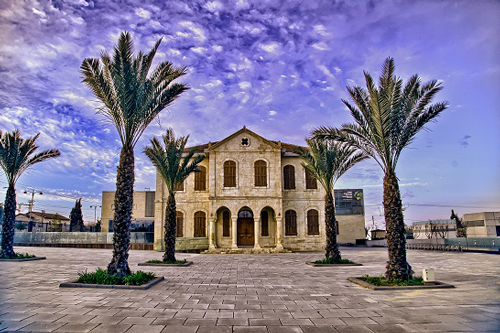
High-tech science museum housed inside historic, picturesque buildings such as this school built 120 years ago.
Photo Credit: https://museums.gov.il/

As a tour guide with an expertise in Beer Sheva (I have been consulted and interviewed in the media about it), I want to give you a glimpse into this “must see” city.

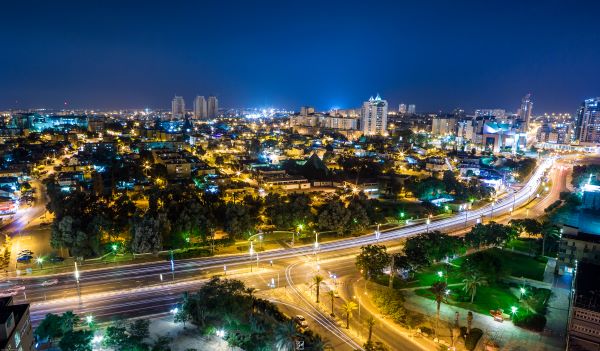
Modern City of Beersheba.
Photo Credit: Shutterstock

Today Ber Sheva, nestled on the edge of Israel’s Negev Desert, is one of Israel’s fastest growing cities.  There are currently 230,000 people living here, almost double the population of 20 years ago.  New neighborhoods consisting of high-rise condos and small villas, are being built constantly at relatively affordable prices.  Due to the city’s world-renowned university and medical school, 16% of the city is made up of students, the highest per capita in the country.  One third are engineers, a fact not lost on the world’s most powerful companies who want to take advantage of these brains. Companies including Oracle, IBM, Google and Lockheed Martin are building large offices and R & D plants in the new, multibillion-dollar technological park, located in the northern part of the of the city.  The Israel Defense Force (IDF), arguably the world leader in technological innovation, is set to move its Intelligence corps and Telecommunications /computers/ teleprocessing operations base to Beer Sheva.

The city has become known as the “Water City” because of its proliferation of gorgeous water fountains, and a new 22.5-acre artificial lake under construction.  This will be the largest artificial lake in the country, and the second largest lake overall after the Sea of Galilee.

Israel’s newest lake, almost complete, will offer many activities such as boating and water sports.
Photo Credit: City of Beer Sheva
One of the more than 30 new fountains found throughout the city.
Photo Credit: Shutterstock

This desert municipality has Israel’s best soccer team, the most shopping space per square mile in the country, and boasts more chess grandmasters than any city in the world!

One of many chess clubs found in Beer Sheva, Chess Grandmaster Capital of the world.
Photo Credit: https://en.chessbase.com/

So much can be said about Beer Sheba, but the biggest reason my tourists enjoy it so much is because of its rich history!

Beer Sheba is mentioned 34 times in the Bible.  The well-preserved archeological remains are a must see for Biblical enthusiasts. This was the place where Abraham, Isaac and Jacob lived and proclaimed the name of G-d (Genesis 21:33).  Here, G-d appeared to Abraham telling him to bring his son Isaac to Jerusalem in order to sacrifice him (Genesis 22).  In this city, Jacob received the blessing from Isaac, which incurred the wrath of Esau, prompting Rebecca to tell her son to flee from the land and only return when his brother’s anger subsided (Genesis 27 and 28).

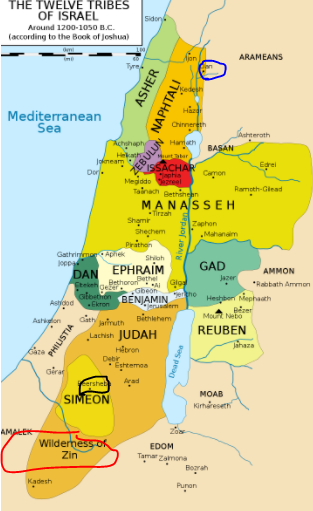
Nine times in Tanach (the Hebrew Bible), the borders of Israel are mentioned as being from Dan (in the North) to Beer Sheva (in the south).  That is quite surprising when one reads Numbers 34:3 which clearly states that the southern border of biblical Israel is actually Nahal Tzin, about 50 kms (31 miles) further south.  Why is Beer Sheva therefore mentioned as the southern border so many times?  Because Beer Sheva is the southern border of “populated” Israel.  In ancient times it was nearly impossible to live further south due to the extreme heat of the desert, and civilization ended here.  That is why when Abraham expelled Hagar and his son Ishmael from his home, they strayed into the “desert of Beer Sheba (Genesis 21:4)”.

Blue circle is Dan in the North. Black circle is Beer Sheba, the southern border of “populated”, Biblical Israel. Red circle is the southern “geographic border” of Nahal Tzin.
Photo Credit:  Janz derivative work Richardprins – CC BY-SA 3.0

Indeed, when standing at ancient Beer Sheba one can see how just a little farther south, the extreme desert begins to take over the landscape in a dramatic fashion.

Giving a tour at Beersheba. One can see that just behind me, after the slight green patch, the desert landscape dramatically takes over. This is the desert where Ishmael and Hagar strayed.

Ber Sheva itself had ample water because the underground water table was high.  One had to just dig a well and they would hit water, as Abraham and Isaac did.

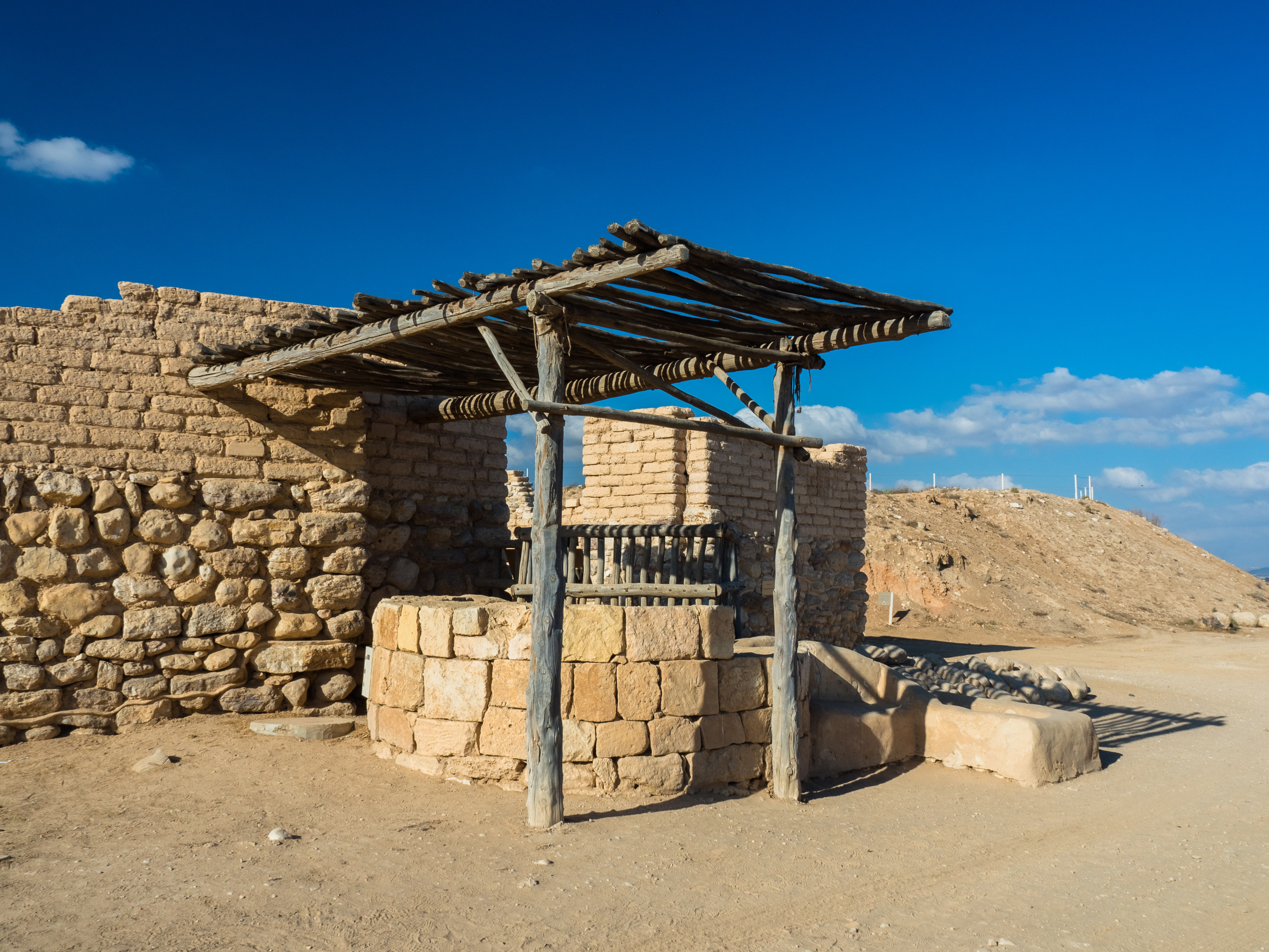
Ancient well in Beer Sheva, perhaps one dug by Abraham himself.
Photo Credit: Shutterstock

When Joshua brought the children of Israel into the land, Beersheba was allocated to the tribe of Shimon (Simon) (Joshua 19:2).

Ancient Beersheba

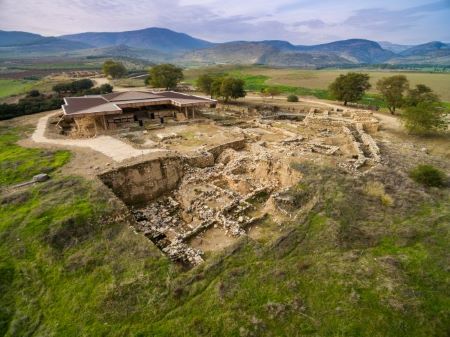
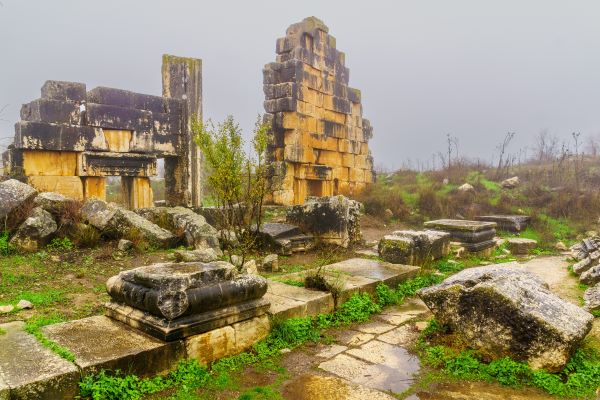
Later King Solomon will build Beer Sheva as a storage city (most of the remains we visit today are from that time) and it will become the local capital of the region.  The city was tiny, at only 11 dunim (2.7 Acres).  Still, the urban planning was quite sophisticated.

King Solomon’s Beersheba. The ruins show a high level of urban planning.
Photo Credit: Shutterstock

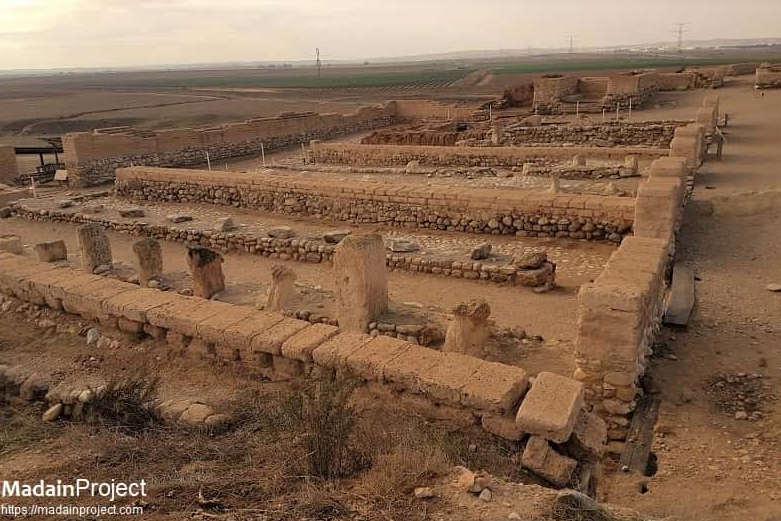
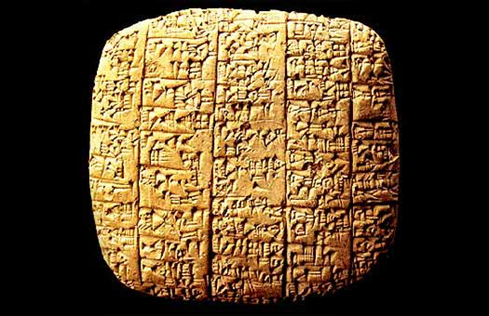
As the provincial capital city, they collected taxes from the nearby cities. This was before actual money as we know it existed, so taxes were paid in goods such as grain, produce, oil and other commodities.  In the storehouse, the names of the cities who paid taxes were found on pottery.

Storehouse of Beer Sheva where taxes were collected locally and stored.
Photo Credit: MadainProject

One of the pots said “Holy”, suggesting that everything in this pot had been designated for use in Jerusalem’s Holy Temple (see Numbers 27).

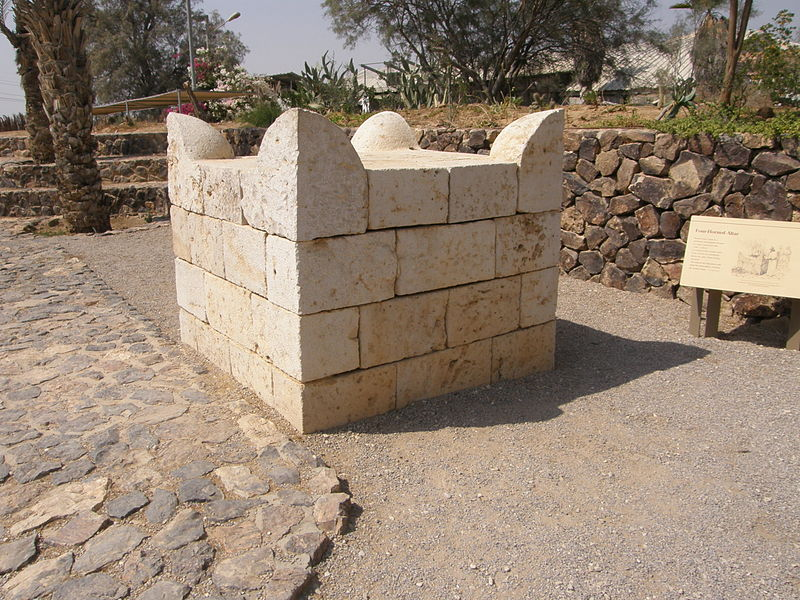
One of the more interesting rooms, the one with the “altar”, is mentioned explicitly in the Bible.  Regarding Josiah, the righteous king who almost completely eradicated idol worship from the land, “He defiled the high places where…priests used to burn offerings from Geba to Beersheba…The one which was at the entrance of the gate…situated at one’s left (when entering) the city gate (2 Kings 23:8)”.  Indeed, when walking through the gate, the first building to your immediate left is this “high place”.

The stairs which led to the altar. The blue circle shows the drainage channel used to remove blood from the sacrifices
The Altar, today in the Israel Museum, where the stairs led to.
Photo Credit: Moshe David via the PikiWiki – Israel free image collection project  Creative Commons Attribution 2.5 Generic

Interestingly, King Josiah was “smashing” places of idol worship in some parts of the country, while in other cases he only “defiled” them.  Why did he choose to “defile” this one and not destroy it?  According to Jewish sources, this particular altar was not used for idol worship, but in the service of G-d.  Although this was also forbidden, since once the Temple was built, it was forbidden to do sacrifices outside of the Temple, it still had a level of holiness.  Therefore, Josiah simply made it unusable by defiling them.

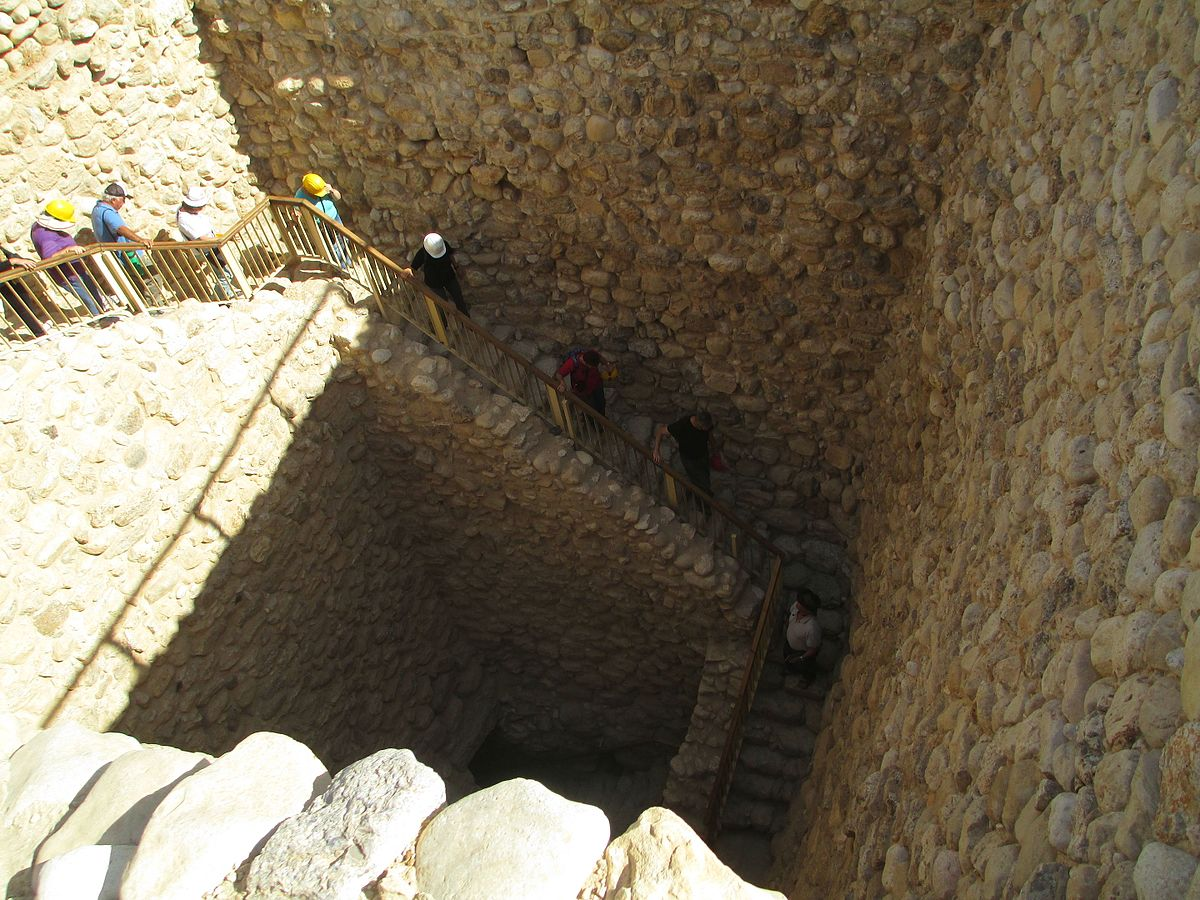
Perhaps the most unique feature of this site is its intricate water system.

Ancient stairs leading to the water system.
Photo Credit: Moshe David via the PikiWiki – Israel free image collection project  Creative Commons Attribution 2.5 Generic

Many of my tourists consider entering the water system to be the highlight of their visit!

Inside the giant reservoir.
Photo Credit: Mboesch –  Creative Commons Attribution-Share Alike 4.0 International

There is so much more that can be said about Beersheba!  This article only gives a small glimpse of what there is to experience in this amazing city.  On your next trip, I highly encourage you to spend a day touring here.  Before you do, check this out: Beersheba Sample Itinerary

Nosson Shulman is a journalist and Licensed Tour Guide in Israel specializing in Biblical toursTo allow tourists to experience Israel during the Corona era, he created the new hit Israel tour video series which brings Israel to the home of viewers by simulating actual tours. To check out his free sneak preview tour videos, click here. To view sample tour itineraries or to inquire about private tour opportunities with a personalized itinerary on your next trip to Israel, click here.

Nosson Shulman


© 2020 All Rights Reserved – Unauthorized Duplication is prohibited
Tel Azekah (David and Goliath)

By Nosson Shulman Licensed Tour Guide of VIP Israel Tours Authentic Virtual Tours

“The Philistines assembled their camps for war…. They encamped between Socho and Azekah…in the Terebinth Valley…The Philistines were standing…on one side and Israel was standing…On the other side and the valley was between them…A champion went forth…Goliath of Gath (1 Samuel 17: 1-4).”

One of the advantages I have living in Israel is the ability to wake up every morning, look outside my window and see where the world’s most famous battle took place!  Of course, I am talking about the clash between David and Goliath.  Even if someone is not well versed in the Bible, it is highly unlikely that they haven’t heard of this epic duel.  Even today on sports networks when the best team is facing an underdog team, the announcers will compare it to “David vs Goliath”.

Scenic view of Tel Azekah, showcasing the landscape and historical site.
View of Tel Azekah from my hometown.
Photo Credit: AVRAMGR – CC BY-SA 4.0

Today we are visiting an off the beaten track site, Tel Azekah, an Israelite city from Biblical times which was given by G-d to the tribe of Judah (Joshua 15: 35).

After Joshua and his army defeated the city states of Jericho and Ai, the powerful city of Gibeon made an alliance with the Israelites (see previous article on Hazor where I discuss the structure of Canaanite city states Tel Hatzor).  Five Canaanite kings attacked Gibeon, to send a message that making peace with the Jews was not in their interest.  When they attacked, Joshua felt bound by his oath and came to their rescue.  As the armies of the 5 kings saw him coming, G-d put panic into their hearts and they were smitten, with the survivors fleeing all the way until Azekah, where a hail storm then finished off the rest (Joshua 10). According to Jewish sources, this was left over from the plague of hail in Egypt.  When Moses asked G-d to stop the plague, the remaining hail was saved for Azekah.

When the Babylonians conquered Israel centuries later, the last three cities to be conquered were the besieged cities of Jerusalem, Lachish and Azekah (Jeremiah 34: 6-7).  Indeed, excavators found a letter written by soldiers at Lachish, to be sent as a warning to fighters in Jerusalem, which said “We cannot see any more, the fire-signals of Azekah.” This “Lachish Ostraca” backs up the Biblical narrative which says these were the last three cities conquered.

Letter found at Lachish which mentions Azekah.
Photo Credit: The Lautenschläger Azekah Expedition

The primary reason I take people to this site, is to relive this famous Biblical battle between David and Goliath the Philistine.

Who were the Philistines we read so much about in the Bible?

Philistine soldier showcasing Greek-inspired clothing, highlighting cultural influence and historical attire.
Philistine Soldier. You can see the Greek influence of his clothing.
Photo Credit: https://deadliestfiction.fandom.com/wiki/Philistine_Soldier?file=Philistine.jpg

The Philistines were originally from Greece.  Beginning around 1200 BCE, for the next 800 years, the Greek Peninsula went through a depression called “The Greek Dark Ages”.  A certain Sea people left Greece and settled in Crete, where civilization hadn’t yet collapsed.  Due to volcanos and unrest, these sea people were once again uprooted.  Approximately 220 years previously, Egypt controlled Canaan, with the city state kings being tributaries.  With the collapse of Egypt’s empire, caused by the Exodus from Egypt (where Pharaoh’s army were drowned), there was suddenly a vacuum left with no one empire running the show.  The Jewish people entered from the Jordan River opposite Jericho (see yellow circle on the picture below) and took over almost the entire Mountainous region (see the large red circle below). The Philistines entered from the Sea and took over the entire coastal area (see below the flat dark green area between the red circle and the sea).

Topographic map of Central Israel with annotated notes highlighting key features and landmarks.
Topography of Central Israel with notes

Although the Philistines had superior arms (due to the fact that they were one of the leading manufacturers of deadly iron weapons) they were not able to conquer and hold the more mountainous region, as their chariots required flatter land (Judges 1:19).

The Philistines oddly entered into Judean territory to wage war with confidence, even though they had just suffered a crushing defeat at the hands of King Saul (1 Samuel: 14). Just as strange, Saul and his men were too frightened to fight.  According to one Jewish source, G-d made it this way in order to bring King David into the picture, putting him in a position to succeed the throne.  G-d had just told Saul the kingship would be taken from him (1 Samuel 16).

The Philistines mobilized at Socho (see above map with black scribble) and the Jews at Azeka (blue scribble above) and the Terebinth valley, which gets its name from the trees growing there in abundance, was between them.

Terebinth tree located at Tel Azekah, a Biblical site with ancient ruins and vegetation.
A Terebinth tree found on Tel Azekah.
Photo Credit: Shutterstock
Map showing the Israelites camped at the foot of Azekah and the Philistines at Tel Socho
The Israelites were encamped at the foot of Azekah (in red letters), The Philistines at Socho (in Blue). Notice the Brook of smooth stones in yellow.
Photo Credit: Wilson44691 – CC0

Each morning for forty days, the mighty Goliath (just under 13 feet tall and covered from head to toe with heavy armor)  approached the Israelite camp and said “Choose for yourself a man and let him come down to me. If he can fight me and kill me, we will be slaves to you. And If I defeat him…You will be slaves to us (1 Samuel 17: 8-9).”  As a side note, one can clearly see the Greek origins of the Philistines.  Nowhere in history, outside of ancient Greece, were wars fought between two heroes with “winner take all” stipulations effecting the entire nation.

While this was happening, Jesse asked his son David, who was shepherding his sheep in Bethlehem, to check on three of his older brothers on the battle field and bring them provisions (In ancient armies, it wasn’t uncommon for soldiers to supply their own weapons, clothes, food, etc.).  When David arrived, he saw a frightened army.  The situation was so dire, that Saul promised anyone who could slay Goliath his daughter’s hand in marriage (which meant wealth and a royal court position). When David heard Goliath disgracing “The battalions of The Living G-d”, he was disgusted and wanted to take down the Giant himself.  He began inquiring as to what the reward from the King would be for slaying the giant.  He already knew the answer, but wanted to engage people in discussion, hoping that word would travel back to the King that David wanted to fight.

Word did travel back to Saul and he summoned David.  He said “You cannot go forth…to fight with him, for you are a lad, while he is a warrior from his youth (1 Samuel: 17:33)”  In ancient times to be in this type of battle, one was expected to have at least a decade or two of war experience, while he had none.  David answered “G-d…will rescue me from this Philistine.”  When Saul heard this level of faith, he said “Go, and may G-d be with you (Ibid 17:37).”

David went to the valley’s brook and picked 5 “smooth” stones.

Terebinth valley brook with smooth stones, preserved from King David's time, creating a peaceful natural landscape
The valley’s brook where most of the stones are perfectly smooth to this day.
Photo Credit: Shutterstock

David put a single stone into his slingshot, aimed it at Goliath and hit him, causing him to collapse. David then cut off the giant’s head and the Philistines fled, thus removing their threat to Israel for a long time to come.  David married Saul’s daughter Michal, and with David now being in the Royal court, G-d had set the stage for David’s rise to Kingship.

I highly recommend visiting Azekah and the Terebinth valley on your next trip.  In addition to being historic and biblical, it offers some of Israel’s best panoramic views and wildflowers.  On the way we can even stop at the brook, where you can pick up one of the stones and take it home with you!

To see a sample Israel tour itinerary which can include Tel Azekah, see our Gaza Envelope Tour, Fun in the Jerusalem and Beit Shemesh Area Tour and our off-the-beaten track Biblical Sites Tour itineraries.


Nosson Shulman is a journalist and Licensed Tour Guide in Israel specializing in Biblical toursTo allow tourists to experience Israel during the Corona era, he created the new hit Israel tour video series which brings Israel to the home of viewers by simulating actual tours. To check out his free sneak preview tour videos, click here. To view sample tour itineraries or to inquire about private tour opportunities with a personalized itinerary on your next trip to Israel, click here. 

Nosson Shulman

© 2020 All Rights Reserved – Unauthorized Duplication is prohibited
Biblical Tel Hazor

By Nosson Shulman: Licensed Tour Guide of VIP Israel Tours Authentic Virtual Tours (click here to check out his free trailer videos)

Joshua…Conquered Hazor and struck it’s king by the sword…Hazor…The Leader of all those kingdoms. (Only) Hazor he burned in fire… All of the others…Israel did not burn (Joshua 11: 10-13).”

King Solomon (re-built) …. Hazor (1 Kings: 9:15)”

Biblical Hazor is one of the premier archeological sites in Israel.  Many of the most epic events of the Bible took place here, and even UNESCO listed it as a world heritage site in 2005.  Such a world class treasure must surely be on the “must-see” portion of itineraries, right?  The shocking truth is that few tourists (even veteran tourists who are Bible literate) have ever even heard of it.  Despite my vast knowledge of Hazor, I have only guided here twice, both times to tourists who annually visit Israel, and only because I recommended it to them.  On the first visit, tears streamed down my tourist’s cheeks when she realized that she was literally standing in a place where G-d led His people in battle.

When people read about the “Land of Canaan” in the Bible, they think of a large kingdom encompassing most of modern Israel, but actually Canaan was made up of city states with their own kings who were often at war with each other.  According to the Bible, Hazor was the most powerful one.  In fact, excavations have shown Hazor to have been the largest Tel (archeological site) in Israel at 820 Dunams (or over 200 acres). To put this into perspective, David’s Jerusalem was only 61 dunams (15 acres).

An aerial shot of the excavated ruins of the ancient walled city. Only 1/8 of the city has been excavated, with the agricultural fields of nearby Kibbutz Ayelet (as partially seen on the right hand side) covering the rest.
Photo Credit: AVRAMGR –  Creative Commons Attribution-Share Alike 4.0 International

The Al Armana letters (a series of ancient letters written between Pharaoh and other Kings) was discovered in 1887 by an Egyptian peasant.  These letters back up the Biblical account of Hazor being the most powerful Canaanite city state.  Egypt controlled the land of Canaan (at the same time the Hebrews were enslaved) and the local kings were Pharaohs’ tributaries.  Whenever powerful kings of empires like Pharaoh or the King of Mesopotamia wrote to each other, they always greeted each other as “Brother”, a sign of equality . Whenever a Canaanite king wrote to Pharaoh, they would start the letter with “To the king, my lord, my god, my Sun, the Sun from the sky, at your feet I bow 7 times forward and 7 time’s backwards…”. There was only one Canaanite King who dared call Pharaoh “Brother”:  The mighty king of Hazor.

One of many ancient letters between kings found in Egypt.
Photo Credit: Public domain

Furthermore, Hazor is the only city in the entire Levant (i.e. the modern-day countries of Lebanon, Syria, Israel, Jordan and Southern Turkey) mentioned in the famous Mari Archives of Mesopotamia.

Mari Archive Letter, written in ancient Cuneiform, which mentions Hazor


Upon G-d’s command, Joshua will bring the Jewish people into Israel by crossing the Jordan River. The Canaanites were aware of G-d’s promise to His people (see Joshua 2: 9-13), but the city states in Northern Israel were not yet ready to submit.  King Jabin of Hazor was placed in charge of mobilizing an army composed of the citizens of the different cities. He successfully recruited a formidable force of warriors, horses, and chariots “As numerous as the sands of the seashore (Joshua 11:4)”.  This military was so intimating that even though   G-d had promised to deliver Israel into their hands, He felt it necessary to remind Joshua “Do not fear them (Joshua 11:6).”

The battle resulted in a decisive victory for the Jews.  In most cases, the infrastructure of conquered cities was not to meant be destroyed.  Instead the fields, workshops and homes were to be left intact for the benefit of the Children of Israel to live.  Hazor was an exception, and it was the only city which Joshua burned.  Indeed, excavations revealed this to be the only city destroyed in its entirety during that time.  Today when visiting the well-preserved ruins of King Jabin’s palace, the burn layer is clearly visible.

The Green circle marks the spot in the Canaanite palace where the burn marks are clearly visible.
Photo Credit: Shutterstock

G-d also commanded Joshua to destroy the chariots (and make unsuitable for war) the powerful war horses he captured.  Why would G-d want them to be destroyed instead of being used by the Israelites in future battles?  According to Jewish sources, G-d did not want the Israelites to believe in the power of their arms, but to put their faith in G-d.  This was a supernatural war.  If the battles were conducted according to natural law, the Jews would not have been able to win. The people needed to know that if G-d was fighting this war, the extra weapons were not going to be their key to victory.

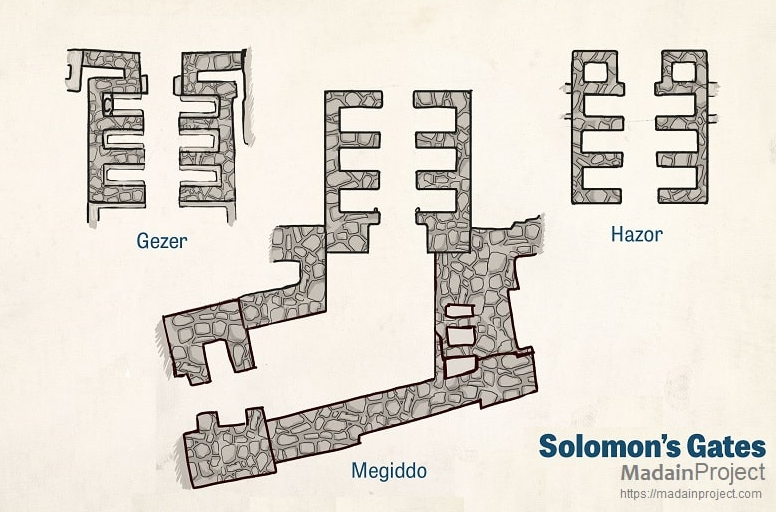
Centuries after the city was destroyed, King Solomon came and rebuilt it on the charred, Canaanite ruins.  King Solomon built many walled cities, but three cities are mentioned by name in the verse: Hazor, Megiddo, and Gezer (1 Kings 9: 15).  In the latter 2 mentioned cities, excavators found city gates which have only been found in cities Solomon built. Archeologists call them “6 Chamber Gates”.

Diagram of an aerial shot of the 6 chambered gates mentioned in the Bible
Photo Credit: MadainProject

Therefore, when digging Hazor, Yigal Yadin (the famous Archeologist who dug Masada and also the second IDF chief of staff) expected to find a similar gate, which he eventually found and dug up.

Impressive remains of Solomon’s gate in Hazor.
Photo Credit: MadainProject

The city was eventually destroyed permanently during the Assyrian conquest of the Northern Kingdom of Israel.

Today one can visit Hazor’s impressive ruins, but people seldom do.  The silver lining is that when exploring this treasure, you are likely to be one of the few visitors here and will have this fascinating site mostly to yourself!

Nosson Shulmanis a journalist and Licensed Tour Guide in Israel specializing in Biblical toursTo allow tourists to experience Israel during the Corona era, he created the new hit Israel tour video series which brings Israel to the home of viewers by simulating actual tours. To check out his free sneak preview tour videos, click here. To view sample tour itineraries or to inquire about private tour opportunities with a personalized itinerary on your next trip to Israel, click here.

Nosson Shulman

© 2020 All Rights Reserved – Unauthorized Duplication is prohibited

Biblical Beit Shemesh

By Nosson Shulman: Licensed Tour Guide of VIP Israel Tours Authentic Virtual Tours (click here to check out his free trailer videos)

“They placed the ark of G-d onto the wagon…. The Cows set out on the direct road…. to Beit Shemesh (1 Samuel 11: 11-12)”

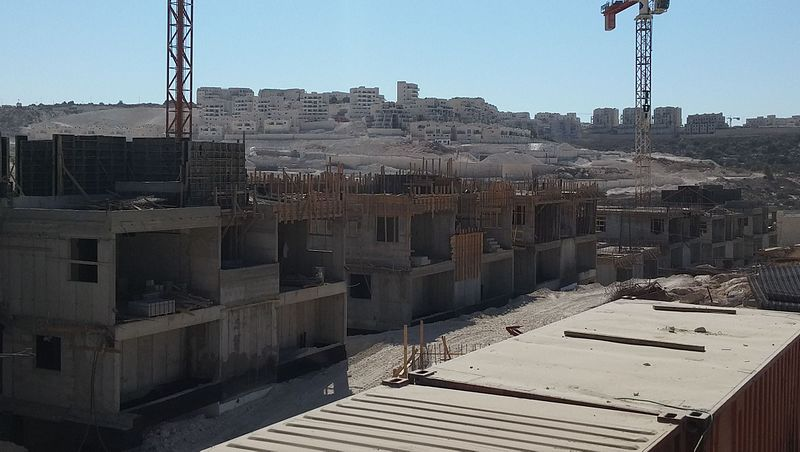
I live in Beit Shemesh, which is Israel’s fastest growing city. In 1995 this sleepy town had only 17,000 residents, today the population stands at 130,000. Based on construction and demand, in 7 years this number is expected to increase to 250,000. From every vantage point, one can see new neighborhoods being built on the horizon

One of many neighborhoods under construction.
Photo Credit RamatBeitShemesh.com:  Attribution-Share Alike 4.0 International

The majority of Beit Shemesh’s residents are observant Jews.  Olim (immigrants) from English countries like the U.S., Canada and U.K. make up a sizeable part of its population.  In some of the neighborhoods English, rather than Hebrew, is actually the more dominant language.  

Beit Shemesh was founded in the early days of the State of Israel.  It has grown to become an amazing place to raise a large family, having beautiful parks, great schools, many synagogues, and a low crime rate.  However, the story of Beit Shemesh did not begin in modern times, but in the Bible. 

Beit Shemesh can be translated as “The House of the Sun”.  Originally a Canaanite city, the city got its name from its inhabitant’s worship of the sun. 

Ancient Canaanite mud bricks found in Beit Shemesh. Most Canaanite homes in the area were built with this material.
 

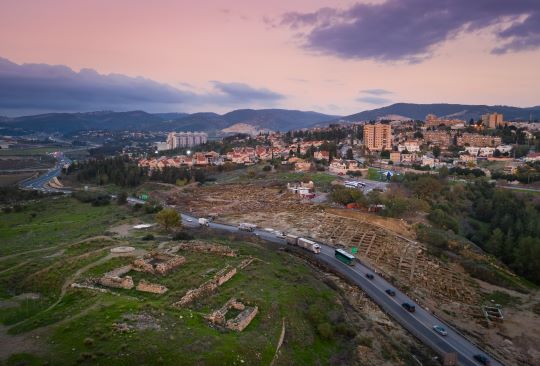
Tel (Hebrew for Archeological mound) Beit Shemesh is literally across the street from the outskirts of the modern city. 

Tel Beit Shemesh in the foreground with the outskirts of the modern city in the background.
Photo Credit: Shutterstock

Beit Shemesh was conquered in the days of Joshua.  Situated on the border between the tribal territories of Dan and Judah (Joshua 15:10), it was one of the 13 cities given to the Kohanim (i.e. Priests who serve in the Temple) as an inheritance (Joshua 21:15). 

A large, biblical-era olive oil industrial zone complex uncovered in Beit Shemesh
Photo Credit: Shutterstock
Model of a typical Jewish home in Ancient Beit Shemesh.
Photo Credit: Nick Laarakkers at nl.wikipedia – CC BY-SA 3.0

The most well-known story connected to Beit Shemesh involved the holy Ark of the Covenant, which had rested in the Tabernacle of Shiloh for 369 years. It was then stolen by the Philistines and brought to Ashdod.  While there, the residents of the city were struck with extremely painful stomach ailments while the statue of their idol Dagon was found destroyed in its temple.  Realizing that G-d might not be happy with their city possessing the Ark, they sent it to Gath, another Philistine city.  When its inhabitants were smitten with similar results, it was then sent it to Ekron, where the same occurred. At this point, the Philistines understood that perhaps G-d did not want any Philistine city to host the Ark.  

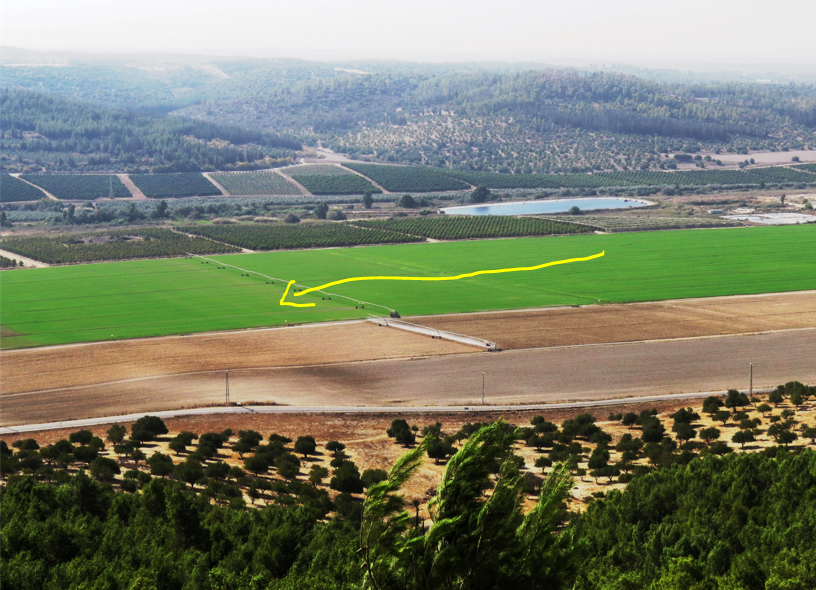
To test whether the previous afflictions were indeed divine retribution or merely a coincidence, the Philistines put the Ark on a wagon pulled by two cows, and placed them on the biblical route of Nachal Sorek.  If the cows headed towards Beit Shemesh, a Jewish city, they would take it as a sign that G-d wanted them to return the Ark to the Israelites.  This is, of course, exactly what happened.  

Nachal Sorek. The arrow shows the exact route the cows took to get to Beit Shemesh. 
Photo Credit: Shutterstock

When the Ark arrived at Beit Shemesh, its residents “Were reaping the wheat harvest in the (Sorek) valley, when they…saw the Ark, they rejoiced to see it (1 Samuel 6:13).” But then all of a sudden, G-d brought a plague that struck down many residents of the city because they “Peered into the Ark of G-d”.  This was something they should not have done at their spiritual level.  

According to Jewish belief, the higher one is spiritually, the more G-d expects of him.  While peering at the ark in that manner may have been overlooked for most, the people of Beit Shemesh knew better at their level, and were thus judged harshly.  Indeed, one can see the contrast between the Philistines who wanted to rid themselves of the ark which was “causing” them havoc to the people of Beit Shemesh, who didn’t blame the Ark but themselves saying “Who can stand before G-d?”.  Instead of ridding themselves of the Ark, they sought a different, more suitable host for it and sent emissaries to the Jewish town of Kiriath-Jearim, whom they deemed more worthy to come and take it from them.   

In 2007, the most impressive find on the tel was discovered. Some bored teenagers took a camera, tied it to a string and put it inside a hole in the ground and took pictures. Unwittingly, they had just found the largest water system ever found in Biblical Israel (outside of Jerusalem).

Diagram of Ancient Beit Shemesh Water System.
Photo Credit: Bas Library

Since there were no springs in the city and the closest springs were too far for everyday use, almost all of their drinking water was supplied by rainfall. Because every drop of rain was vital for their survival, all of the roofs had a system of pipes which would channel the water to the cistern so as not to waste anything.

The Inside of the sophisticated water system.
Photo Credit: Bukvoed –Creative Commons Attribution 4.0 International

About 1500-year ago, the Byzantines built a large monastery which serviced Christian pilgrims to the Holy Land. Since then, the city was largely abandoned until modern times. 

Remains of the large Byzantine Monastery.
Photo Credit: Shutterstock

Beit Shemesh is relatively close to the hotels of Tel Aviv and/or Jerusalem.  There are also many other incredible sites in the area, which can be visited on the same day.  The next time you are in Israel, request that this wonderful Biblical treasure be on your itinerary! 

Nosson Shulman is a journalist and Licensed Tour Guide in Israel specializing in Biblical toursTo allow tourists to experience Israel during the Corona era, he created the new hit Israel tour video series which brings Israel to the home of viewers by simulating actual tours. To check out his free sneak preview tour videos, click here. To view sample tour itineraries or to inquire about private tour opportunities with a personalized itinerary on your next trip to Israel, click here.

Nosson Shulman

© 2020 All Rights Reserved – Unauthorized Duplication is prohibited

Gibeah of Benjamin (Tel El Ful)

By Nosson Shulman Licensed Tour Guide of VIP Israel Tours Authentic Virtual Tours

“Saul… went to his home, to Gibeah (1 Samuel 10: 26)”

While there are many off the beaten track treasures in Israel, some are so little known that even many Israel experts have never heard of them. Today’s historic site, Tel el Ful, rarely sees visitors but this unique treasure is our next stop.

File:ארמון חוסיין ב תל אל פול.JPG
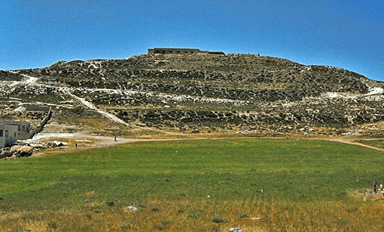
The top of Gibeah today.
Photo Credit: Eli.berckovitz

This location, North of Jerusalem’s Old City, is known in the Bible by several names. One of them is Gibeah, Hebrew for “Hill” because of its conspicuously high elevation from its surrounding areas.

Tel El Ful.
Photo Credit: FerrellJenkins.blog

Indeed, this place offers one of Israel’s best views! On a clear day one looking westward will see Israel’s lowlands, the Judean Forest and coastal region. Looking eastward, the Judean Desert, Dead Sea and the Biblical mountains of Jordan are visible.

It is also known as the Gibeah of Saul (1 Samuel 11:4), because this is where Israel’s first King, Saul, had his palace. A third name for this location is Gibeah of Benjamin (1 Samuel 13:15) as this is found in the tribal territory of Benjamin. King Saul was a native Benjamite.

Indeed, between 1922-23 renowned archeologist William Albright excavated the site and found a palace dated to the time of the United Monarchy of Israel, whose era includes the tumultuous reign of Saul.

Blueprint of Saul’s palace by Dr. Albright

One of the more well-known Biblical stories took place here before Saul’s reign, during the time of the Judges and once again the archeology matches the Biblical narrative.

In Judges 19 and 20, due to the actions of the Tribe of Benjamin against the Levite’s concubine, the other 11 tribes declared war and destroyed Gibeah by fire.  William Albright found the original “Gibeah” underneath the ruins of where King Saul would shortly build his palace, and it was covered in a deep layer of a type of ash found only on ruins which has been destroyed in flames.

Additional proof of this being the exact location of Gibeah, is the route the Levite and his concubine took to return from Bethlehem in Judah to his home on Mount Ephraim. As the sun was going down, they were passing Jerusalem but the Levite said let us continue further and “Spend the night in Gibeah or in Ramah (Judges 19:13)”. All of these cities, on route to his home, are on the Biblical “Spine route” today known as Highway 60. To be sure, the city Dr Albright excavated was on this very route.

The Biblical Spine Route (Today’s Highway 60). Gibeah was just North of Jerusalem at the place where the Red Line exists the blue line on this map

During the siege of Jerusalem culminating in the destruction of the Second Temple in 70 CE, General Titus, who later became the Emperor of Rome, set up his camp here because of the great view of the battlefield from this vantage.

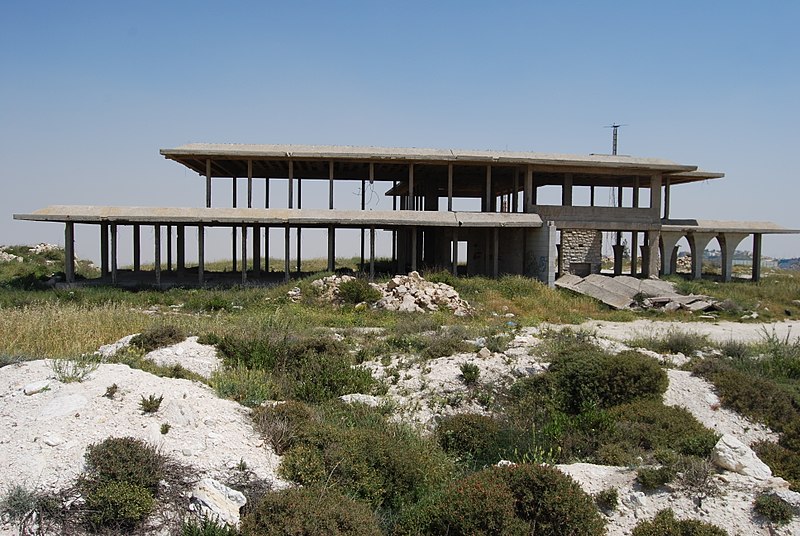
Where are the remains of King Saul’s palace today and what is the structure you currently see on top of the hill?

File:Jerusalem-Tel-el-Ful-577.jpg
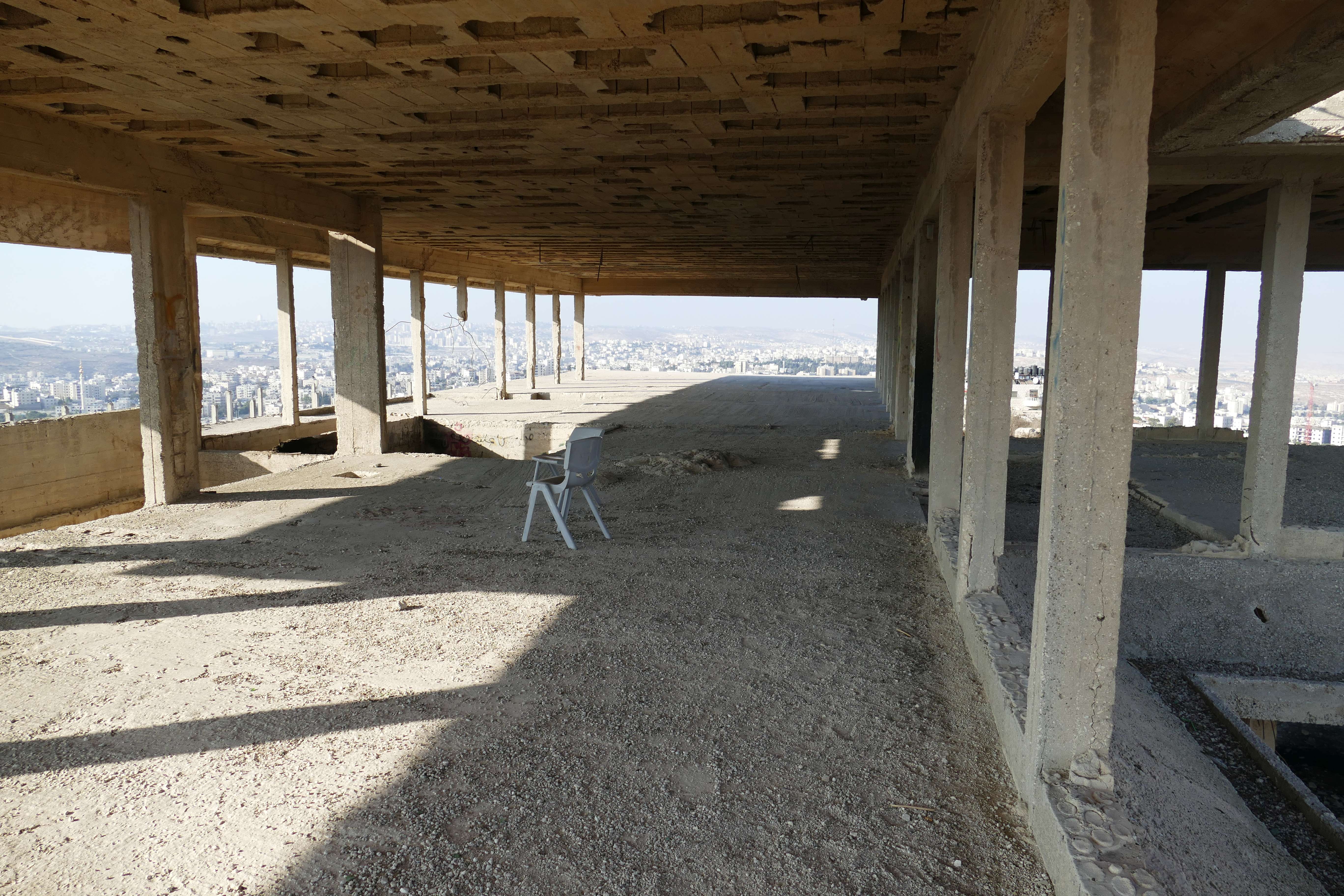
Inside King Hussein’s incomplete palace on top of Tel El Ful. The Panoramic view from here is spectacular
Photo Credit: Bukvoed 

In 1948 Jordan Illegally took control of much of Israel, and tried to destroy any ancient Jewish remains they could find to deny that Jews ever had a connection to their historic homeland. On this location in 1965, on top of King Saul’s palace, King Hussein (father of Abdullah,  the current King of Jordan) began building his palace, initially destroying the ruins. In 1967 Israel liberated this land, and the skeleton of the building, never completed, remains. Israel legally annexed here in 1980 and in 1988 King Hussein officially relinquished any claims to it.

Today is it possible to visit this unique site, enter its structure and savor these superior views. While this site in generally safe to visit, one should first check with a licensed tour guide who is familiar with the building and security situation well.

By Nosson Shulman – Licensed Tour Guide and Trip Organizer in Israel who specializes in History, Tanach (Bible) and Adventure Tours. For more itineraries click here. Check out our new Virtual tour including a free sneak preview video Virtual Tours

Nosson Shulman

© 2020 All Rights Reserved – Unauthorized Duplication is prohibited

Hebron: Cave of the Patriarchs (Mearat HaMachpelah)

By Nosson Shulman Licensed Tour Guide of VIP Israel Tours Authentic Virtual Tours

“And Ephron’s Field….And the cave within and all the trees  in the field…was confirmed as Abraham’s as a purchase in the view of the Children of Heth…Afterwards Abraham buried Sarah his wife in the cave of the field of Machpelah…which is in Hebron, in the Law of Canaan (Genesis 23: 17-19)”

Burial of Sarah

An entire chapter in the Bible is dedicated to the Cave of the Patriarchs in Hebron, showing the site’s importance in scripture.  Today we will visit this holy site, which unfortunately is not on many tour itineraries, but should be!

Abraham was told by G-d to go to Jerusalem and sacrifice his son Isaac.  Just as he was about to offer up his beloved son, an angel of G-d stopped him, revealing it to be only a test for Abraham.  On his return trip to his home in Beer Sheva (going south on today’s route 60), he passed through the city of Hebron and heard that his beloved wife Sarah has passed away.  Heartbroken, he wanted to bury Sarah in the best plot of land, the Cave of the Patriarchs, owned by Ephron.  Abraham asked the local Canaanites who revered him, to intercede on his behalf with Ephron to sell his field and cave. Ephron agreed, but at the outrageous price of 400 shekels in the currency “Most accepted by Merchants”. Despite its high price, Abraham accepted and paid him.

Why was Abraham so insistent that she be buried in this cave?

Artist rendition of What the Cave looked like in the time of Abraham.
Photo Credit Hebron Foundation

According to Jewish tradition, Abraham was once herding his cattle when one of his oxen went into the cave.  Abraham went to catch him and immediately smelled the aroma of the Garden of Eden. He also discovered that this was also the burial spot of Adam and Eve, and knew that this is where he wanted his family to be ultimately buried.

Another question arises: Why did Abraham have to buy property which already belonged to him because G-d had promised Abraham that he and his descendants would inherit Israel as an eternal possession?  Jewish sources reveal three places in Israel where their leaders bought they own “inherited” land, so no one should later claim that they were stolen (as many in the UN and Islamic world claim today):

  1. The Temple Mount (located at Mount Moriah) bought by King David (2nd Samuel: 24: 18-25)
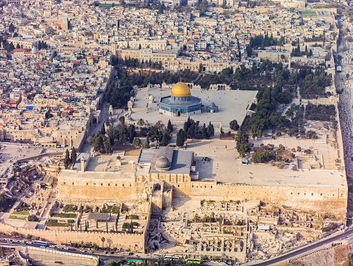
Temple Mount Built on upon Mount Moriah
Photo Credit: Andrew Shiva by CC BY-SA 4.0

2. Joseph’s Tomb which was bought by Jacob in Shechem (Genesis 33: 18-19)

Joseph’s Tomb in Biblical Shechem
Photo Credit: “Joseph’s Tomb” by young shanahan is licensed under CC BY 2.0

3. The Cave of the Patriarchs in Hebron

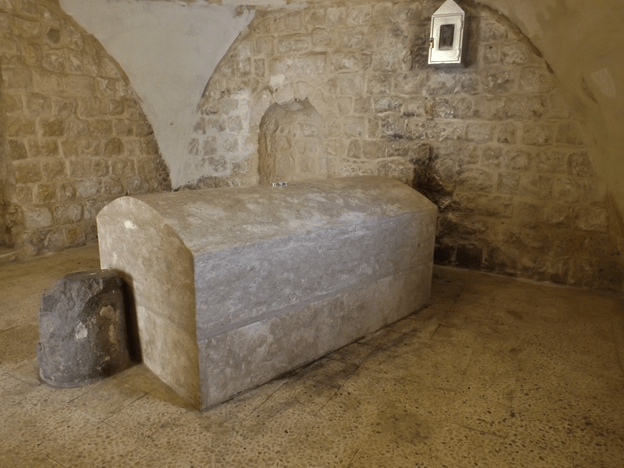
Cave of the Patriarchs. This is the burial place of Abraham, Sarah, Isaac, Rebecca, Jacob, Leah, and Adam and Eve.

Abraham, Isaac, Rivkah (Rebecca), Jacob and Leah are all buried here.

This grand building you see today was built on top of the cave by the infamous King Herod more than 2000 years ago.

Indeed, as you enter the building, you are walking on flooring more than 2 millennia old!

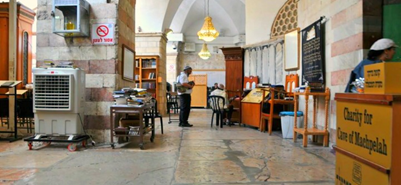
Inside the Cave of the Patriarchs building with it’s Ancient Floors

The cave itself, which is under the building, has been inaccessible for the last 700 years, when a fanatical Islamic empire called the Mamelukes took control and sealed the cave to all. They banned Jews, Christians and all non-Muslims from even entering the building.

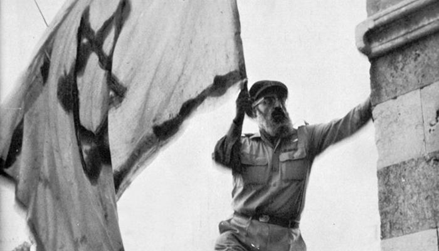
In the 1967 Six Day War, Israel liberated Hebron.  Chief Rabbi Goren of the IDF (Israeli Defense Forces) was so excited for the return of Jewish sovereignty for the first time since the 2nd Temple Era, that he drove himself to the Cave building and reached Hebron several hours before the IDF entered, and hoisted the Israeli flag atop the building.

Rabbi Goren atop the Cave of the Patriarchs in 1967
Photo Credit: Jewish Community of Hebron

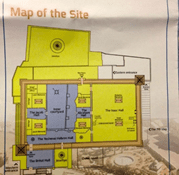
Immediately, non-Muslims were permitted by Israel to enter the building for the first time in centuries. In a failed, unreciprocated gesture of peace, Israel allowed the Palestinians to take control of the majority of the building in the late 1990’s (See yellow area on the below map where non-Muslims are banned from entering), with Israel retaining a smaller section that allowed Jews, Christians and people of faith from all over the world to experience its majesty (see blue on the below map).

Detailed floor plan of the Maarat Machpelah (Cave of the Patriarchs) in Hebron (Chevron), showing the layout of the structure and surrounding areas.

On your next trip to Israel, I highly recommend you put a visit to Hebron into your itinerary! To take a one of a kind virtual tour of Hebron right now, click here.

Please visit the author’s site: https://guidedtoursofisrael.com

Nosson Shulman is a journalist and Licensed Tour Guide in Israel specializing in Biblical toursTo allow tourists to experience Israel during the Corona era, he created the new hit Israel tour video series which brings Israel to the home of viewers by simulating actual tours. (including Hebron). To check out his free sneak preview tour videos, click here. To view sample tour itineraries or to inquire about private tour opportunities with a personalized itinerary on your next trip to Israel, click here.

NOSSON SHULMAN

© 2020 All Rights Reserved – Unauthorized Duplication is prohibited

Lot’s Wife: Relive Sodom & Gomorrah

By Nosson Shulman Licensed Tour Guide of VIP Israel Tours & Authentic Virtual Tours

“G-d caused rain of sulfur and fire to fall on Sodom and on Gomorrah…(Lot’s) wife looked behind her and was turned into a pillar of salt (Genesis 19:24-26)”

The story of Sodom and Gomorrah is one of the better known stories of the Torah (Hebrew Bible).  Today we will visit Mount Sodom, part of the Judean Desert mountain ridge, where Lot, Abraham’s nephew, choose to live. Unlike the rest of the desert, this mountain is completed made out of sulfur.

4000 years ago, the wicked people of Sodom were murderers robbers, and renowned for their selfishness where feeding the poor was a capital crime. They were also exceedingly wealthy due to their precious stone mines and agricultural fertility as it says “It was all watering (full of springs) before G-d destroyed Sodom…Like the Garden of G-d (Genesis 13:10)”.  Indeed, the archaeological evidence shows this barren, salty mountain was fertile up until that time.

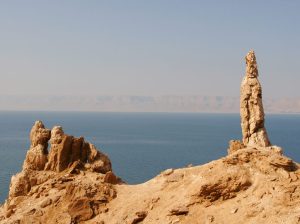
Because of their deeds, G-d decides to destroy the city, together with 4 nearby cities, by raining fire and brimstone on the city but tells Lot, via angels, to flee from the city and not to look back as the city is destroyed but Lot’s Wife decided to turn around and was instantly turned into a pillar of Salt along with the city.

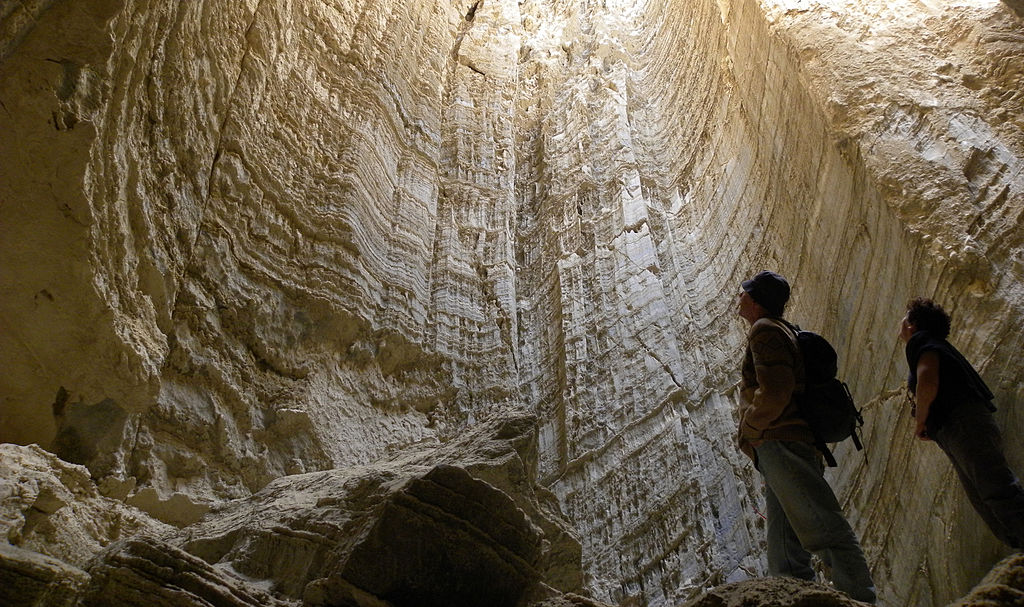
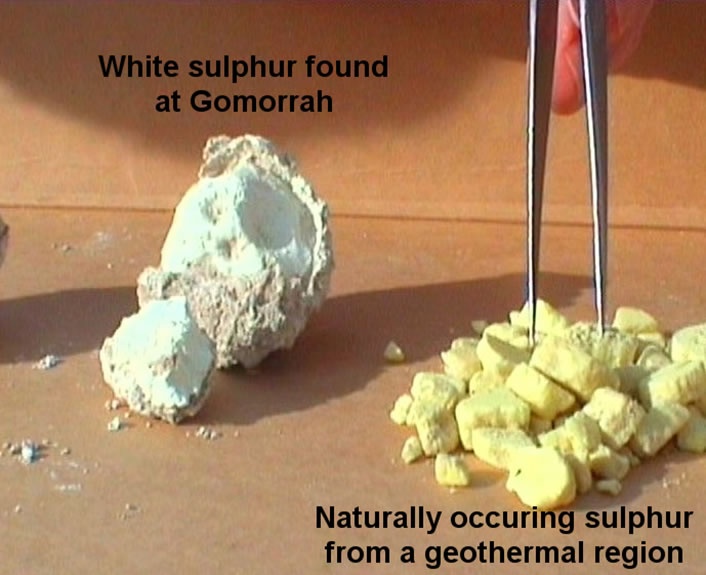
The sulfur that cover’s the currently barren mountain is unlike that found anywhere else in the world.

Sulphur Comparision Lots Wife Israel

The Bible relates that in the end of days, this area will return to being fertile once again.

Lots Wife today

Relive Sodom & Gomorrah and the Lot’s Wife experience today with Nosson Shulman on your very own private luxury Israel tour. To experience Israel from the comfort of your own home see our new Virtual Tours


By Nosson Shulman – Licensed Tour Guide and Trip Organizer in Israel who specializes in History, Tanach (Bible) and Adventure Tours. For more itineraries click here. Check out our new Virtual tour including a free sneak preview video Virtual Tours

© 2020 All Rights Reserved – Unauthorized Duplication is prohibited
Jerusalem’s Hezekiah Biblical (Broad) Wall

By Nosson Shulman Licensed Tour Guide of VIP Israel Tours Authentic Virtual Tours
When Hezekiah saw that (the Assyrians)…were headed for battle against Jerusalem…He rebuilt all the broken sections of the wall… and erected (a new) wall outside of it (Chronicles 2: 32: 2-5)”

Visiting the holy city of Jerusalem, and seeing its many sites where endless miracles took place,  is an uplifting experience. Today, I will take you to an important example of a site mentioned in Tanach (Bible), where G-d saved the Jewish people through an open miracle.

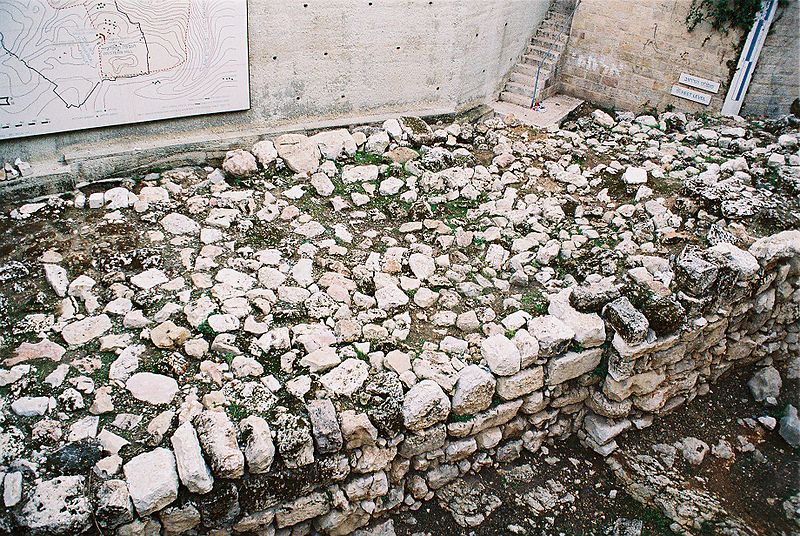
This site, popularly called the “Broad Wall”, is in the Jewish Quarter of the Old City, a mere 20 second walk from the main square. If you have travelled to Israel, you probably passed this treasure countless times and failed to notice it. The wall was built by Hezekiah, the Righteous King of Yehuda (Judah) close to 2600 years ago, in order to prevent the mighty Assyrians, the world’s super power of the time, from laying waste to Jerusalem, and exiling (or worse) its inhabitants.

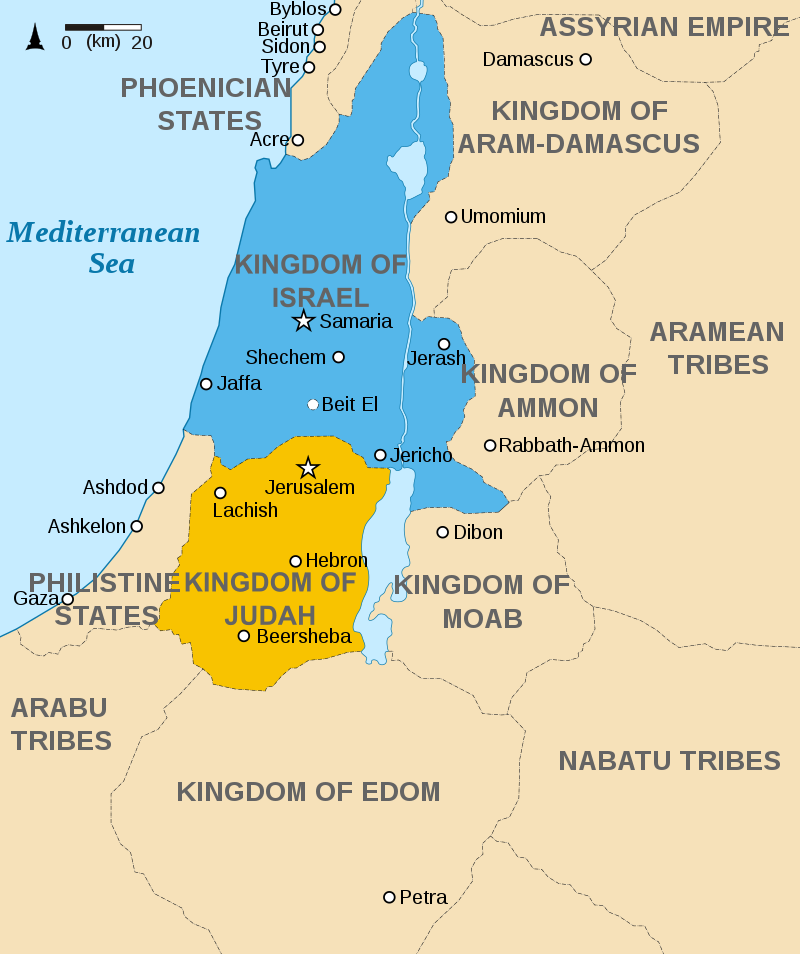
The original Jerusalem of King David lay further to the south of here. Over the years, the city grew from its core to include this area. The city grew exponentially during the reign of Hezekiah, because of the refugees who trickled in after the fall of the Northern Kingdom of Israel (after King Shlomo (Solomon), the Jewish kingdom had split into two: Israel in the north, and Judah in the south).

The Assyrians, with their 185,000 troops, perhaps the largest army the world had ever known until then, conquered the fortified cities of Judah, and then set out for Jerusalem. Hezekiah had to act quickly, and he built this wall around the new parts of the city to protect its new inhabitants. The wall was 7 feet thick and 28 feet high.

Because Jerusalem is a city of valley and hills, the wall had to be built according to topography, leaving some unfortunate houses outside of the city wall. Attached to the outside of the wall, you can still see the remains of these houses, whose stones were needed in the wall’s construction (see Isaiah 22:10).

The Assyrian army had never lost a battle in history, and Hezekiah knew only a miracle could save them. He and his future father in law Isaiah prayed for G-d to intervene. G-d promised Isaiah that no Assyrians would enter the city, and the people went to bed. G-d sent an angel that night, and burned the souls of the Assyrian soldiers, leaving 185,000 bodies around these walls, and removing the Assyrian threat. The people arose the next morning, and realized that G-d had saved them from destruction.

For years, archaeologists of the biblical minimalist camp said that the story never happened, because no remains from the period had even been found this far away from the City of David, and the city did not extent this far. This changed after the 6 day war, when Jerusalem was liberated from Jordan. During the 19 years of Jordanian occupation, the Jewish quarter and its holy sites were destroyed to remove any evidence of Jewish connection to the land. Now, archaeologists were able to dig under the debris (without interference from the buildings) and find this wall mentioned in Tanach.
The pottery found in the area date to the time of the biblical story, and so, this wall is a living witness to one of history’s greatest miracles.

Did you know that you can now actually tour Jerusalem from the comfort of your own home as if you were actually there?  Check out my new, Jerusalem tour video, where we will explore this incredible city’s many historic alley ways and Biblical sites on a guided tour.  Check out the free sneak preview tour video from a Biblical worldview perspective: Trailer

Relive the Jerusalem experience today with Nosson Shulman on your very own private luxury Israel tour. To experience Israel from the comfort of your own home see our new Virtual Tours


By Nosson Shulman – Licensed Tour Guide and Trip Organizer in Israel who specializes in History, Tanach (Bible) and Adventure Tours. For more itineraries click here. Check out our new Virtual tour including a free sneak preview video Virtual Tours

© 2020 All Rights Reserved – Unauthorized Duplication is prohibited

A Mosaic Treasure at Ein Gedi!


By Nosson Shulman Licensed Tour Guide of VIP Israel Tours Authentic Virtual Tours

“King David ascended and dwelt in the strongholds of Ein Gedi (Samuel 1: 24,1)”

Ein Gedi Synagogue

The Oasis of Ein Gedi, a site mentioned many times in Tanach (Bible), is one of Israel’s most visited sites. If you have been to Israel, you have probably hiked its desert rocks, swam in its year round water streams, and watched as families of Ibex (antelope) cross your path without warning.

Today however, we will venture off the beaten track, and explore one of Ein Gedi’s lesser known sites: the Ancient, Talmudic Synagogue.

The Synagogue from Roman/Byzantine times was only discovered in 1965, when workers of nearby Kibbutz Ein Gedi were plowing the field and found a well preserved Mosaic floor. Excavations were started and they soon realized they had found the community synagogue from the 3rd-5th century.
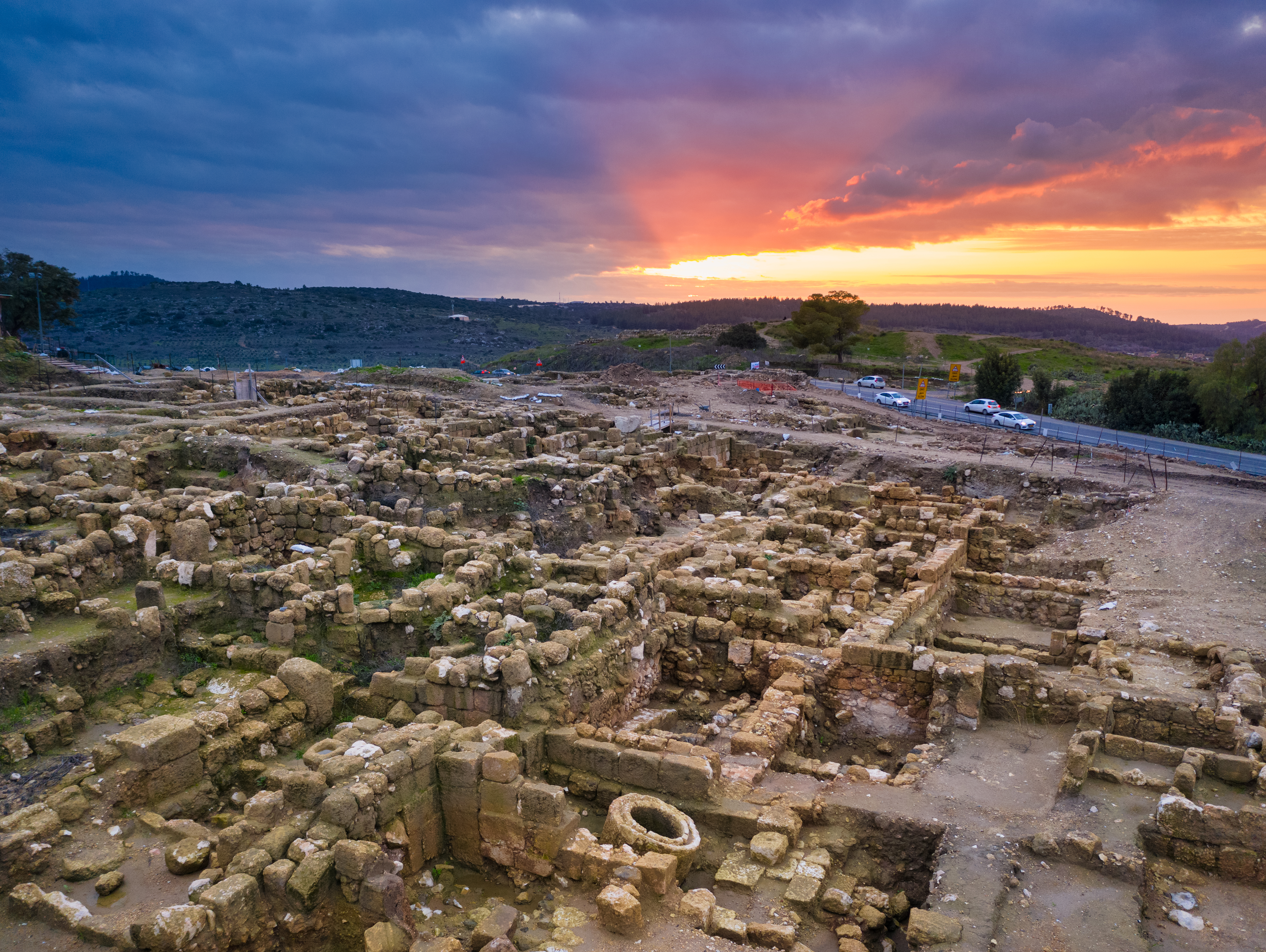
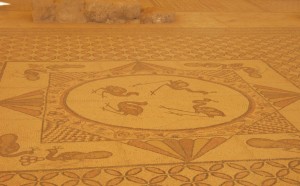
The mosaic floor of Ein Gedi (photo: Alan Chandross)

The designs of the Synagogue testify to the wealth of the community. Several colorful mosaics were found portraying exotic birds such as peacocks and partridges, as well as grapes and the Menorah.

As Jewish law dictates, the synagogue faces northwards towards Jerusalem, where the Aron Kodesh (prayer niche which holds the Torah Scroll) was carved into the wall.

The most important findings, however, were the several inscriptions found by the entrance. As in synagogues today, it is common to find plaques commemorating the donors. Ein Gedi of 1500 years ago was no different, and the three sons of “Halfi” are praised for building the fashionable staircase “on behalf of the Merciful One”.

The most interesting inscription tells the members of the community to keep the town’s “secrets” and curses those who reveal it. What was this secret? Due to Ein Gedi’s unique climate of desert sun and abundant water, they grew exotic trees from which they had secret methods of producing perfumes and spices, which were exported worldwide. They were so well known that years earlier, Cleopatra, the infamous Egyptian Queen, had the land seized for herself.

The community continued to grow until around 530 when the community mysteriously was abandoned. Remains of fire burn marks suggest that the community was attacked and destroyed by unknown invaders.

The community remained abandoned for 1400 years until the establishment of Israel, where a now thriving Kibbutz was established in 1956.

Relive the Ein Gedi experience today with Nosson Shulman on your very own private luxury Israel tour. To experience Israel from the comfort of your own home see our new Virtual Tours


By Nosson Shulman – Licensed Tour Guide and Trip Organizer in Israel who specializes in History, Tanach (Bible) and Adventure Tours. For more itineraries click here. Check out our new Virtual tour including a free sneak preview video Virtual Tours