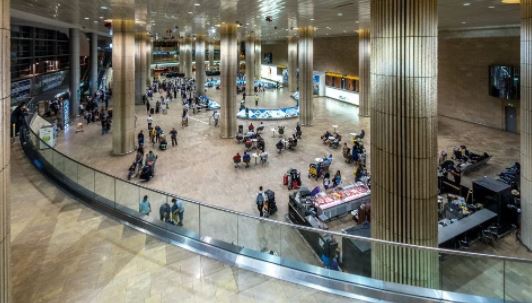
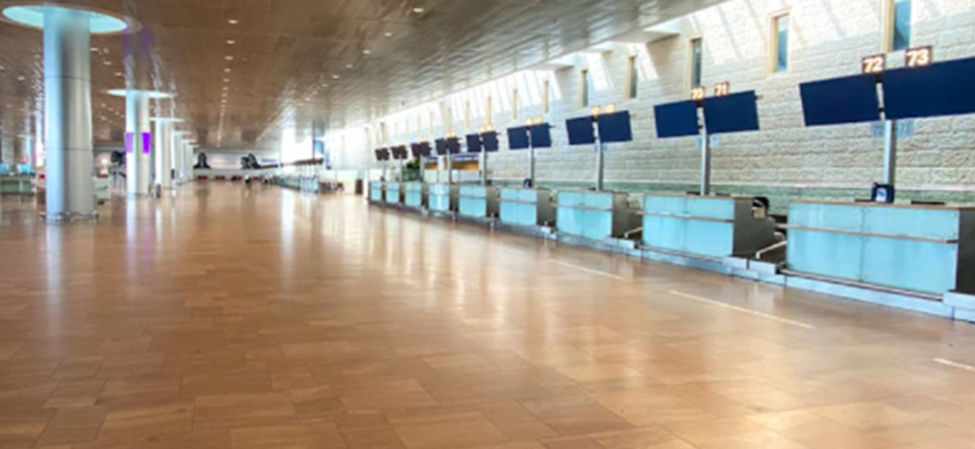
In a stunning development, the Ministry of Health, in conjunction with Prime Minister Naftali Bennett, declared that starting on May 20, tourists landing in Ben Gurion airport will no longer be required to take a PCR Test before entering the Jewish State. This decision was made in light of the decline in morbidity data, although the ministry of health will maintain the suitability of the testing system at the airport in order to allow it to be re-activated, should it be necessary, either partially or fully.
Additionally, beginning on Tuesday May 10, tourists will be able to take an antigen test in lieu of a PCR Test prior to boarding their flight to Israel. If one chooses the antigen option, they are required to take it within 24 hours of the flight (as opposed to the PCR Test which can be taken within 72 hours of the flight).
This announcement comes just after Israel recently removed the indoor mask mandate at most places of interest to tourists including malls, museums, stores, restaurants, leisure centers and hotels. Of course, people visiting these sites can still certainly choose to wear a mask if they would like to. However, on the airplane (and possibly at the airport as well) masks are still mandatory at this point. On March 1, Israel removed the green passport mandate (vaccination status) as a requirement to enter the country, meaning almost everyone can enter (although anyone who currently has Covid 19 will not be allowed to board).
At this time, there is still a requirement to fill out an entry statement online within 48 hours of your flight. To fill out this form, click here.
Disclaimer:
The author of this article is not an attorney, and this article should not be construed as legal advice or an authoritative source. This article is for informational purposes only and should never be relied upon. The author takes no responsibility for the content or accuracy of this article. It is highly recommended (and the sole responsibility) for anyone wanting to enter Israel to do their due diligence and independently verify that they are indeed qualified to enter the country, and to ensure that they have the appropriate documents to successfully do so.
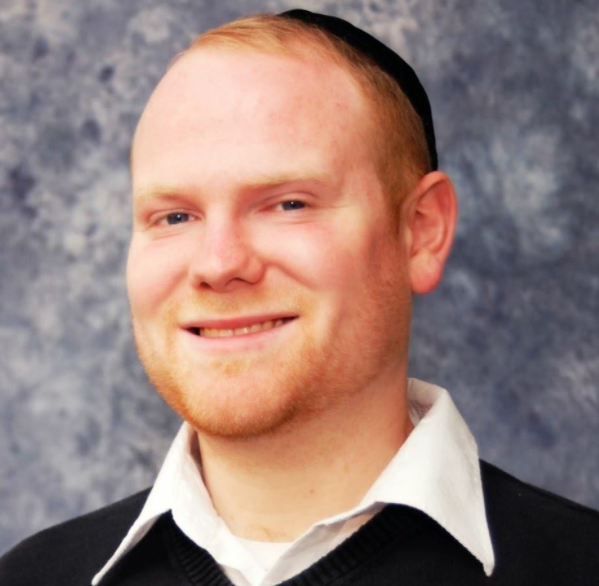
Nosson Shulmanis a journalist and Licensed Tour Guide in Israel specializing in Biblical tours. To allow tourists to experience Israel during the Corona era, he created the new hit Israel tour video series which brings Israel to the home of viewers by simulating actual tours. To check out his free sneak preview tour videos, click here.To view sample tour itineraries or to inquire about private tour opportunities with a personalized itinerary on your next trip to Israel, click here.
Eytan Stibbe (Standing tall in the back) and 3 private astronauts pose for a picture aboard Axiom-1. This was the world’s first privately funded (and manned) mission to the orbiting outpost.
In what is being hailed as a revolution in commercialized human spaceflight, four tycoons (including Israeli Eytan Stibbe) spent two weeks at the International Space Center (ISS), successfully returning to earth a few days ago. The SpaceX crew capsule (which carried the 4-man team), upon reentry parachuted into the Atlantic Ocean (off the coast of Florida) after a 16 hour descent from orbit.
The space mission was the first in world history to be privately bankrolled (not subsidized by tax dollars). The entire project (from training the crew to building the project) was paid for by Axiom, a private company contracted with NASA to build the first commercial addition to the ISS. The four individuals on the trip paid between 55-60 million dollars each for their seats abroad the space craft. With this successful trip, the company is hoping to offer private trips to space at least twice a year.
Eytan Stibbe (previously a fighter pilot, reaching the rank of Colonel, before becoming successful in the private sector) also set another milestone as the first Israeli to successfully return from space. He was not however the first Israeli in space, as that distinction belongs to Israeli war-hero Ilan Ramon, a fighter pilot responsible for bombing Iraq’s nuclear reactor in 1981 and then miraculously making it back to Israel alive against all odds. He was the commanding officer of Eytan Stibbe in the air force. On February 1, 2003 after (by all accounts) a successful 16 days in space, his spacecraft tragically disintegrated upon reentry, killing all 7 people abroad only 16 minutes before landing.
While in space, Eytan Stibbe conducted 35 science experiments, and even ate Matzah and gefilte fish to celebrate the Jewish holiday of Passove
Nosson Shulmanis a journalist and Licensed Tour Guide in Israel specializing in Biblical tours. To allow tourists to experience Israel during the Corona era, he created the new hit Israel tour video series which brings Israel to the home of viewers by simulating actual tours. To check out his free sneak preview tour videos, click here.To view sample tour itineraries or to inquire about private tour opportunities with a personalized itinerary on your next trip to Israel, click here.
“And the border went up toward Debir from the Valley of Achor, and so northward, facing Gilgal, that is before the ascent to Adumim, which is on the south side of the valley, and the border passed toward the waters of Enshemesh, and the goings out thereof were at En-rogel (Joshua 15:7)”
The modern Jewish settlement of Maale Adumim is in the Judean Desert. The high mountains visible in the background are located in Jordan. Photo Credit: Shutterstock
Today, we are visiting a site which sat on arguably the most important road from Biblical times (and even today). Anyone driving through this extreme desert road from Jerusalem to Jericho, the Dead Sea or Masada has passed by here, although likely never stopped at this site. This area has incredibly breathtaking views, and includes a rich history and unique archeology. Additionally, Israel’s newest top nightlife and shopping attraction recently opened up here (for more on that, click here). Today this Jewish city, located in Judah and Samaria (West Bank) is of utmost importance to Israel’s national security and hold on Jerusalem, which is why every Prime Minister (right and left) beginning with Yitzhak Rabin made developing this area a priority. With that in mind, let us explore this timeless treasure!
Today, Maale Adumim (population 42,000) is an award winning, beautiful Jewish city (3rd largest) in Judah and Samaria. Among Israel’s Jews on the right and the mainstream left, a consensus has developed that any future peace treaty would need to require Israel to retain control. Photo Credit Shutterstock
In Biblical times, Maale Adumim sat on the border between Benjamin and Judah (see Joshua 15:7 and 18:17).
Map of the tribal territories of Israel. Maale Adumim was located in Judah on the border with Benjamin (as indicated by the red circle). Photo Credit: Janz derivative work Richardprins – CC BY-SA 3.0
When the Bible referred to “Maale Adumim (translated as the Ascent of the Red)” it wasn’t exclusively referring to a particular town, but rather the stretch of road beginning in Jericho (400 meters below sea level) and steeply rising to Jerusalem (800 meters above sea level). The limestone rocks on this ascent are red, tinted by Iron Oxide, hence the name “Red Ascent”.
The rocks of Maale Adumim are reddish due to iron oxidization. Photo Credit: Shutterstock
During the days of the First and Second Temple, Jews had an obligation to go on a pilgrimage to Jerusalem 3 times a year: Passover, Sukkot, and Shavuot (in the future, when the Third Temple is rebuilt the obligation will be reinstated). Jews coming from the Galilee, Jordan Valley, modern day Jordan, Lebanon, and Syria would ascend to Jerusalem on this road, and there were many inns along the way. Today’s Inn of the Good Samaritan Museum (one of the largest collections of Synagogue and Church mosaics in the world) is housed in an Ottoman Turkish Inn built upon a Byzantine Inn. It is believed that during Second Temple times, this was also the location of an Inn due to a Herodian era fortress found nearby which protected it.
The entrance to the Good Samaritan Museum, a seldom visited treasure containing unique Mosaic finds. This building was built in Turkish times upon Byzantine ruins. It is believed at this location that an Inn existed during the Second Temple Period. Photo Credit: Hoshvilim – Creative Commons Attribution-Share Alike 4.0 International
In Byzantine times, a large monastery existed here (uncovered during construction of a new neighborhood of Maale Adumim in the 1980s) called Martyrius. The Monastery complex was huge, with mosaic floors and having 6 large cisterns, a dining room, a hostel for travelers and horse stables. It was damaged by the invading Persians in 614 CE and completely abandoned after the Arab conquest (circa 638 CE).
Mosaic floor uncovered in Maale Adumim from the Martyrius Monastery Photo Credit: Dr. Avishai Teicher Pikiwiki Israel- CC BY 2.5
During the Muslim era, the area went through a long period of decline. In the 20th Century, the British paved the Jericho-Jerusalem Road naming it highway one, however they redirected the road from Jericho to nearby Lido (where the Dead Sea industry, hotel and nightclub was located) and so it remains today.
The now-abandoned Lido Night Club, which was a club for British high society in the 1940s. Today’s highway one ends here. Photo Credit: Dr. Avishai Teicher Pikiwiki Israel – Creative Commons Attribution 2.5 Generic
When Jordan occupied the land from 1948-1967, little development took place here. In 1967, Jerusalem and Judah and Samaria were liberated by the Israeli Defense Forces (IDF). At first the Israeli government (led by the leftwing Labor party) wouldn’t permit Jews to return or build homes here, because they were under the illusion that if Israel were to “return” the newly liberated land to the Arabs, they would be clamoring for peace (in August 1967, the Arab nations famously gathered in Sudan and disavowed any future peace deal regardless of land). Israel only allowed small settlements to be built in areas which were militarily necessary for strategic reasons (mainly in the Jordan Valley and Gush Etzion). After the Yom Kippur War in 1973, Gush Emunim (a religious-Zionist organization whose goal was to settle all the newly liberated lands in order fulfill the Torah command of settling their ancestral homeland, while restoring Jewish presence in the area) was founded. They began to settle this area in the mid-1970s. In 1977 Menachem Began (a champion of the settlement movement) was elected Prime Minister, and he made it easier for communities to be built throughout Judah and Samaria, resulting in Maale Adumim being granting local council status. In 1991, Maale Adumim became the first Jewish settlement to be officially declared a city (since then Betar Illit, Ariel and Modiin Illit have also received that recognition). Currently, many new neighborhoods are being built here and a flourishing community, including many native English speakers, call this place home. Twice, the city has won the Israel Ministry of Education prize for excellence and three times has won the “Most Beautiful City in Israel Award” by the Council for a Beautiful Israel. The area now sprouts several flourishing settlements, including Mitsphe Yericho, Vered Yericho, Anatot, Kfar Adumim, and several others. Together this bloc of settlements is known as the “Adumim Bloc” and retaining control of this area just west of Jerusalem is considered a rare consensus issue in Israel.
New neighborhoods are always being built in Maale Adumim. Photo Credit: Shutterstock
One of the crowning achievements of the city was the establishment of one of the first industrial zones in the settlements, which quickly became one of the premier industrial zones serving the Jerusalem area. Today, more than 300 companies have factories here and are a major employer for both Jews and thousands of Palestinians. For residents of the Palestinian Authority (PA) these jobs are highly sought after, because even those making Israeli minimum wage earn on average three times more than they would working for employers in the PA. They also get benefits underheard of in the Arab cities of Judah and Samaria such as mandatory paid sick days, legal holidays based on the Muslim calendar, paid transportation, Israeli healthcare, pension, and vacation time.
A partial aerial shot of the Industrial zone of Mishor Adumim. Since this picture was taken, more factories have been built. Photo Credit: Neukoln – Creative Commons Attribution-Share Alike 3.0 Unported
In mid-2021, a revolutionary game changer to the area occurred when Israel’s most luxurious mall, D-City, opened here (at a cost of $230 Million). It is a breath-taking architectural phenomenon, built by celebrity architect Gadi Halperin, to resemble the deluxe Venetian Resort in Las Vegas. Indeed, one who visits here can be forgiven for temporarily forgetting they are NOT in Italy but rather in an extreme desert! The mall has over 200 brand name stores (including several furniture stores) water fountains, nightly concerts, restaurants with a venetian ambiance and an amusement park with 40 rides. It will soon also have a hotel and convention center. This mall is projected to become the main shopping center for over 1.5 million Israelis (including Jerusalemites) for their home furnishing needs, a major rest way between the center of the country and Eilat and a major nightlife hotspot and a tourist attraction in itself. This is likely to create economic opportunities for the surrounding desert communities, who will open businesses catering to this increased traffic, thus accelerating the area’s growth (for more on this wonderful hotspot, click here).
D-City’s “Piazza”. The skylight in the picture is artificial and mimics an outdoor dining experience in Venice Italy! Photo Credit: Ynhockey- CC BY-SA 4.0
Today there is so much to do for tourists in the area, including some of the best ATV/Jeeping in the country and hiking trails (including waterholes). On your next trip to Israel, in addition to visiting the Dead Sea and Masada, definitely take the opportunity to stop here and explore this stunning area!
Nosson Shulmanis a journalist and Licensed Tour Guide in Israel specializing in Biblical tours. To allow tourists to experience Israel during the Corona era, he created the new hit Israel tour video series which brings Israel to the home of viewers by simulating actual tours. To check out his free sneak preview tour videos, click here.To view sample tour itineraries or to inquire about private tour opportunities with a personalized itinerary on your next trip to Israel, click here.
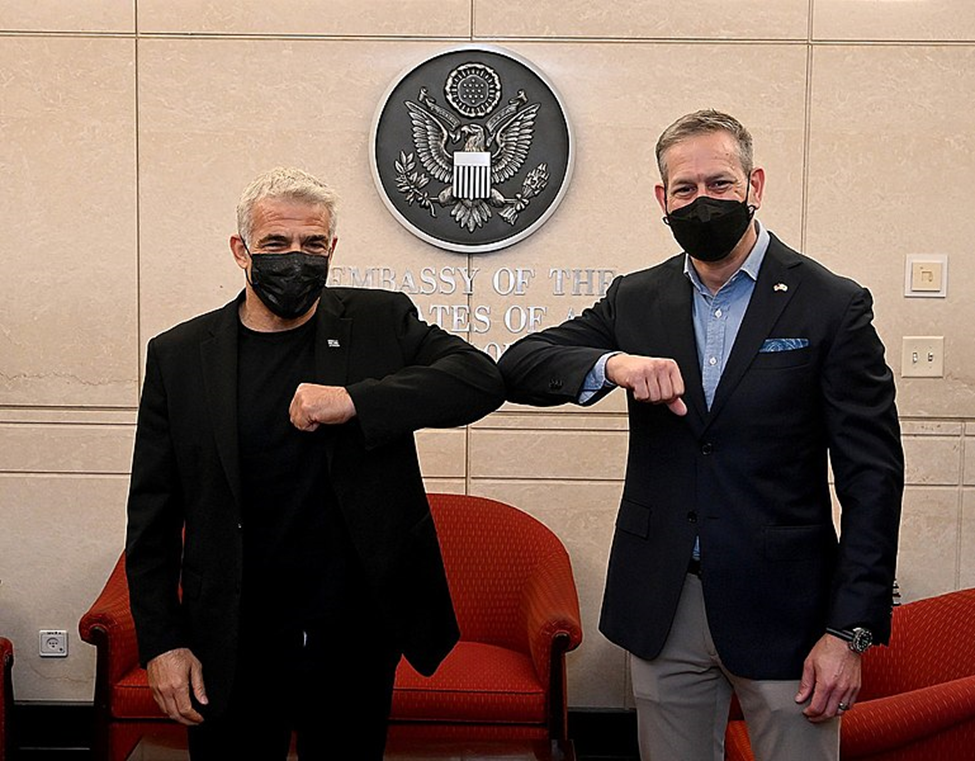
Israel’s Foreign Minister Yair Lapid and senior US Embassy diplomat Jonathan Shrier wearing masks at the US embassy in Jerusalem. When this photo was taken, it was compulsory to wear masks indoors. Now Israelis may still choose to continue to wear them, although it is no longer mandatory.
For the first time in more than 2 years (with the exception of a brief 10-day period in June 2021) Israelis are no longer required by law to wear masks indoors (with the exception of places having high contagion potential such as hospitals, senior residences, health clinics and airplanes). Although the mask mandate was set to expire on May 1, due to low morbidity, the government decided to scrap it early, officially ending on Saturday, April 23rd at 8:00 PM Israel time.
In practice, Israelis (many long tired of being forced to wear masks) had been flouting the requirements for months. The removal of the requirements comes just days after a US Federal judge struck down mask requirements on public transportation (including in airports and planes). The government is still encouraging people to wear masks, though they no longer are required to. According to Israeli Prime Minister Naftali Bennet “We have finally learned how to live alongside the coronavirus – without panic, with responsibility and sound judgment”.
Nosson Shulmanis a journalist and Licensed Tour Guide in Israel specializing in Biblical tours. To allow tourists to experience Israel during the Corona era, he created the new hit Israel tour video series which brings Israel to the home of viewers by simulating actual tours. To check out his free sneak preview tour videos, click here.To view sample tour itineraries or to inquire about private tour opportunities with a personalized itinerary on your next trip to Israel, click here.
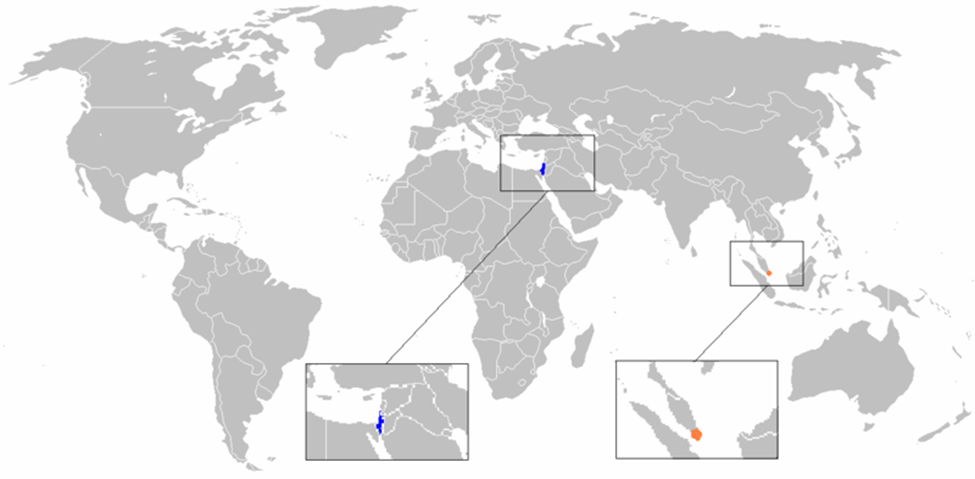
Although Israel and Singapore are tiny countries, both are economic superpowers whose contributions to innovation, science & technology are disproportionate to their size!
In a diplomatic victory for Israel, Singapore (one of the world’s leading economic superpowers) will be opening it’s first embassy in Israel, to be located in Tel Aviv. Singapore’s Foreign Minister, Vivian Balakrishnan, made the announcement on his recent trip to Israel during a meeting in Jerusalem with Israel’s foreign minister.
The South-Asian Island nation has actually had relations with Israel since 1969, made possible after the country gained independence from Malaysia (who to this day refuses to make peace with the Jewish State). The two countries share a special relationship, part of which comes from both being tiny nations surrounded by countries that are hostile to their existence. As with Israel, Singapore has a need for a strong military, which Israel played a large part in developing. The Singaporean military, including its national service program, is directly modeled after the Israeli Defense Force (IDF). Immediately after the independence of Singapore in 1965, military advisors from the IDF were brought to the island to help set up and train their fledgling military. Today, Singapore is the second largest Asian importer (after India) of Israeli weaponry, military technology, and hardware (such as tanks and fighter jets). Additionally, the overall trade between the nations, including high-tech equipment, electronics and computer machinery is worth several billion dollars annually!
Although relations with Israel have been strong for decades, Singapore has preferred to keep their relationship as discreet as possible, because of Singapore’s close proximity and relations with its Muslim neighbors, including Malaysia and Indonesia. This is why until now they have not opened an embassy in Israel (although they had an “unofficial” representative in Tel Aviv). However, with the Abraham Accords normalizing ties between Israel and four Arab nations brokered in 2020 by the Trump administration, and Israel’s improving relations with Turkey, Jordan, and Egypt (in addition to its growing profile in the wider Sunni Muslim world) having open relations with Israel is less stigmatized, and now Singapore is openly boasting about it’s ties with the Holy land.
Since the 19th century when wealthy Jewish traders from Baghdad settled on the Island, Singapore has been home to a small, but thriving Jewish community (at least 180 descendants of the original immigrants, who are mostly Orthodox, still live there). Currently there are a few synagogues, full time Rabbis, a Jewish cemetery, Mikvaot (Ritual baths), a day school, and kosher restaurants. For a minority group, the Jewish community plays a significant role in the country and antisemitism amongst the locals is virtually non-existent.
Nosson Shulmanis a journalist and Licensed Tour Guide in Israel specializing in Biblical tours. To allow tourists to experience Israel during the Corona era, he created the new hit Israel tour video series which brings Israel to the home of viewers by simulating actual tours. To check out his free sneak preview tour videos, click here.To view sample tour itineraries or to inquire about private tour opportunities with a personalized itinerary on your next trip to Israel, click here.
“G-d caused rain of sulfur and fire to fall on Sodom and on Gomorrah…(Lot’s) wife looked behind her and was turned into a pillar of salt (Genesis 19:24-26)”
Lot’s Wife (overlooking the Dead Sea) was turned into a pillar of salt some 4000 years ago (see Genesis 19). Photo Credit: Shutterstock
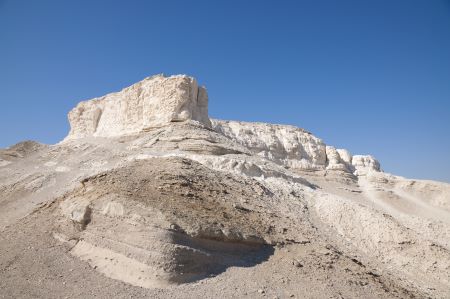
Today we are visiting an unusual Biblical site, where truth is stranger than fiction! Located in the heart of the Judean Desert, Mount Sodom is completely composed of sulfur (as opposed to the rest of the desert which is composed of limestone).
Despite the fact that the rest of the Judean Desert is composed of desert limestone, Mount Sodom is entirely composed of salt. Photo Credit: Shutterstock
When standing at this abnormal “enclave” of salt, tourists immediately understand that this is not a natural geological feature. Indeed, the sulfur found here is unique (it’s 98% pure and white, unlike natural sulfur formed by geothermal activity). What happened here would have remained an unexplained mystery, if not for the Bible recording what occurred here.
Millions of high purity (98% pure) sulfur balls with burn rings were found here, embedded in what looks like the ashen remains of cities. The picture on the bottom is Gomorrah. Photo from Public Domain
Four thousand years ago, the wicked people of Sodom were murderers, robbers, and well renowned for their selfishness. Even feeding the poor was a capital crime! According to Jewish sources, this was meant to keep poor people from having a reason to come to their town. Selfishness was so ingrained in their psyche that they used to strip the trees bare of fruits, lest any birds or animals should benefit even the slightest from their property. They were also exceedingly wealthy due to their precious stone mines and agricultural fertility as it says “It was all watering (full of springs) before G-d destroyed Sodom…Like the Garden of G-d (Genesis 13:10)”. Indeed, the archaeological evidence shows that this barren, salty mountain was fertile up until that time.
Because of their evil deeds G-d decided to destroy Sodom, together with 4 nearby cities, by raining fire and brimstone on the city. Lot (Abraham’s nephew) had settled in Sodom with his family. In the merit of his uncle, G-d sent angels to inform Lot’s family that the city would be destroyed and that he needed to flee immediately. He also commanded them not to look back as the city was being destroyed. Despite the warning, Lot’s Wife decided to turn around and was instantly turned into a pillar of salt along with the city and the Dead Sea.
Lot fled with his wife and two daughters. Lot’s wife couldn’t resist the urge to look and was immediately converted into a pillar of salt. Picture taken from public domain
In the end of days, the Bible tells us that Sodom and the Dead Sea will be healed and once again become a place of great fertility (see Ezekiel 47). In the meantime, you can still visit this wonderous site to see firsthand where one of the most dramatic Biblical events took place!
Sponsored by Rockets Into Roses: Discover the powerful art of an Israeli Hero living on the Gaza border, who transforms rocket fragments into stunning, one-of-a-kind masterpieces. His Art, his Jewelry, and items of Biblical Value owned by US presidents and many world leaders, not only symbolizes resilience but directly supports charities aiding Israelis in the Gaza Envelope.Limited Time Offer: Enjoy Free Shipping on All Orders with the discount code: freeship
To sponsor our next article or newsletter and have your business seen by thousands of our American pro-Israel subscribers and beyond, please contact us at info@guidedtoursofisrael.com
To see a sample Israel tour itinerary which can include Mount Sodom,click here
Nosson Shulmanis a journalist andLicensed Tour Guidein Israel specializing in Biblical tours. To allow tourists to experience Israel during the Corona era, he created the new hit Israel tour video serieswhich brings Israel to the home of viewers by simulating actual tours. To check out his free sneak preview tour videos, click here.To view sample tour itineraries or to inquire about private tour opportunities with a personalized itinerary on your next trip to Israel,click here.
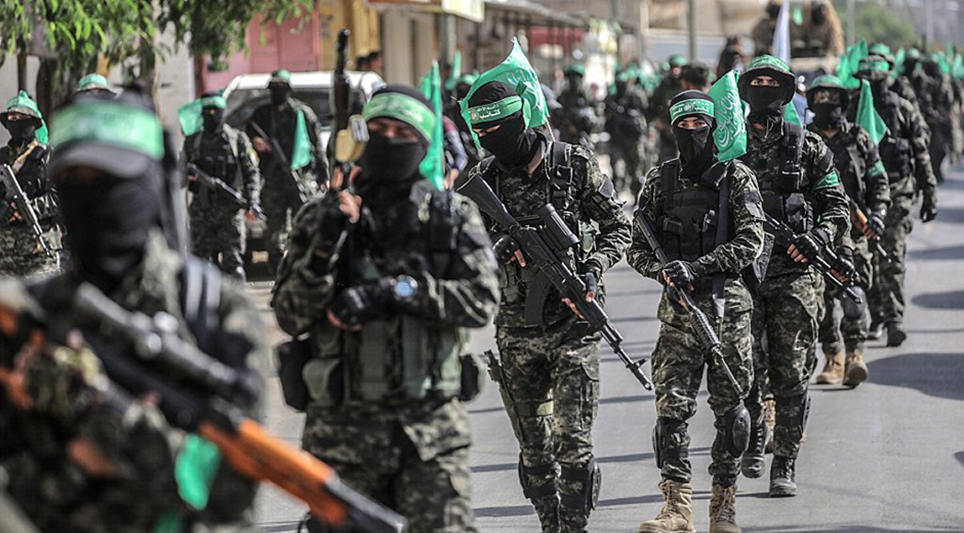
In another major blow to Hamas, Australia has just blacklisted the entirety of Hamas as a terror organization (although they banned the military wing in 2003, until now dealings with the political wing were legal). This follows Australia’s complete ban on Hezbollah (an Islamic terror organization based in Lebanon) only a few months ago!
Now with this designation, providing any support to the terror group (financial or otherwise) in the Land Down Under is punishable by a prison sentence of up to 25 years! Says Australia’s Home Affairs Minister Karen Andrews “The views of Hamas and the violent extremist groups listed today are deeply disturbing, and there is no place in Australia for their hateful ideologies.” Indeed, the group’s charter openly seeks the destruction of Israel. In the last several years, the Jihadist group has initiated several (unprovoked) wars against the Jewish State, indiscriminately fired thousands of rockets into heavily populated areas, and orchestrated acts of terrorism against innocent civilians.
Australia was the not the first country that differentiated between Hamas’ political and military wings. In late November 2021, England (which had already banned the military wing years earlier) finally took the step to outlaw its political wing, dealing a major financial blow to Jihadists (for more on that, click here). Even today, countries such as Japan, New Zealand, and Paraguay have only outlawed Hamas’ armed forces, claiming that the political wing carries out important civil society functions like charity, humanitarian projects and the building of infrastructure in Gaza, and therefore should not be sanctioned on that end. Those opposed to this idea are quick to point out this fallacy from both a moral and practical point of view. Morally both wings have the same goal, the utter destruction of the Jewish State and its inhabitants and cannot be considered separate entities (as a comparison, no decent person would ever even consider funding the “political wing” of the mafia or racial supremacy groups like the KKK, Neo-Nazi movement and Louis Farrakhan’s Nation of Islam regardless of the social service programs they were offering).
From a practical perspective, once countries and private donors give money to the “political wing” of Hamas, the money can “find” it’s way to the military wing (indeed, this arrangement often allows Hamas to by-pass sanctions against it). Even where there is oversight on how the money is spent, Hamas uses the money to build schools encouraging a life of Jihad, establishing community centers where weapons of the “military wing” can be stored in the basement, funding “certain science and technology (i.e., weapon building)” university programs in Gaza and paying terrorists who are sitting in Israeli prisons.
It’s not just the money. Since the “political wing” members aren’t sanctioned, influential citizens and politicians can meet with them, giving them legitimacy. The policy has led to hundreds of very powerful institutions (such as the UN and universities) and NGOs to hire terrorists (many of them who have spent time in Israeli prisons) who in turn hire more Hamas members. Once in a position of power, they use their positions to recruit would-be terrorists to the organization, and lobby countries to apply pressure on Israel to free convicted terrorists.
t needs to be pointed out that the political wing isn’t immune to using direct violence to obtain their goals (even without the help of the military wing). One of the most recent terrorist attacks in Jerusalem (in which a 26-year-old civilian was shot and killed in cold blood, 2 officers injured, and a Rabbi (and father of 8) still dressed in his prayer shawl was shot and miraculously survived the attack) was committed by a senior member of the political wing.
With this move, Australia joins the ranks of countries that have banned Hamas in its entirety. Included in this list are Canada, United States, UK, EU, and the OAS (Organization of American States).
Nosson Shulmanis a journalist and Licensed Tour Guide in Israel specializing in Biblical tours. To allow tourists to experience Israel during the Corona era, he created the new hit Israel tour video series which brings Israel to the home of viewers by simulating actual tours. To check out his free sneak preview tour videos, click here.To view sample tour itineraries or to inquire about private tour opportunities with a personalized itinerary on your next trip to Israel, click here.
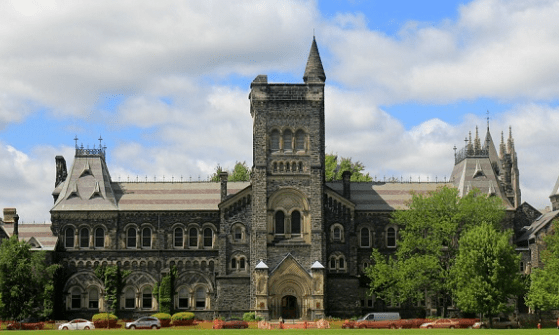
In a historic first, the University of Toronto will withhold over $10,000 from the Graduate Student Union as punishment for their antisemitic boycott of Israel.
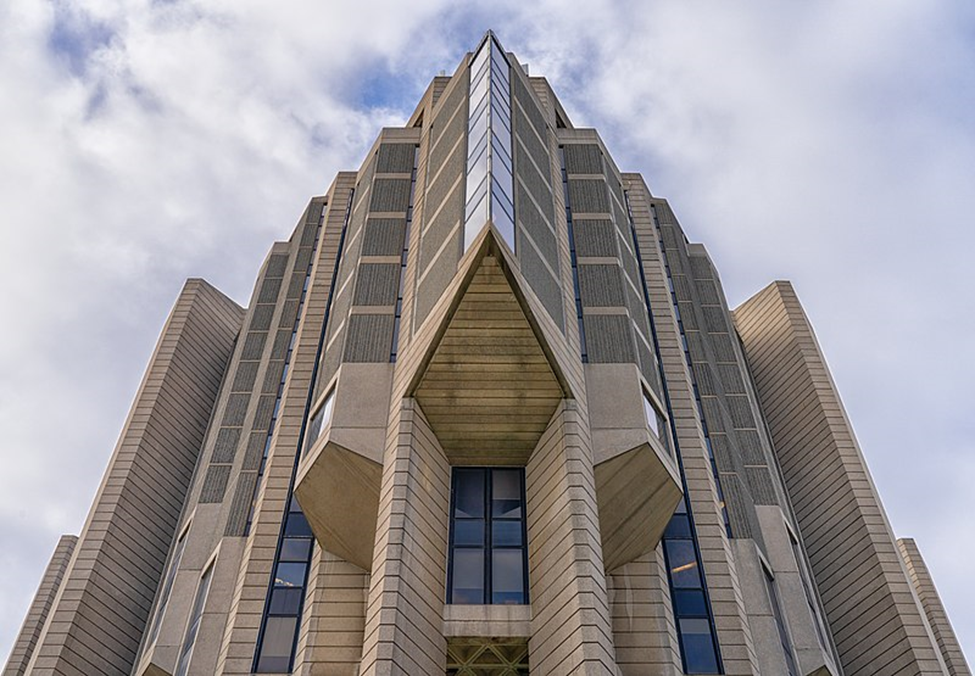
The Robarts Library is the largest of 44 libraries belonging to the University of Toronto. This academic library system is the third largest in North America (only behind Harvard and Yale). Photo Credit: Maksim Sokolov (Maxergon) – Creative Commons Attribution-Share Alike 4.0
North American Universities have long been a bastion of anti-Israel activities and commentaries (in Europe, the situation is often worse). Blatant anti-Semitism on campus has festered for decades, with the school’s administration turning a blind eye. Last year’s vote by the University of Toronto’s Graduate Student Union (GSU) for the passing of a motion calling for the boycott of Israel (including divesting the school’s investments connected to Israeli firms and businesses) surprised no one. What is causing shockwaves, is the University’s (unheard of) decision to punish the GSU by withholding funds from it. Even though it took the University more than a year to react following an official complaint, this marks the first time in Canadian history that a university has withheld money from groups supporting BDS and anti-Semitism!
According to U of T’s Vice-President and Provost Cheryl Regehr, $10,918 (or 0.86% of its entire budget) will be withheld from the GSU. This sum is the amount the student’s union would have spent on promoting anti-Israel activities on campus. These payments are collected from mandatory student fees, meaning that every student on campus (even Jewish and Pro-Israel students) were essentially being forced to fund anti-Semitic activities that they do not agree with! This was a clear violation of the school’s Statement on Freedom of Speech, which states that “the University’s primary obligation is to protect the free speech of all involved. Debate must not be limited by preordaining conclusions. Individuals can also not be forced to hold specific views on controversial issues in order to participate in any aspect of university life.”
The University of Toronto (my Alma Mater) has long been considered one of the world’s most prestigious universities. In almost every yearly ranking, the school is listed as being within the top 15-30 institutes of higher learning in the world. Yet even with this distinction, the University (like many other top colleges) has allowed anti-Israel activities to flourish, creating an environment where pro-Israel students are afraid to speak up. In 2005, the school hosted the world’s first “Israel Apartheid Week” which has since become an annual event in universities in at least 55 cities around the world (as a Pro-Israel activist on campus, I was heavily involved in exposing the lies of the event). In 2011, Professor Rupaleem Bhuyan from the Faculty of Social Work encouraged her students to do a “Jew count” to show how Jews were overrepresented by population in the University’s staff (she is still employed at the school). In 2018, a professor of Middle Eastern studies refused to meet with a Jewish student, claiming by email that his pro-Israel views “posed a great threat to academic freedom” (the university declined to punish the professor by saying that while the professor’s email was overly harsh, it did not constitute discrimination). In late 2021, U of T’s Scarborough Campus Student Union voted to place restrictions on Kosher Food on campus because doing so would “normalize Israeli apartheid.” These are just some of the many incidents which have occurred on campus in the last several years and while (up until now) little action has been taken to make Jewish and pro-Israel students feel safer, it is hoped (though certainly by no means a foregone conclusion) that this action by the university is the start of a wakeup call to stamp out the world’s oldest form of hatred from its halls!
Nosson Shulmanis a journalist and Licensed Tour Guide in Israel specializing in Biblical tours. To allow tourists to experience Israel during the Corona era, he created the new hit Israel tour video series which brings Israel to the home of viewers by simulating actual tours. To check out his free sneak preview tour videos, click here.To view sample tour itineraries or to inquire about private tour opportunities with a personalized itinerary on your next trip to Israel, click here.
“When Hezekiah saw that (the Assyrians)…were headed for battle against Jerusalem…He rebuilt all the broken sections of the wall… and erected (a new) wall outside of it (Chronicles 2: 32: 2-5)”
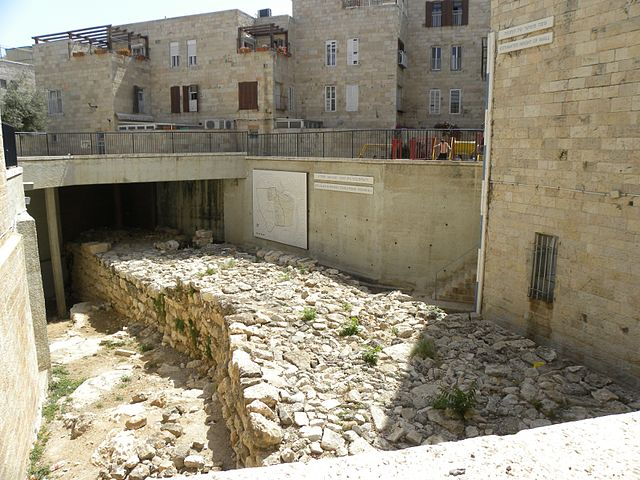
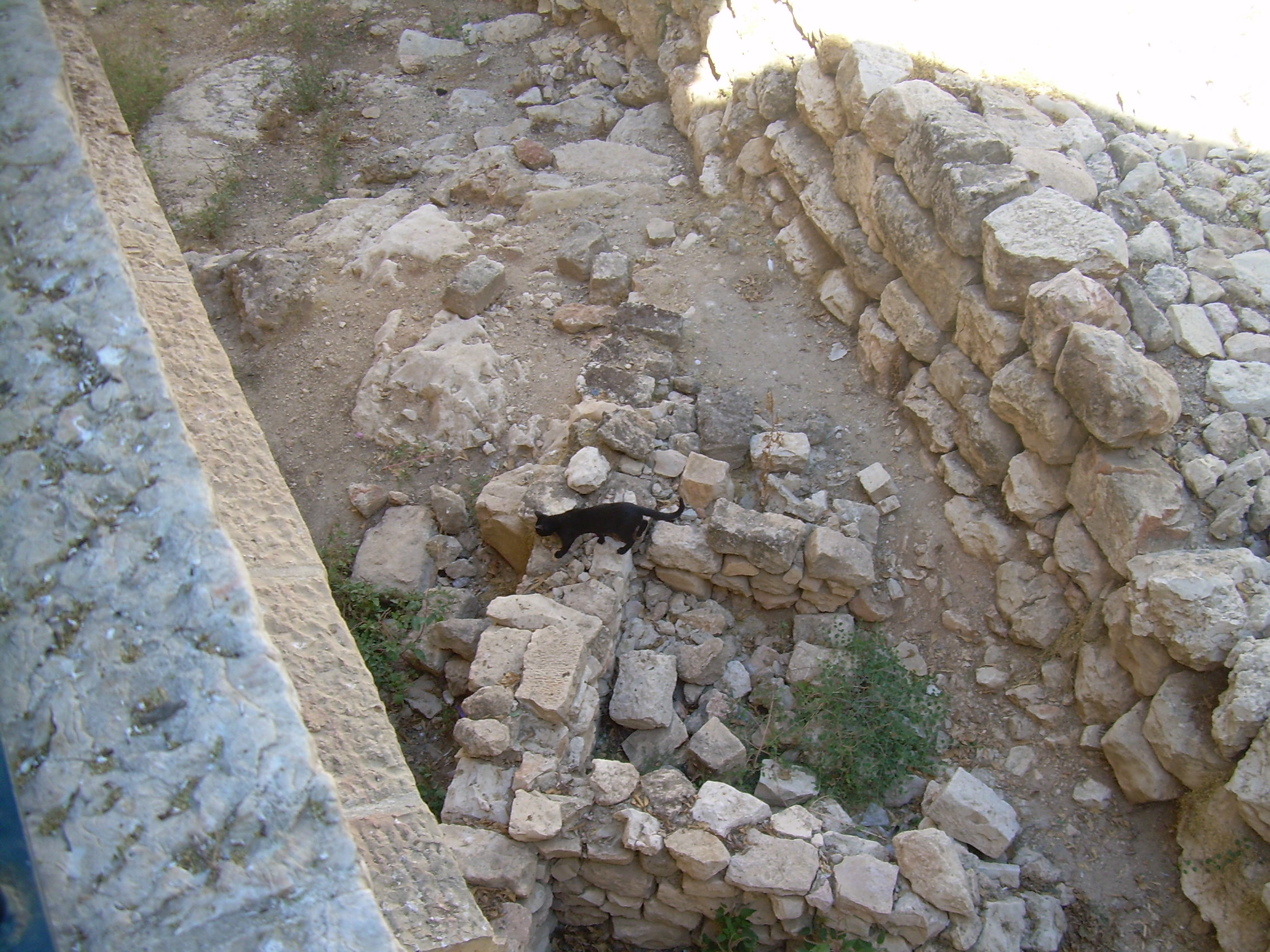
This wall, built by the righteous King Hezekiah, is mentioned explicitly in the Bible. Photo Credit: Lior Golgher – CC BY-SA 2.5
Visiting the holy city of Jerusalem, and seeing its many sites where endless miracles took place, is an uplifting experience. Today, I will take you to an important example of a site mentioned in Tanach (Bible), where G-d saved the Jewish people through an open miracle.
This Biblical treasure is located in the heart of the residential section of the Jewish Quarter of the Old City. Photo Credit: Ian Scott – Creative Commons Attribution-Share Alike 2.0
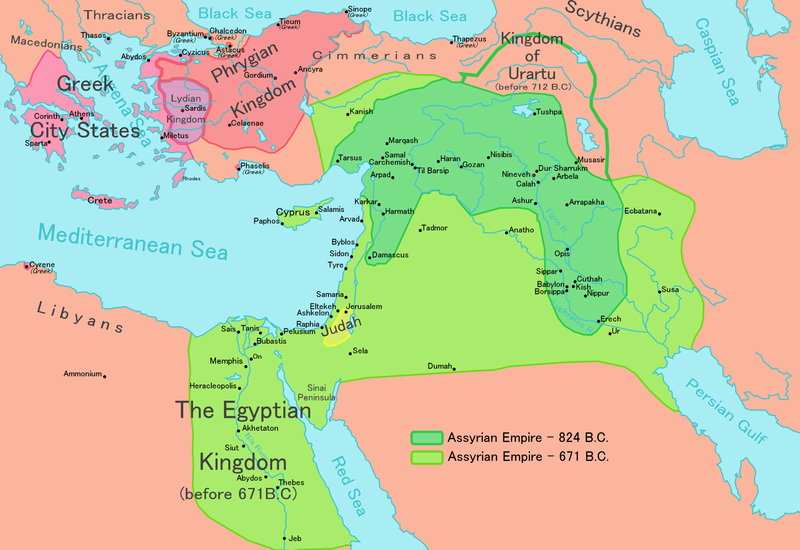
This site, popularly called the “Broad Wall”, is in the Jewish Quarter of the Old City, a mere 20 second walk from the main square. If you have travelled to Israel, you probably passed this treasure countless times and failed to notice it. The wall was built by Hezekiah, the Righteous King of Yehuda (Judah) close to 2600 years ago, in order to prevent the mighty Assyrians, the world’s super power of the time, from laying waste to Jerusalem, and exiling (or worse) its inhabitants.
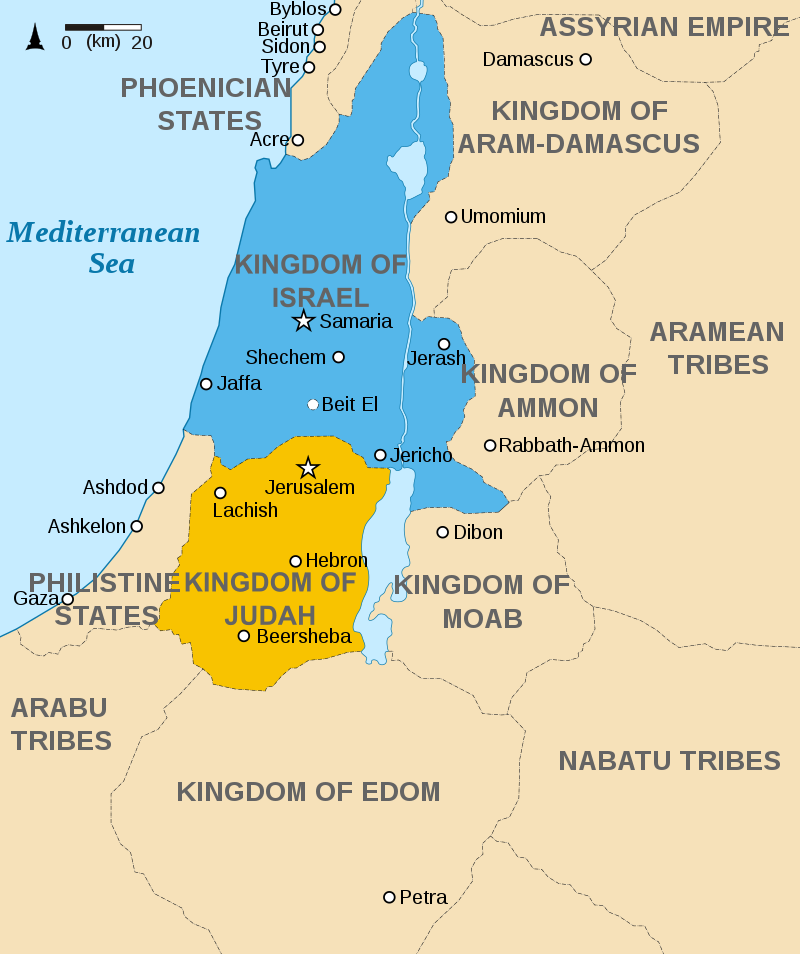
The original Jerusalem of King David lay further to the south of here. Over the years, the city grew from its core to include this area. The city grew exponentially during the reign of Hezekiah, because of the refugees who trickled in after the fall of the Northern Kingdom of Israel (after King Shlomo (Solomon), the Jewish kingdom had split into two: Israel in the north, and Judah in the south).
Map of the divided kingdom. After Solomon’s death, his Kingdom split into two: the Northern Kingdom of Israel and the Southern Kingdom of Judah (where Hezekiah reigned). Photo Credit: Oldtidens_Israel_&_Judea.svg: FinnWikiNo – Creative CommonsAttribution-Share Alike 3.0 Unported
The Assyrians, with their 185,000 troops, perhaps the largest army the world had ever known until then, conquered the fortified cities of Judah, and then set out for Jerusalem. Hezekiah had to act quickly, and he built this wall around the new parts of the city to protect its new inhabitants. The wall was 7 feet thick and 28 feet high.
Because Jerusalem is a city of valley and hills, the wall had to be built according to topography, leaving some unfortunate houses outside of the city wall. Attached to the outside of the wall, you can still see the remains of these houses, whose stones were needed in the wall’s construction (see Isaiah 22:10).
The Assyrian army had never lost a battle in history, and Hezekiah knew only a miracle could save them. He and his future father in law Isaiah prayed for G-d to intervene. G-d promised Isaiah that no Assyrians would enter the city, and the people went to bed. G-d sent an angel that night, and burned the souls of the Assyrian soldiers, leaving 185,000 bodies around these walls, and removing the Assyrian threat. The people arose the next morning, and realized that G-d had saved them from destruction.
For years, archaeologists of the biblical minimalist camp said that the story never happened, because no remains from the period had even been found this far away from the City of David, and the city did not extent this far. This changed after the 6 day war, when Jerusalem was liberated from Jordan. During the 19 years of Jordanian occupation, the Jewish quarter and its holy sites were destroyed to remove any evidence of Jewish connection to the land. Now, archaeologists were able to dig under the debris (without interference from the buildings) and find this wall mentioned in Tanach (Bible). The pottery found in the area date to the time of the biblical story, and so, this wall is a living witness to one of history’s greatest miracles.
Nosson Shulmanis a journalist andLicensed Tour Guide in Israel specializing in Biblical tours. To allow tourists to experience Israel during the Corona era, he created the new hit Israel tour video serieswhich brings Israel to the home of viewers by simulating actual tours. To check out his free sneak preview tour videos, click here.To view sample tour itinerariesor to inquire about private tour opportunities with a personalized itinerary on your next trip to Israel, click here.
“And the fortress cities are Ziddim, Zer, and Hammath, Rakkath, and Kinneret (Joshua 19:35)”
“The country (valley) around (the Sea of Galilee) is also called Ginosar, whose soil is so fruitful, that all sorts of trees can grow upon it, and all trees (both cold and hot climate trees) are planted by inhabitants, which flourishes because the temper of the air is so well mixed, that it agrees very well with all sorts of different fruit trees … a spring from a most fertile fountain waters here so much so that people think it is the vein of the mighty Nile (Josephus)”
In Biblical times, Kinneret (nestled on the Sea of Galilee) was an important city, surrounded by the mega-fertile fields of Ginosar
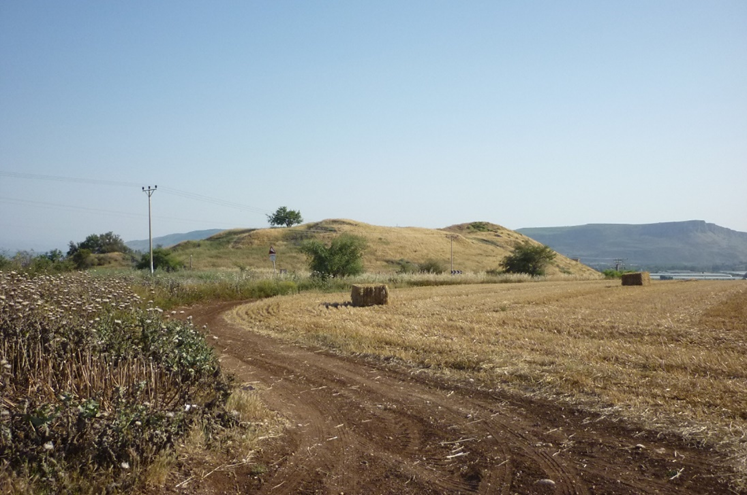
Today we are visiting a site of paramount beauty and an important place in Biblical times, the town of Kinneret and the fertile fields of Ginosar (aka Gennesat) surrounding it. Although Ginosar remains one of the most fruitful places in the country, the ancient ruins of Kinneret have all but been forgotten (although in actuality, this site is arguably the MOST significant place in the entire state of Israel with regards to natural security concerns). Very few people are aware of its existence and even fewer have visited here, but those who do are rewarded with breathtaking views (including the Sea of Galilee). It has a visibly rich past and is also beautifully aromatic!
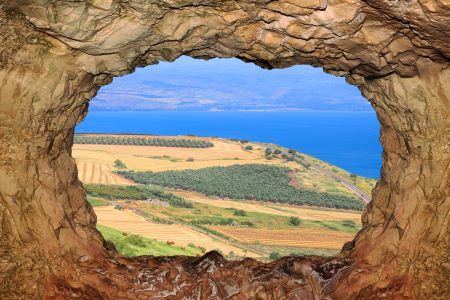
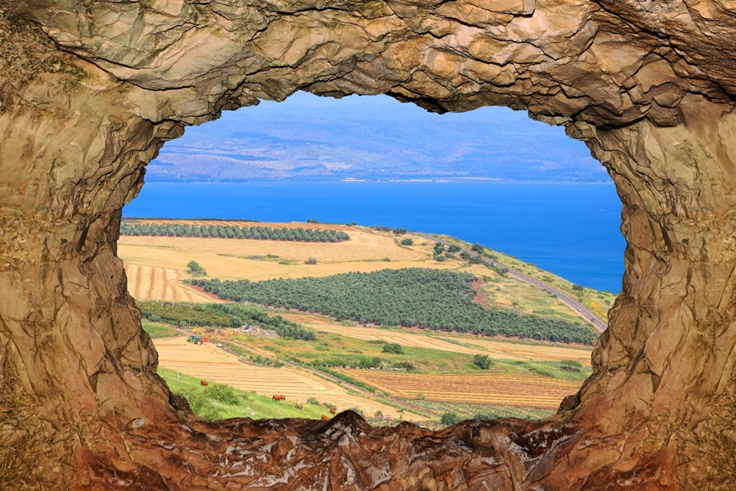
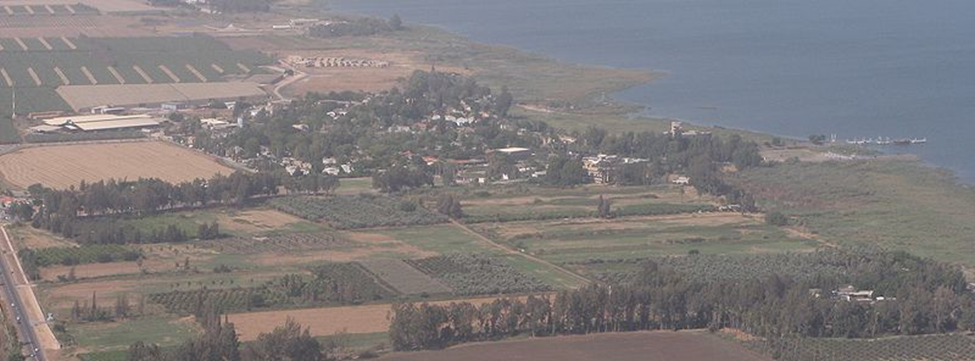
View of the still extremely fertile fields of Ginosar which surround the Biblical ruins of Kinneret and the entire north-eastern shore of the Sea of Galilee. Photo credit: Shutterstock
The site (which was fortified) was first settled in the early Canaanite period (circa 3rd Millenia BCE) making it one of the oldest sites in the country. When Joshua brought the children of Israel into the Holy Land, the inhabitants of Kinneret unsuccessfully fought against the Jews (see Joshua 11:2). Joshua’s army captured the city, gave it to the tribe of Naphtali (see Joshua 19:35) and made the city into a booming metropolis, having the thickest city walls ever found in Israel (12 meters or 39 feet).
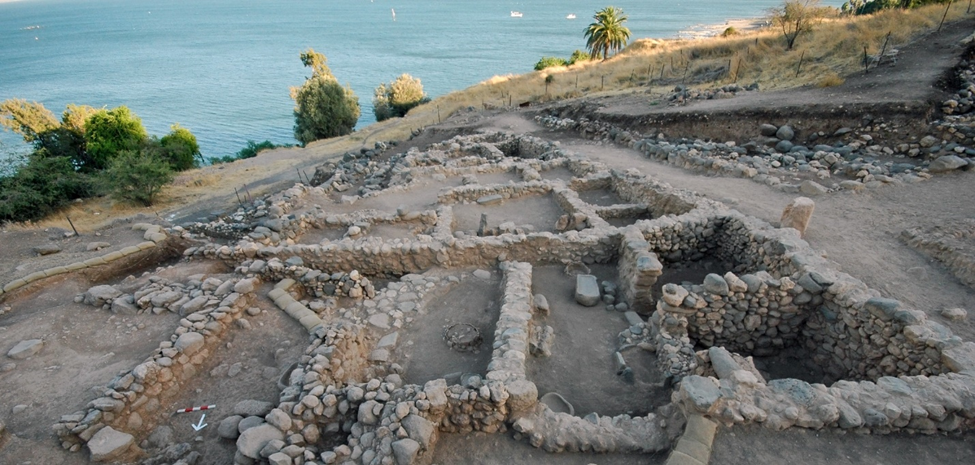
A view from the top of Biblical Kinneret, which is situated on the Sea of Galilee. The ruins are from the Israelite period when the city was a booming metropolis! Photo Credit: Kinneret Regional Project
What circumstances allowed this city to flourish in Biblical times? Firstly, it was strategically located on the ancient highway connecting Egypt and Mesopotamia (Assyria, Babylonia, etc.) the world’s leading superpowers of that time. Controlling this road meant having a certain level of control over international trade. Additionally, Kinneret sits on the Sea of Galilee (in fact, this important town gave its name to the Sea as even today, the Sea of Galilee is called “Kinneret” in Hebrew). The north-eastern part of the Sea (where Kinneret was located) is warmer due to geo-thermal springs that flow into it, making this the part of the sea that has the richest sea life (which made this region a major player in the fishing industry. For example, Magdala, a nearby town, became very wealthy from the fish trade. For more on that, click here).
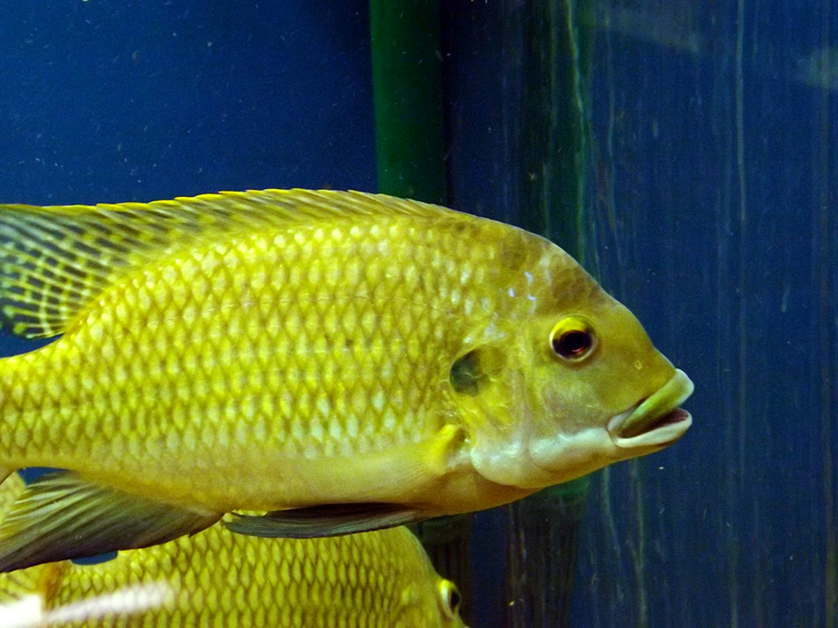
Red Belly Tilapia (popularly known as St. Peter’s fish) can be found in abundance in the Sea of Galilee and are a popular dish at many of the excellent seafood restaurants that dot the waterfront. Photo Credit: SuperJew – CC BY-SA 3.0
The number one factor that made this city a desirable, wealthy, location were the extremely fertile fields of Ginosar that surrounded the town. Even today, the soil here is among the most fertile in the entire Middle East, particularly for fruit. Indeed, according to Jewish sources, the reason why the town (and subsequently the sea itself) got the name Kinneret, is because the fruits of Ginosar (which surrounded the town) are as sweet as the sound of the harp (Kinnar is Hebrew for harp). Due to the excellent climate and great soil of this area, all types of fruit grew here in ancient times (flourishing in hot, cold, or temperate climates). Jewish sources laud the greatness of these particular fruits (which are compared to the fruits of the Garden of Eden!).
The fruits of Ginosar matured a full month faster than fruits of other fields. According to Jewish sources, this is connected to the blessing which Jacob (on his deathbed) gave his son Naphtali that he is a “Swift Gazelle (see Genesis 49: 21)”. This refers to the valley of Ginosar (found in Naphtali’s territory) which ripens its fruits swiftly, like the gazelle.
Some of the fields of nearby Kibbutz Ginosar. Banana groves, date farms, mangos and olive orchards can be seen. Photo Credit: יעקב- Attribution-Share Alike 3.0 Unported
The city of Kinneret was later destroyed by Ben Haddad, King of Aram (based in Damacus) after King Asa of Judah bribed him to destroy it (1 Kings 15:20). It was subsequently rebuilt, then destroyed again by Assyrian King Tiglath-Pileser III approximately 2600 years ago. Since then, aside from a small town that existed here during the Hellenistic period, the town has been almost completed abandoned and forgotten. However, in 1964 Tel Kinneret became arguably the biggest national security concern of the State of Israel.
Since Biblical times, water has often been an issue in this Middle Eastern country (the fact that all of Israel has 24/7 running water is nothing short of miraculous. Israel’s next-door neighbors including most of Jordan, do not have that level of access). The Sea of Galilee is Israel’s only freshwater “lake” and was Israel’s main source of drinking water. In 1964, as Israel’s population was growing, the national water carrier was built to bring water from the Sea of Galilee to the rest of the country (including Israel’s towns in the southern Negev desert). However, the Golan Heights (which overlooks the Sea) was occupied by Syria who were trying to destroy the state of Israel. Attempts had been made in earlier years to cut off Israel’s water access by any means and all Syria would have to do would be to shoot a missile at the high-tech pumping station (which after 58 years is still considered cutting edge). In order to protect the station from Syrian fire, it was built underneath (the long abandoned) ruins of biblical Kinneret. In 1967 Israel liberated the Golan Heights, making direct fire no longer an issue, although the water level of the Sea of Galilee is still of utmost importance and the National Water Carrier system is actively being protected from enemies who are constantly trying to find ways to “pollute” the water. (As an example, Iran recently tried to hack into the computer system of the National Water Carrier, making the water undrinkable and almost succeeded until an astute employee noticed the change at the last minute and was able to put an immediate stop to it).
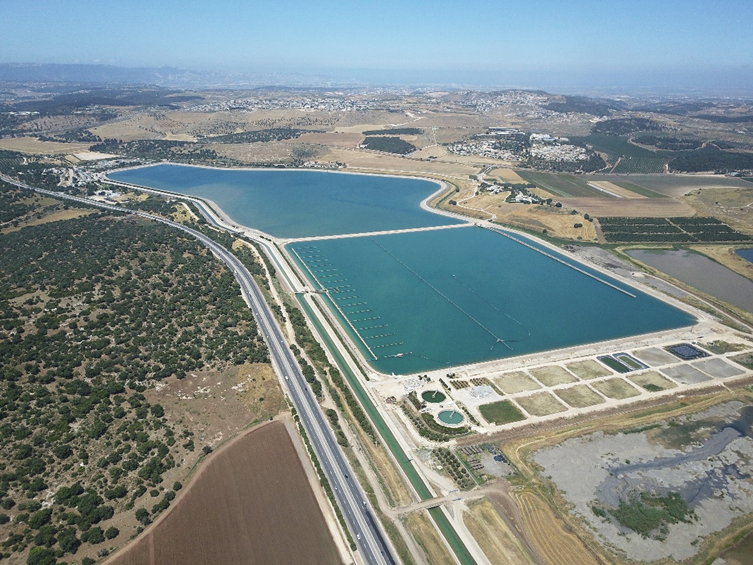
The Eshkol Treatment Plant, where most of the water piped from the Sea of Galilee is brought for treatment before being sent to the rest of the country. Photo Credit: Shutterstock
According to Jewish sources, in the end of days in the battle between Gog and Magog, the casualties from Gog will be buried (near Tel Kinneret) in the Valley of Ginosar (see Ezekiel 39:11).
On your next trip to Israel, I highly recommend visiting this luscious valley!
Nosson Shulmanis a journalist and Licensed Tour Guide in Israel specializing in Biblical tours. To allow tourists to experience Israel during the Corona era, he created the new hit Israel tour video series which brings Israel to the home of viewers by simulating actual tours. To check out his free sneak preview tour videos, click here.To view sample tour itineraries or to inquire about private tour opportunities with a personalized itinerary on your next trip to Israel, click here.












 Unique Sites of Israel Blog