
By Nosson Shulman: Licensed Tour Guide of VIP Israel Tours & Authentic Virtual Tours (click here to check out his free trailer videos)
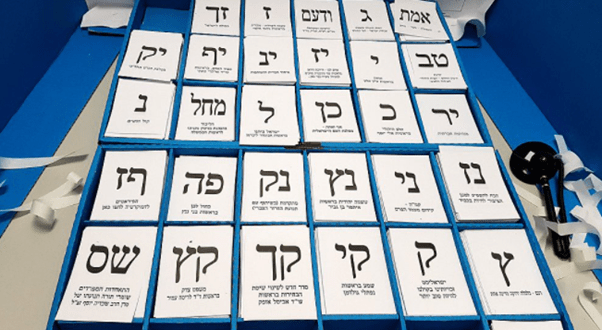
Israel’s electoral system is fascinating! Although Israel is a country of 9 million people, in each election approximately 30 parties run, and between 8-12 parties win enough votes to have seats in the Knesset, Israel’s legislature. Compare this to the U.S., which has 330 million people but only two parties of significance. To understand Israel’s electoral system, there are 10 things you need to know
1) Israel’s electoral system is based on Proportional Representation
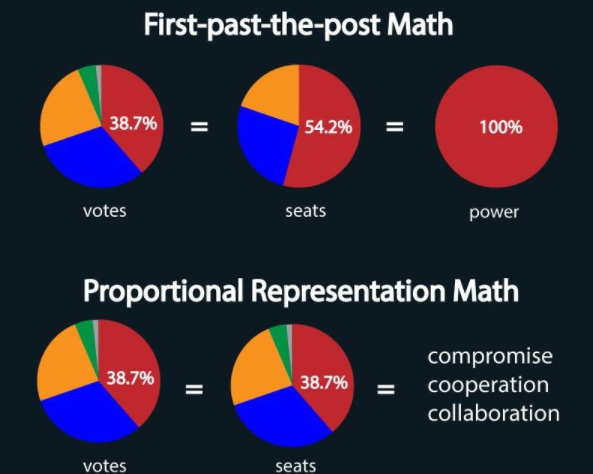
In the U.S., Canada, and the United Kingdom (UK), the system is a “First-past-the-post-system” and divided into districts. Residents vote in the district they reside in for the candidate they wish to choose. The one with the plurality of votes is the winner, and the other votes do not count towards anything. It is possible to have a candidate win with only 30-40% of a vote because they got more than any other candidate. A party can also win the popular vote, but if another party has more seats nationwide, that party takes power.
In Israel, if 20% of the country votes for a party, that party gets 20 percent. Also, there are no districts, rather all of the country’s votes are combined. For example, people voting in Eilat (Israel’s southernmost city) have their ballots counted together with the residents of Haifa in Israel’s north.
2) Israel’s electoral system encourages people to vote for smaller parties

Canada, the U.S., and the U.K. suffer from “wasted vote” syndrome. As an example, in Canada if one supports the Conservative party but lives in the district where only the Liberals and the NDP party are the vast majority, there is a healthy chance that person will not vote conservative, but rather for the party seen as the lesser of two evils. If one lives in the U.S. and is a staunch environmentalist they may technically support the Green, but most will vote for the Democrats, as voting for the Green party is a wasted vote.
In Israel, there is no wasted vote (see below for the one exception). If for example one supports the National Religious party in an area where that party is not particularly powerful, their vote still counts so there would be no need to have to vote for one of the two largest parties.
3) A party needs at least 3.25% of the national vote to be counted

A party that has less than 3.25% of the national vote does not make it into the Knesset. The reason for this threshold (in theory at least) is to prevent fringe extremist parties who have minimal support from getting into the Knesset. If a party one supports polls below that number, they may be discouraged to vote for them as not to waste their vote. However, smaller parties often have a way of getting around this:
4) Parties often merge for elections in order to pass the threshold

This happens in every election. In order to increase their chances of getting into the Knesset, they run on a joint ticket, often splitting after the election is done.
A good example of this are the Arab parties. When, not long ago, the threshold was only 2%, four major Arab parties would run alone. In the last few elections, they merged together, even though many of them are ideological opposites and not particularly fond of each other. The parties range from Communist (Hadash party) to Islamist (Ra’am party) and only merged to not waste any votes. The smaller religious Jewish parties often merge together for the same reason.
5) Israel never had a majority government, thus smaller parties have disproportional power in the Knesset

In Israel, there are 120 seats available in each election. A party needs a minimum of 61 seats to rule the country, although that has never happened. In 1949 Prime Minister David Ben Gurion had 52, and since then no one has come anywhere close! Prime Minister Netanyahu’s party, Likud, is currently the largest with 37 seats. Therefore, the largest party needs the smaller parties to join with them in exchange for supporting many of the smaller party’s policies. In addition, cabinet positions such as Foreign Minister, Defense Minister, etc., are shared with coalition partners. The more seats a party has, the more they can demand as a prerequisite for them joining the coalition.
It should be noted that sometimes the second largest party ends up controlling the Government. In 2009, Tzipi Livni of the now-defunct Kadima party had 28 seats while Netanyahu had only 27, but because Netanyahu was able to form a coalition of at least 61 seats, he became Prime Minister.
6) In Israel, all citizens are automatically registered to vote and need to produce ID before they can vote
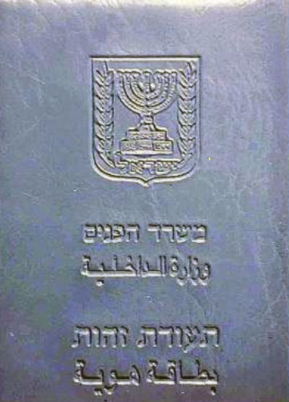
In Israel prior to the election, citizens receive the exact address where they are registered to cast their ballots, and the voting can only be done at that assigned station. A passport, or Teudah Zehut (Israeli ID card) is required to vote.
7) A person can support one candidate for Prime Minister even though they are voting for a different party
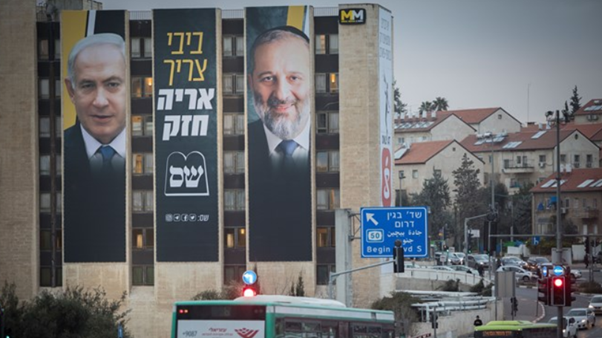
In Israel there are no direct elections for Prime Minister, though generally only two (sometimes three) people in each election will realistically have a chance to become Prime Minister by building a coalition. One may support (as an example) Benjamin Netanyahu for Prime Minister, but vote for Shas and United Torah Judaism, two parties which have pledged to support Netanyahu for the position.
If these voters want Netanyahu to be Prime Minister, why wouldn’t they just vote for his Likud party? This is because they feel that he is the best person to run the country, but they support the policies of these parties, and want them to have as much clout as possible in influencing Netanyahu’s decision making.
8) Although Elections in Israel are for 5 year terms, in practice elections tend to be every 3 years
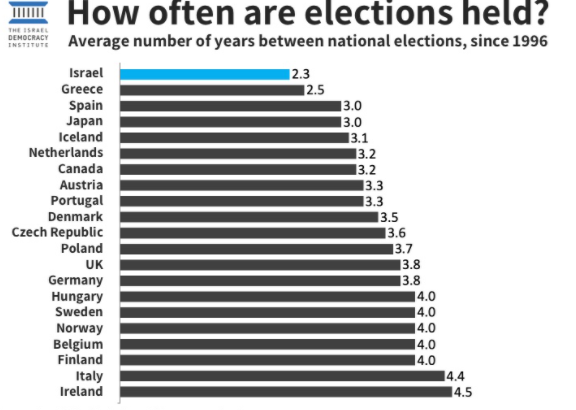
As coalitions are formed by competing parties with often differing agendas, it is difficult to keep coalitions together for a long time. If they fall apart and the Prime Minister no longer has 61 MK’s (Knesset Members) supporting him, elections are called within three months.
This week’s election will be the 24th in Israel’s less than 73 years as a country, and the 4th in two years.
9) There are no term limits for Prime Minister
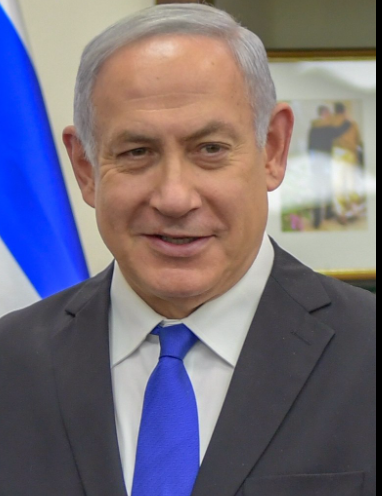
As long as a politician has 61 people willing to support them, he/she can stay on forever. In the 6 elections which proceeded last year’s election, former Prime Minister Netanyahu was able to stay at the helm because he was able to form coalitions (polls say he will likely return to being Prime Minister in this week’s election). A sitting Prime Minister retains his seat until another candidate can convince at least 61 other MKs that they are the candidate who can best deliver their constitution’s priorities.
10) Not all Arab Israelis vote for Arab parties
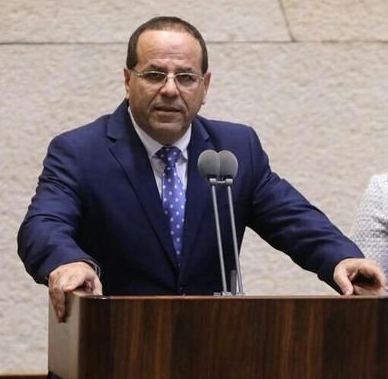
In Israel, all citizens have the right to vote whether they are Jewish or Arab. The Arab parties, none of whom officially support Israel as a Jewish state, receive the largest percentage of the votes of those who show up to the ballots (many Arabs, perhaps the majority, choose not to vote though they are legally allowed and encouraged to do so). However, many Arabs feel that parties with a traditionally Jewish support base represent them better. Many Arabs in the Galilee vote for Shas, an Ultra-Orthodox Sephardi Jewish party, because of the party’s fighting for funding for poor communities in the periphery. Likewise, Druze Israelis, who make up 2% of Israel, tend not to vote for Arab parties, but for “Jewish parties” across the left-right Spectrum. Most parties in Israel have some Arab members running on their slate.
Nosson Shulman is a journalist and Licensed Tour Guide in Israel specializing in Biblical tours. To allow tourists to experience Israel during the Corona era, he created the new hit Israel tour video series which brings Israel to the home of viewers by simulating actual tours. To check out his free sneak preview tour videos, click here. To view sample tour itineraries or to inquire about private tour opportunities with a personalized itinerary on your next trip to Israel, click here.

 Unique Sites of Israel Blog
Good information. Thanks for putting it together.
I’m Just seeing this now. Thank you for the kind words!