“The sixth lot came out to the children of Naphtali, for the children of Naphtali according to their families.… And the fortress cities are Ziddim, Zer, and Hammath, Rakkath, and Chinnereth (Joshua 19:32-35)”
The natural hot springs of Tiberias (a remnant of the flood of Noah) have made this a popular resort town since Biblical times. Photo Credit: Shutterstock
Today we are visiting an off the beaten track treasure, currently not well known to non-Israeli tourists, but historically famous worldwide. I am of course talking about Hammath (hot springs) of Tiberias National Park. This site has some of the most impressive remains in the country, the centerpiece being a beautiful Talmudic era synagogue with possibly the best mosaic floor in all of Israel. The site also affords beautiful views of the Sea of Galilee. Hammath, though, isn’t just a treat for the eye, but also the skin! This archeological site has natural pools for tourists to bath in, and a wonderful rich history to enjoy.
One of the pools of Hammath in Tiberias where tourists can relax. There are several pools of different (hot) temperatures which are naturally supplied underground. Photo Credit: Shutterstock
According to Jewish sources, these underground hot springs (17 in all) first came about due to the flood of Noah. The flood came from two sources: the rain from above, and the flow of “all” of the springs from down below (see Genesis 7:11). The springs get their heat from the fires of Gehinnom (often interpreted as “Hell” for lack of a better translation). At the conclusion of the flood, the rains stopped and “springs” were closed (see Genesis 8:2). This time however, the Torah intentionally didn’t use the word “all” to describe the closings of the springs because (according to Jewish texts) not all of them were closed. The springs that would bring benefit to the world remained open, such as the hot springs of Tiberias.
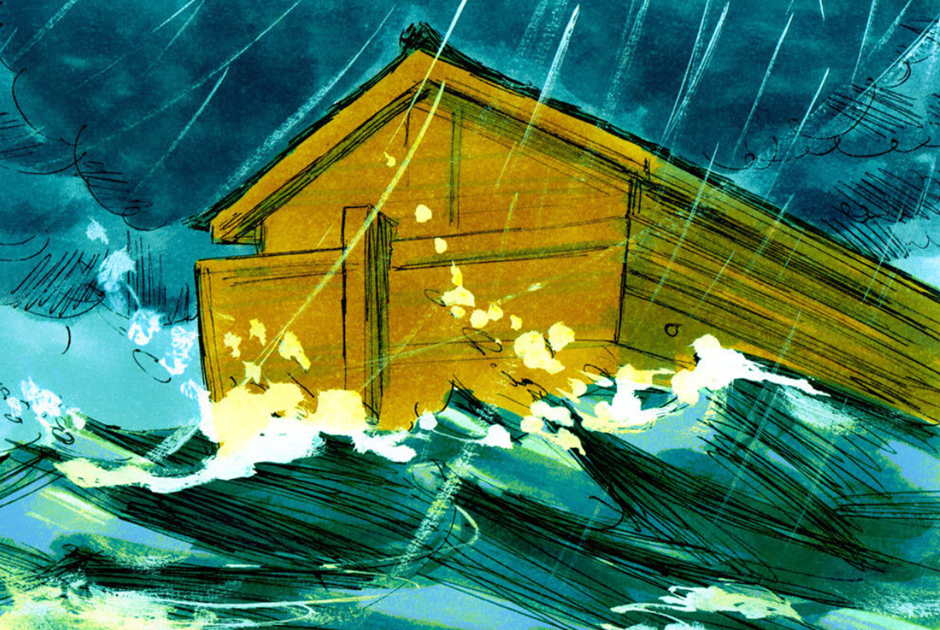
The water that flooded the world during Noah’s time came from the heavens above and springs down below. The Hot Springs of Tiberias are remnants of those springs. Photo Credit: Freebibleimages.org
In Canaanite times a fortified city, then simply called Hammath (literally translated as hot springs) existed here. Joshua later conquered this territory, and the land was given to the tribe of Naftali (see Joshua 19:22-25). The town reached its zenith in Roman times. The hot springs became famous throughout the Empire as the waters were known for their superior healing properties. The Romans built many sophisticated spas around the springs, turning this small town into a major resort destination.
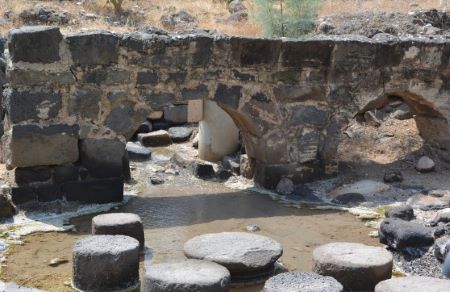
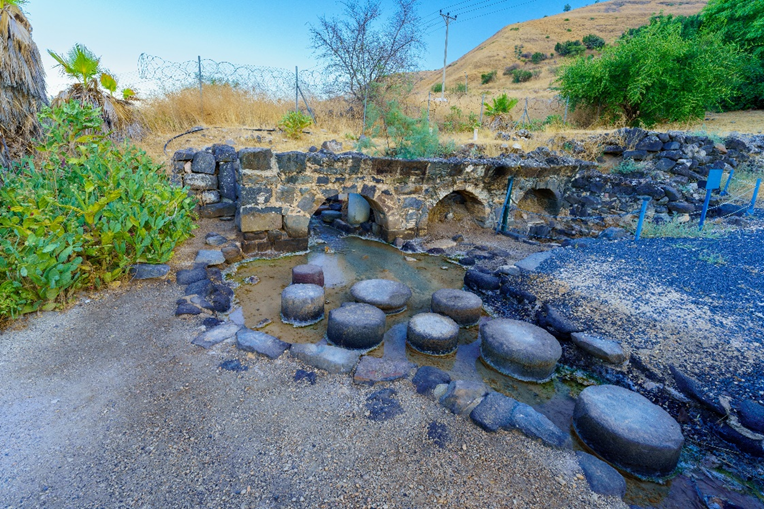
The Romans built many sophisticated resorts and spas at Hammath Tiberias. Here are the remains of one of them. Photo Credit: Shutterstock
A large Jewish community developed in Hammath Tiberias, that flourished for centuries. Two synagogues have been located in excavations (one of them is currently buried, under a lawn at the nearby Holiday Inn hotel. This is because it was found during the British Mandate period, and they had a rule that once you found something, you had to re-bury it.) The most impressive one was massive; at least two stories high, with several rooms (including a Kiddush room), and a one-of-a-kind mosaic floor. It is likely that many other synagogues existed here, and hopefully future digs will unearth them!
Part of the massive Mosaic floor of the Synagogue that was unearthed here. Even 1700 years later, the floor is in near mint condition, and the attention to detail is still incredible! Photo Credit: Shutterstock
Many of the great Rabbis of the Talmud spent time healing at the hot springs. Rabbi Shimon Bar Yochai, Zt’l, for example, hid from the Romans for 12 years in a cave with his son. When Emperor Hadrian (who wanted him dead) passed away, he was able to leave, but was covered in painful sores from his ordeals. After spending a few days bathing here, he was completely healed. His contemporary, Rabbi Meir, Zt’’l, lived in Hammath Tiberias and gave popular Torah classes here. The springs themselves are mentioned many times in several books (written over the last 2000 years) that deal with case studies of Jewish law. For example, although Jews are forbidden from cooking on Shabbat, the sages discuss whether cooking food in the “Hot Springs of Tiberias” is considered “cooking” as Jewish law defines it and therefore forbidden (or not).
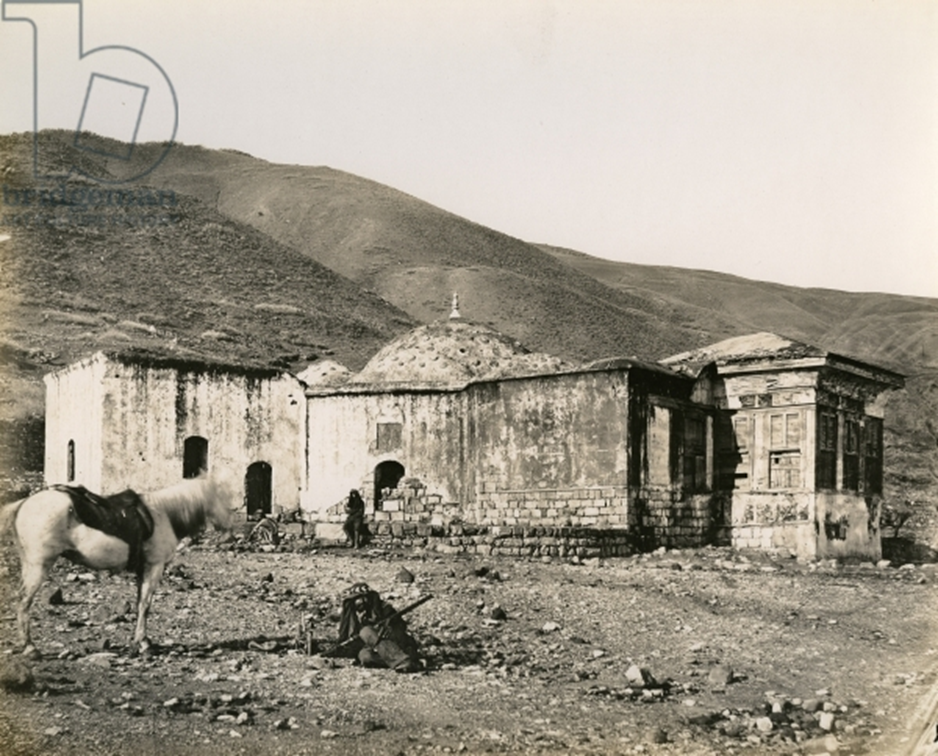
The Turkish bathhouse that operated from 1780 to 1944 is today a museum on the grounds of the Hammath Tiberias National Park.
In the early Muslim period (circa 8th century), the town was completely abandoned until 1780, when a Turkish bathhouse was built here (that operated until 1944). Today that bathhouse is a museum that can be visited by tourists to the National Park. On your next trip to Israel, I encourage you to visit this amazing site and enjoy a soak in its pools!
By Nosson Shulman – Licensed Tour Guide and Trip Organizer in Israel who specializes in History, Tanach (Bible) and Adventure Tours. For more itinerariesclick here. Check out our new Virtual tours including free sneak preview videos
Israel (in green circle) and Papua New Guinea (in orange) have had diplomatic relations since 1975. Photo Credit: קרלוס הגדול – CC BY-SA 4.0
In another diplomatic victory for Israel, Papua New Guinea has announced that they will move their embassy to Jerusalem this year. Although the predominantly Christian nation, located on an island in the South Pacific, have had diplomatic relationships with Israel since 1978 (three years after declaring independence) this will be their first embassy in Israel. Eli Cohen (Israeli foreign minister) said, “I thank Papua New Guinea for the close relationship, the overwhelming support at international institutions and the decision to establish an embassy in Jerusalem.” Indeed, Papua New Guinea often votes against anti-Israel resolutions in the UN General Assembly.
When the move is completed, Papua New Guinea will be joining the United States, Guatemala, Kosovo, and Honduras who have already moved their embassies to Jerusalem. Countries such as Hungary, Czech Republic, Slovakia, Brazil and Colombia have opened branches of their embassies in Jerusalem, which in effect gives de facto recognition of Israel’s sovereignty in Jerusalem.
Nosson Shulmanis a journalist andLicensed Tour Guidein Israel specializing in Biblical tours. To allow tourists to experience Israel during the Corona era, he created the new hit Israel tour video serieswhich brings Israel to the home of viewers by simulating actual tours. To check out his free sneak preview tour videos, click here.To view sample tour itineraries or to inquire about private tour opportunities with a personalized itinerary on your next trip to Israel,click here.
JoinVIP Israel tour guide, creator of Authentic Virtual Israel Tours and radio host Nosson Shulman each week as he leads you on an inspiring, 2 minute virtual tour of a different off the beaten track biblical site in Israel. The new series airs live every week on Israel News Talk Radio and is then posted here in video form
For more on Mount Sodom and Lot’s Wife, click here
Nosson Shulmanis a journalist andLicensed Tour Guidein Israel specializing in Biblical tours. To allow tourists to experience Israel during the Corona era, he created the new hit Israel tour video serieswhich brings Israel to the home of viewers by simulating actual tours. To check out his free sneak preview tour videos, click here.To view sample tour itineraries or to inquire about private tour opportunities with a personalized itinerary on your next trip to Israel,click here.
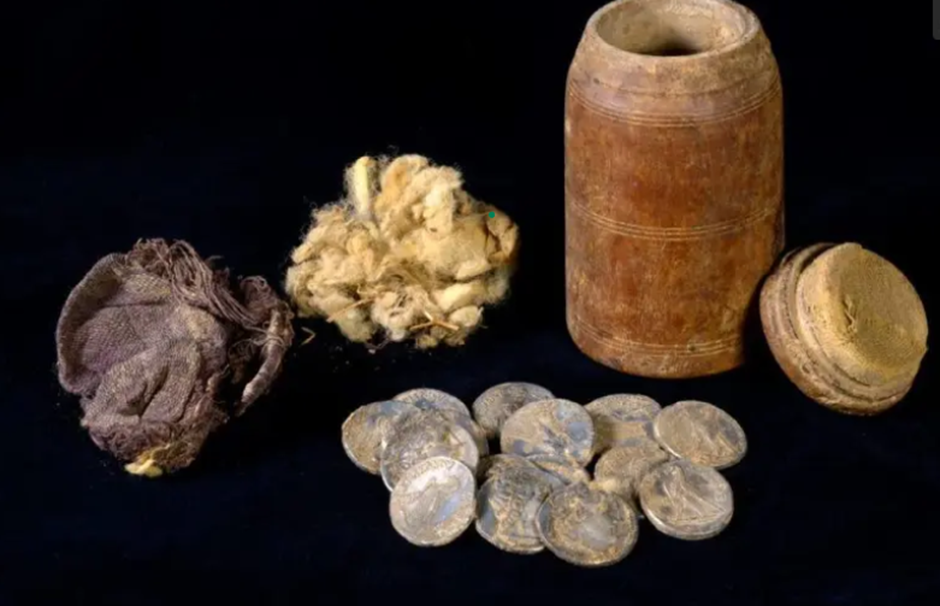
A wooden box with 15 silver coins from the period of the Maccabees (of Chanukah fame) was discovered in 2022 by Nachal Darga in the Judean Desert, considered by many to be the hardest hiking trail in Israel. Photo Credit: Israel Antiquities Authority (Dafna Gazit).
In part 1, we saw 5 of the top 10 archeological finds of 2022 (to see part 1, click here). We continue with the next top 5 incredible discoveries on the list:
6) 15 Silver Maccabean coins minted in the years leading up to the (ultimately) successful Maccabean Jewish revolt against the Greek overlords.
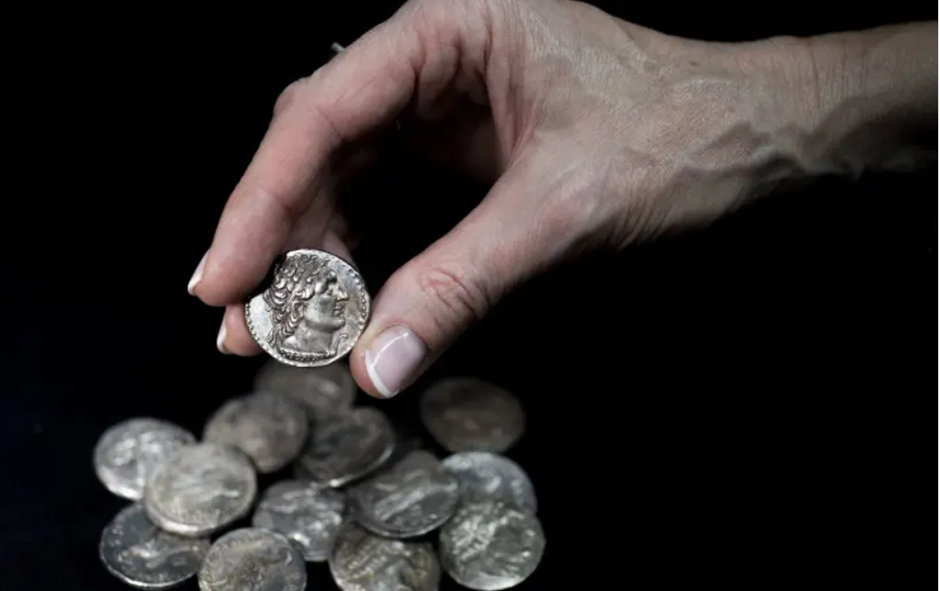
This coin (minted just before the war) shows the face of Egyptian ruler Ptolemy VI, who ruled at the same time that his uncle, Antiochus IV (the villain in the Chanukah story) ruled the Seleucid Empire, which included the land of Israel. Photo Credit: Israel Antiquities Authority (Shai HaLevi ).
Every year for 8 days, Jews around the world celebrate the festival of Chanukah. The holiday commemorates the miraculous recapture and rededication of the Second Temple (circa 167 BCE) which had been desecrated by the occupying Hellenistic Greeks, and the subsequent lighting of the Menorah (with only enough oil to last one day) which remained alight for 8 days! This gave the Jews enough time to reproduce the pure olive oil required for the nightly service. The Jews were led by a small band of pious brothers (all priests) known as the Maccabees (aka the Hasmoneans) who, with G-d’s help, were able to overthrow the Greeks (who tried to outlaw Torah observance) and ultimately expel them from the land. While there is much archeology from that war, for the first time ever, remains from the very beginning of the rebellion have been located in the Judean Desert.
In 2022 archeologists exploring inside a cave within the Nachal Dara gorge found a wooden box, containing 15 coins dating from 176 BCE to 170 BCE, just before the rebellion. How did they get there? Luckily, the Book of the Maccabees fills us in.
The rebellion started in 167 BCE (soon after the coins had been minted) with the priest Mattathias (father of the Maccabean band of brothers) killing the King’s official (who tried to get Jews to offer sacrifices to idols) and destroying the foreign altar in Modiin. He then cried out “Let every one who is zealous for the law and supports the covenant come out with me!” Many people fled, including those who went to the Wilderness (the nearby Judean Desert). According to the text, “At that time many who were seeking righteousness and justice went down to the wilderness to live there, they, their sons, their wives, and their livestock, because troubles pressed heavily upon them. And it was reported to the king’s officers and to the troops in Jerusalem the city of David that those who had rejected the king’s command had gone down to the hiding places in the wilderness. Many pursued them and overtook them; they encamped opposite them and prepared for battle against them on the Sabbath day. They said to them, “Enough of this! Come out and do what the king commands, and you will live.” But they said, “We will not come out, nor will we do what the king commands and so profane the Sabbath day.” Then the enemy quickly attacked them. But they did not answer them or hurl a stone at them or block up their hiding places, for they said, “Let us all die in our innocence; heaven and earth testify for us that you are killing us unjustly.” So they attacked them on the Sabbath, and they died, with their wives and children and livestock, to the number of a thousand persons (1 Maccabees 2: 29-38).”
Archeologists believe that the coins belonged to one of the people who had fled to the desert, taking his money with him for safe keeping. Ultimately whoever hid them there was killed in battle, never to return. This is why approximately 2200 years later the coins were still inside the cave, waiting to be found.
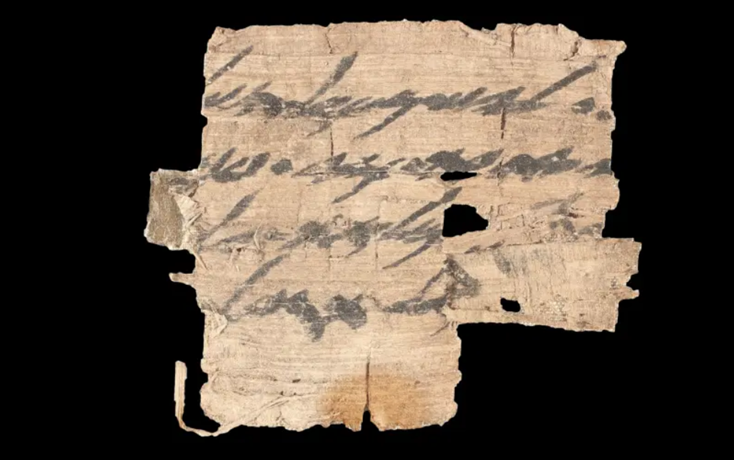
7) The Ishmail Papyrus: A 2700 year old papyrus letter with Hebrew writing on it (one of only three known to exist)
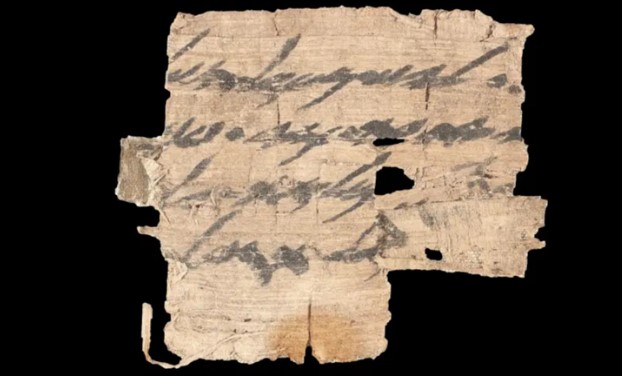
This first Temple treasure was discovered in the US, due to a sophisticated intelligence operation. Photo Credit: Israel Antiquities Authority (Shai HaLevi ).
One of the most important ancient Israel discoveries made in 2022 was in ….. Montana!? Yes, you read that right, it was indeed discovered in the western United States. The written text (in ancient Hebrew letters) states “To Ishmael, send….”, with the rest being cut off. A smattering of other sentences also cut off were found on it including “Don’t send”, “Cry after him” and “of no help”. It was written during the end of the Judean Monarchy (it is believed that during that time period all official documents were written on Papyrus) just before the destruction of the First Temple.
Who is the “Ishmael” mentioned in this official document? It was quite a common name at that time. The first recorded person to have that name was Abraham’s first son Ishmael (although this text is almost certainly not connected to him). It could very well be referring to “Ishmael the son of Nethaniah” (see Jeremiah 41) who was of royal descent. He assassinated Gedaliah, the very righteous governor appointed by the Babylonian King to lead the remnant of Jews still allowed to live in the land (the Temple had been destroyed and the Jewish elite had been already exiled to Babylonia). After his assassination, the Jewish people remaining in Israel fled to Egypt (against the advice of Jeremiah), and the first exile was complete. The time period when it was dated certainly makes it a possibility that it is the same person mentioned in the Bible (indeed, archeology directly connected to him have been discovered in excavations elsewhere).
How did such a rare treasure end up in the mid-western United States? An American woman visiting the Rockefeller Museum in East Jerusalem in 1965 (when it was under Jordanian control) was gifted the item by the curator of the museum. Upon returning home, she framed and put it on her wall, and the item was long forgotten about. In 2018 after the death of a top archeologist, his successor was going through his items and discovered a picture of the letter. With some serious detective work, including involving government agencies, they located the scroll (which was on her son’s wall). In order to persuade the man (who chose to remain anonymous) to return it to Israel, they explained that the item could best be studied and then displayed in a temperature-controlled environment. In memory of his mother and because of his pro-Israel, Christian values, he donated it to Israel where it remains today.
8) One of a kind inscription from the time of the righteous King Hezekiah, praising his deeds and paralleling a specific verse from the Bible
This ancient limestone slab, which mentions the biblical King Hezekiah, was discovered in the City of David. Photo Credit Elad foundation (Vladimir Neichin)
During digs of Jerusalem’s City of David in 2007, a limestone slab with ancient Hebrew writing was found. After years of research, the text was finally deciphered in late 2022 and found to not only have the name of righteous Judean King Hezekiah, but also parallels a Biblical verse.
This is not the first time that contemporary inscriptions referencing King Hezekiah, one of the most prominent and famous Kings of the Davidic monarchy, have been located. The Bible relates that during his reign, the ever expanding Assyrian army laid siege to Jerusalem, and Hezekiah prayed to G-d to intervene. G-d responded by destroying the mighty Assyrian army (for more on that monumental event, click here). When the Assyrian King wrote his annals explaining his loss, he mentioned Hezekiah (for more on that, click here). Additionally, clay seals have been found that refer to the righteous king, and in Iraq a prism mentioning his son was unearthed. Many ruins from his time have also been found at Biblical sites throughout Israel (he was known to be a formidable builder). A contemporary monumental Stele (an inscription where the King was praised for his work) however, had never been found in Israel until now! This is unlike the Kings of Assyria, Babylon and Egypt who were known to be very boastful about their achievements, writing monumental inscriptions praising themselves.
Although the slab contains two broken lines of text, the two most prominent words written are “Hezekiah” and “Pool” (the inscription was found by the remains of a pool close to the one he built near the Gihon Spring. For more on that site, click here). The professors and archeologists involved in its deciphering concluded that the full text was “Hezekiah made the pool in Jerusalem”. This is parallel to the Biblical verse “And the rest of the events of Hezekiah and all his mighty deeds, and how he made the conduit and the pool, and he brought the water into the city, they are written in the book of the chronicles of the kings of Judah. (2 Kings 20: 20).”
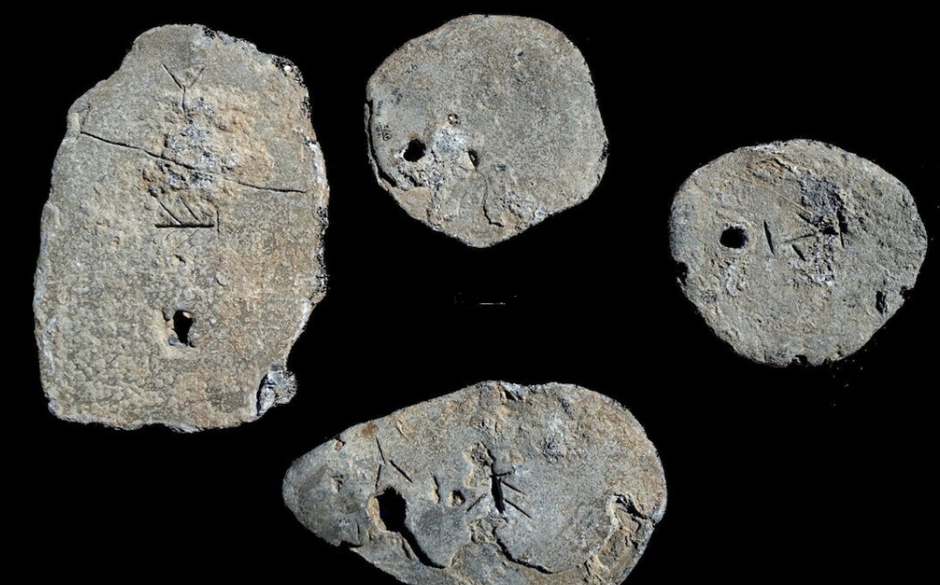
9) Four lead ingots from the times of the Biblical Judges. Trading of them is referenced in the Bible.
As related in the Bible, the tribes of Asher and Dan were involved in the international Mediterranean metal trade. Recent discoveries of lead ingots prove how extensive this trading network was. Photo Credit: Hebrew University
One of the best places to discover archeology is underwater, especially at the site of an ancient port. Since such sites would have been host to many shipwrecks (and because the ships carried many precious goods and cargo, the findings go a long way in helping us to understand the past). In Israel, underwater searches at the ancient ruins of Caeserea (the largest man-made port of the ancient world) regularly turn up a treasure trove of finds from all different time periods. In 2022, the 3200-year-old lead ingots found there were analyzed and found to have been mined in Sardinia, an Italian island in the Western Mediterranean Sea, about 1748 miles from Israel. The raw material was then processed on the Island of Cyprus (as illustrated by the stamp from that Island). Cyprus itself was very rich in copper, important in the production of bronze. These metals were subsequently sold all over the Mediterranean including along the coast of Israel, illustrating the vast trading network that existed at the time of the Judges.
“Academics” seem to be surprised by this (together with an even older shipwreck discovered off the coast of Haifa, found to contain tin metal imported from faraway England). To readers of Tanach (Hebrew Bible) however, this long-distance trading of metals comes as no surprise! In Judges 5:19, the verse says “Dan, why does he gather into the ships? Asher dwelt at the shore of the seas, and by his breaches.” The Hebrew word used for “ships” usually means those designed as long distance vessels (England, Cyprus and Sardinia certainly qualify), while the word for “breaches” can also be translated as “harbors (possibly as an example, Haifa, Caeserea, etc). In Deuteronomy 33:25, Moses blessed the (soon to be) coastal tribe of Asher (who had important harbors) saying “Your locks are iron and copper”. In other words, Asher who dwelt in the harbors (as referenced in Judges) traded in metals like copper (such as those mined in Cyprus) which when combined with tin (such as that which was imported to Israel from England thousands of years ago) turned into bronze, a very important metal in Biblical times.
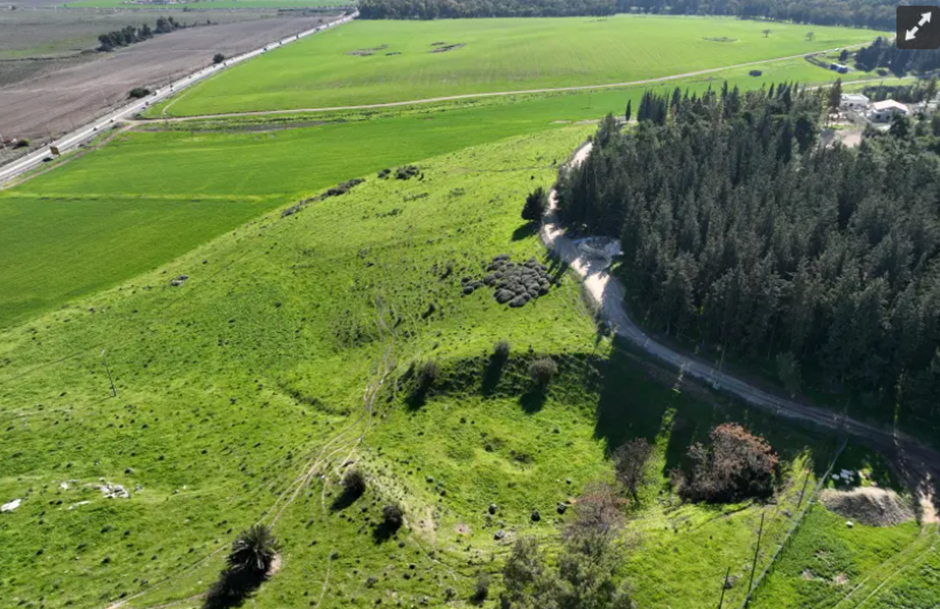
10) First Roman military amphitheater (for gladiator fights) ever found in the Levant (i.e. Southern Turkey, Lebanon, Israel, Jordan, Cyprus and Syria).
The bowl-shaped depression of a Roman military amphitheater found at Legio (in Biblical times, it was famously called Megiddo). Such finds are exceedingly rare in the Roman empire, and virtually non-existent in the eastern half of the empire. Photo Credit: Jezreel Valley Regional Project
From the 3rd century CE and onwards, watching Gladiator fights was a popular pastime in the Roman empire. In Israel even with centuries of digging throughout the land, only 4 Amphitheaters have ever been found, including Beit Shean (for more on that site, click here), Caeserea, Beit Guvrin (for more on that site and for pictures of its amphitheater, click here) and Samaria. However, they were all for civilian use. Ones built solely for the usage of military personnel had not only never been found in Israel, but never in the entire Eastern half of the gigantic Roman empire. Even in the western regions of the empire where some were located in Germany, France, and Spain, they are still rare. This is why the 2022 identification of a military amphitheater outside the ruins of the Biblical city of Megiddo (which the Romans called “Legio”) is so significant. It was probably built during the reign of the Roman Emperor Diocletian who ruled from 284 to 306 CE. The Emperor (one of the most capable rulers in Roman history) was a great builder, and many of his projects in Israel can still be seen today (indeed a still shiny gold coin with his face, minted in 294 CE, was found here).
The amphitheater was used for both the training and entertaining of the troops of the 6th legion who were stationed in Legio.
By Nosson Shulman – Licensed Tour Guide and Trip Organizer in Israel who specializes in History, Tanach (Bible) and Adventure Tours. For more itinerariesclick here. Check out our new Virtual tours including free sneak preview videos.
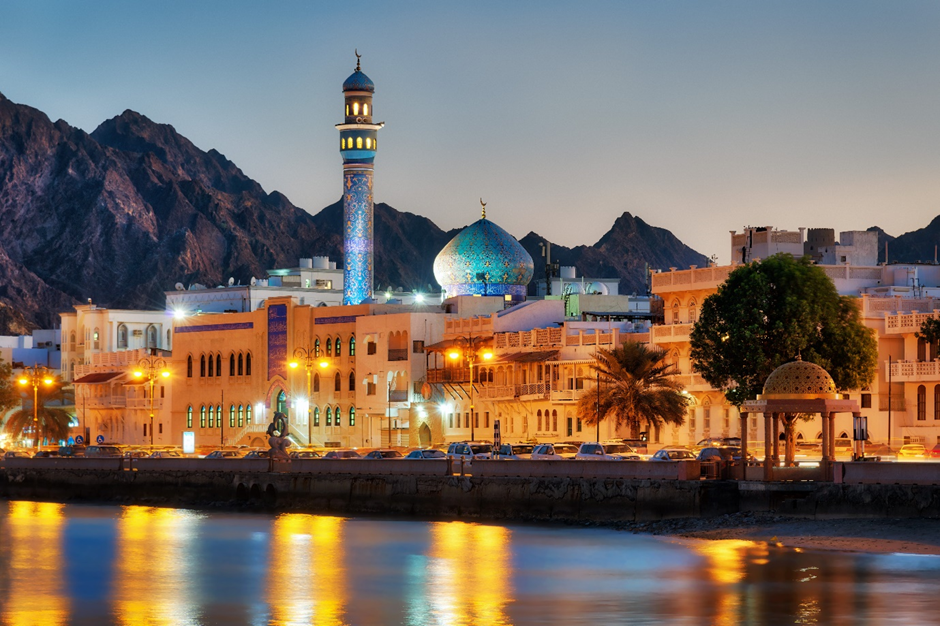
A night view of the waterfront commercial center of Muscat, the capital of Oman. In a major game changer for international travel, the oil-rich Arab gulf country will now allow Israeli planes to use its airspace. Photo Credit: Shutterstock
In a major game changer for relations between Israel and the Arab world, Oman, an Arab Muslim (oil and gas rich) nation on the Persian Gulf (which borders Saudi Arabia, the United Arab Emirates, and Yemen) will allow Israeli planes to freely fly over its airspace. This is despite the fact that Oman doesn’t currently recognize the Jewish State (although unofficially the two countries have had relations for years, in large part due to Prime Minister Netanyahu’s cultivating secret ties and his surprise visit in 2018). This follows on the footsteps of Saudi Arabia, who last year also allowed Israelis to use their airspace (for more on that historic concession, click here).
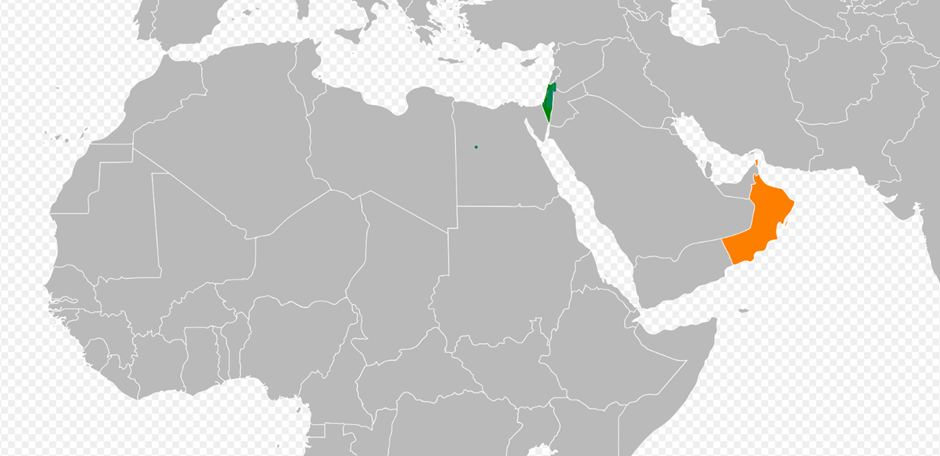
This move has major implications for travel to Israel. Due to the agreements with Saudi Arabia and Oman, travel to India and the far east will be cut by 2 to 4 hours. This will make Israel more accessible to tourists from the east, while also making international travel to these countries much cheaper for Israelis (partly due to the airplanes saving on the fuel needed for longer flights). Some of the routes now possible for the first time include flights directly to Tokyo, Japan (slated to start in March 2023) and Melbourne Australia, which is expected to be added shortly.
The countries of Israel (in dark green) and Oman (in orange). Looking at this map it is easy to see how access over Oman’s airspace will positively affect travel to and from Israel.
The opening of this airspace also has major implications for international travel. Prime Minister Netanyahu said that the development effectively turns Israel into “the central transfer point between Asia and Europe.” Israeli airlines will now also become more competitive on the world stage. While this historic announcement doesn’t officially mean that Israel and Oman have full diplomatic relations yet, this development brings peace one step closer!
Nosson Shulmanis a journalist andLicensed Tour Guidein Israel specializing in Biblical tours. To allow tourists to experience Israel during the Corona era, he created the new hit Israel tour video serieswhich brings Israel to the home of viewers by simulating actual tours. To check out his free sneak preview tour videos, click here.To view sample tour itineraries or to inquire about private tour opportunities with a personalized itinerary on your next trip to Israel,click here.
Extremely rare ivory, decorated with a Lotus flower, discovered in the City of David’s former parking lot. Photo Credit: City of David
Israel is one huge archeological site! Since almost any location in the country could literally be on top of buried ancient treasure, there is a strictly enforced law. Prior to developers building anything (or before the government can add new infrastructure, such as widening a highway) archeologists must first excavate the site to see what lies beneath the ground. Additionally, because of the sheer volume of archeological sites in Israel (including several not yet discovered) it’s not unusual for major archeological finds to be discovered by individual hikers, and even children during family outings. In addition to these finds at previously unknown locations, many sites are already known to be rich with archeology. When funding for digs (which are very expensive) are secured, sites are dug with the expectation that major finds will be unearthed.
The year 2022 was another fruitful year for archeological discovery (for the top 10 list of 2021, click here). Hundreds of finds were discovered, many quite revolutionary in our understanding of past Biblical and historic events. While all of these findings deserve their own articles, I have narrowed down the list to what I believe were the top 10 finds:
1) Ancient Egyptian Burial Cave from the time of Pharoah Ramses the 2nd
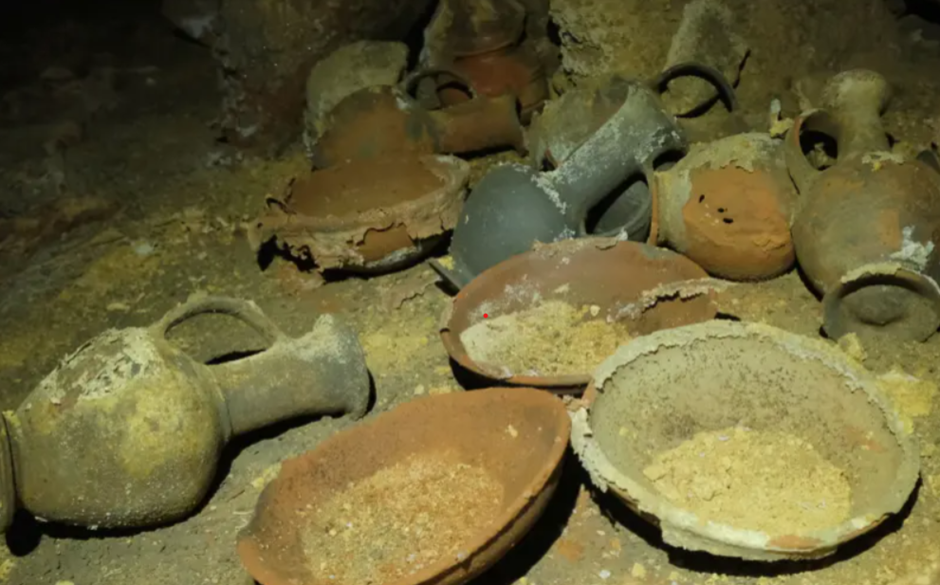
An extremely rare Egyptian burial cave was found in Israel, with most of the vessels still fully intact. Photo Credit: EMIL ALADJEM/IAA
In what some archeologists have described as a “Once in a lifetime” find, an extremely rare Egyptian burial cave from the time of Pharoah Ramses 2nd (who many believe is the Pharoah from Exodus) was located. Inside the cave were fully intact weapons, vessels (including bowls, chalices, cooking pots, oil lamps and jugs) some of which were painted red, and some had bones in them. The Egyptians believed that in the journey to the afterlife these items would be needed, so they were buried with them.
This burial cave was discovered accidently in the Palmahim Beach National Park in central Israel when the drill of a mechanical digger (who was doing construction work) hit the roof of the structure. The burial cave, believed to be about 3300 years old, had been completely sealed until it was discovered last year. Because the archeologists were the first people to gain access in more than three millennia (unlike most Egyptian sites, this one was not looted in ancient times), entering the cave was like entering a time capsule. This will allow researchers to understand ancient funerary customs like never before. One of the archeologists compared these findings to a set on Indiana Jones.
The lesser-known story of the Egyptians controlling the land of Israel began with Pharoah Thutmose III, who invaded in the 15th century BCE. For the next 350 years approximately (including the time when the Jews were slaves in Egypt) they controlled the land and allowed the local Canaanite city-state Kings to stay in power as long as they didn’t rebel. Their rule remained until the Biblical Exodus when the army of Pharoah (probably Ramses 2nd) was drowned in the Sea of Reeds, and the Egyptians lost all of their overseas empire practically overnight.
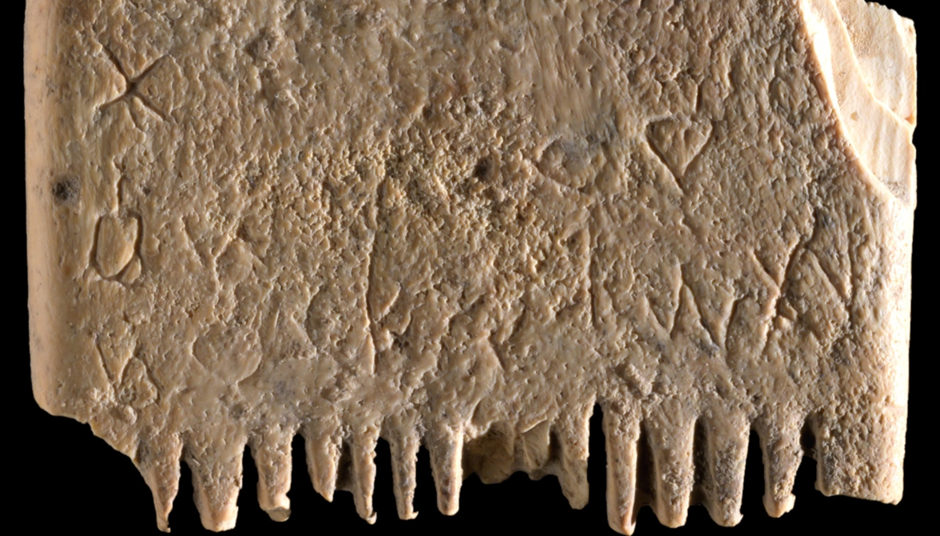
2) The world’s oldest lice comb ever found, inscribed with the only full sentence ever discovered in the ancient Canaanite language.
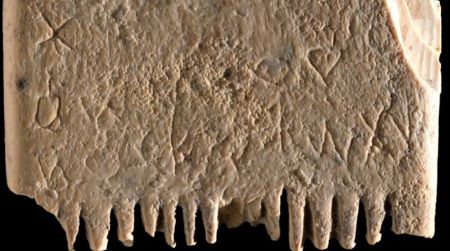
Archeologists believe the original owner of this ivory comb was very wealthy. Photo Credit: Israel Antiquities Authority (Dafna Gazit).
During a dig at the extraordinary Biblical site of Lachish (for more on that site, click here), a 3700-year-old ivory lice comb was found (dating to around the times of Biblical Patriarchs: Abraham, Isaac, and Jacob). This makes the comb the oldest such product ever found anywhere. The comb had 14 teeth for lice and eggs. Between two of them, the remains of an ancient louse were discovered.
What makes this comb extra valuable to researchers is the inscription in the ancient Canaanite language which says “May this tusk root out the lice of the hair and the beard”. This is the oldest complete sentence ever found in the ancient language (it is believed that the Canaanites only developed their own written language a mere hundred years earlier). Since it was made with ivory, it is believed to have been imported from Egypt and thus owned by a wealthy person.
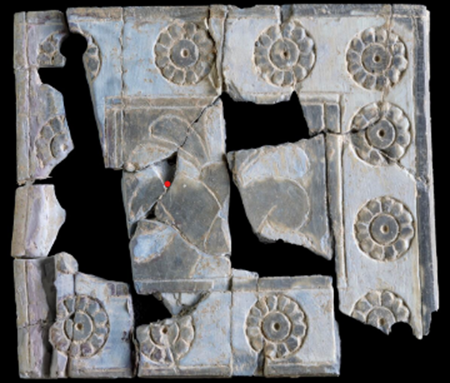
3) Extremely rare collections of decorated ivory plaques (possibly the same ones mentioned explicitly in the Bible) were discovered in Jerusalem for the first time
These ivory remains may be the same ones which were mentioned explicitly in the Bible. Photo Credit: Israel Antiquities Authority (Dafna Gazit).
Archaeologists digging under the (former) Givati parking lot in the City of David in Jerusalem, were stunned to uncover a large collection of ivory plagues (more than 1500 fragments) dating to the Biblical First Temple period. It was discovered inside what was once an extremely luxurious palace (circa 9th and 8th century BCE), destroyed by the invading Babylonians (circa 422 BCE) by fire. This is the first time that they have been found in Jerusalem, and few have been located elsewhere in the world.
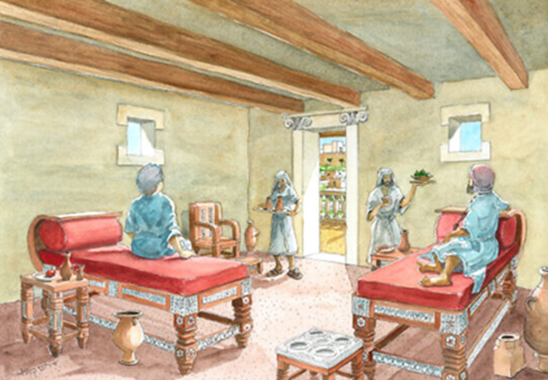
Ivory was perhaps the most valuable raw material in the ancient world (even more than gold). What made them so valuable was that they were from elephants in Africa and needed to be imported from a great distance. Based on other places where they have been located, it is believed that they were probably set inlaid into wooden couch thrones.
Artist’s rendition of the luxurious furniture, and the decorative inlays set into it. Photo Credit: City of David
Based on the location and time period, it is possible that they belonged to King Solomon, whom the Bible records as having received a shipment of ivory from abroad (see 1 Kings 10:22), using it to build a throne (see 1 Kings 10:18). If it did indeed belong to the righteous king, it would appear that his descendants continued to use it for generations until the destruction of the First Temple. Similar findings have only been found in a few other capital cities of great Kingdoms from that time period, including Sennacherib’s palace in Nineveh (capital of Assyria) and in Samaria, the capital city of the northern kingdom of Israel (Jerusalem was in the southern kingdom of Judea). The ivory in Samaria may have belonged to King Ahab (see 1 Kings 22:39).
Other valuable items found in the ancient Jerusalem palace include jars used to hold vanilla-spiced wine, a seal made of agate (a semi-precious stone), and a seal impression inscribed with the words “Natan-Melech servant of the King”).
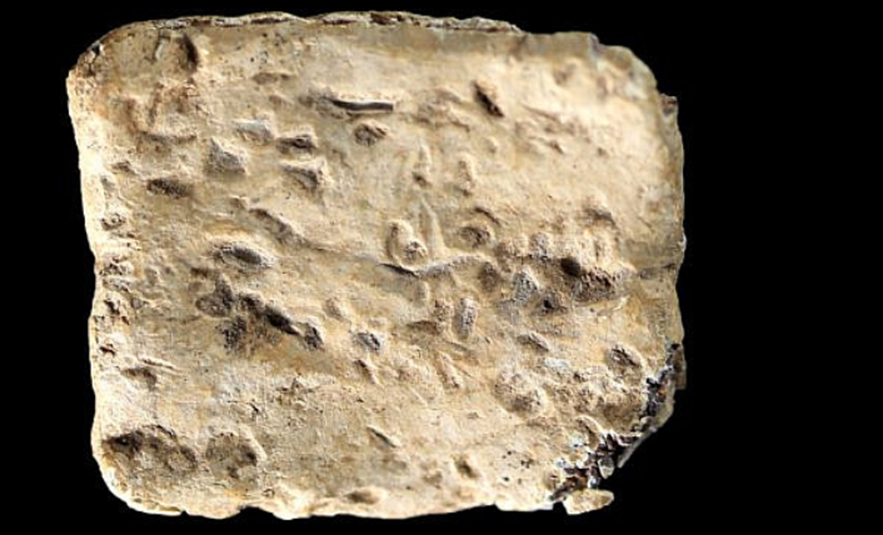
4) A 3200-year-old curse text bearing the oldest Hebrew text ever found. The name of G-d in Hebrew is written on it
The amulet is tiny (2 by 2 cms) and believed to be the earliest Hebrew script ever found.
While still in the wilderness (see Deuteronomy 11 and 27), the Children of Israel were commanded that when they would enter the Holy Land, 6 tribes would utter their famous curses on Mount Ebal (for more on that great site, click here). In Joshua 8, this commandment was carried out. Joshua then built an altar on the mount (which is still visible).
In 2019, excavations of the dirt by the altar unearthed a tiny amulet (2 by 2 cms), dated to the time of Joshua. In 2022, the inscription was finally deciphered and says “Cursed, cursed, cursed – cursed by (G-d’s name) .You will die cursed. Cursed you will surely die. Cursed by (G-d’s name) – Cursed, Cursed, Cursed.” The archeologist who discovered it said it may have been used in a ceremony (especially as it was discovered by the altar).
Although all words of the Torah are truth and do not require archeology to back up its validity, for academics who subscribe to the Biblical minimalist camp, this is a major blow. Several said that Moses could not have written down words of Torah because they think that Hebrew as a written language came much later. In fact, many of them claimed (despite thousands of years of Jewish religious texts which say to the contrary) that the ancient Israelites at this time were illiterate and only able to pass down information orally until they became literate.
The implications in academia are huge. According to Dr Scott Stripling, the archeologist who discovered the amulet “One can no longer argue with a straight face that the Biblical text was not written until the Persian period or the Hellenistic period as many higher critics have done, when here we do clearly have the ability to write the entire text at a much, much earlier date.”
5) 1200-year-old rural estate and mansion discovered in the Negev Desert with a unique deep, subterranean system
This discovery, the first of its kind ever found in the Negev Desert, was unearthed in Rahat, a Bedouin city. Photo Credit: EMIL ALADJEM/IAA
Archeologists excavating in the Bedouin city of Rahat in Israel’s south, uncovered a 1200-year-old rural luxurious mansion, located between two unearthed old mosques. The complex, discovered deep underground, had a large courtyard surrounded by 4 wings with several rooms (many of the walls had high-end frescos covering them). Inside the house, large ovens for cooking were found. The house was likely owned by a wealthy landlord who oversaw farmsteads in the area.
The most impressive part of the complex was a subterranean, (well-constructed) system of stone vaults found 5.5 meters below the courtyard. It is believed that this was part of a cooling system which allowed the owners to store food and cold water (a massive cistern was found here) away from the hot desert sun. It is also believed that during the scorching summer months, these rooms were also used for entertainment. The system also allowed residents to go from one side of the building to the other without having to be exposed to the sun.
This find is significant for understanding that time period. According to the lead archeologist “Their high status and wealth allowed them to build a luxurious mansion that served as a residence and for entertaining; we can study the construction methods and architectural styles, as well as learn about daily life in the Negev at the beginning of Islamic rule.”
To be continued-
By Nosson Shulman – Licensed Tour Guide and Trip Organizer in Israel who specializes in History, Tanach (Bible) and Adventure Tours. For more itinerariesclick here. Check out our new Virtual tours including free sneak preview videos.
JoinVIP Israel tour guide, creator of Authentic Virtual Israel Tours and radio host Nosson Shulman each week as he leads you on an inspiring, 2 minute virtual tour of a different off the beaten track biblical site in Israel. The new series airs live every week on Israel News Talk Radio and is then posted here in video form.
For more on the Gate of Mercy, the gate which Moshiach (Messiah) will enter , click here
Nosson Shulmanis a journalist andLicensed Tour Guidein Israel specializing in Biblical tours. To allow tourists to experience Israel during the Corona era, he created the new hit Israel tour video serieswhich brings Israel to the home of viewers by simulating actual tours. To check out his free sneak preview tour videos, click here.To view sample tour itineraries or to inquire about private tour opportunities with a personalized itinerary on your next trip to Israel,click here.
“Then Joshua spoke to the Lord on the day when the Lord delivered up the Amorites before the children of Israel, and he said in the sight of Israel, “Sun, stand still upon Gibeon, and Moon in the valley of Ajalon. And the sun stood still, and the moon stayed, until the people had avenged themselves upon their enemies (Joshua 10:12-13)”
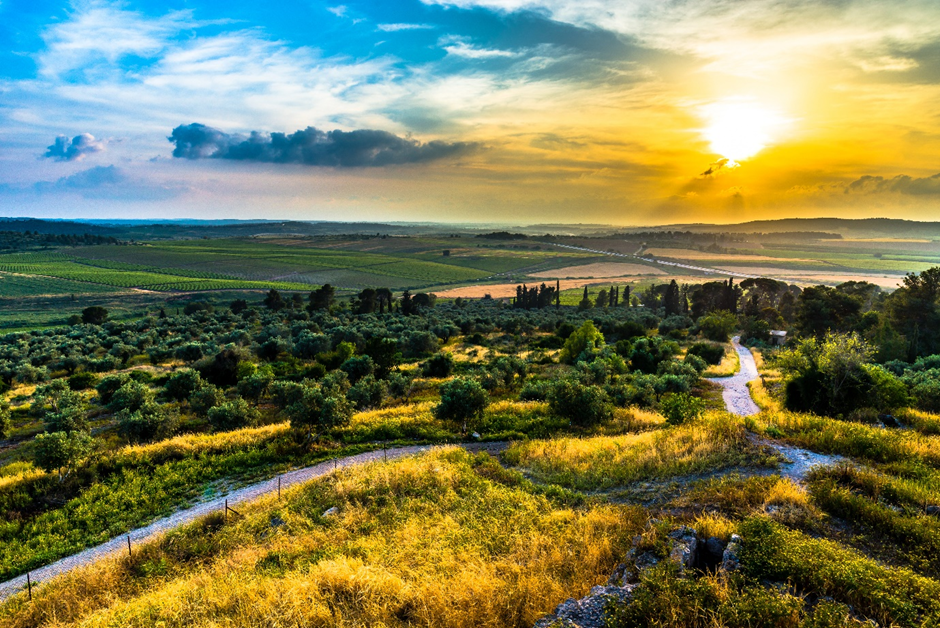
The sun setting in the Ayalon Valley is always a sight to behold. In Biblical times, the most dramatic sunset in world history took place here. Photo Credit: Shutterstock
Today, we are visiting the enchanting Ayalon Park Canada. This centrally located park (roughly between Jerusalem and Tel Aviv) has it all: beautiful (family-friendly) trails with lots of greenery and wild flowers, planted forests of fruit trees (when in season, the blooming white flowers of the almond trees are gorgeous), picnic tables, and well preserved, archeological ruins (beautifully integrated into the parks landscape). The park offers stunning views of the Biblical Ayalon valley below, our main focus for today.
The ruins of the site, such as this Roman Aqueduct and Ottoman Turkish reservoir below it, are well preserved and integrated with the overall landscape of the park. This alone is reason to come and visit, but as we shall soon see, the Biblical events that happened here make this site a must-see. Photo Credit Shutterstock
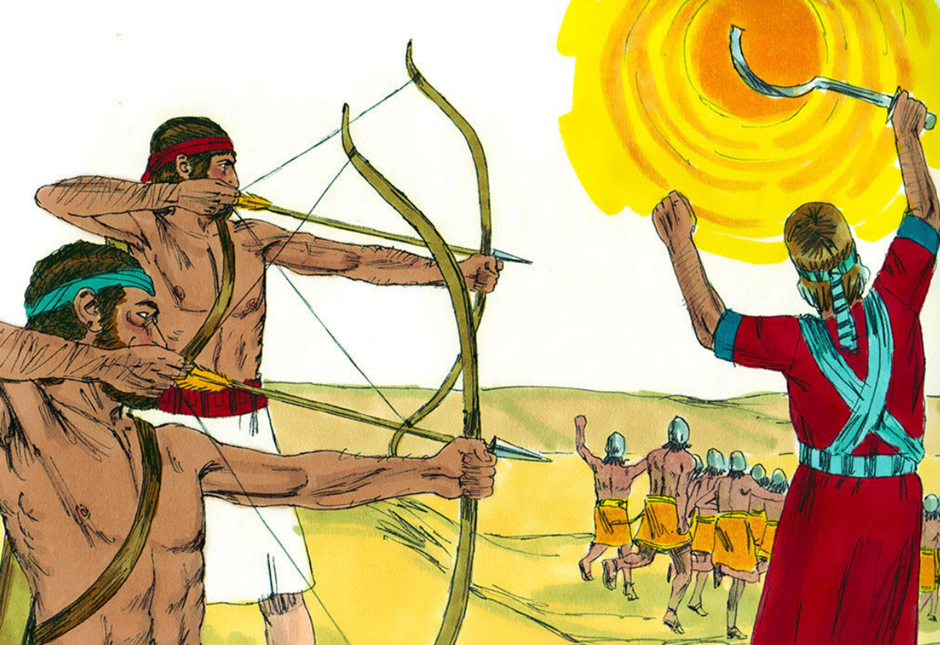
The Ayalon Valley, given to the tribe of Dan, was (and remains today) one of the most strategic valleys in all of Israel. Today’s two highways (same routes as the ancient highways) connect Jerusalem to Tel Aviv and the rest of the coast (highways 1 and 443) and go through the valley. Due to its central location, many wars were fought here, including arguably the most dramatic event in Biblical history. Joshua and his army defeated the city states of Jericho and Ai. The powerful city of Gibeon made an alliance with the Israelites (see previous article on Hazor where I discuss the structure of Canaanite city states, Tel Hazor). Five Canaanite kings attacked Gibeon (for more on that, click here) sending a message that making peace with the Children of Israel was not in their interest. When they attacked, Joshua felt bound by his oath and came to their rescue. As the armies of the five kings saw him coming, G-d put panic into their hearts and they were smitten, with the survivors fleeing by way of the “Ascent of Beth-horon”. As they started to descend from Beth-Horon, G-d sent a hailstorm that finished off most of the remaining troops (Joshua 10). According to Jewish sources, these actual hailstones were left over from the plague of hail in Egypt. When Moses asked G-d to stop the plague (see Exodus 9:33) the remaining hail was saved. With the death of most of the Canaanite troops, the remainder kept fleeing westward through this valley and the sun was quickly setting (according to Jewish sources, it was Friday evening and therefore almost Shabbat). In order to take care of the job before sundown, Joshua prayed to G-d for the sun to stand still (which it did) and it didn’t set until the enemies had been destroyed and the war was over (see Joshua 10).
In the Ayalon Valley a huge miracle occurred, with the setting sun suspended in place (according to Jewish sources, it was for 36 hours) until the war was over. Photo Credit: freebibleimages.org
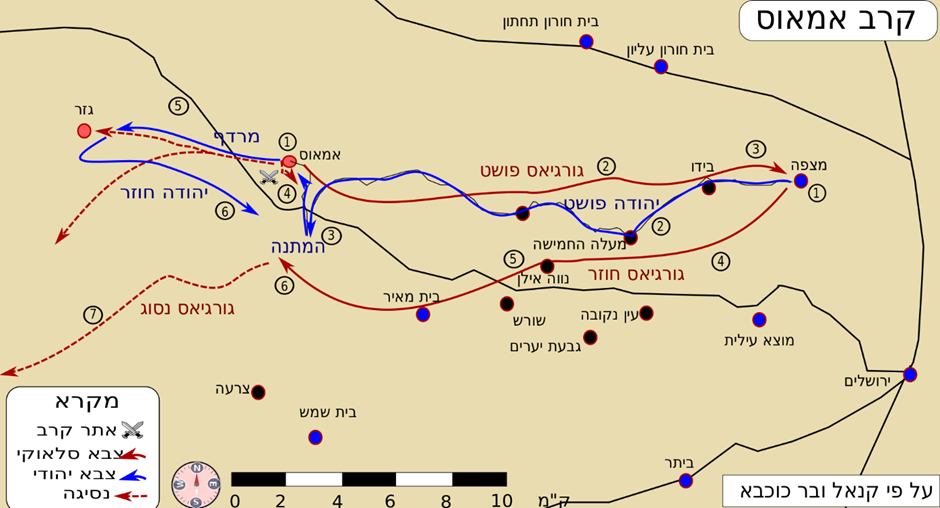
Located on the grounds of the park are the ancient ruins of Emmaus, a major city in ancient times and the location of the Battle of Emmaus in 165 BCE (whose battle strategy is still studied in military academies around the world). During the anti-Torah decrees of the mighty Hellenist rulers (circa 2nd century BCE) a small group of pious Jews led by the Maccabees (5 brothers) rebelled. Against all odds, they defeated the powerful Greek army in the first two battles in military upsets. They also had Jerusalem (controlled by the Greeks) under siege. The Greeks built a heavily fortified town in Emmaus. The leader of the brothers, Judah, gathered his men to Mizpah (for more on that site, click here) and intentionally “leaked” the information to the Greeks in order to lure them into a trap. The Greeks, led by General Gorgias, took the bait and sent thousands of their best soldiers to attack them in a “surprise” night time raid (leaving some of the men at Emmaus). Judah in turn led his men down to Emmaus by the Ayalon Valley and attacked the remaining sleeping camp from behind, massacring thousands and causing the rest to flee to Gezer (for more on that click here). Subsequently, Judah burned the powerful Greek fortifications and took over their advanced weaponry for future battles. When General Gorgias (whose troops were tired by being all night on a fruitless search) returned and saw the camp on fire, he panicked and fled to the area of Philistines, thus leaving Jerusalem under the siege of Jewish forces (for more on the next two battles, click here).
The map of the Battle of Emmaus (the red lines represent the movements of the Greek forces while the blue line represents the Jewish forces). The Greek troops based in Emmaus (#1 on the map) led their troops to Mizpah (#3) assuming the Jewish troops were there. However, the Jewish troops left Mizpah and arrived at Emmaus (#1) by sunrise, destroying the camp in a surprise attack. Photo Credit: Effib – CC BY-SA 4.0
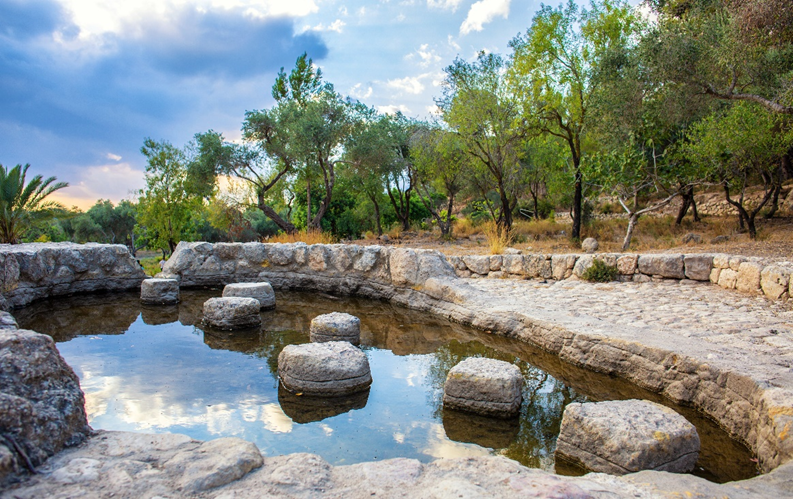
Not only was the area important to control for strategic reasons, but also agriculture as the Ayalon Valley, including around Emmaus, had abundant (underground) water springs. For this reason, sophisticated Roman aqueducts have been found in Park Canada which led water from springs above to the fertile fields of the Ayalon valley below. This is why the entire Ayalon Valley (even today) is filled with so many Israeli agricultural towns and Kibbutzim.
This pool is located at the place where water emerged from underground. An aqueduct was built that transported the water to the fields below as part of a Byzantine era irrigation system. Photo Credit: ShutterStock
Even in modern times, the Ayalon Valley has been a strategic priority for the State of Israel and the site of deadly battles where many IDF soldiers lost their lives. Just a few minutes away from Park Canada is the Israeli Tank Museum of Latrun (a worthwhile place to visit when in the Ayalon Valley area). Part of the museum is located in an old, but formidable British fortress built in the 1930s to end the Arab revolt of 1936-39. The fortress was built here because it controlled one of the most important junctions in the country (where Highway 1 meets Highway 3). When the British left in 1948, Jordan quietly took over the fortress which meant that Highway 1 became unusable, and Jerusalem was under siege. Israel fought 5 unsuccessful battles here with extremely high casualty rates to the IDF which included 168 dead, at least 327 injured and 19 captured (tragically, around 50% of soldiers fighting at Latrun were Holocaust survivors fresh off the boat).
This British “Tegart fortress” (today part of the Tank Museum which tourists may visit) was the scene of some of the heaviest IDF casualties in the 1948 War of Independence. Failure to capture this fort meant that between 1948-1967, much of Highway one was unusable and one had to take a much longer bypass route to get from Tel Aviv to Jerusalem. Photo Credit: Bukvoed – CC BY 2.5
Failure to capture this fort, meant that a new road was quickly needed to lift the dire siege on Jerusalem. In July, Israel captured Ramle and Lod (two major cities in the Ayalon Valley) and they were able to build today’s Highway 44. However, because Latrun was not conquered, between 1948-67 one couldn’t take Highway one directly from Tel Aviv to Jerusalem but had to take a much longer bypass route. From Highway 1, you would have had to turn south on Highway 3, then west on Highway 44, north on Highway 38 and West on Highway one.
Throughout history, Highway One (with blue line) was one of the main routes from Jerusalem to Tel Aviv (and Old Jaffa). Between 1948-1967 Latrun (see orange circle) was controlled by Jordan and therefore inaccessible, so Israel paved Highway 44 (see pink line) between Highways 3 and 38 (see yellow lines). Photo Credit: משתמש:בן-ציוןממ – CC BY-SA 3.0
In 1967, the Latrun Junction was liberated by the IDF and today, highway one is once again the most important artery in the country. On your next trip to Israel, come and explore Park Canada, ancient Emmaus, Latrun, and all the other great sites located in the Biblical Ayalon Valley!
By Nosson Shulman – Licensed Tour Guide and Trip Organizer in Israel who specializes in History, Tanach (Bible) and Adventure Tours. For more itinerariesclick here. Check out our new Virtual tours including free sneak preview videos
JoinVIP Israel tour guide, creator of Authentic Virtual Israel Tours and radio host Nosson Shulman each week as he leads you on an inspiring, 2 minute virtual tour of a different off the beaten track biblical site in Israel. The new series airs live every week on Israel News Talk Radio and is then poster here in video form.
For more on Biblical Kedesh, one of the 6 Cities of Refuge , click here
Nosson Shulmanis a journalist andLicensed Tour Guidein Israel specializing in Biblical tours. To allow tourists to experience Israel during the Corona era, he created the new hit Israel tour video serieswhich brings Israel to the home of viewers by simulating actual tours. To check out his free sneak preview tour videos, click here.To view sample tour itineraries or to inquire about private tour opportunities with a personalized itinerary on your next trip to Israel,click here.
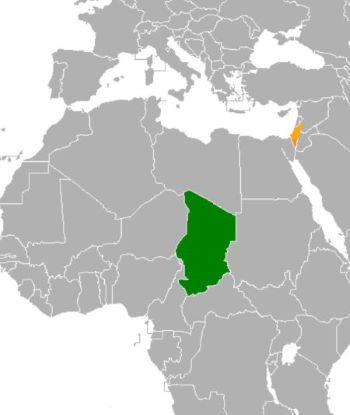
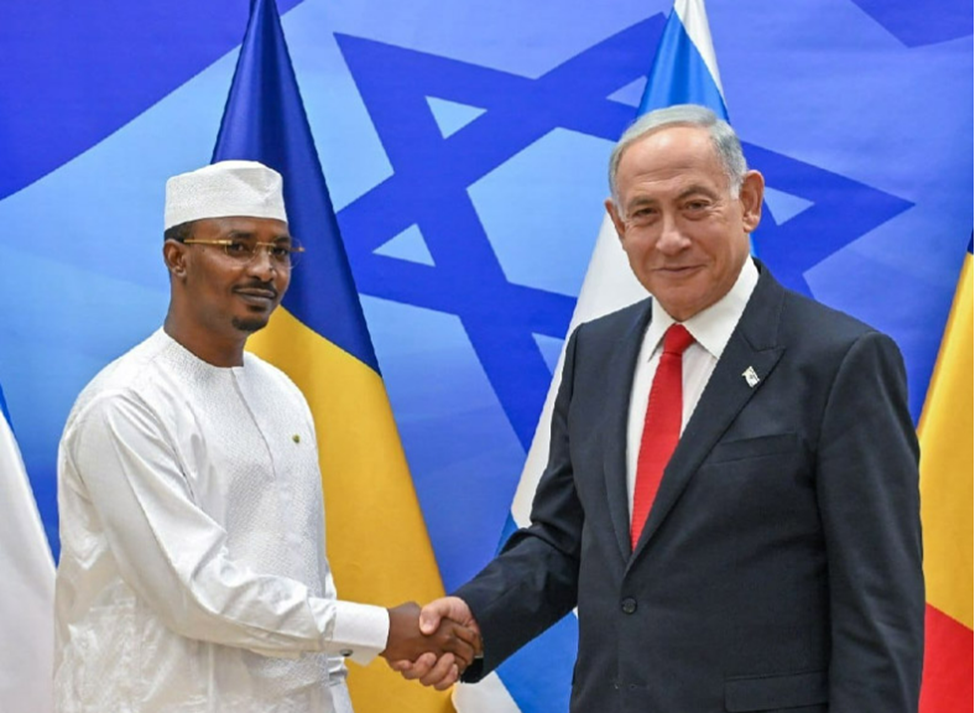
Prime Minister Netanyahu meets with President Mahamat Idriss Deby Itno of the Republic of Chad in Jerusalem, prior to the opening of its embassy in Ramat Gan (February 2023). Photo Credit: Israel’s Ministry of Foreign Affairs `
In the latest major diplomatic victory for Israel, the Republic of Chad has opened its first embassy in Israel. The landlocked African nation of 17 million has a Muslim majority. The inauguration ceremony in Ramat Gan was attended by both President Deby of Chad (who arrived especially for this) and Prime Minister Netanyahu. At the event, Netanyahu (who has made building strong relationships with African, Arab and Muslim countries the keystone of his foreign policy) said, “We are strengthening our friendship and our common interests in pursuing peace, security and prosperity”.
From 1961 until 1972 the two countries had full diplomatic relationships. However, during the Six Day War of 1967 and the Yom Kippur war of 1973, the vast majority of sub-Saharan African nations severed all relations with the Jewish State, and Chad was no exception. In 2019, Israel and Chad reestablished full diplomatic relations.
For well over a decade Netanyahu has been broadening relations with the African continent, who are eager to benefit from Israel’s vital assistance in building their energy, technological, clean water, medical, security and agricultural infrastructure (indeed, the help from Israel has been a major game changer for several African nations). These efforts have paid off In 2011, Ghana re-established relations with Israel. In 2016, Netanyahu became the first Israeli leader to visit Africa in over 50 years, including Uganda, Rwanda, Kenya, and Ethiopia. Two weeks after that trip, Guinea established full relations with the Jewish country. At the end of 2016, Jerusalem was chosen by the Economic Community of West African States (ECOWAS) to be the first non-African state to host one of their seminars. In 2017, Netanyahu was invited to the ECOWAS annual summit (held in Liberia) and became the first non-African head of state to address the summit (which was attended by the heads of state of all 15 country members of ECOWAS). In 2018 Tanzania opened it’s first Embassy in Israel, while in 2019 Israel opened its first embassy in Rwanda. In 2020 Malawi recognized Jerusalem as Israel’s capital and pledged to move their embassy to Jerusalem. As reported here, Equatorial Guinea followed suit in 2021. In 2022, Liberia pledged to open their first embassy in Israel’s eternal capital. Additionally, on July 22, 2021, the chair of the African Union granted Israel “Observer Status”. Today, at least 41 of the 46 sub-Saharan African countries have full diplomatic relations with the Jewish State.
Nosson Shulmanis a journalist andLicensed Tour Guidein Israel specializing in Biblical tours. To allow tourists to experience Israel during the Corona era, he created the new hit Israel tour video serieswhich brings Israel to the home of viewers by simulating actual tours. To check out his free sneak preview tour videos, click here.To view sample tour itineraries or to inquire about private tour opportunities with a personalized itinerary on your next trip to Israel,click here.



















 Unique Sites of Israel Blog