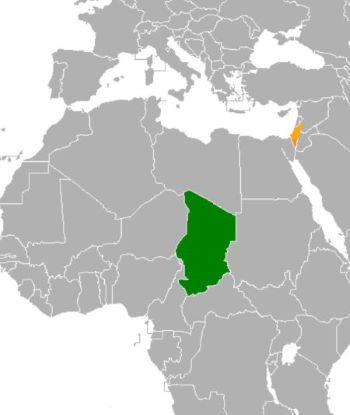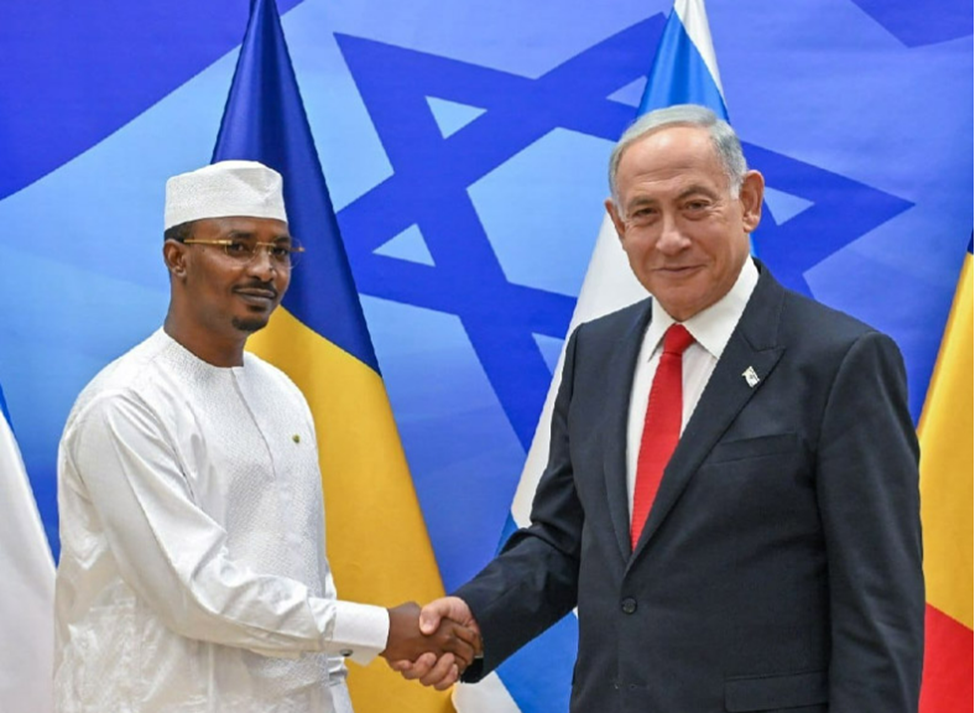
Prime Minister Netanyahu meets with President Mahamat Idriss Deby Itno of the Republic of Chad in Jerusalem, prior to the opening of its embassy in Ramat Gan (February 2023). Photo Credit: Israel’s Ministry of Foreign Affairs `
In the latest major diplomatic victory for Israel, the Republic of Chad has opened its first embassy in Israel. The landlocked African nation of 17 million has a Muslim majority. The inauguration ceremony in Ramat Gan was attended by both President Deby of Chad (who arrived especially for this) and Prime Minister Netanyahu. At the event, Netanyahu (who has made building strong relationships with African, Arab and Muslim countries the keystone of his foreign policy) said, “We are strengthening our friendship and our common interests in pursuing peace, security and prosperity”.
From 1961 until 1972 the two countries had full diplomatic relationships. However, during the Six Day War of 1967 and the Yom Kippur war of 1973, the vast majority of sub-Saharan African nations severed all relations with the Jewish State, and Chad was no exception. In 2019, Israel and Chad reestablished full diplomatic relations.
For well over a decade Netanyahu has been broadening relations with the African continent, who are eager to benefit from Israel’s vital assistance in building their energy, technological, clean water, medical, security and agricultural infrastructure (indeed, the help from Israel has been a major game changer for several African nations). These efforts have paid off In 2011, Ghana re-established relations with Israel. In 2016, Netanyahu became the first Israeli leader to visit Africa in over 50 years, including Uganda, Rwanda, Kenya, and Ethiopia. Two weeks after that trip, Guinea established full relations with the Jewish country. At the end of 2016, Jerusalem was chosen by the Economic Community of West African States (ECOWAS) to be the first non-African state to host one of their seminars. In 2017, Netanyahu was invited to the ECOWAS annual summit (held in Liberia) and became the first non-African head of state to address the summit (which was attended by the heads of state of all 15 country members of ECOWAS). In 2018 Tanzania opened it’s first Embassy in Israel, while in 2019 Israel opened its first embassy in Rwanda. In 2020 Malawi recognized Jerusalem as Israel’s capital and pledged to move their embassy to Jerusalem. As reported here, Equatorial Guinea followed suit in 2021. In 2022, Liberia pledged to open their first embassy in Israel’s eternal capital. Additionally, on July 22, 2021, the chair of the African Union granted Israel “Observer Status”. Today, at least 41 of the 46 sub-Saharan African countries have full diplomatic relations with the Jewish State.
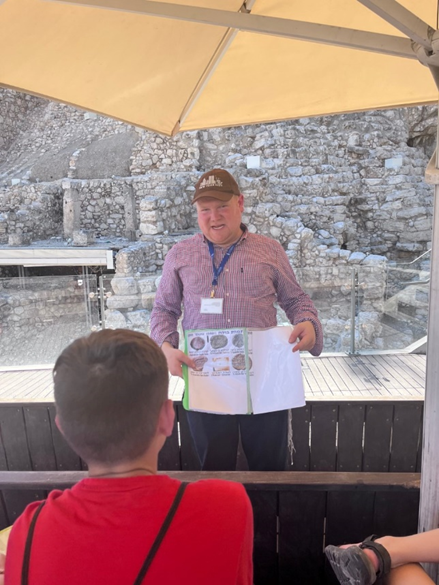
Nosson Shulmanis a journalist andLicensed Tour Guidein Israel specializing in Biblical tours. To allow tourists to experience Israel during the Corona era, he created the new hit Israel tour video serieswhich brings Israel to the home of viewers by simulating actual tours. To check out his free sneak preview tour videos, click here.To view sample tour itineraries or to inquire about private tour opportunities with a personalized itinerary on your next trip to Israel,click here.
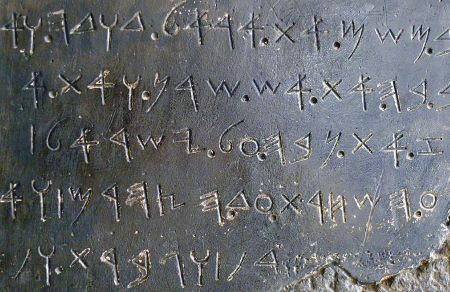
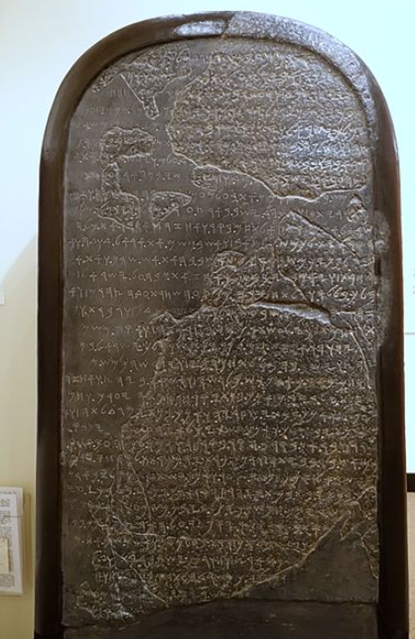
Although the Mesha Stele was discovered more than century and a half ago, very recent new technology has allowed researchers to conclude that King David is mentioned explicitly in the text. Photo Credit: Wikicommons-Public Domain
In may have taken 155 years, but researchers (using cutting edge digital imaging techniques) have concluded that an archeological stele (an ancient stone slab bearing a commemorative inscription) specifically references King David. The slab, also known as the Moabite Stone, references “The House of David” on its 31st line and “Altar of David” on the 12th line.
The Mesha Stele was discovered in 1868 in Jordan (about 15 miles east of the Dead Sea). In 1869 one of the local Bedouin tribes smashed the stone slab into many pieces, to protest against the ruling Ottoman empire who were forcing them to sell it to Europeans. Prior to it being broken, a rough paper-mache impression had been made of it, and most of the fragments were able to be put back together (although the damage made it very difficult to decipher parts of it.) Since 1873, the stone has been in the Louvre Museum in Paris.
The slab was written in the ancient (Semitic) Moabite language, spoken by the ancient nation mentioned many times in the Bible. This nation was at war with the Israelites for centuries (Ruth, of Biblical fame was a Moabite princess who converted to Judaism and was the great grandmother of King David, who Messiah will descend from). It was written by Moabite King Mesha, and describes his war with Israel. This war is mentioned in depth in the Bible (see 2 Kings 3) and specifically elaborates on Israel’s withdrawal from Moab which is mentioned in verse 27 which states “And he took his first-born who would resign after him, and brought him up for a burnt-offering on the wall. And there was great wrath upon Israel, and they withdrew from him and returned to the land.”
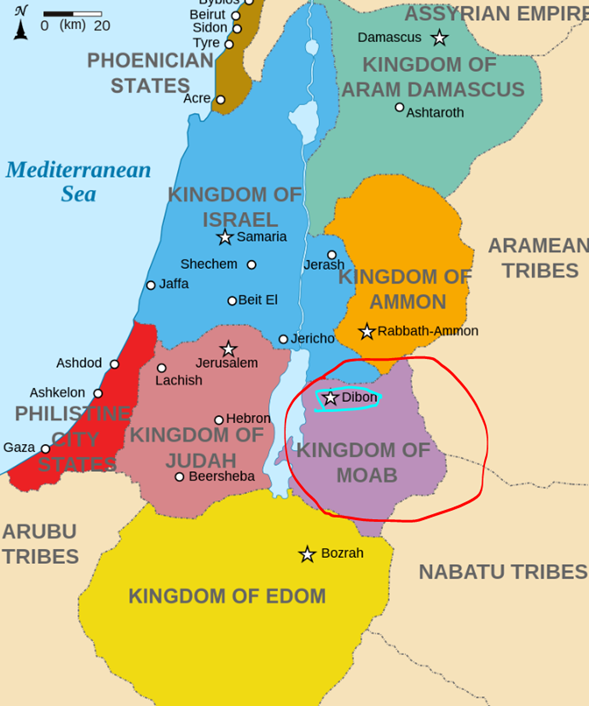
Moab was the Biblical kingdom east of the Judah (see red circle). Its capital city was Dibom (see aqua blue circle). This Stele was discovered in the Jordanian city of Dhiban (the Arabized name of Dibon). Photo Credit: Kingdoms_of_Israel_and_Judah_map_830.svg: *Oldtidens_Israel_&_Judea.svg: FinnWikiNo – CC BY-SA 3.0
Much damage had been done to some of the letters on the stone where David is mentioned. For decades archeologists in the Biblical minimalist camp tried to claim that the text doesn’t mention him, but rather someone else whose name is also spelled with the same letters but pronounced differently. Although farfetched and clearly fitting confirmation bias, their claims can now be completely discarded due to advances in technologies. Using Reflectance Transformation Imaging (where numerous high end digital images are taken of an artifact from various angles and then combined) on both the stone and on the paper-mache, the researchers are finally able to put the debate to rest. It is now hoped that with improvements to imaging and technology, other ancient texts can now be deciphered.
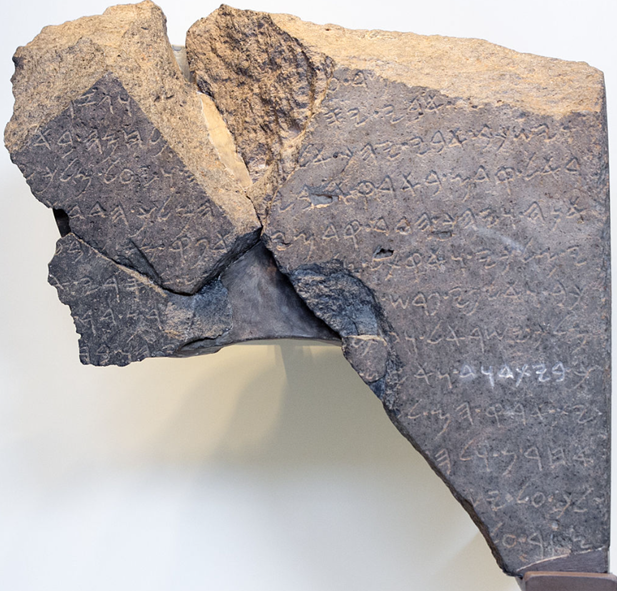
The Moabite Stone is not the first inscription found from the Biblical era mentioning “The House of David”. The Tel Dan Stele was written (more or less) around the same time as the Mesha Stele (circa 9th century BCE) and was discovered in 1993 in Northern Israel. It also mentions the “House of David” (see letters highlighted in white). Photo Credit: Oren Rozen – CC BY-SA 4.0
The Tel Dan Stele, currently displayed at the Israel Museum, famously also mentions “The House of David (and corresponds with the Biblical events mentioned in 2 Kings 8: 28-29).
Nosson Shulmanis a journalist andLicensed Tour Guidein Israel specializing in Biblical tours. To allow tourists to experience Israel during the Corona era, he created the new hit Israel tour video serieswhich brings Israel to the home of viewers by simulating actual tours. To check out his free sneak preview tour videos, click here.To view sample tour itineraries or to inquire about private tour opportunities with a personalized itinerary on your next trip to Israel,click here.
“This is the inheritance of the tribe of the children of Judah according to their families…Halhul, Beth-zur, and Gedor(Joshua 15:20-58)”
“They came into Idumea and encamped at Beth-zur, and Judas met them with ten thousand men… Then Judas and his brothers said, “See, our enemies are crushed; let us go up to cleanse the sanctuary and dedicate it (Maccabees 4:29-61. Today, this event is celebrated by more than 15 million Jews worldwide as the holiday of Chanukah)
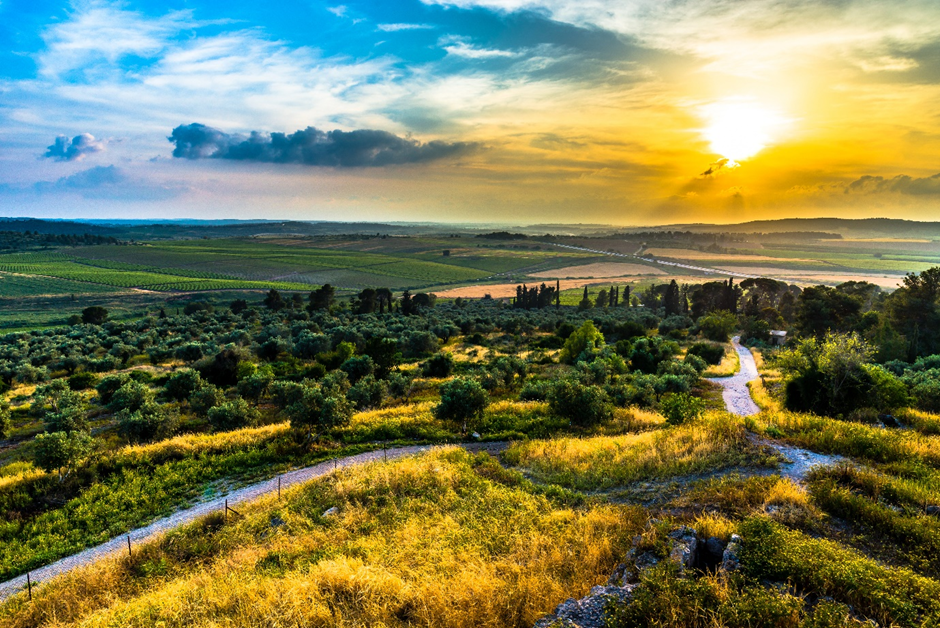
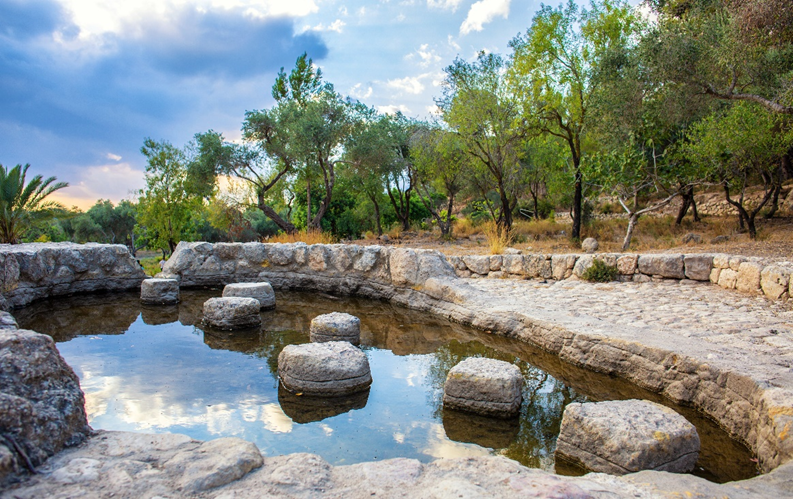
Today, Karmei Tzur is a beautiful Jewish town in the Judean Hills with exquisite panoramic views. However more than 2100 years ago, one of the biggest game changers (and defining moments) in Jewish history occurred here!
Today we are visiting an isolated Biblical site, directly related to one of the most consequential events in Jewish history. Tourists seldom visit here though, and not many Israelis (outside of the settlements) are even aware of its existence (indeed, even online information about this wonderful town is hard to find). This incredible site though, has not only history, inspiring beauty, and panoramic views, but an intriguing story, connected to one of the greatest miracles in history!
The stunning scenery in this area (with its enchanting vineyards and rolling hills as far as the eye can see) would on its own make this a worthwhile site to visit. However, as we will soon see, this town has so much more to offer.‘
When Joshua brought the Children of Israel into the promised land after 40 years in the desert, Karmei Tzur (then called Beit Tzur) was given to the tribe of Judah (see Joshua 15). Before Jacob passed away, he blessed Judah so that his land would be fertile, (especially with grapes) and produce an abundance of wine (see Genesis 49:11). Even today, visitors to Karmei Tzur (which literally translates as the Vineyards of Tzur) can clearly see the fruits of the blessing, with the many vineyards surrounding the town.
The results of the blessing which Jacob gave on his deathbed upon Judah’s land is easily visible to visitors to Karmei Tzur. The town is literally surrounded by flourishing vineyards.
In 422 BCE the holy First Temple was destroyed by the Babylonians, and the population of Judea exiled to modern day Iraq. Only a few decades later, the Persians conquered Babylonia. In 350 BCE, during the days of Ezra and Nehemiah (under the rulership of King Cyrus the Great) the Jews were allowed to return to the newly created province of Yehud (Judea) and rebuild the Temple. Although the Persians were the ultimate rulers, in practice they allowed the Jews to run the province autonomously (as long as they remained loyal to the empire). However, the new province encompassed a much smaller area than historic Judea. Beit Tzur was on the very southern border of Yehud.
When the Jews were permitted by Cyrus the Great to return to the Holy Land, they settled in the newly created province of Yehud (see blackline) which was smaller than the Judea of first Temple times. Beit Tzur (in the aqua blue circle) was the southern border town. Photo Credit: Garry Steven -CC BY-NC-SA 4.0
The inhabitants of the town of Beit Zur helped rebuild the walls of Jerusalem (see Nehemiah 3:16).
The “Cyrus Cylinder”, found during excavations, was the written proclamation allowing Jews to return to Israel. Today, the original is in the British Museum. Prioryman – CC BY-SA 3.0
The town of Halhul, across the tiny valley (which is an Arab city today and very visible from where we stand) was already part of Idumea (Edom). The valley didn’t just separate the two towns, it separated the world of monotheism and paganism (which became more pronounced once the Hellenist Syrian-Greeks took over Judea from the Persians and tried to force the Jews to forsake the holy Torah).
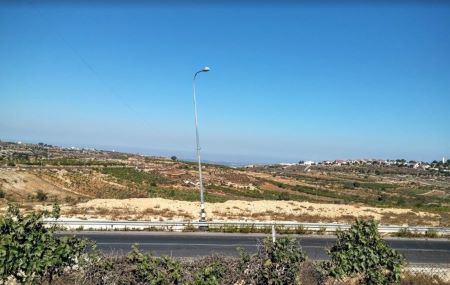
The Arab city of Halhul, which can be easily seen from Karmei Tzur. In biblical times, this land belonged to the Tribe of Judah (see Joshua 15:58). Since the failed Oslo II accords in 1995, the city had been under Palestinian Authority control and is currently off limits to Israelis.
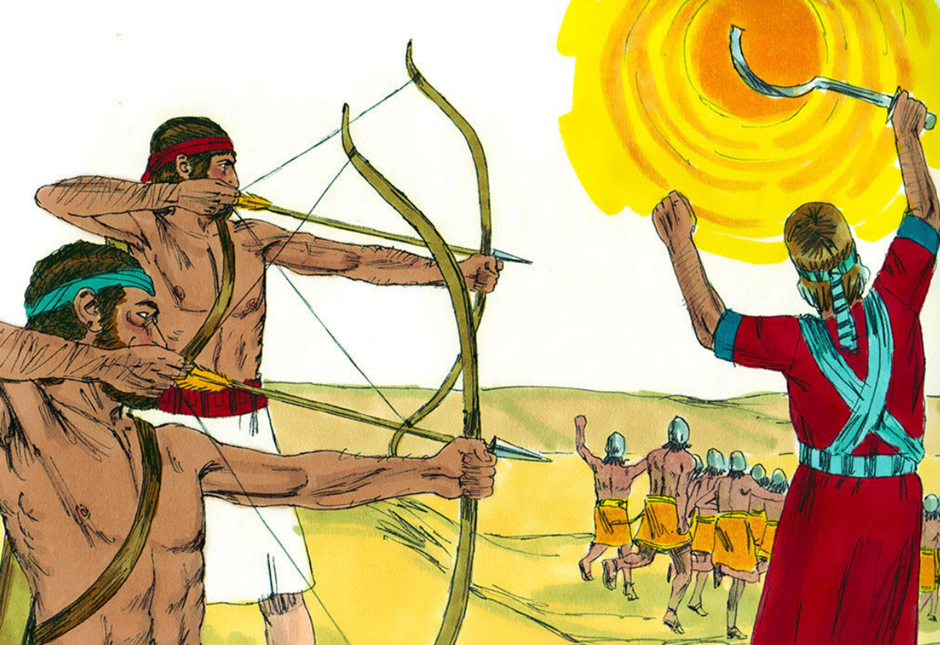
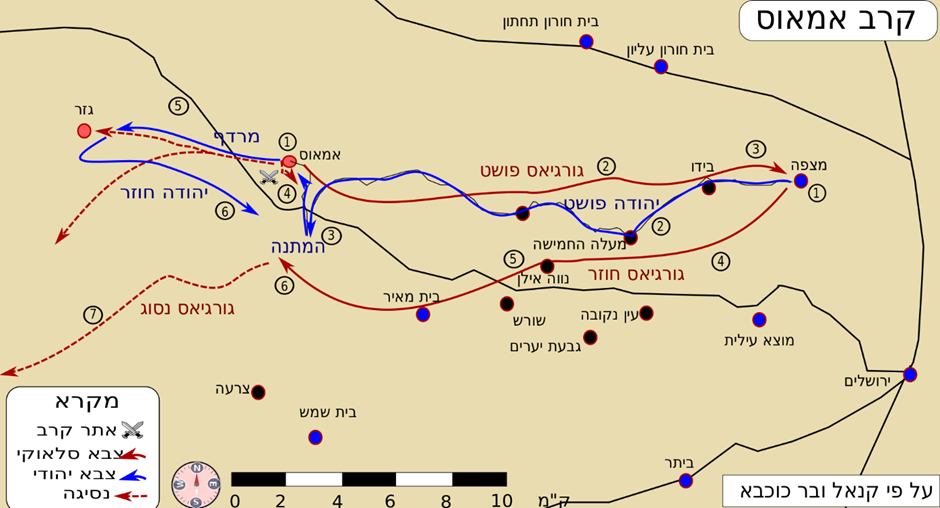
With the anti-Torah decrees of the Hellenist rulers, a small group of pious Jews led by the Maccabees (5 brothers) rebelled. Against all odds, they defeated the powerful Greek army in the first three battles (which to this day are considered among the greatest upsets in military history)! When word of the Greek defeat reached Lysias, the Syrian Governor, he was shocked as he believed that victory for the Jews wasn’t possible. Discouraged, he mustered a whopping 65,000 troops and stationed the troops at Halhul. At Beit Tzur the Jews, led by their leader Judah the Maccabee, had only 10,000 troops. Although outnumbered, with G-d’s help, the Syrian-Greeks lost 5,000 men. When Lysias saw his troops were dying (in addition to the determination of the Jewish forces) he withdrew and fled to the capital city of Antioch (modern day southern Turkey). When Judah saw that the siege had been lifted, he told his men “See, our enemies are crushed; let us go up to cleanse the sanctuary (of the Temple) and dedicate it.” They then travelled to Jerusalem and rededicated the Temple (which had been desecrated by the Greeks). Today, the Jewish holiday of Chanukah celebrates these miraculous events (see 1 Maccabees 4). Afterwards, Beit Tzur was fortified to protect the southern border (according to historian Josephus, this town became the strongest in all of Judea).
The ruins of Beit Tzur, which today are in an area controlled by the Palestinian Authority. Israelis are banned entry and it is also not advisable for non-Israelis to visit for safety reasons. However, the modern Jewish town of Karmei Tzur (which preserves the name) is a wonderful place to relive the ancient events.
Two years later, Lysias returned with 120,000 soldiers and 32 elephants (the tanks of the ancient world). They re-conquered Beit Tzur and headed towards Jerusalem. Enroute, they battled the Jewish forces at Beit Zechariah (the fifth battle of the war) and for the first time, the Jewish people were defeated. The Greeks then laid siege to Jerusalem. G-d caused a rebellion to happen in Antioch, and Lysias had no choice but to return back, lifting the siege (see 1 Maccabees 6).
The fifth battle of the war against the Hellenists involved 32 elephants, unnerving the Jewish troops who had never seen such massive creatures.
Over the next few years, Beit Tzur changed hands several times, until ultimately the losing Greeks were expelled from all of Israel. In 100 BCE, the town was abandoned for millennia (though there is evidence that during Byzantine times it was inhabited).
In 1984, the observant Jewish town of Carmei Tzur was founded not too far from the ruins. Today, the flourishing town has over 1000 residents, including 8 families of “Inca Jews”, South American aboriginals who converted to Judaism
Today Karmei Tzur is a flourishing community with beautiful views, nice homes and a high quality of life. Photo Credit: Gush-Etzion.org
On your next trip to Israel, especially if you are visiting Hebron, I recommend briefly stopping here to experience this historical delight in person!
Nosson Shulmanis a journalist andLicensed Tour Guidein Israel specializing in Biblical tours. To allow tourists to experience Israel during the Corona era, he created the new hit Israel tour video serieswhich brings Israel to the home of viewers by simulating actual tours. To check out his free sneak preview tour videos, click here.To view sample tour itineraries or to inquire about private tour opportunities with a personalized itinerary on your next trip to Israel,click here.
According to “The Economist”, the Jewish State’s ranking was “unexpected” due to the political instability created by multiple elections in a short time period.
A view of the Tel Aviv Stock Exchange, founded in 1953. Photo Credit: פארוק – Creative Commons Attribution-Share Alike 3.0 Unported
In a surprising report, Israel has been ranked by “The Economist” as having the 4th best performing economy in the world. The report evaluated 34 countries of the OECD (essentially all of the “First World” countries). Five macroeconomic indicators were measured including growth, annual inflation, extent of inflation, stock market and public debt.
Israel’s economy grew by an estimated 6.3% in 2022, while their debt to GDP ratio fell from 68% to 60%. Although the country’s inflation rate rose to 5.3%, that is still approximately half the rate of most of the wealthiest countries. This was a huge surprise, because between 2019-2022 Israel had 5 elections and was without a stable government for almost that entire time.
The country with the best performing economy was Greece, which shrank its national debt to GDP ratio by 16%. Portugal and Ireland also outperformed Israel, while Spain was tied for 4th place with the Jewish State.
The United States, with an economy that grew only by 0.2%, ranked 20th while Germany (which is very politically stable) underperformed and ranked only 30th among OECD countries. The study also found that countries with the lowest inflation were the least likely to be dependent on Russian gas or oil.
Nosson Shulmanis a journalist andLicensed Tour Guidein Israel specializing in Biblical tours. To allow tourists to experience Israel during the Corona era, he created the new hit Israel tour video serieswhich brings Israel to the home of viewers by simulating actual tours. To check out his free sneak preview tour videos, click here.To view sample tour itineraries or to inquire about private tour opportunities with a personalized itinerary on your next trip to Israel,click here.
“On the third day, Abraham lifted up his eyes and saw the place from afar (Genesis 22:4)”
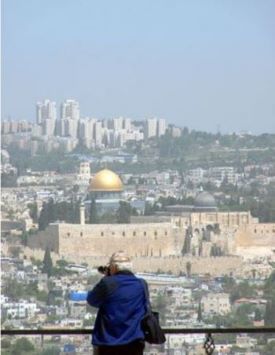
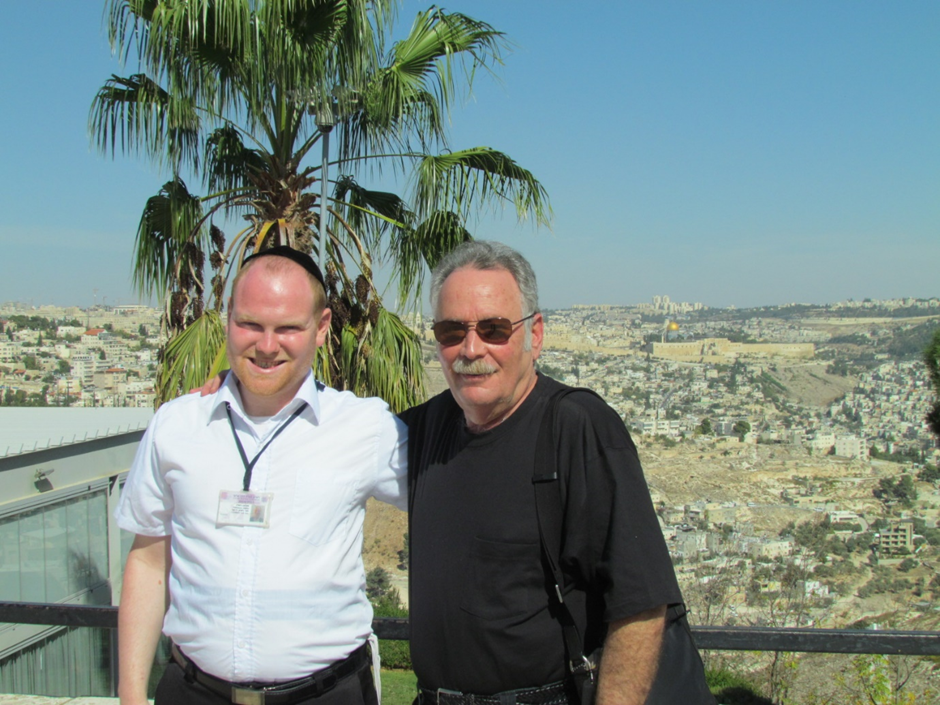
Giving a tour on the Haas Promenade. Arguably, the most impressive view of biblical Jerusalem can be seen from here (you can see the Old City and Temple Mount to my tourist’s left). The patriarch Abraham also stood here approximately 3800 years ago!
Today, we are visiting a majestic lookout point that my tourists really enjoy visiting! Since this is arguably the view where one can best see the splendor of ancient and modern Jerusalem, I often make this the first stop on the trip. From here, one can see sites not only connected to Jerusalem’s glorious past (like the Old City, Temple Mount, Western Wall, etc.) but also to the future end of days (such as the Kidron Valley and the Mount of Olives). Some of the most well-known biblical stories transpired here. Additionally, the events that occurred here during the 1967 Six Day War were the direct catalyst for the liberation of Jerusalem by the IDF. Although this area is not as “off the beaten track” as most of the other sites I write about, there are some treasures located here that few visitors know about (and therefore may be missing the best part). With that in mind, let us explore this biblical wonder!
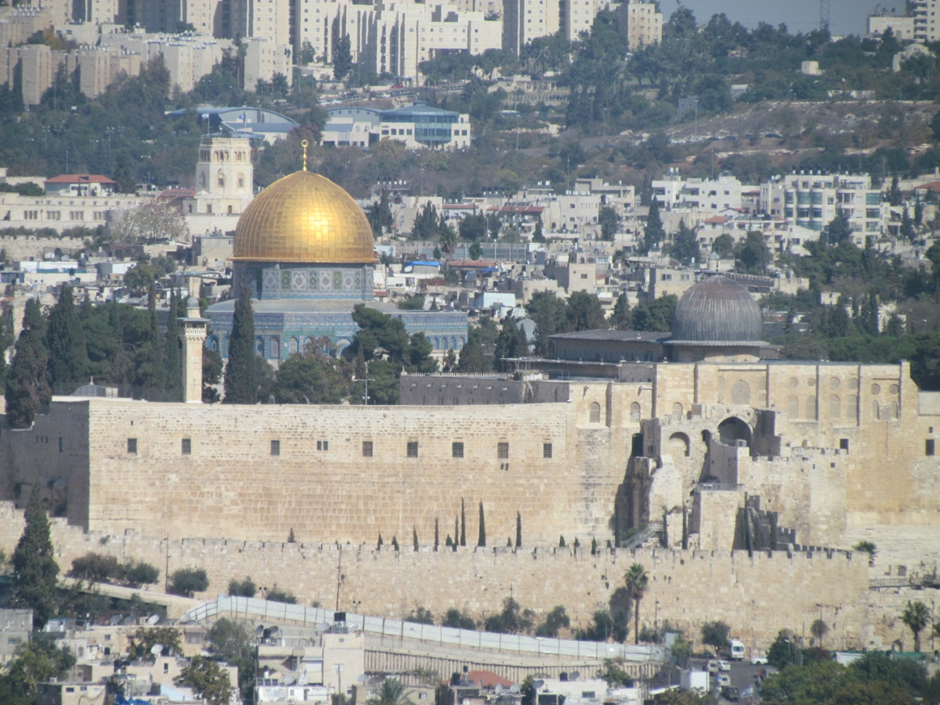
A closeup picture of the Temple Mount taken from the Haas Promenade. During the times of Abraham, this place was known as Mount Moriah
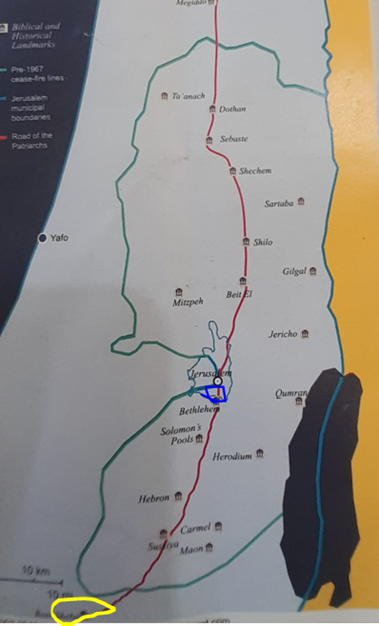
Probably, the most climatic biblical story to take place here was connected to the binding of Isaac. G-d told Abraham who was in Beer Sheva (for more on this ancient city,click here) to take his beloved son Isaac and offer him as a sacrifice at the land of Moriah (Mount Moriah is today underneath the Temple Mount). Although a difficult test for Abraham, he had every intention of doing G-d’s will. To get to Mount Moriah, Abraham took the ancient spine route, more or less today’s highway 60 (for more on this route, click here). It took him three days to get to where we stand right now (although it is less than a 3 day walk, according to Jewish sources, Abraham took his time so that no one should falsely claim later that he acted on impulse, but if he really had time to think it over, he would not have done it. Therefore, he took his time to show that impulse had nothing to do with his desire to fulfill this commandment, as difficult as it may be). On the third day, Abraham lifted up his eyes and saw the place (Mount Moriah) from afar (see Genesis 22:4). I believe that the place he “lifted his eyes” is where we are standing now, because arriving from Beer Sheva, the first place where Mount Moriah would be visible is right here.
Abraham, Isaac and his two attendants left Beer Sheva (see yellow circle) and on the third day, arrived in the area of today’s Haas Promenade (see blue circle) where they first laid eyes on the mountain that may be seen from here.
According to Jewish sources, while standing here (today’s Haas Promenade) Abraham saw a cloud attached to the mountain which represented the Shechaniah (divine presence). He asked Isaac what he saw, and he answered, “a cloud”. He then asked his two attendants (whom Jewish sources identify as Ishmail and Eliezer) what they saw, and they said they couldn’t see anything. The fact that they could not see the Shechaniah, was a sign that only Isaac was at the spiritual level needed to continue to Mount Moriah. Therefore, Abraham told them to “Stay here with the donkey, while I and the lad will go yonder, and we will prostrate ourselves and return to you (Genesis 22:5)”. Ultimately, as the sacrifice was about to be performed, an angel of G-d stopped him, revealing it to be only a test for Abraham.
A view of the Temple Mount (Mount Moriah) as seen from the Haas Promenade. According to Jewish tradition, the exact location on the mount where the binding took place is today under the Golden Dome. Photo: zeevveez – Creative Commons Attribution 2.0 Generic
Many centuries later, David was anointed King of Israel in Hebron (for more on this biblical city, click here). David led his army to Jerusalem (the last stronghold of the Jebusites) by taking the same ancient spine route his ancestor Abraham took. Although not mentioned specifically, it makes sense that on his way, he would naturally come to this overlook to see the place he was about to conquer and strategize the next move (see 2 Samuel: 5 and 1 Chronicles 11).
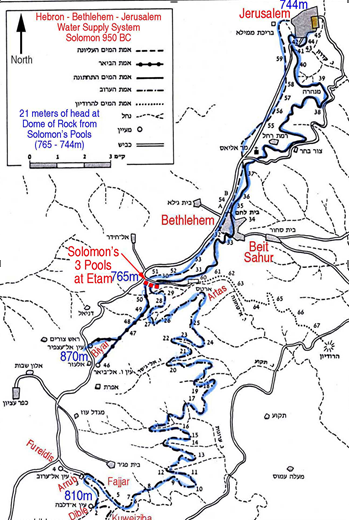
Hundreds of years later (circa 2nd century BCE) the Hasmonaeans (aka the Maccabees) overthrew the Greek overlords and reestablished an Independent Jewish Kingdom for 103 years. The holy second Temple (which had been desecrated by the Greeks) was renovated, and Jerusalem as a city expanded significantly. A new water source was needed to both give drink to the locals, and to provide for the needs of the expanding tourism base coming to the city (especially during tri-annual pilgrimage festivals which all Jews are commanded to perform when the Temple stands). Since the local springs were no longer sufficient, water had to be brought from afar (due to technological advances, aqueducts were now in existence and could bring water from a distance). An elaborate aqueduct system was built, bringing water from Ein Eitam (10 kms away as the crow flows) through a 21 km pipeline, that ultimately ended at the Temple.
The elaborate aqueduct system which brought water to Jerusalem from today’s Gush Etzion region. Many pipe routes were later added by King Herod and Roman Governor Pontius Pilate.
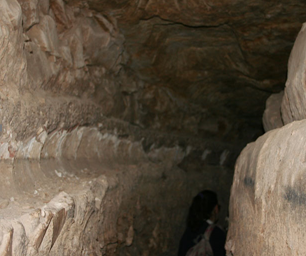
However, the mountain we stand on posed a problem, as it stood in the way (an aqueduct can only bring water from a higher source to a lower source), so 400 meters of tunnel were carved into the mountain as part of the system. The aqueduct also brought water to the Temple which was used for purification. Incredibly, this water system continued to be used for millennia until the British Mandate period in the 1920s. Today with advanced reservations, tourists can actually enter into these aqueducts and explore!
Tourists can walk through this incredible ancient system which was used to bring water to Jerusalem and the holy Temple.
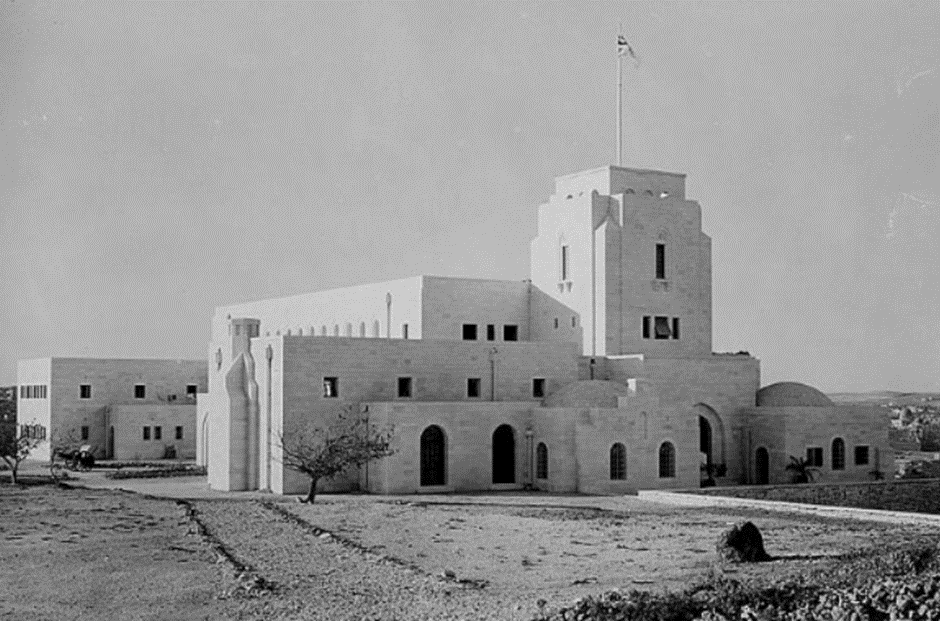
In the 1930s, the British (who ruled here) built the High Commissioner’s Palace and offices on this hill from which they ruled Israel. In 1948, this land was given to the United Nations (UN) and for the next 19 years, it was a Demilitarized Zone (DMZ) neither ruled by Jordan nor Israel.
The former British High Commissioner’s residence and offices as seen in the 1930s. Today, the UN controls this site.
In the beginning hours of the Six Day War on June 5, 1967, Israel completely destroyed Egypt’s Air Force in a preemptive strike, easily taking over the Sinai Peninsula. Immediately, Jordan entered the war (not knowing that Egypt was no longer capable of fighting against Israel) and illegally took over the DMZ and expelled the UN from the building. From here, they shelled the civilian neighborhoods of Israel controlled West Jerusalem. For the first hour and one half, Israel tried to end this strife with Jordan through diplomatic means, sending a message that Israel would not initiate any action against them if they stayed out of the war. Jordan rejected the overtures, with King Hussein declaring it was too late, “The dye was cast”. A decision was made by Israel to liberate the Old City and West Bank from Jordanian occupation, and by June 7 the mission was accomplished.
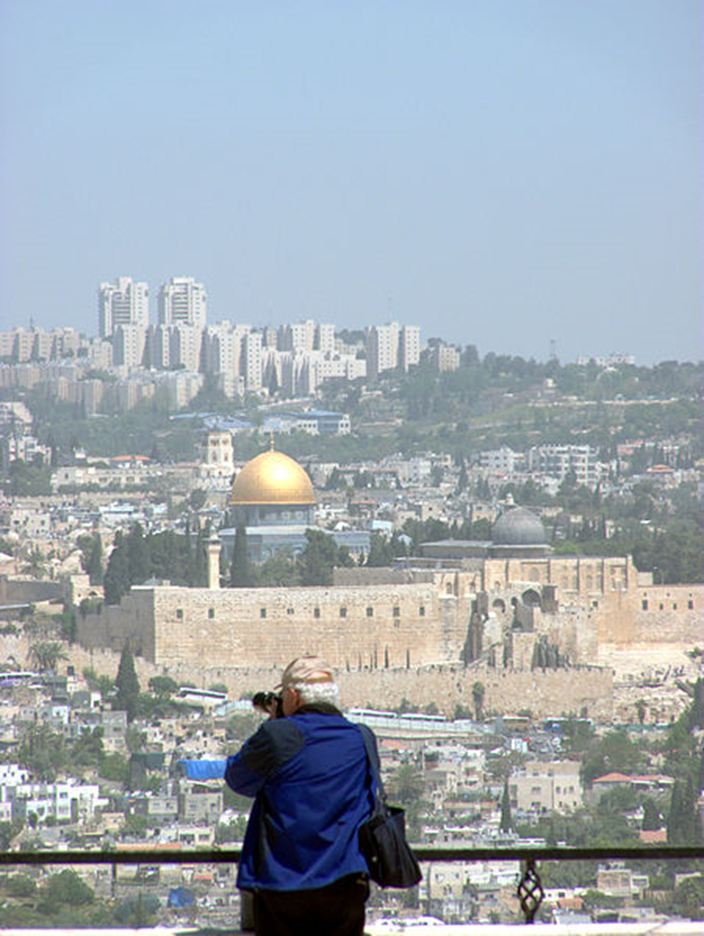
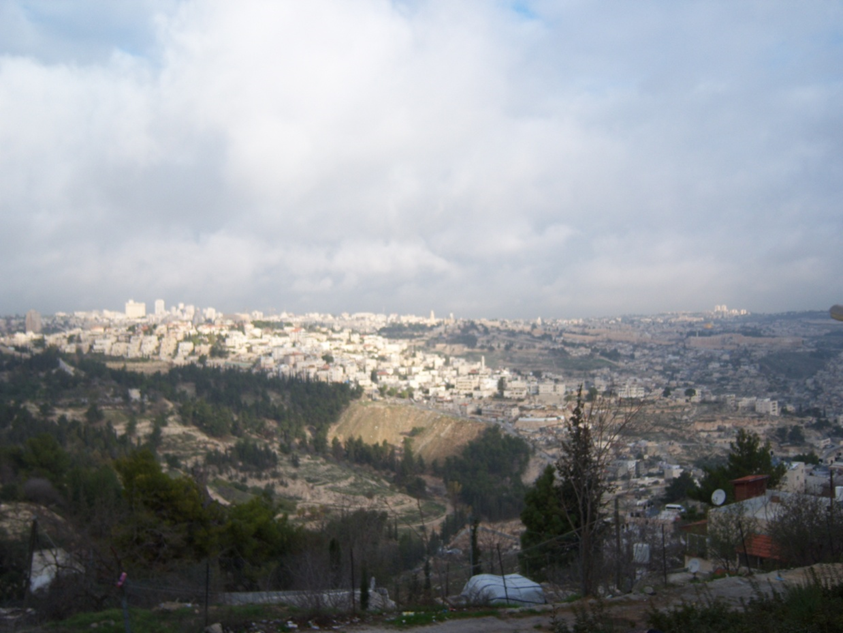
One of the views of Jerusalem that can be seen from this vantage point.
In 1987, this vista was turned into a stunning promenade. On your next trip to Israel, it is worthwhile to put this wonderful site on your itinerary!
By Nosson Shulman – Licensed Tour Guide and Trip Organizer in Israel who specializes in History, Tanach (Bible) and Adventure Tours. For more itinerariesclick here. Check out our new Virtual tours including free sneak preview videos.
The small, historic Jerusalem neighborhood of Batei Brodie where Mrs. Rothman, a”h, called home
Jerusalem is home to hundreds of thousands of pious, Torah Observant Jews. One of them, Mrs. Elka Rothman, a”h, a lifelong resident of the holy city, sadly passed away last week at 97. Today the city mourns her death, along with her over 2000 living descendants (yes, you read that number correctly)!
Mrs. Rothman, daughter of the legendary Rabbi Amram Blau, z’’l, was born in 1925. She married Rabbi Rothman, z’’l, a longtime Rebbe (teacher) of the famous school “Talmud Torah Etz Chaim”, and together they had 13 children. Her descendants include a multitude of grandchildren, great grandchildren, great-great grandchildren, and even great-great-great grandchildren (some of whom are to be married shortly). There was a popular saying in Jerusalem that she was “The grandmother of half the city”. As her name appeared on so many invitations for family simchas (joyous milestones such as weddings, Bar Mitzvahs, Bris Milah (ritual circumcision) etc.), when the print store owners made the invitations, they would jokingly ask the person making the joyous event whether it was “with or without Elka”!
In addition to being the matriarch of such a large family, she was known for her kindness and being careful with her speech. Those who knew her said “her house was open to every pauper; she guarded her tongue from any evil speech. She had a good opinion on every person and served her creator until the last day of her life, with joy, praise and singing”.
Nosson Shulmanis a journalist andLicensed Tour Guidein Israel specializing in Biblical tours. To allow tourists to experience Israel during the Corona era, he created the new hit Israel tour video serieswhich brings Israel to the home of viewers by simulating actual tours. To check out his free sneak preview tour videos, click here.To view sample tour itineraries or to inquire about private tour opportunities with a personalized itinerary on your next trip to Israel,click here.
Israeli licensed tour guide Nosson Shulman illustrating well preserved, Biblical era ruins in the City of David. According to a new study, the millions of tourists who visited the Jewish State in 2022 travelled through the fifth safest country in the world!
As a licensed tour guide in Israel, I am often asked by potential tourists questions about how safe travel is to Israel. This is a fair question, when one considers that foreign journalists (often with malicious intent) portray Israel as an intolerant country filled with “wars” and “terrorism”. They report on anything and everything that occurs in Israel, especially with regards to conflict (though they seldom report on Israel’s successes). While residents and visitors to the Jewish State know this not to be true, people from all over the world (who have never been to Israel) are inundated with the subliminal message that Israel is dangerous. According to a recent study this question is misplaced, and Israel is actually safer than several countries that are usually considered to be very safe worldwide.
According to “The Swiftest”, an American insurance comparison website, Israel is actually the fifth safest country in the world. This study was based on data from reports by numerous international organizations such as the United Nations (UN), World Health Organization (WHO), the World Bank, Our World in Data and the WorldRiskReport. The criteria included statistics with regards to homicides, road accidents, natural disasters, crime, death due to poor hygiene or food (or water) poisoning, communicable diseases, likelihood of injuries while on tour (for example, poorly maintained hiking trails and interpersonal violence) and others. The study compared the 50 countries in the world most often visited by tourists.
The only countries considered safer than Israel were Singapore (with a rating of A+), Denmark (A+), Holland (A), and Switzerland (A), with Israel also receiving a grade of “A”. As a comparison, Israel ranked higher than some countries that are normally recognized as being safe, including Germany (ranked 9th), the UK (10th), France (15), Australia (18), and Canada (21). The US ranked 30 and had a rating of C-.
The country deemed to be the most unsafe, was South Africa by a large margin, mainly due to its high homicide rate, although it received an “F” in almost all categories. The second worst was India (the low ratings are mainly based on poor hygienic conditions). Other countries receiving an “F”, included the Dominican Republic, Mexico, Brazil, Cambodia, the Philippines, and Saudi Arabia.
Nosson Shulmanis a journalist andLicensed Tour Guidein Israel specializing in Biblical tours. To allow tourists to experience Israel during the Corona era, he created the new hit Israel tour video serieswhich brings Israel to the home of viewers by simulating actual tours. To check out his free sneak preview tour videos, click here.To view sample tour itineraries or to inquire about private tour opportunities with a personalized itinerary on your next trip to Israel,click here.
““And he-Hezekiah-stopped up the source of the waters of the upper Gihon, and he led them straight down on the west to the City of David (2 Chronicles 32:30)”
The “Gihon Spring” tunnels, mentioned explicitly in the Bible. When my tourists go through this wonderous shaft, dug 2600 years ago, they are literally “Walking through the Bible”. Photo Credit: Tamar Hayardeni – Creative Commons Attribution 3.0 Unported
There are certainly no shortage of incredible Biblical sites for visitors/tourists to Israel! As a licensed tour guide, my job is to explain both the familiar and lesser-known events/stories from the sites that we visit. Few sites, though, are as impressive and explicitly mentioned in as much detail as where we are visiting today. I am of course referring to the “Hezekiah Tunnels”, where the Biblical “Gihon Spring” has flown through for 2600 years. This unique site is where arguably the greatest miracle ever to take place occurred in the long history of the Jewish people. Let us now enter together into these water tunnels with our flashlights (there is also a dry option for those who prefer not to get wet).
Getting ready to enter the water tunnels with a family from the US (although there is a dry option, families with kids almost always want to do the wet option, especially in summer). Here, the kids have their flashlights ready to go, eager to enter the Biblical tunnels!
Throughout the course of history many places had water challenges, and Jerusalem was no exception. From the times of the Canaanites (circa 1800 BCE) until the Second Temple period, the main water source, the Gihon Spring, was located outside of the city walls. During a time of peace, the simplest way to get water was to leave the city gate, head down to the spring with a bucket, fill it and bring the water back to the city. However, during a time of war when leaving the city was under siege by the enemy, getting to the water by normal means was impossible. Approximately 3800 years ago (around the time of Abraham), the ancient Canaanites built a fortress (which jutted outside the city wall) on top of the source of the Gihon Spring.
The Gihon Spring was located outside of the city walls (see red). On top of the water source the Canaanites built a fortress (see blue), allowing access to the water in a time of war. Some of the water went into a pool for storage (as seen immediately to the left of the fortress) while some of the water travelled through a long tunnel (marked by the two aqua lines) which had holes at intervals to water the Kings Garden in the valley below. Photo Credit: Ir David Foundation
To access the water source, an impressive underground tunnel was built which led to the water source underground (and therefore out of range of enemy weaponry). Today, tourists can walk through this ancient tunnel.
This subterranean tunnel was built approximately 3800 years ago to allow access (in a time of war) to the source of the Gihon Spring (then Jerusalem’s main source of drinking water) which sat outside of the city wall. Photo Credit: israeltourism – CC BY-SA 2.0
After descending the stairs, we are in the ancient fortress!
Standing outside of the fortress which led to the subterranean tunnel.
From the source, some of the water was channeled into a pool for storage. At this pool, King Solomon was likely coronated (see 1 Kings 1:33). According to Jewish sources, it was a custom to anoint Kings by a flowing water source. This symbolized that their reign should be as endless as the flowing waters.
The main pool used for storing drinking water for the city’s inhabitants. It was here where King Solomon was probably coronated King. Photo Credit: Tamar Hayardeni
Some of the water was channeled through a tunnel which watered the gardens below in the Kidron Valley. Many archeologists claim that it was through this tunnel that Joab (King David’s general) entered, to conquer the city from the Jebusites (see 2 Samuel 5:8). Under the Judean Monarchy, this water system continued to be used until Hezekiah made a new tunnel, which dried out this tunnel (today, this is the dry option for tourists who want to “Walk the Bible” without getting wet).
The Canaanite Water Tunnel (used for approximately 1200 years) until King Hezekiah built a new tunnel, which resulted in this tunnel becoming permanently dry. Today, visitors who don’t want to get wet can walk through this tunnel. Photo Credit: Deror_avi – GNU Free Documentation License
During the time of the very righteous King Hezekiah, the world’s undisputed superpower was the ruthless Assyrian Empire. They were conquering the known world at that time and had never lost a battle (let alone a war). They were the largest army up until then, with 185,000 troops (see 2 Kings: 19:35), (to put it into perspective, about 300 years later when Alexander the Great conquered most of the known world, he had less than 40,000 troops). After the Assyrian King Sennacherib had destroyed the other walled cities of Judea, including Lachish (for more on that incredible site, click here), his troops began to march towards Jerusalem. In preparation for the war, Hezekiah built a new city wall (see 2 Chronicles 32:5. For more on this site, click here). He also wanted to ensure that his enemies would have no access to water (as mentioned, the Canaanite tunnel which was still in use at that time had holes in it which watered the gardens below and would have provided ample water to the sieging Assyrians). Therefore, Hezekiah sealed up the Upper Gihon Spring (which flowed through today’s “Dry tunnel”) and rediverted the water underground, leading it westwards to a pool at the bottom of the City of David (see 2 Chronicles 32:30). He then dammed and built a wall around, so the water was entirely within Jerusalem’s city walls, and not accessible to the attacking Assyrians. For many tourists to Israel, walking through this very water tunnel is one of the highlights of their trip.
Hezekiah built a new tunnel which rediverted the flow of water from the Canaanite tunnel to the Shilioach (Siloam) Pool) at the foot of the City of David. Tourists have the option to walk through these very tunnels. Photo Credit: Ir David Foundation
Ultimately, G-d performed a miracle and sent an angel who slaughtered the 185,000 Assyrians soldiers, removing the powerful threat to Judea, which continued to remain independent for nearly 150 years.
Assyria had never lost a battle, but because of G-d’s miraculous intervention, the Assyrians had no choice but to bypass Judah (in red circle). Photo Credit: Nigyou – Creative Commons Attribution-Share Alike 3.0 Unported
This water system continued to be used for centuries, including the entire Second Temple period (until 70 CE when both the Temple and much of the system was destroyed by the Romans). The water led to the Shiloach pool and according to Jewish sources, it was from this pool that the “Sin waters” were gathered and mixed with the ashes of the Red Heifer (see Numbers 19). This water was then sprinkled (by a Priest) onto someone who had become ritually impure due to of having been in contact with a corpse (for example, the person had simply been to a cemetery or was in a room when somebody died). The person who had the water sprinkled upon them then became purified. This was extremely important, because it is forbidden for Jews to enter the Temple while in this form of impurity (see Numbers 19:20 which discusses the repercussions of doing so). Once this holy ritual was performed, a Jew could then ascend to the Temple Mount (this Biblical prohibition is still in effect today, even without a Temple. Until the next Red Heifer is found according to its very strict specifications, which Jews believe will be in the days of Messiah, ascending to the Temple Mount is forbidden for Jews as everyone is presumed to have this impurity today).
Artist’s rendition of the Shiloach pool during the Second Temple Times (the 2000-year-old stone pavement seen on the bottom right is original).
Every year on the Jewish festival of Sukkot (when the Temple stood), the cherished commandment of the water libation was performed. Water was gathered from this pool, brought to the holy Temple, and poured upon the altar. The joy that accompanied this procedure was so intense and palpable, that according to Jewish sources, one who has never seen this rejoicing has never experienced real enjoyment.
Today, the remains of the Shiloach Pool can be visited and walked upon by tourists. Although the pool’s history was well-known to Torah observant Jews from their studies of Jewish religious texts, the exact physical location was only rediscovered (accidently) in 2004. Construction workers were moving a large drainage pipe nearby and struck some stones underneath, revealing the ancient structure in the process. Photo Credit: Deror avi – Creative Commons Attribution-Share Alike 3.0 Unported
On your next visit to Israel, I look forward to leading you through these ancient Biblical tunnels, walking on the same grounds where so many great Biblical heroes treaded!
To see a sample Jerusalem walking tour itinerary which can include the City of David,click here
Sponsored by Rockets Into Roses: Discover the powerful art of an Israeli Hero living on the Gaza border, who transforms rocket fragments into stunning, one-of-a-kind masterpieces. His Art, his Jewelry, and items of Biblical Value owned by US presidents and many world leaders, not only symbolizes resilience but directly supports charities aiding Israelis in the Gaza Envelope. Enter code vip10 for a 10% discount, valid for a limited time only.
To sponsor our next article or newsletter and have your business seen by thousands of our American pro-Israel subscribers and beyond, please contact us at info@guidedtoursofisrael.com
By Nosson Shulman – Licensed Tour Guide and Trip Organizer in Israel who specializes in History, Tanach (Bible) and Adventure Tours. For more itinerariesclick here. Check out our new Virtual Israel Tours including free sneak preview videos.
With a population of about 41,000, the Jewish city of Maale Adumim is the 3rd largest Jewish city in Judea and Samaria (aka West Bank). Today more than 500,000 people live in this territory, liberated by Israel in 1967. Photo Credit: Shutterstock
Between 1948 (when Israel declared independence) and 1967 (when Israel won the 6-day war), much of Israel was off limits to Jews. Israel’s premier holy sites including the Cave of Machpelah, the Western Wall, the Mount of Olives, the Tomb of Rachel, and the Tomb of Shimon HaTzedek were occupied by Jordan, and Jews were denied entry. In 1967, the combined Arab armies of Syria, Egypt and Jordan were planning a war of annihilation against Israel but miraculously (with G-d’s help), Israel was able to liberate much of its biblical heartland in this defensive war (approximately 80% of all towns mentioned in the Bible are found in Judea and Samaria, aka the West Bank). Although it came with a struggle (the bureaucratic, political, ideological obstacles to growth in the territories are still a major factor today), Judea and Samaria now officially have more than 500,000 Jewish residents (500,270 to be exact, at least as of Erev Rosh HaShana, according to the Ministry of the Interior). This figure does not even include the 350,000 Jewish residents of East Jerusalem, land also liberated by the IDF in 1967 and legally annexed by the Jewish State in 1980.
Judah & Samaria (in red) was liberated in 1967 by the IDF, and today more than half a million Jews call this land (once again) “home.” Photo Credit: Ramiy – CC BY-SA 3.0
The first town to be re-established (most of the towns derived their names from the Biblical and pre-1948 Jewish cities which once existed on their grounds) was Kibbutz Kfar Etzion in September 1967. Today, there are nearly 150 Jewish towns throughout Israel’s biblical heartland. The largest Jewish city in the territories is the Torah observant town of Modiin Illit (aka Kiryat Sefer) with 83,510 residents. The next largest is Beitar Illit at 66723, followed by Maale Adumim at approximately 41,000. The smallest one, located in the Jordan Valley, is Kibbutz Niran with a population of 112 (despite their small size, they are one of the major players in the date industry). Like the majority of the settlements, this town is filled with Jewish archeology from Biblical times.
Today, not only is a thriving population living here, but commercially the economy is ever growing with many industrial zones, commercial centers, wonderful unique tourist sites, thriving agriculture, delicious wineries, a university and medical school, and a brand new 250-million-dollar luxury mall and entertainment complex (for more on that, click here). Most significantly, a thriving Jewish day school system, along with the existence of many synagogues and yeshivas (academies of Torah learning) ensures that any future development of this Jewish heartland will be rooted in and guided by the same eternal values and traditions (i.e. Torah) of our past!
Nosson Shulmanis a journalist andLicensed Tour Guidein Israel specializing in Biblical tours. To allow tourists to experience Israel during the Corona era, he created the new hit Israel tour video serieswhich brings Israel to the home of viewers by simulating actual tours. To check out his free sneak preview tour videos, click here.To view sample tour itineraries or to inquire about private tour opportunities with a personalized itinerary on your next trip to Israel,click here.
The 6 Domed Synagogue in Gyrmyzy Gasaba, Azerbaijan, one of the world’s only entirely Jewish towns (officially 100%) and the only city with a majority Jewish population outside of the US and Israel. Soon, this Muslim majority country will open its embassy in the Jewish State. Photo Credit: Shutterstock
In another major diplomatic coup for Israel, Azerbaijan has announced that they will be opening an embassy for the very first time in Israel. What makes this move especially significant, is that they will be the first Shite Muslim-majority country with a Shite ruler to do so (Bahrain opened its first embassy in Israel in 2021 and has Shite majority but their ruler, King Hamad bin Isa Al Khalifa, is Sunni)! This follows an historic vote in the energy-rich nation’s parliament in Baku (its capital), approving the move.
Despite this move only occurring now, the two countries have long been allies. Soon after the Eurasian nation declared independence from the Soviet Union in 1991, Israel became one of the first countries to recognize the new nation. The economic and defense ties are vital to the security of both nations. Israel is the largest supplier of defensive weapons to the Shite country (between 2016-2021, 69% of all Azerbaijan’s arm imports were from Israel). In the 2020 Nagorno-Karabakh war with (Iranian backed) Armenia, Israel supported its Muslim ally (who ultimately won the war). From Israel’s perspective, Azerbaijan shares a border with (and has a hostile relationship with) Iran (although both are Shite nations, Azerbaijan is secular, while Iran is a theocracy). The country has allowed Israel to use its territory for vital intelligence gathering against Iran, and as a point of entry into the radical Islamic country. It is also believed that should Israel need to destroy Iran’s nuclear weapon plants in the future, the use of Azerbaijani airspace for operations and refueling will be fundamental to the success of the operation (it should be noted that both countries deny this. However, Azerbaijan’s President Ilham Aliyev once compared, in a leaked document, his country’s relationship with Israel as being like an iceberg; with nine-tenths of it being below the surface). On the economic front, Israel buys 40% of its oil from them.
The former Soviet country has a lesser known (but very rich) Jewish heritage. Once home to over 50,000 Jews, most left after the dissolution of the USSR (the majority moved to Israel). However approximately 6000-8000 Jews still live in the country (many of them distinguished in their fields), making it one of the largest Jewish populations in a Muslim country. In fact, the town of Gyrmyzy Gasaba (with an estimated population of 3500 residents) is 100% Jewish according to the official census. This makes the town the only Jewish majority city in the world outside of Israel and the United States.
Azerbaijan (who will be opening their embassy in Tel Aviv) is just one of the latest in a series of countries who are set to open their first embassy in the country. As reported here recently, Singaporerecently announced they will open their first embassy in Tel Aviv. Other countries who have recently done so include Tanzania, Bahrain, United Arab Emirates, and Armenia (all in Tel Aviv). Additionally, Kosovo and Honduras both recently opened their first embassies in the country, but did so in Jerusalem, Israel’s current and historic capital city (joining Guatemala and the United States who officially moved their embassies from Tel Aviv to Jerusalem in recent years).
Nosson Shulmanis a journalist andLicensed Tour Guidein Israel specializing in Biblical tours. To allow tourists to experience Israel during the Corona era, he created the new hit Israel tour video serieswhich brings Israel to the home of viewers by simulating actual tours. To check out his free sneak preview tour videos, click here.To view sample tour itineraries or to inquire about private tour opportunities with a personalized itinerary on your next trip to Israel,click here.