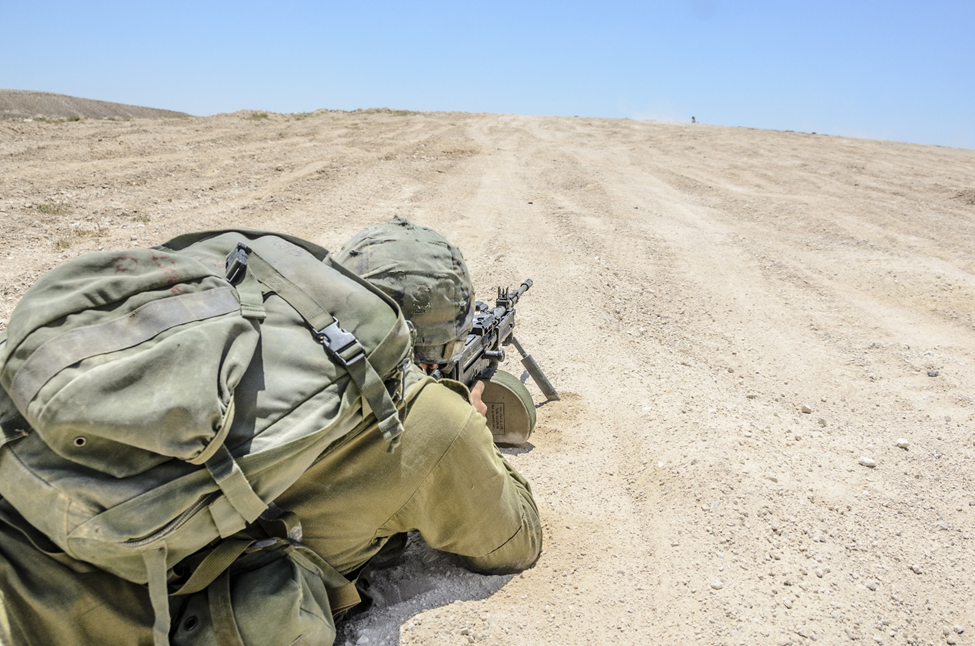
An Israeli soldier, training in counter terrorism near the Gaza Strip. Many former IDF soldiers suffer from PTSD, not even aware that they have it. A new, cutting-edge discovery will hopefully change that, allowing veterans to get the help that they most desperately need. Photo Credit: Shutter Stock
During the 2014 Gaza War, Israeli soldier Yitzik Saidyan fought heroically in some of the conflict’s fiercest battles against Islamic terrorists. While selflessly doing his part to keep his country safe, this came at huge personal cost. Within the first three hours of combat, 7 of his close fellow soldiers were killed. With no time to address this trauma, he continued in the battlefield for several more weeks. When the war was over, life went back to normal for most Israelis, but not Yitzik. Due to this trauma, he was unable to maintain employment, moved from apartment to apartment, was prone to angry outbursts, and went for long periods of time without sleeping or eating. He tried to get officially recognized as disabled from the IDF (which would entitle him to compensation) but was only recognized as 25% disabled (according to a friend, he was treated as though he were trying to “milk” the system). Every time he applied for help he had to go through bureaucratic hoops, including having to relive his trauma each time he met with the review committee. In 2021 feeling alone and hopeless, he attempted suicide, publicly setting himself on fire. Thankfully, soldier Saidyan survived, and has since been diagnosed with PTSD (Post Traumatic Stress Disorder), and now appears to be getting the help needed to help treat his physical and mental scars.
Unfortunately, in a country which has suffered much trauma in its short history, thousands of Israeli war veterans suffer from PTSD. It is estimated that one third of veterans suffering from this dangerous mental illness have not been diagnosed. Some may not be aware that they have it, or that their condition has a name (awareness of PTSD has grown but still has a long way to go). Even for those who are recognized as disabled and eligible for help, each session of therapy requires revisiting their painful pasts again, causing some to avoid getting needed help. However, Israeli scientists have recently discovered a potential revolutionary breakthrough that will allow the soldiers to get a speedy diagnosis (and therefore quicker path to treatment) without the need for a painfully drawn-out process!
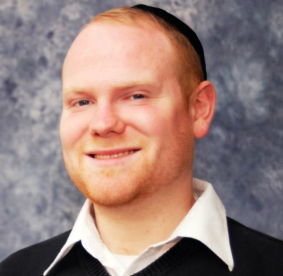
Israeli scientists have discovered that they can simply use saliva samples to diagnose PTSD quickly and accurately. In a joint project conducted by Tel Aviv and Haifa Universities, saliva samples of 200 veterans of the first Lebanon War (in 1982) were collected. The samples with PTSD were found to have a certain bacteria in their saliva. According to Professor Ilana Gozes (the head of the study) the implications are huge, stating that, “Until now, diagnosis of PTSD has been based solely on psychological and psychiatric measures. Thanks to this study, it may be possible, in the future, to use objective molecular and biological characteristics to distinguish PSTD sufferers, taking into account environmental influences.” She added “We hope that this new discovery and the microbial signatures described in this study might promote easier diagnosis of post-traumatic veteran soldiers so they can receive appropriate treatment.”
Besides the easier diagnosis for suffers of this crippling mental illness, the researchers believe that their findings will assist in the development of microbiotic-related medications for treating PTSD symptoms.
Nosson Shulmanis a journalist and Licensed Tour Guidein Israel specializing in Biblical tours. To allow tourists to experience Israel during the Corona era, he created the new hit Israel tour video series which brings Israel to the home of viewers by simulating actual tours. To check out his free sneak preview tour videos, click here.To view sample tour itineraries or to inquire about private tour opportunities with a personalized itinerary on your next trip to Israel, click here.
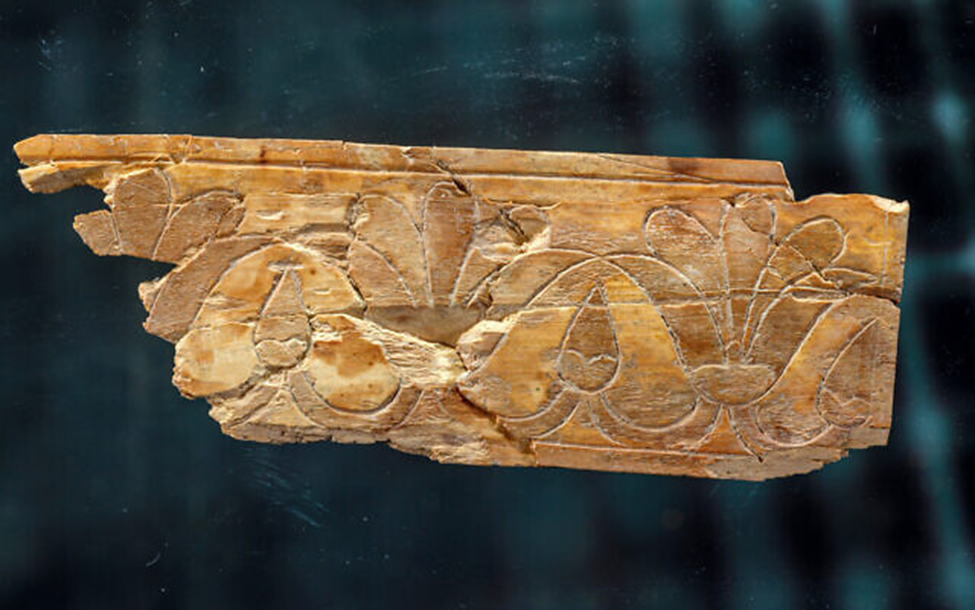
One of the rare ivories decorated with a Lotus flower, discovered in the City of David’s former parking lot. Photo Credit: City of David
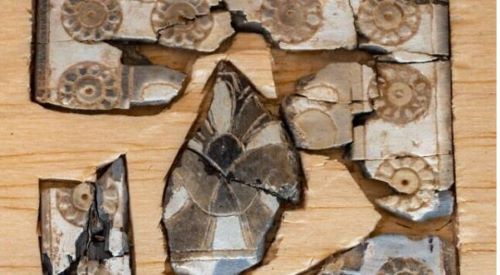
Archeologists digging under the (former) Givati parking lot in the City of David in Jerusalem, were stunned to uncover a large collection of ivory plagues (more than 1500 fragments) dated to the biblical First Temple Period. It was discovered inside what was once an extremely luxurious palace (circa 9th and 8th century BCE) which was destroyed by the invading Babylonians (circa 422 BCE) by fire. This is the first time that they have been found in Jerusalem, and few have been located elsewhere in the world.
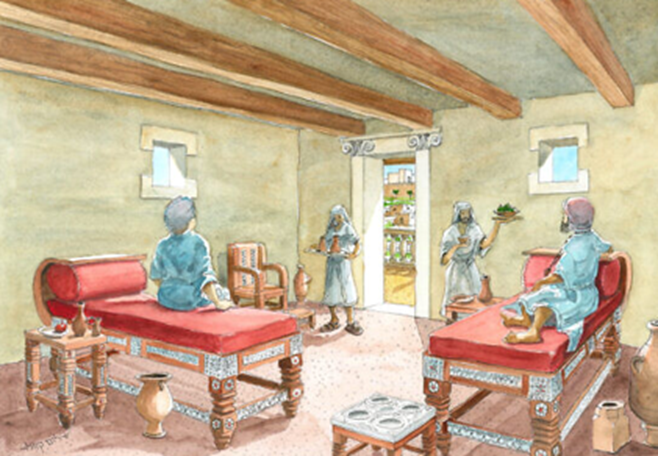
Ivory was perhaps the most valuable raw material in the ancient world (way more than gold). What made them so valuable was that they were from elephants in faraway Africa and had to be imported from a great distance. Based on other places where they have been located, it is believed that they were probably set inlaid into wooden couch thrones.
Artist’s rendition of the luxurious furniture, and the decorative inlays set into it. Photo Credit: City of David
Based on the location and time period, it is possible that they belonged to King Solomon, whom the Bible records as having received a shipment of ivory from abroad (see 1 Kings 10:22), using it to build a throne (see 1 Kings 10:18). If it did indeed belong to the righteous king, then it would appear that his descendants continued to use it for generations until the destruction of the First Temple. Similar findings have only been found in a few other select capital cities of great Kingdoms from that time period, including Sennacherib’s palace in Nineveh (capital of Assyria) and in Samaria, the capital city of the northern kingdom of Israel (Jerusalem was in the southern kingdom of Judea). The ivory in Samaria may have belonged to King Ahab (see 1 Kings 22:39).
Other valuable items found in the ancient Jerusalem palace include jars which were used to hold vanilla-spiced wine, a seal made of agate (a semi-precious stone), and a seal impression inscribed with the words “Natan-Melech servant of the King”).
Nosson Shulmanis a journalist and Licensed Tour Guidein Israel specializing in Biblical tours. To allow tourists to experience Israel during the Corona era, he created the new hit Israel tour video series which brings Israel to the home of viewers by simulating actual tours. To check out his free sneak preview tour videos, click here.To view sample tour itineraries or to inquire about private tour opportunities with a personalized itinerary on your next trip to Israel, click here.
“And all these kings met together, they came and camped together at the waters of Merom, to fight with Israel (Joshua 11: 5)”
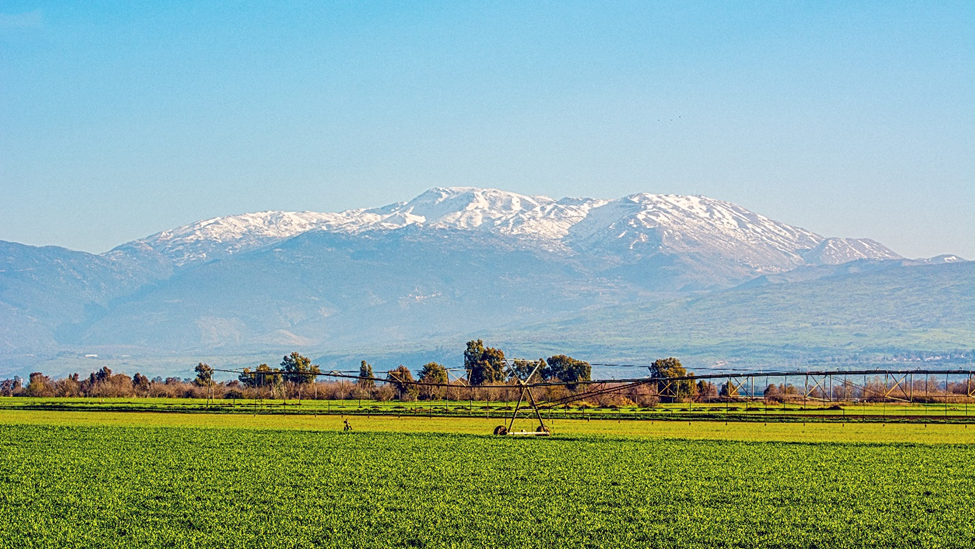
Today, the Hula Valley is one of the world’s most important Bird watching centers. In Biblical times, it was the site of arguably the most important battle in the time of Joshua. Photo Credit: Shutterstock
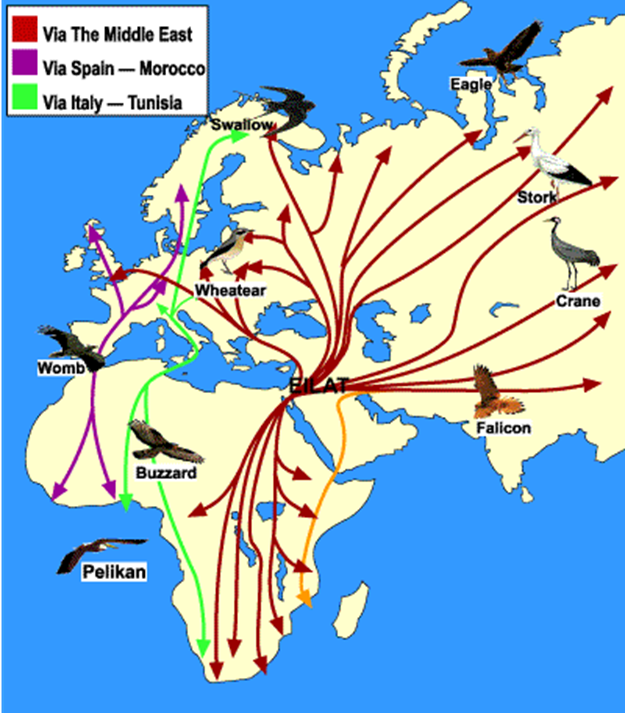
Today we are visiting the Hula Valley, a stunning Biblical site where one of the most consequential (and miraculous) battles in history took place. In addition to being the site of the State of Israel’s first major infrastructure project, the valley also happens to be one of the world’s premier birdwatching sites. Each year 500 million migrating birds fly through Israel en route to Africa from Europe in the autumn, and vice versa in the spring (more than any country in the world outside of Panama). Many of the birds also fly to Asia. This makes sense when considering that Israel is the land bridge between Europe, Asia and Africa. Since many birds cannot fly across the open Mediterranean Sea, their only route is through Israel.
Israel (particularly via the Hula Valley) is a land bridge between three continents. Photo Credit: Israel-Guide.com
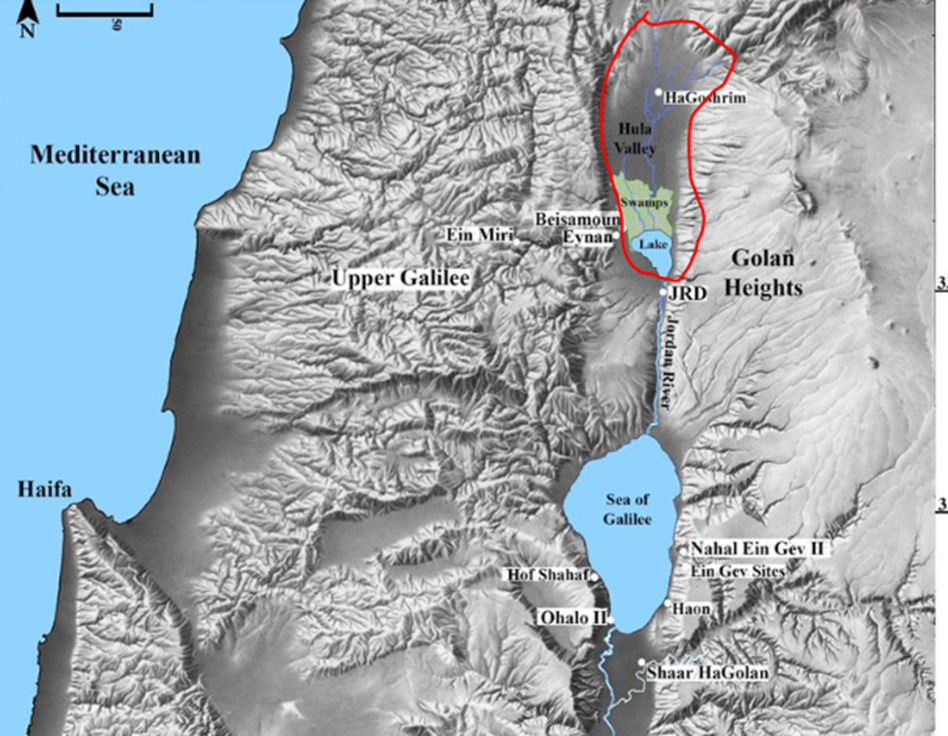
The Hula Lake (the Biblical Waters of Merom) sits in the Hula Valley (sandwiched between the Upper Galilee and the northern Golan Heights) north of the Sea of Galilee. The lake was almost completely drained in the 1950s, although in the 1990s a percentage of it was redrained (more on that shortly). According to Jewish sources, it is one of the 7 seas that encompass Israel. The Hula Valley itself sat on the junction of a major international trade route which went from Egypt to Damascus, and was home to the ultra-powerful Canaanite city of Hazor (for more on that fascinating site, click here).
The Hula Lake is located in the Hula Valley (in red circle), sandwiched between the upper Galilee and the Golan Heights in northern Israel. Photo Credit: Canadian Friends of Hebrew University
It is one of the world’s oldest recorded lakes (some even say the oldest). In the 14th century, Pharoah Amenhothep IV wrote about the lake in the famous Armarna letters. This location, however, is best known for the miraculous biblical battle that took place. In the 13th century BCE, upon G-d’s command, Joshua will bring the Jewish people into Israel by crossing the Jordan River. The Canaanites were aware of G-d’s promise to His people (see Joshua 2: 9-13) but the city states in Northern Israel were not yet ready to submit. King Jabin of Hazor was placed in charge of mobilizing an army, composed of the citizens of the different Canaanite city states in Israel’s north. He successfully recruited a formidable force of warriors, horses, and chariots “As numerous as the sands of the seashore (Joshua 11:4)” and they gathered at the “Waters of Merom (Lake Hula) to wage war with Israel (Joshua 11:5)”. This military was so intimidating, that even though G-d had promised to deliver Israel into their hands, He felt it necessary to remind Joshua “Do not fear them (Joshua 11:6).” G-d told Joshua that the Canaanites had assembled by the lake, which led him to bring his troops “upon them by the waters of Merom suddenly and…. (fall) upon them (Joshua 11:7). According to Jewish sources, G-d had told Joshua about this assemblage against them or else he wouldn’t have known about the surprise attack about to take place, which is what the Canaanites were hoping for. That is why they “suddenly” attacked the Canaanites.
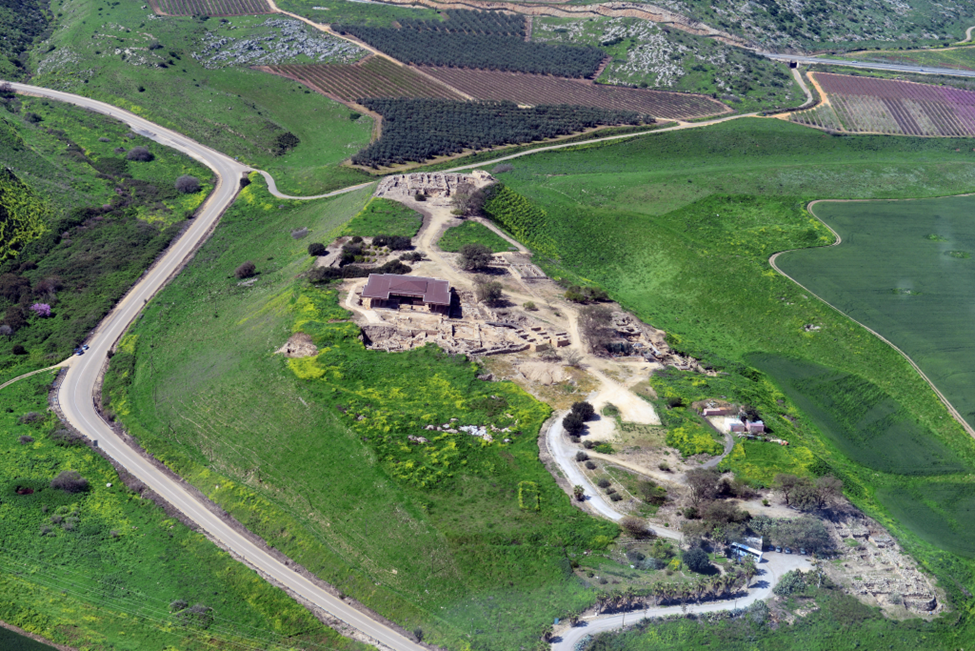
The attack was so successful and complete, that not a remnant remained of the enemies (including the nearby powerful city of Hatzor which was burned to the ground on G-d’s command). With this total victory, Joshua was able to conquer almost all of Israel (although when he died, there remained a few Canaanite pockets that he was unable to get to).
An aerial shot of the nearby excavated ruins of Hazor (in the Hula Valley) which Joshua destroyed by fire upon G-d’s command after the successful battle at the Waters of Merom, aka Hula Valley (see Joshua 11). Photo Credit: AVRAMGR – Creative Commons Attribution-Share Alike 4.0 International
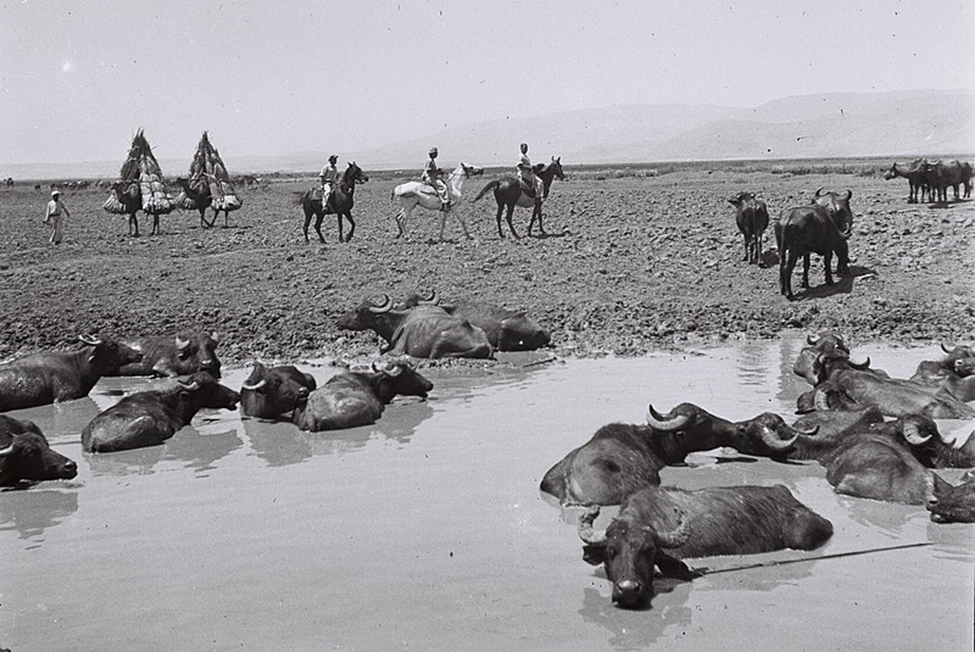
For the next several millenia, the Hula Valley continued to be inhabited by rural settlements where agriculture flourished. By the late 19th century, when the Jews started returning en masse to Israel, the land was filled leopards, bears, hyenas, jackals, gazelles, wolves, and other animals (for more on Israel’s past animals, click here. For more on animals currently living in Israel, click here). It is estimated that 5000 water buffalos lived by the lake (and are believed to have been introduced here in the 8th century for their milk, and work as beasts of burden).
Buffalos soaking in the swamps of the Hula Valley in 1946.
A rich eco-system existed here, with many species of animals and plants being endemic (found nowhere else in the world). Birds migrated in vast numbers every fall and spring, using the lush Hula valley as a resting station. In 1883 Jewish pioneers returned and bought land in the valley, to start an agricultural village called Yesod Hama’alah. Over the next several decades more land was bought and settled by Jews, and by 1948 there were 12 Jewish villages.
Today, Yesod Hama’alah is a flourishing agricultural community of appoximately 1800 residents . Photo Credit: Tomer hu – CC BY-SA 4.0
Unfortunately, the waters and swamps of Hula also brought mosquitos, which in turn brought malaria, bringing much death, and limited settlement growth in the area. It is estimated that by the late 1930s, 70% of local adults has been infected with the deadly disease and the majority of children did not survive to adulthood. By 1948 due to the use of DDT and other innovations, malaria had been largely eradicated in Israel.
When the state was formed, they decided to drain the swamps and lake in order to prevent the return of malaria, and to create farmland which was badly needed for the budding agricultural country. It was also needed in order to create employment for the millions of unemployed Jewish refugees arriving to Israel from Europe and Arab countries. When draining commenced in 1951, the project became the standard bearer of the entire Zionist movement, as it best symbolized the spirit of the Jewish people returning from exile to rebuild their homeland. Enthusiasm throughout the country was high and the draining sites became such a popular tourist attraction, that sightseeing was restricted so as not to impede on this heavy undertaking. By the time it was completed in 1958 (this was by far the largest and most expensive project in the fledging country’s first decade) almost all of the water had been drained (although the government did keep a small section (800 acres) of the water area to preserve some of the endemic flora and fauna).
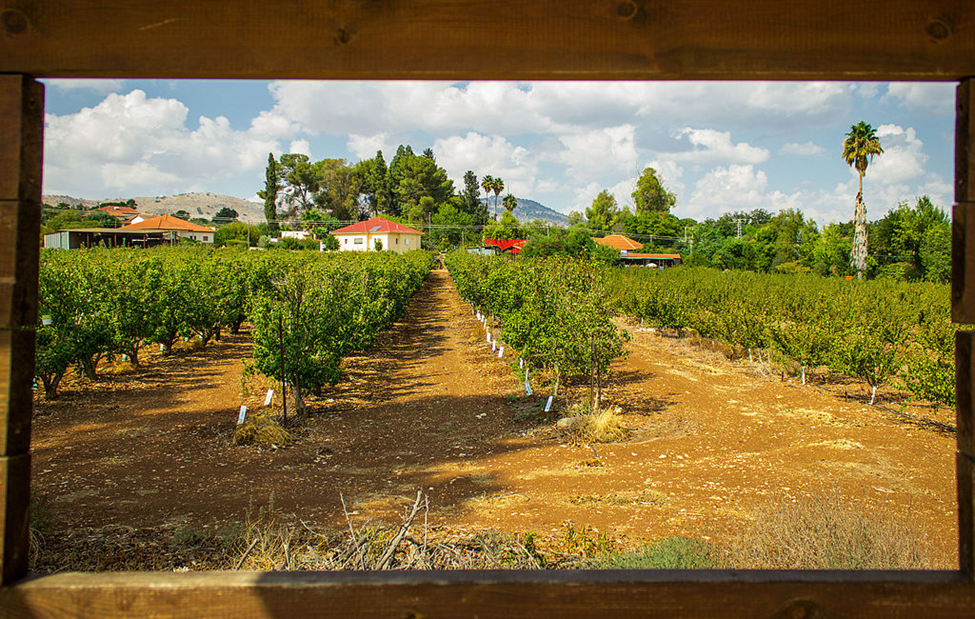
Once drained, agriculture in the valley flourished tremendously, becoming an important part of Israel’s bread basket. Unfortunately, the draining did have some unintended consequences. Photo Credit: Shutterstock
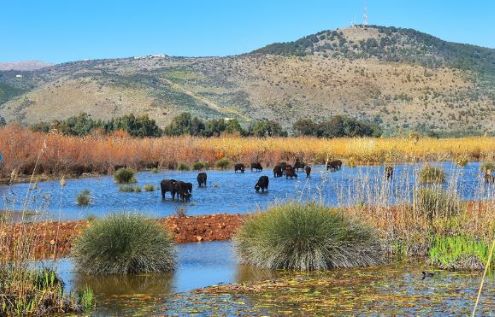
Agricultural flourished, providing a much-needed boost to the new Jewish state. The draining, however, led to several problems. As expected, because of the change, almost all migrating birds stopped flying here. Additionally, although 800 acres had been preserved, it did not stop the rich flora and fauna from disappearing, with several endemic species eventually listed as being extinct. Of course, Israel had to prioritize its growing population, but then unforeseen consequences occurred which affected the quality of the agriculture. The peat soil, accustomed to being underwater was now exposed and the soil became too dry, causing it to disintegrate. Without the natural vegetation, the wind blew away much of the topsoil onto crops, destroying them. In addition, the peat of the dry swamp would often ignite, causing underground fires which were very difficult to extinguish. Much of the peat soil turned black and became infertile. It was also discovered that the swamps and lake had acted as a natural filtration system to the Sea of Galilee. Without this, the water of the Sea (Israel’s main drinking source for almost it’s entire existence, though in the last 10 years, desalinated water has become the number one source of drinking water for the country) began to deteriorate. In 1994, the Israeli government decided to redrain a portion of the waters of the Hula Valley, and the results have been successful. The migrating birds have returned, creating a niche tourism market (beautiful bike paths and a kid friendly visitor’s center has also been added). Visitors can experience the picturesque beauty this site has to offer. To keep the soil moist, the fields have moving sprinklers on wheels. The water buffalo have returned and can be seen by visitors.
Today, visitors to the site can enjoy the site of water buffalos. Photo Credit: Shutterstock
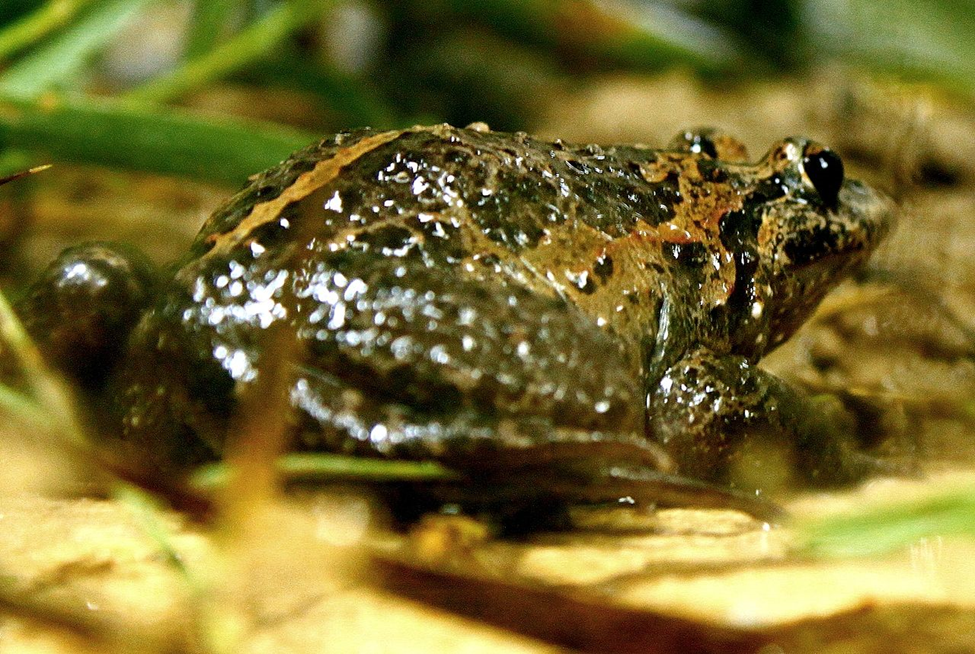
There is even hope that some of the animals once thought to be extinct may make a return. In 1996, the Hula painted frog was declared extinct in the wild (the first amphibian in the world to ever receive that designation) but in 2011, scientists spotted a female frog (since then, another 10 have been discovered).
This Hula painted frog was spotted in 2011, 15 years after it was declared to be extinct. Photo Credit: Mickey Samuni-Blank – CC BY-SA 3.0
Whether one prefers biblical history, nature, biking, or child friendly activities, the Hula Nature Reserve has something for everyone and should definitely be included on your itinerary!
For a sample tour itinerary which can include visiting the biblical Hula Valley, click here
By Nosson Shulman – Licensed Tour Guide and Trip Organizer in Israel who specializes in History, Tanach (Bible) and Adventure Tours. For more itinerariesclick here. Check out our new Virtual tours including free sneak preview videos.
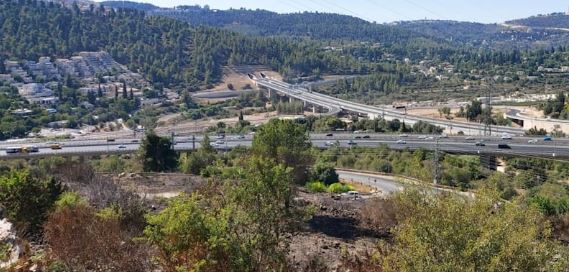
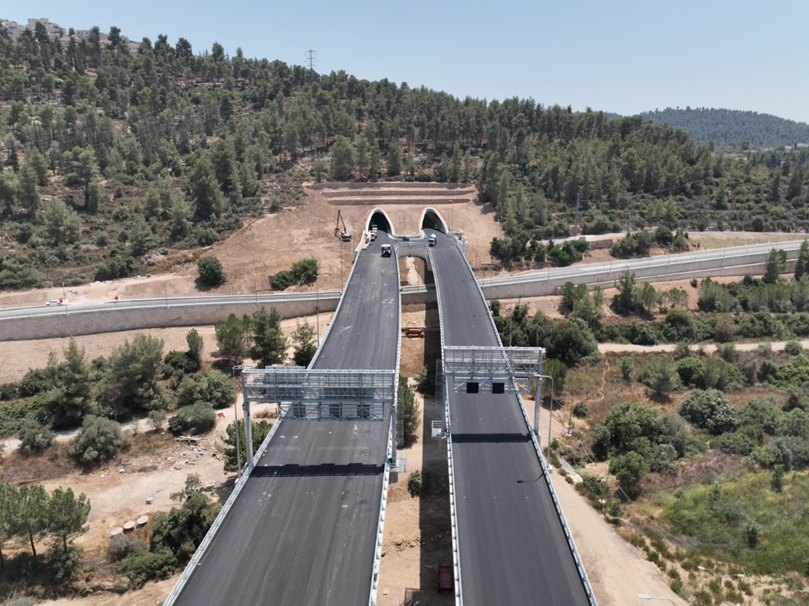
Aerial view of the new highway, which for the first time will allow people travelling on Route 1 to directly enter Jerusalem to the South and West of the city. This new addition is expected to significantly reduce congestion where it matters most. Photo Credit: Jerusalem Municipality
Representing a major transportation revolution to anyone driving into Jerusalem from the center of the country (including Tel Aviv) Highway 16 has opened to the public!
The new 6 Km (3.7 mile) road was built with 4 tunnels (dug deep into the mountains), 7 bridges and exits into the Jerusalem neighborhoods of Givat Shaul, Har Nof, and Givat Mordechai. The road connects Highway 1 (Tel Aviv-Jerusalem Route) with Highway 50 (Begin Boulevard) which is the ultra-important highway connecting Jerusalem’s northern and southern neighborhoods. Previously, one wishing to visit these neighborhoods had to enter from the heavily congested city entrance. It is expected to help 40% of all commuters to the city, who until now had to enter from the same roads as all other drivers.
The project, started in 2019, cost an estimated 450 million dollars and has been completed more than a year in advance of its due date. To further reduce traffic into the city a large parking lot will be built, allowing drivers to park for free, rather than enter the city with their cars. The parking lot will be connected to the (currently under construction) green Line of the Jerusalem light rail (so far, only the red line is in use). Besides the hugely impactful advantages of reducing heavy traffic, much effort was put into the surrounding aesthetics, including 50,000 acres of newly landscaped territory such as walking and bike paths, picnic areas, and observation points overlooking the enchanting forests of the Jerusalem hills.
In recent years, many major infrastructure projects have taken place in and around the Holy City with the goal to reduce traffic. In 2011, the first (electric) light rail line opened (currently two other massive lines are being constructed within the city, while the current line is being extended). In 2017, a third lane in each direction was added to Highway one, which significantly cut travel time. In 2018, the high-speed train between Jerusalem to Tel Aviv was completed, cutting the journey down to only 31 minutes between the cities, including a stop at the airport on the way (as of 2022, the route from Jerusalem now connects to all the Tel Aviv train stations and even beyond to Herzliya, Israeli’s high-tech capital). For those who live south of Jerusalem, for example Gush Etzion in Judah and Samaria, a new lane is being added in each direction.
While Israelis will clearly benefit, tourists wanting to maximize their experience in Israel’s eternal capital will now be able to see much more, while traveling much less!
Nosson Shulmanis a journalist and Licensed Tour Guidein Israel specializing in Biblical tours. To allow tourists to experience Israel during the Corona era, he created the new hit Israel tour video series which brings Israel to the home of viewers by simulating actual tours. To check out his free sneak preview tour videos, click here.To view sample tour itineraries or to inquire about private tour opportunities with a personalized itinerary on your next trip to Israel, click here.
Picture of a fake ice cream flavor, meant to mock the anti-Semitic nature of Ben and Jerry’s boycott of Israel.
In a blow to the anti-Semitic Boycott, Divestment, Sanction (BDS) movement, a federal judge has dismissed a lawsuit brought by Ben and Jerry’s against its parent company Unilever. The goal of the failed lawsuit was to prevent the conglomerate from allowing its products to continue to be sold in Judah and Samaria, land that Israel liberated in 1967.
In July 2021, Ben & Jerry’s shocked the world when it became arguably the most prominent American company ever to announce it was boycotting large parts of Israel. The ice cream maker said that beginning in 2023, their products would no longer be sold in Jewish areas of Judah and Samaria. This brought intense heat upon its parent company Unilever, a multi-national conglomerate, because of the existing anti-Boycott laws in at least 35 states (which required their governments to divest any investments they had in the corporation and prohibiting purchase of their products).
Originally Unilever (who purchased the ice cream giant in 2000) claimed that their hands were tied. They claimed that when they bought the company, they agreed to the founder’s stipulation that the ice cream maker would retain its board of directors independent from its parent company, meaning they could continue to promote the (often extreme) left wing views of its original founders. Although primarily a for-profit company, Ben & Jerry’s regularly involves itself in non-business related, political and “social” issues.
Unilever stated that it was unfair to hold the entire company liable for the actions of one of their subsidiaries. Unfortunately (for Unilever) states including New York, Florida and Arizona disagreed, and immediately divested hundreds of millions of dollars it had invested in the large conglomerate. Other states such as Illinois, Texas, New Jersey, Michigan, and Maryland also initiated the process, with many states planning to follow suit. Within the first few months, the company lost more than 20 billion dollars of value, leading to lawsuits from shareholders and board members of the large corporation. Additionally, the Securities and Exchange Commission (SEC) began investigating the company for not properly disclosing to investors the risks stemming from the boycott. High ranking US politicians began to pressure the company, personally complaining in writing to the SEC. These collective actions, in addition to a lawsuit from the Israeli licensee, prompted the company to realize that the boycott was going to continue to cost them dearly, so they made an announcement that its subsidiary will no longer boycott Israel after reaching a settlement with American Quality Products (AQP), the ice cream company’s Israeli licensee. According to the terms of the deal, Unilever sold all of its business interests in Israel to AQP, allowing them to continue selling ice cream without limit or an expiration date on both sides of the green line. Even though the ice cream sold in Israel will no longer be under the auspices of Unilever or Ben & Jerry’s, the Israeli licensee retains the right to sell the ice cream using Ben & Jerry’s Arabic and Hebrew labelling (although not in English).
As expected, Ben & Jerry’s filed a lawsuit against its parent company to halt that sale, claiming that Unilever was contractually prevented from interfering in their social activism and by going through with the sale. They argued that their customers could be under the “false impression” that they support Israeli settlements. Judge Andrew Carter rejected their argument, calling it speculative. In siding with Unilever, Judge Carter ruled that the ice cream manufacturer failed to demonstrate that they would suffer irreparable damage if this sale went through.
Nosson Shulmanis a journalist andLicensed Tour Guidein Israel specializing in Biblical tours. To allow tourists to experience Israel during the Corona era, he created the new hit Israel tour video serieswhich brings Israel to the home of viewers by simulating actual tours. To check out his free sneak preview tour videos, click here.To view sample tour itineraries or to inquire about private tour opportunities with a personalized itinerary on your next trip to Israel,click here.
Once again, Israeli scientists have developed a major medical breakthrough that may revolutionize life expectancy and prevent degenerative diseases that affect tens of millions of people around the world. As of now, no cures exist for these debilitating diseases, but that many soon change!
Professors Einav Gross and Shmuel Ben-Sasson of Hebrew University’s Medical School in Jerusalem have identified a group of molecules that may prevent age-related diseases, by enabling cells to repair damaged components, making it possible for those tissues to retain proper function. The efficiency of the molecules was demonstrated on a model organism and proved that they can indeed renew cell vitality in diseased tissues.
As people age, the cells found in their tissues have reduced effectiveness in the quality-control system which removes defective mitochondria (the cell’s “powerplants” which are responsible for energy production). According to Professor Gross, they can be compared to tiny electric batteries that help cells function properly. Although these ‘batteries’ wear out constantly, our cells have a sophisticated mechanism that removes defective mitochondria and replaces them with new ones. This degenerative process leads to (age-related) diseases including Alzheimer’s, Parkinson’s disease, heart failure and sarcopenia.
In order to test their findings, the research team, along with Hebrew University’s tech transfer company, have established a startup company called Vitalunga to develop an oral drug. It is believed that not only can this drug cure diseases that are currently deemed incurable, but it can also prevent them from developing in the first place.
This is not Israel’s first breakthrough discovery in the field of aging and age-related diseases. As previously reported here, last year Israeli scientists discovered a way to reverse aging and increase life expectancy by 30%, a real world “Fountain of Youth”. Earlier this year, Israeli scientists announced that they had discovered a cure for paralysis, potentially allowing millions of people confined to a wheelchair to walk again. In both of these cases scientists are hoping that, within the next 2-3 years, these treatments will be available to humans.
Sponsored by Rockets Into Roses: Discover the powerful art of an Israeli Hero living on the Gaza border, who transforms rocket fragments into stunning, one-of-a-kind masterpieces. HisArt, his Jewelry, and items of Biblical Value owned by US presidents and many world leaders, not only symbolizes resilience but directly supports charities aiding Israelis in the Gaza Envelope.
Nosson Shulmanis a journalist andLicensed Tour Guidein Israel specializing in Biblical tours. To allow tourists to experience Israel during the Corona era, he created the new hit Israel tour video serieswhich brings Israel to the home of viewers by simulating actual tours. To check out his free sneak preview tour videos, click here.To view sample tour itineraries or to inquire about private tour opportunities with a personalized itinerary on your next trip to Israel,click here.
“And in the mountain… Anab, and Eshtemoh, and Anim (Joshua 15: 48-50)”
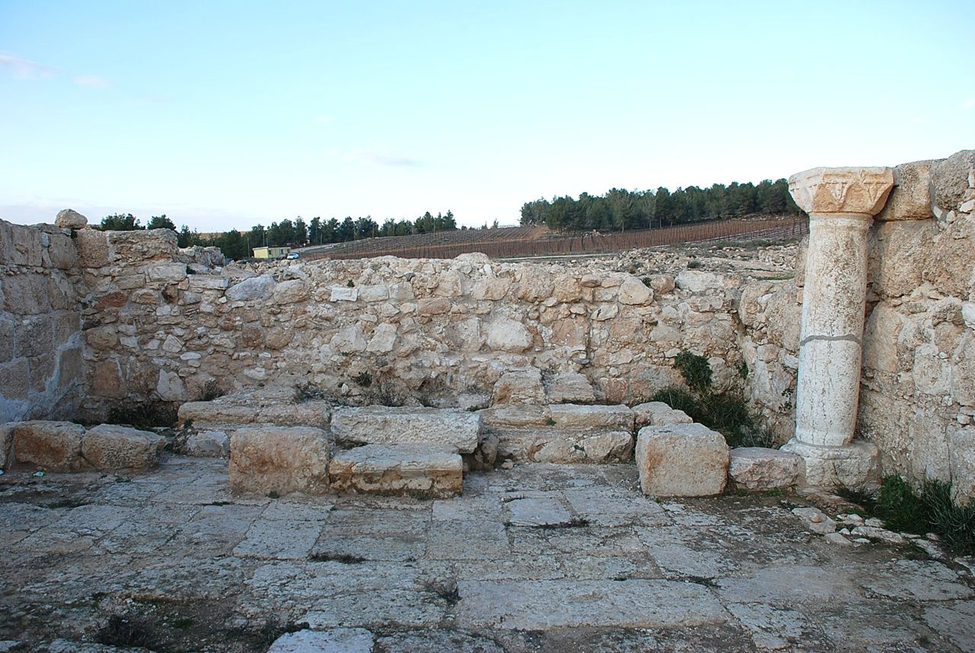
Remains of the Synagogue that served the Jewish community from the 4th to 7th Century. Photo Credit: — קלודיוס Creative Commons Attribution-Share Alike 4.0 International
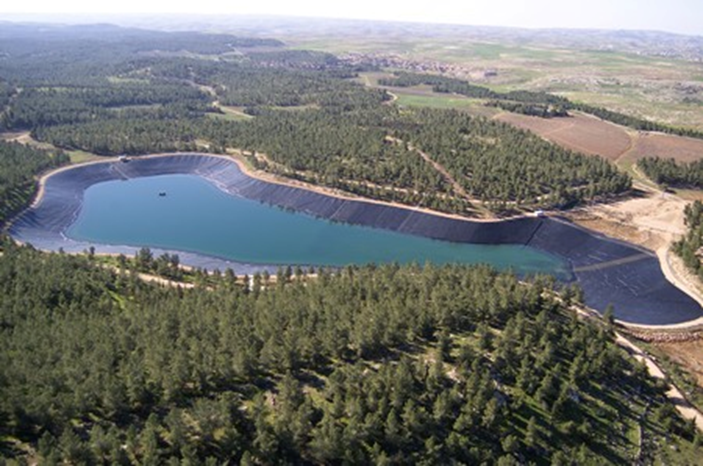
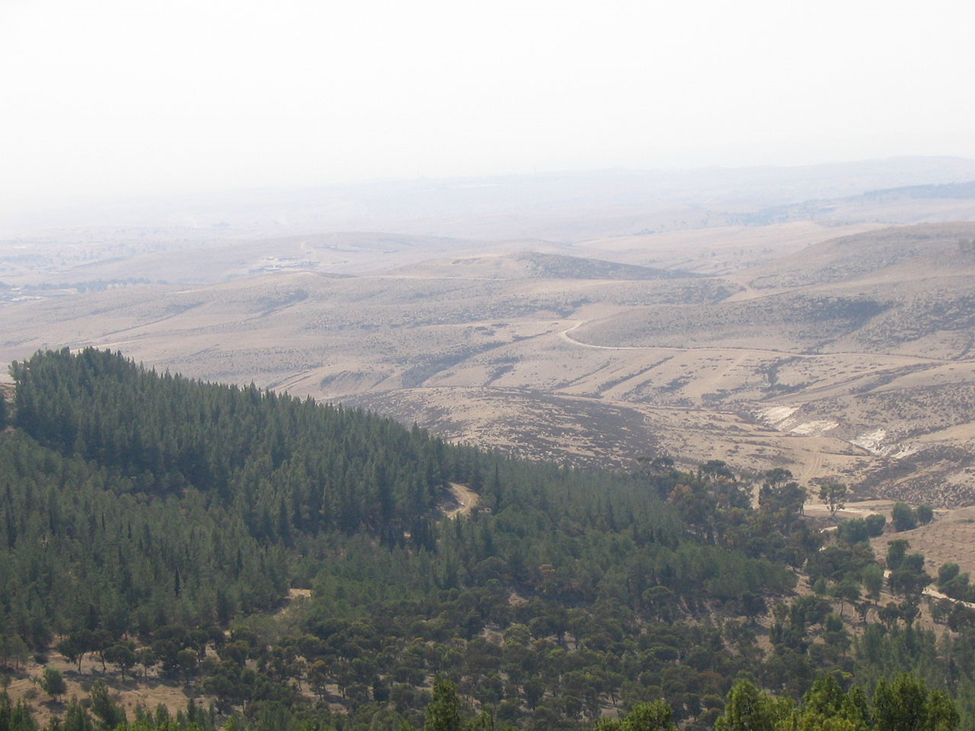
Today we are travelling to a spot seldom explored by tourists or locals, beautifully located in the Yatir forest (Israel’s largest) in the Southern Hebron Hills. Like most of Israel’s current forests, this forest was hand planted by the JNF (since 1964 they have planted more than 4 million trees here). This stunning area covers approximately 40,000 Dunims (10,000 Acres).
The Yatir forest and reservoir. Since 1964, the JNF has planted over 4 million trees including Aleppo Pines, Cypresses, Atlantic Terebinths, Olives, Figs, Carobs and Acacias! Photo Credit: JNF
At the southern edge of the forest, the extreme Negev Desert dramatically appears (seemingly out of nowhere). Because of the dramatic change in climate and vegetation, many universities and scientific institutions have set up sophisticated research centers, conducting important environmental experiments. Scientists have discovered that this hand planted forest has halted all desertification northwards (at a time where most deserts, such as the Sahara, grow exponentially each year). The research conducted in this “living laboratory” forest is very scientifically important.
At the very edge of this luscious forest, the mighty Negev Desert dramatically appears. Photo Credit: Okedem -CC BY-SA 3.0
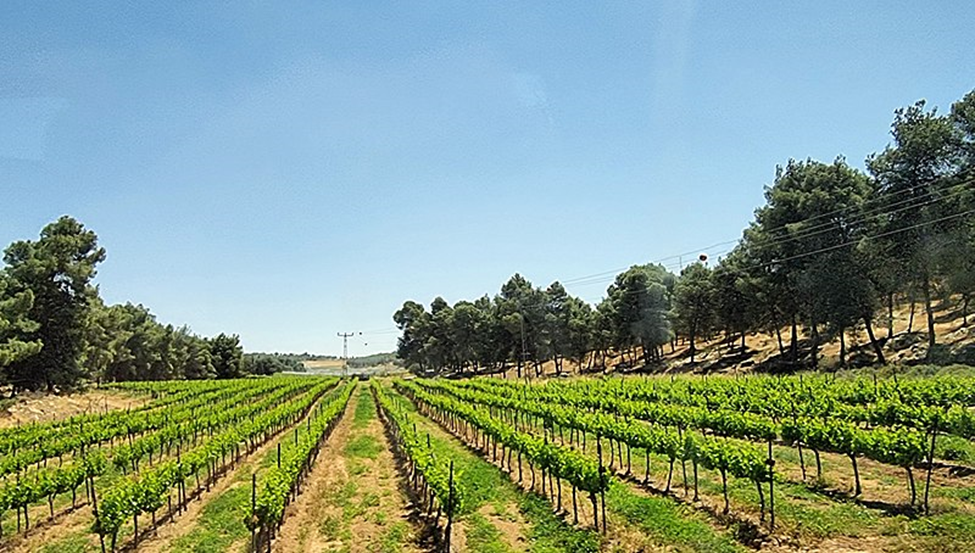
There is so much to do here, beautiful hiking trails, archeology, and a vineyard that has a world class winery.
There is so much to do here, beautiful hiking trails, archeology, and a vineyard that has a world class winery. Photo Credit: Okedem –CC BY-SA 3.0
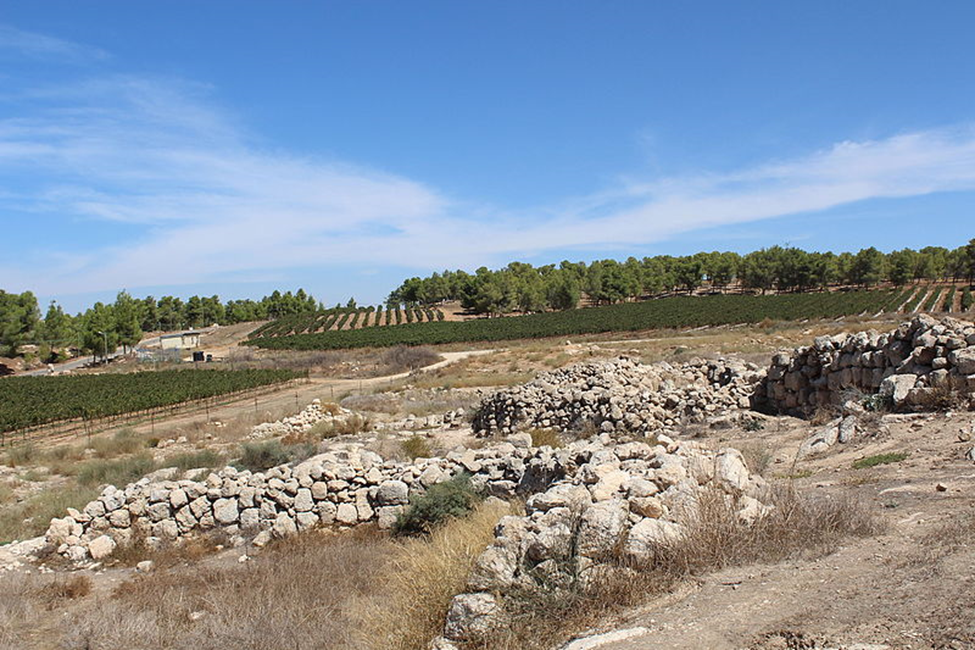
The most incredible archeology can be found in an ancient Jewish town (existing here for thousands of years), the biblical Anim! This town was located in the tribal territory of Judah (see Joshua 15:55). A very powerful fortress, with walls 5 meters (or 16 feet) thick was built here during the Judean monarchy and destroyed in 422 BCE when the Babylonians conquered Israel.
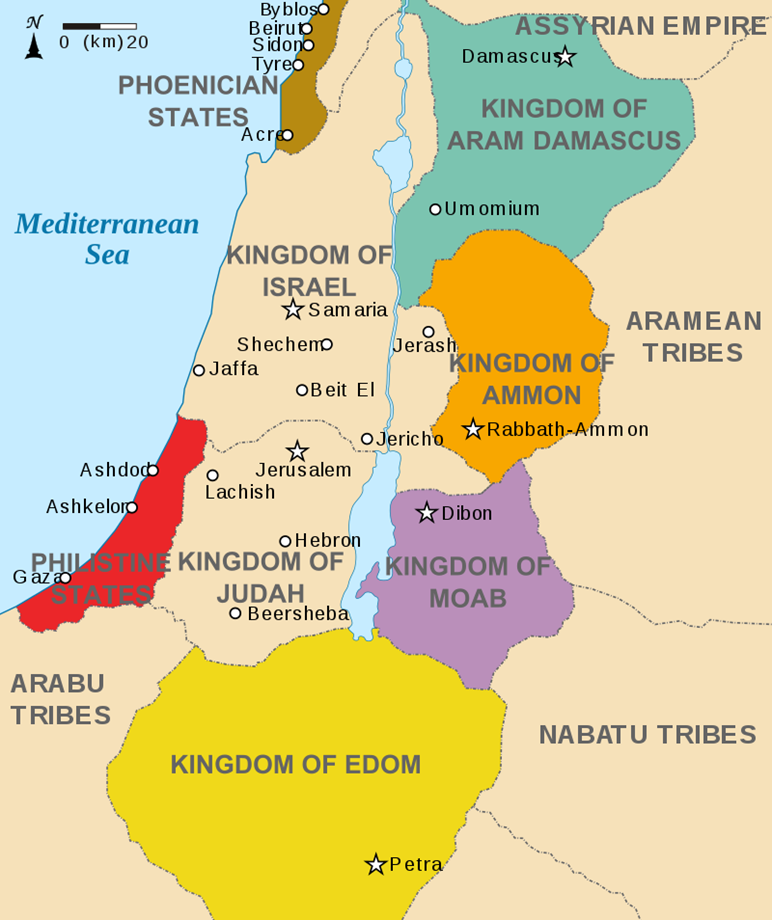
After the Jews were exiled by the Babylonians, the Residents of Edom (just south of Israel) took the opportunity to move into the abandoned homes and lands of Southern Israel. When the Jews first returned to Israel in the Persian era 50 years after the exile, the region around Anim and the Yatir forest continued to be occupied by the Edomites. In 112 BCE the Jewish, Maccabean King John Hyrcanus successfully waged a campaign against them, resulting in Israel once again gaining control of southern Israel (which included Anim).
After the Jews were exiled by the Babylonians, the neighboring Idumeans (Edomites) moved into the abandoned land. They occupied it until 112 BCE when the Hasmonaean (Maccabean) ruler, John Hyrcanus, conquered the Idumeans, and recaptured the land which the Edomites had stolen in Israel’s absence. Photo Credit: : Richardprins – CC BY-SA 3.0
The Jewish community continued to flourish during the Roman times and Byzantine period. Even after the Bar Kochva revolt, circa 132-135 CE when the Romans subsequently forbade Jews (for centuries) from living “anywhere” in Judea (and subsequently, the center of Jewish life in Israel moved almost entirely to the Galilee), somehow Jews continued to live and flourish in the cities of the Southern Hebron Hills, despite it being part of Judea. (As an important side note, in order to punish the Jews after the revolt, the Romans changed the name of the province from Judea to Palestine. They named it after the Philistines, the Biblical enemy of the Jews, to humiliate them. The name was purposely chosen after the name of a nation that no longer existed. This happened many centuries before the advent of Islam, and there has never been a distinct Arab nation called Palestine).
The town became wealthy from agriculture and industry (many wine and olive oil presses in good condition can be seen here). In the 4th Century a massive Synagogue was built here, which was in use from the 4th to 7th Century. It was built on the highest point in town (in accordance with Jewish law). The ruins of the Synagogue and its frame are still very well preserved. The built-in benches and Torah Ark are still seen here.
The Torah scrolls were kept in the Ark, whose base and foundation are clearly still seen. Photo Credit: Stéphanie Gromann – Attribution
In the 7th century, the town (and most of the Southern Hebron Hills) were mysteriously abandoned. This was possibly due to the breakdown of central rule at the end of the Byzantine period and early Islamic period. Since they were on the edge of the desert at a time of weak governance, living in such proximity to desert warriors may have become more dangerous (the fact that the town wasn’t destroyed physically by conquest and not many material goods were found, suggests that the people who left took their movable property with them, lending credence to this theory).
In the later Islamic period (circa 13th and 14th century) a small Islamic village existed here, and a mosque was built on top of the synagogue (during excavations in the 1980s, archeologists removed the mosque, which had been inactive for centuries, and found the synagogue under it). By Ottoman times, the town was abandoned and has since laid in ruins.
On your next trip to Israel, if you are looking to sample great wine, enjoy beautiful nature, and see incredible archeology, the Yatir forest is waiting for you!
Nosson Shulmanis a journalist and Licensed Tour Guide in Israel specializing in Biblical tours. To allow tourists to experience Israel during the Corona era, he created the new hit Israel tour video series which brings Israel to the home of viewers by simulating actual tours. To check out his free sneak preview tour videos, click here.To view sample tour itineraries or to inquire about private tour opportunities with a personalized itinerary on your next trip to Israel, click here.
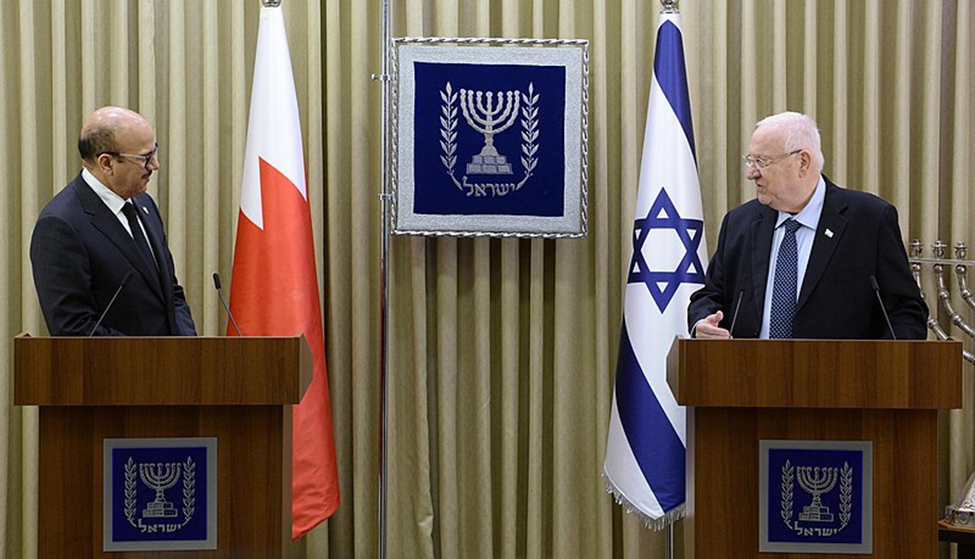
Bahraini Foreign Minister Abdullatif bin Rashid Al Zayan meeting with then-Israeli President Reuven Rivlin in Jerusalem (November 2020) after ties were established.
In a shocking move, King Hamad bin Isa Al Khalifa of Bahrain has fired one of the most influential people in his government, Sheikha Mai Bint Mohammed Al Khalifa, from her position as the President of the Bahrain authority for culture and antiquities (she also happens to be his relative). What makes this major news, however, is the unprecedented reason for the firing, which was disrespecting an Israeli!
In June 2022 Sheikha Mai was attending the funeral of the father of the current US ambassador to the oil rich nation, as was Israel’s ambassador to Bahrain, Eitan Na’eh. When they were introduced, she refused to shake his hand, and disgusted that he was there promptly left, telling the US embassy not to publish any pictures of her taken there. As a result, she was terminated from her position, with the Crown Prince (and Prime Minister of the country) then calling Israeli Prime Minister Yair Lapid to re-affirm the importance of ties between the nations. Such a move is unprecedented in the Arab world, and clearly illustrates how far the Abraham Accords (brokered by then-President Trump in 2020) has changed the perception of many of the citizens of Bahrain (in addition to Morocco and the UAE) towards the Jewish State.
To understand why this is so significant, one just has to look at the difference between the recent Trump-brokered deals and previous ones. In 1979, Israel officially signed a peace treaty with Egypt, followed by Jordan in 1994. Although these treaties have been very important for cooperation in security (and intelligence), this (often) cold peace has largely been limited to relationships between governments. The rank-and-file population of Israel’s two neighbors have largely rejected the treaty and being identifiably Jewish is still very dangerous in those countries. Also, in order for those treaties to pass, Israel had to give up land and precious, limited resources like water. Indeed, in countries like Jordan, terrorists who killed Jews are regularly honored in official capacity, such as in Parliament. One particularly (unrepentant) terrorist, Ahlam Tamimi, was responsible for the death of 15 civilians (half of them children) in the infamous 2001 Sbarro Pizzeria bombings in Jerusalem. As a reward, she was given her own talk show in Jordan (although she originally received 15 life sentences in Israel, she was released in a prisoner exchange in 2011 for kidnapped Israeli soldier Gilad Shalit). In Jordan, it is considered taboo to punish (at least to the full extent of the law) someone who harmed Israel. The last two years, however, indicate that these most recent treaties have certainly been brokered differently!
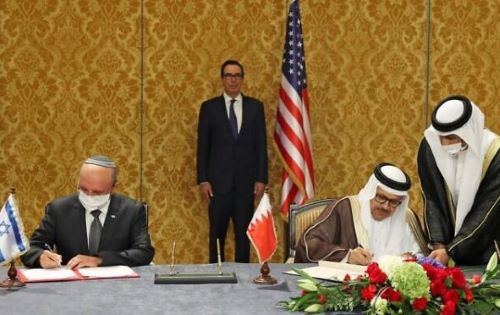
In August 2020, the world was shocked when it was announced that Israel and the United Arab Emirates (UAE) were to sign a peace treaty, a deal that Trump was instrumental in negotiating. In quick succession, the Trump administration would then go on to broker a deal between the Jewish State and Bahrain, Sudan, and Morocco. These peace treaties were gained without giving up any land or resources (peace for peace) and has resulted in much good will between the citizens of these countries. As an example, 100,000’s of Israelis have visited the UAE (for more on that, click here), and many have reported being invited for tea and lunch by locals when they found out they were from Israel. Generally, no attempts are made to hide their identity, and for Torah observant Jews, wearing a clearly visible yarmulke, black hat, or exposed Tzitzit on the streets is the new norm (certainly a rarity in most of “civilized” Western Europe today). Trade deals worth billions of dollars have been signed, and much anti-Semitic content has been removed from UAE school textbooks. In Manama (Bahrain’s capital city), a synagogue recently reopened with the blessings of the royal family, who enjoy a great relationship with its tiny Jewish community. There are now direct flights between the countries and in February 2022, then Israeli Prime Minister Naftali Bennett became the first PM to visit this country, where he was warmly received. The fact that a powerful official (she was voted by Forbes in 2014 as the 6th most powerful woman in the Middle East) and member of the Royal family could be punished for their rude conduct towards an Israeli indicate that the future is looking brighter than ever (although admittedly much work remains to be done).
Disclaimer: While thousands of Israelis and observant Jews have visited these countries in the last two years and have reported being treated very well, anyone wishing to visit these countries are responsible for independently verifying (including by contacting the local Israeli embassies) that visiting these countries are currently safe. This article is for informational purposes only and the author takes no responsibility for any of the content of this article.
Nosson Shulmanis a journalist andLicensed Tour Guidein Israel specializing in Biblical tours. To allow tourists to experience Israel during the Corona era, he created the new hit Israel tour video serieswhich brings Israel to the home of viewers by simulating actual tours. To check out his free sneak preview tour videos, click here.To view sample tour itineraries or to inquire about private tour opportunities with a personalized itinerary on your next trip to Israel,click here.
“Be exceedingly happy, O daughter of Zion; Shout, O daughter of Jerusalem. Behold! Your king (Messiah) shall come to you. He is just and victorious; humble, and riding a donkey and a foal, the offspring of [one of] she-donkeys (Zechariah 9:9)”
“And you shall give it to Eleazar the kohen, and he shall take it outside the camp (via the Eastern Gate) and slaughter it in his presence (Number 19:3)”
“The he-goat shall thus carry upon itself all their sins to a precipitous land, and he shall send off the he- goat (via the Eastern Gate) into the desert (Leviticus 16:22)”
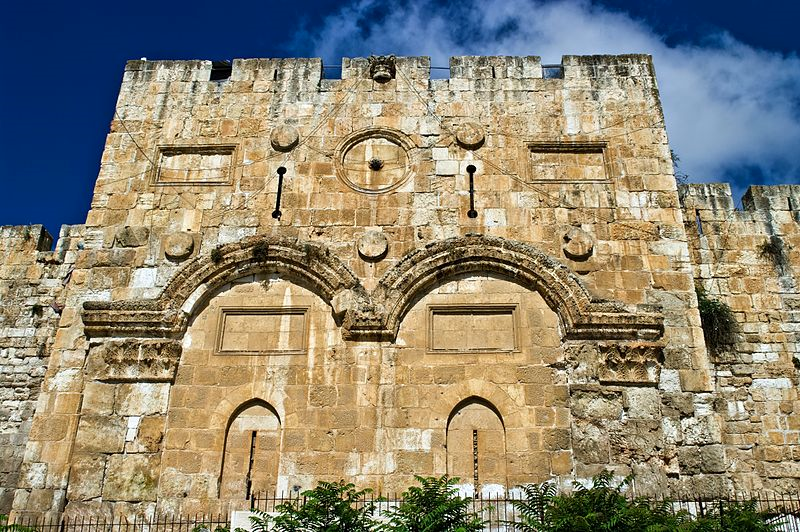
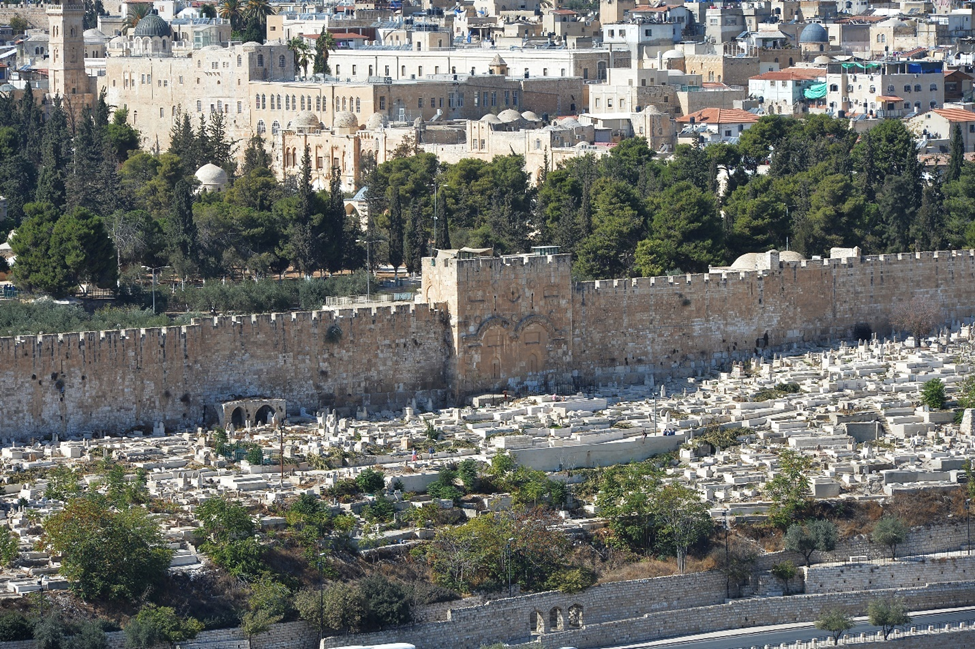
The Gate of Mercy, sealed since 1541. According to Jewish tradition, this is the gate that Mashiach (Messiah) will come through! Photo Credit: Nikodem Nijaki – Creative Commons Attribution-Share Alike 3.0 Unporte
Today we are exploring one of the most significant (though unfrequently visited) sites in the country, the Gate of Mercy, which is now sealed but leads to the top of the Temple Mount. What makes this site so important is not just because of its history, but also its future! That is because (according to Jewish tradition) this is where Mashiach (Messiah) will enter to redeem Israel.
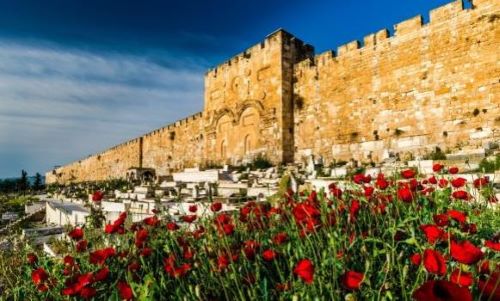
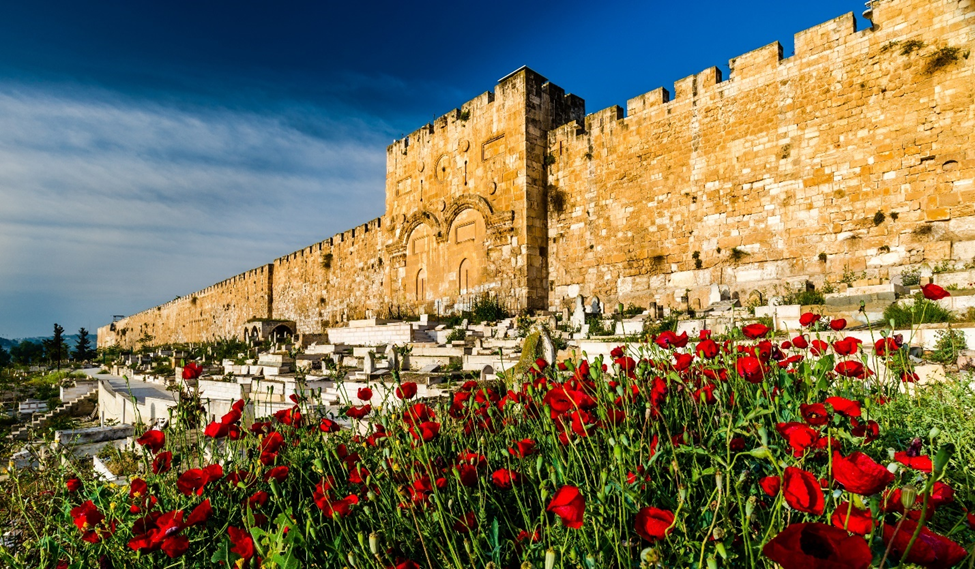
Beautiful poppy flowers surrounding the Gate of Mercy. Between the gate and the flowers is a Muslim cemetery which was strategically placed here to prevent Mashiach (Messiah) from coming through this gate (more on that later). Photo Credit: Shutterstock
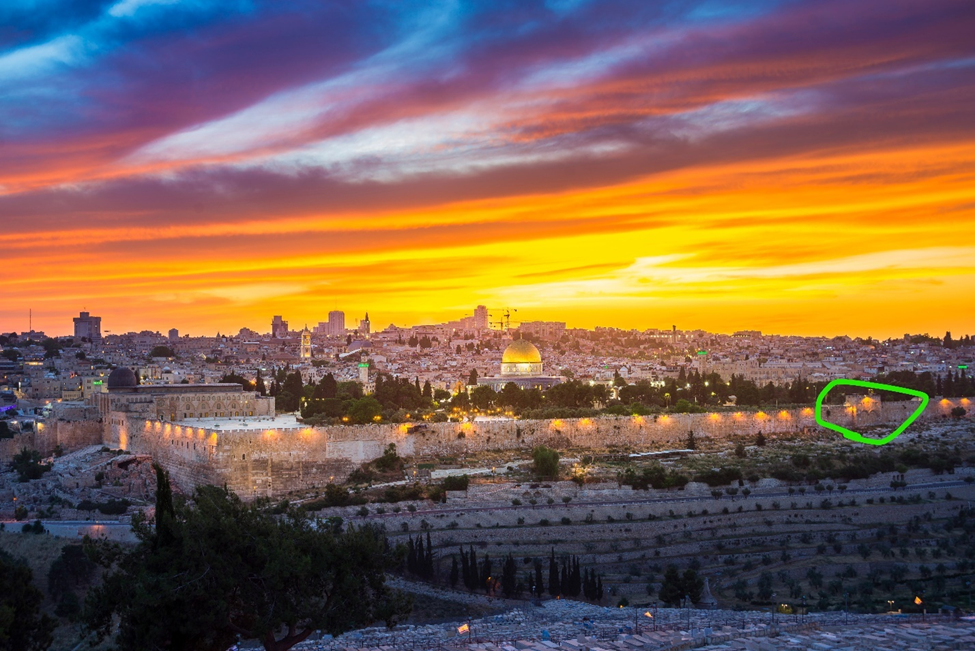
The Gate is found on the eastern wall of Jerusalem’s Old City, which is by the far the oldest wall. Whereas most of the current walls surrounding the Old City are from the Ottomans in the 16th century, the visible bottom parts of the wall are from the Hasmonean period (circa 100 BCE), and the top parts are from the times of Herod (circa 20 BCE).
The Eastern Wall of Jerusalem (as seen from the Mount of Olives). The Gate of Mercy is circled in green. Photo Credit: Shutterstock
In the days of King Solomon (who built the First Temple), an eastern gate existed which led to the Temple Mount. It is believed to be close to the current gate, although it was destroyed by the Babylonians in 422 BCE (some historians say 586 BCE) along with the holy Temple. In 371 BCE, the Jews once again returned to Israel and rebuilt the Temple.
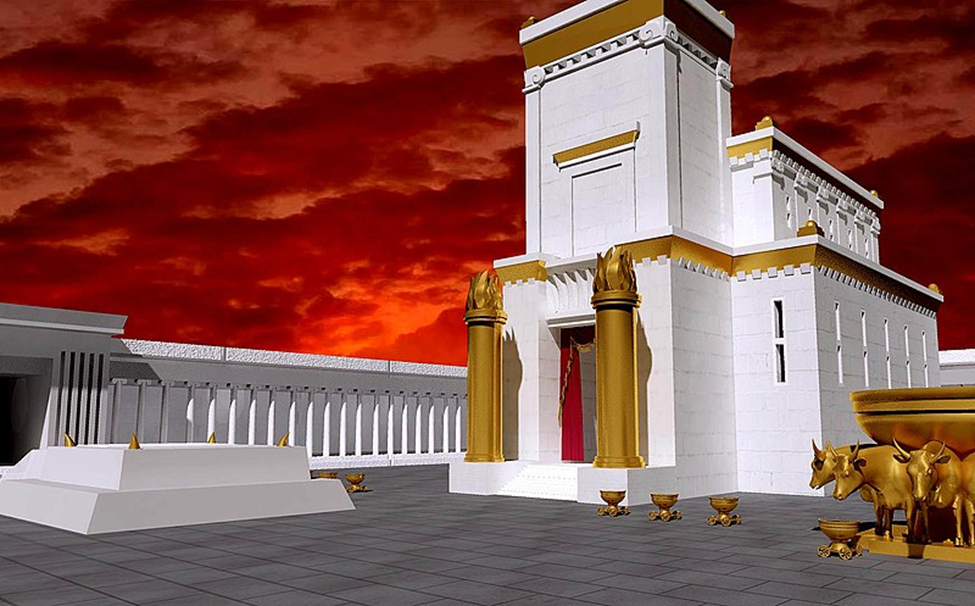
The First Temple (built by King Solomon). Photo from the Public domain
In 355 BCE after a wave Jewish immigration back to Israel, Nehemiah rebuilt the city walls of Jerusalem. This included the construction of the Shushan (Eastern) Gate, named after the capital city of Persia, the empire who ruled Israel at that time. The Eastern gate even had a design of Shushan on it. According to Jewish sources, this was ordered by Persia so that the people would remember that they were living under Persian rule, and not to rebel. The gate led directly to the Temple Mount, and through it the High Priest lead the red heifer, an extremely rare cow, to the Mount of Olives. Due to the Torah specifications of what constitutes a red cow, only 9 have ever existed and in the days of Messiah, a 10th is to be found. The red heifer was slaughtered, with his remains being burned. The ashes of the animal would then be mixed with a special water, and then sprinkled on someone who had been impure (for example being near a corpse) in order to purify him. This was an extremely important procedure, otherwise anyone who had ever been to a cemetery (or been in place where someone died while he was there) could not enter the Temple until they were purified (see Numbers 19 for more on the Red Heifer).
It was also through this gate on Yom Kippur (the holiest day of the year except for Shabbat) where the High Priest sent off the he-goat who had the lot on him which read “To Azazel”. The goat would be brought to Azazel, a mountain in the Judean Desert, and killed. This was a very important commandment and an essential aspect in the atonement service of Yom Kippur (see Leviticus 16).
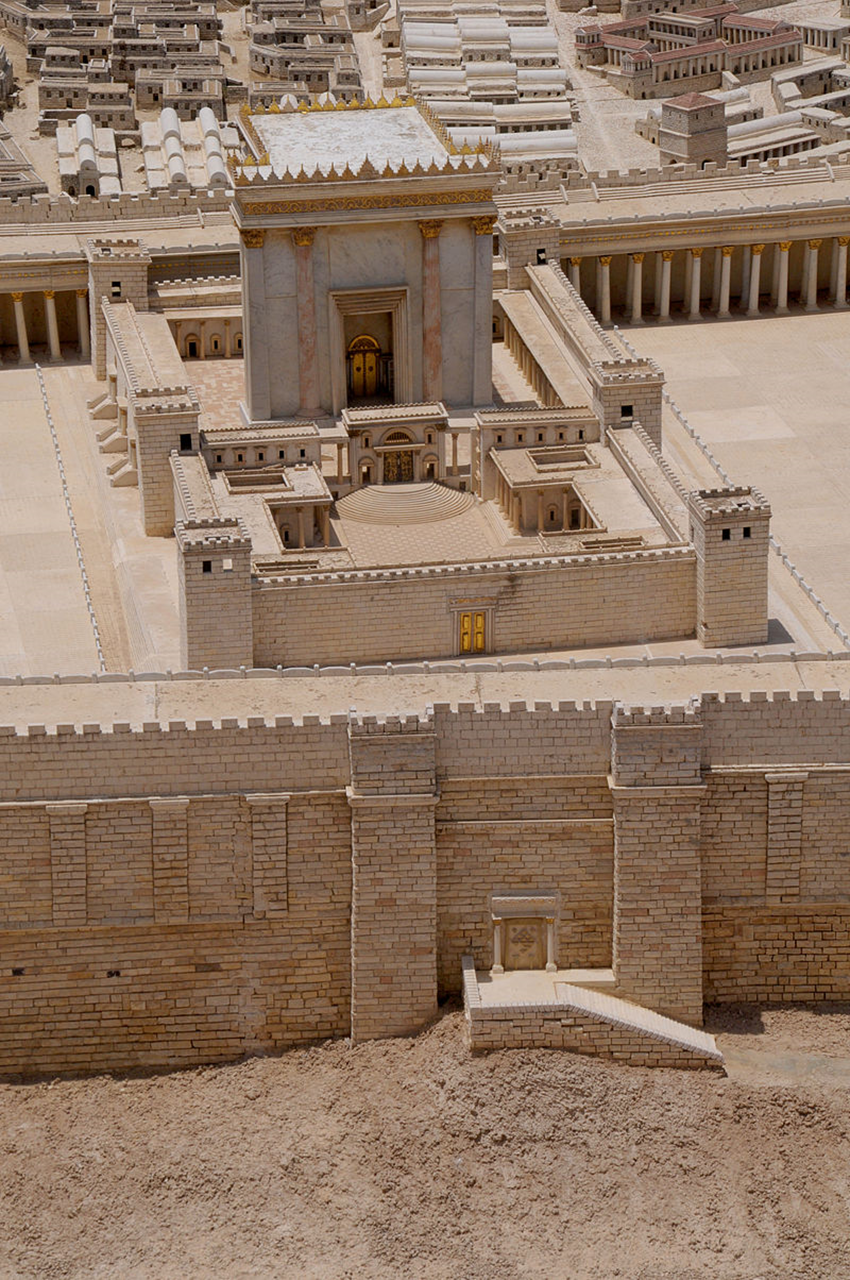
The Shushan Gate (seen on this model of the Second Temple located at the Israel Museum) was just below the Heichal (the central sanctuary of the Temple) and led to the Temple Mount. Photo Credit: Sarah Murray – CC BY-SA 2.0
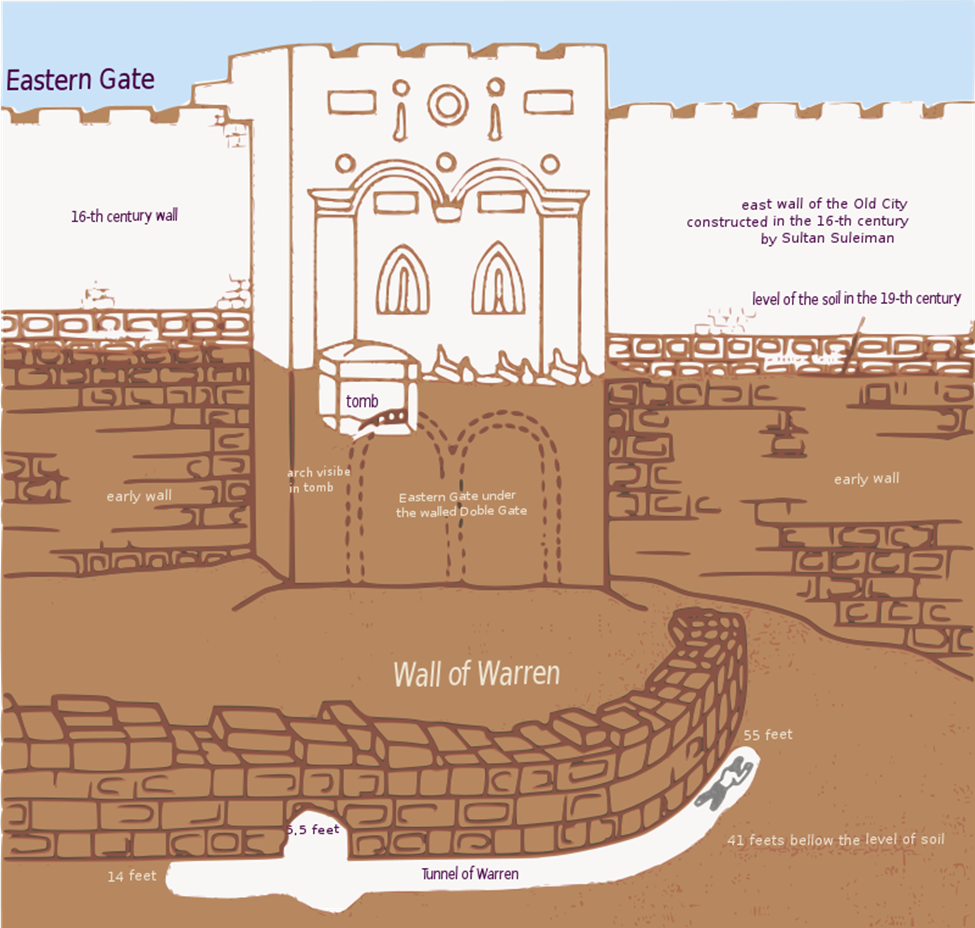
The Temple was destroyed by the Romans in 70 CE. In the 7th century (some say the end of the Byzantine Empire, while others say the early Islamic period) a new gate (Mercy Gate) was built on top of the ruins of the Shushan Gate
A diagram showing the older Shushan gate buried underground below the Mercy Gate. Photo Credit: Public domain
According to Jewish tradition, Mashiach will enter the city via the Mercy Gate and rebuild the Temple. In 1541 the Ottoman Turks who had just finished building the (current) City Walls of Jerusalem, sealed the gate in order to prevent the Messiah from entering and redeeming Israel. (The fact that they invested so many resources for this, clearly indicates that they also believed in the coming of Messiah). A Muslim cemetery was also placed there to prevent Elijah the Prophet, a Kohen (Priest) from heralding in Messiah (according to Torah law, a priest cannot enter a cemetery). Ironically, unbeknownst to the Turkish government at that time, a priest may enter a non-Jewish cemetery, so this graveyard does not hinder anything!
This Muslim cemetery was placed in front of the Mercy Gate to prevent Elijah from heralding in Messiah, although he could have entered anyway, as a priest can enter a non-Jewish cemetery! Photo Credit: Shutterstock
On your next trip to Israel, a view of the Mercy Gate can definitely enhance your trip experience. May the holy Temple be rebuilt speedily in our days!
Nosson Shulmanis a journalist and Licensed Tour Guide in Israel specializing in Biblical tours. To allow tourists to experience Israel during the Corona era, he created the new hit Israel tour video series which brings Israel to the home of viewers by simulating actual tours. To check out his free sneak preview tour videos, click here.To view sample tour itineraries or to inquire about private tour opportunities with a personalized itinerary on your next trip to Israel, click here.
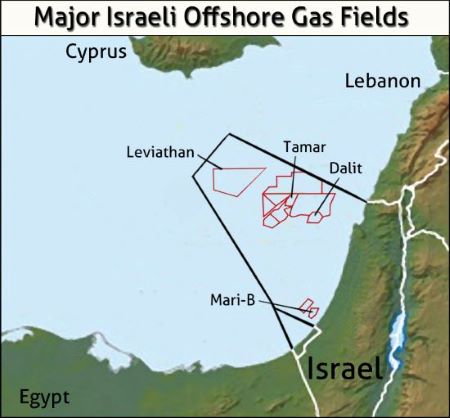
The Noa Gas Field off the coast of Ashkelon. So far, well over 30 trillion cubic meters of gas have been discovered off of its coast. It is believed that there is much more waiting to be found. Photo Credit: אורי כפיר -רן ארדה – CC BY-SA 3.0
For many years, Israel was dependent on the outside world for the majority of its energy needs. This allowed many countries (including from the European Union) to pressure Israel into making concessions against its interests. Today the shoe is on the other foot, and this time Israel is in the driver’s seat!
Since 2009 (when the first gas reserves were discovered off the coast of Haifa) Israel has discovered at least 36 trillion cubic feet of gas (making it one of the world’s largest reserves). It is believed that there is a lot more to be discovered. Since then, Israel has signed a 15-billion-dollar deal to sell gas to Egypt, and a 10-billion-dollar deal with Jordan, and that is only the beginning of Israel’s journey into becoming a major energy exporter. Now, in a major diplomatic coup for Israel, the EU is in dire need of natural gas due to their sanctions on Russia’s energy sector, which until now has supplied Europe with 40% of their gas needs. They are now looking towards the Jewish state for help (especially as the cold winter months are approaching).
EU Commission President Ursula von der Leyen, and Italy’s Prime Minister Mario Draghi recently made a trip to Israel to meet with Israel’s minister of energy Karine Elharrar. They signed a memorandum of understanding together in a deal which also includes Egypt (currently much of the gas Egypt buys from Israel via underwater pipelines, is then liquefied to be shipped to Europe on a container ship). The deal would see Israel increase its gas export to Europe via Egypt (which will also make Egypt an energy hub, a fact that has already warmed relationships between the two countries who officially made peace in 1979). While this will certainly help, the pipeline (and Egypt’s current liquidation facilities) will not be sufficient to cover Europe’s needs. Also, although Israel’s known gas reserves keep multiplying by the year, its relatively new infrastructure still needs to be developed to the point where it can supply much of that gas to the world quickly, which is expected to take a few years. Europe wants to partner with Israel to upgrade the Jewish’s states capabilities to export more gas long term for their needs. According to the EU Commission President, two “major” energy projects they are interested in seeing developed, are the world’s longest underwater pipeline (more than 1300 miles) to export their gas to Italy (via Cyprus and Greece) which would then pipe the gas to the rest of Europe (for more on that project, click here). Another pipeline may also be built in the Eastern Mediterranean to Turkey (who would then ship it to the rest of the continent). According to EU Commission President von der Leyen, such projects will help “end our dependency on Russian fossil fuels” that are used to “blackmail us”.
The implications could not be more impactful! For many years, Israel’s enemies (particularly from oil-rich Arab countries) have used their energy resources to blackmail countries into putting pressure on Israel, to the detriment of its national security. If Europe becomes increasingly dependent on Israel’s energy, it will make it harder to make unreasonable demands on the Jewish State, while Israel’s energy independence will make it less dependent on other countries, giving it has more freedom to act against threats to its security, with less fear of economic sanctions from its major trading partners. Also, because international terrorism is largely (though not entirely) paid for through the middle eastern oil trade (in the past every time one pumped gas, there was a good chance that they were unwittingly funding international terrorism) terror supporting countries have less money to distribute to terrorist groups, who have been suffering from major cash flow problems in the last few years.
Many countries around the world, especially in developing nations, have become dependent on Israeli water/agricultural technological know-how and medical research. Israel has used this leverage to build brand new relationships with countries, many of whom had not previously recognized Israel’s right to exist. Many peace deals have been signed, making the world a safer place. Now with its new energy resources, the sky’s the limit!
Nosson Shulmanis a journalist andLicensed Tour Guidein Israel specializing in Biblical tours. To allow tourists to experience Israel during the Corona era, he created the new hit Israel tour video serieswhich brings Israel to the home of viewers by simulating actual tours. To check out his free sneak preview tour videos, click here.To view sample tour itineraries or to inquire about private tour opportunities with a personalized itinerary on your next trip to Israel,click here.











 Unique Sites of Israel Blog
.JPG)