BREAKING: Ben and Jerry to Continue Selling in Judah and Samaria Indefinitely

This move represents a massive blow to the anti-Semitic BDS movement

By Nosson Shulman: Licensed Tour Guide of VIP Israel Tours Authentic Virtual Tours (click here to check out his free trailer videos)

Picture of a fake ice cream flavor, meant to mock the anti-Semitic nature of Ben and Jerry’s boycott of Israel.

In an amazing turn of events, Unilever (the multinational conglomerate and parent company of Ben & Jerry’s) has announced that its subsidiary will no longer boycott Israel after reaching a settlement with American Quality Products (AQP) the ice cream company’s Israeli licensee. According to the terms of the deal, Unilever sold all of its business interests in Israel to AQP, allowing them to continue selling ice cream without limit or an expiration date on both sides of the green line. Even though the ice cream sold in Israel will no longer be under the auspices of Unilever or Ben and Jerry’s, the Israeli licensee retains the right to sell the ice cream using Ben and Jerry’s Arabic and Hebrew labelling (though not in English). This is a major defeat for the anti-Semitic Boycott, Divestment and Sanctions (BDS) movement.

In July 2021, Ben and Jerry’s shocked the world when it became arguably the most prominent American company to ever announce it was boycotting large parts of Israel. The ice cream maker said that beginning in 2023, their products would no longer be sold in Jewish areas of Judah and Samaria. This brought intense heat upon its parent company Unilever, a multi-national conglomerate, because such action runs afoul of anti-Boycott laws in at least 35 states (which required their governments to divest any investments they had in the corporation and prohibiting purchase of their products).

Unilever claimed that their hands were tied, because when they bought the company they agreed to the founder’s stipulation that the ice cream maker would retain its board of directors independent from its parent company, meaning that could continue to promote the (often extreme) left wing views of its original founders. Although primarily a for-profit company, Ben and Jerry’s regularly involves itself in non-business related, political and “social” issues. Unilever claimed that it was unfair to hold the entire company liable for the actions of one of their subsidiaries. Unfortunately (for Unilever) states including New York, Florida and Arizona disagreed, and immediately divested hundreds of millions of dollars it had invested in the large conglomerate. Other states such as Illinois, Texas, New Jersey, and Maryland also initiated the process and many states had planned to follow suit. Within the first few months, the company lost more than 20 billion dollars of value, leading to lawsuits from shareholders and board members of the large corporation. Additionally, the Securities and Exchange Commission (SEC) began investigating the company for not properly disclosing to investors the risks stemming from the boycott. High ranking US politicians began to pressure the company, personally complaining in writing to the SEC. These collective actions, and a lawsuit from the Israeli licensee, prompted the company to realize that it was in their best interests to quickly rethink their plans to boycott Israel.

As expected, the “socially minded” board members of Ben and Jerry’s condemned the decision from their parent company, tweeting “we do not agree with it” and “We continue to believe it is inconsistent with Ben and Jerry’s values for our ice cream to be sold in the Occupied Palestinian Territory”. They also added that “our company will no longer profit from Ben and Jerry’s in Israel.”

Nosson Shulman is a journalist and Licensed Tour Guide in Israel specializing in Biblical toursTo allow tourists to experience Israel during the Corona era, he created the new hit Israel tour video series which brings Israel to the home of viewers by simulating actual tours. To check out his free sneak preview tour videos, click here. To view sample tour itineraries or to inquire about private tour opportunities with a personalized itinerary on your next trip to Israel, click here.

Nosson Shulman

Hill of Jonah & Ashdod Port

By Nosson Shulman: Licensed Tour Guide of VIP Israel Tours Authentic Virtual Tours (click here to check out his free trailer videos)

And the word of G-d came to Jonah son of Amittai (Jonah 1:1)”

This is the land that yet remains (for the Israelites to conquer); all the borders of the Philistines…. the five lords of the Philistines; the Gazathites, and the Ashdodites, the Ashkelonites, the Gittites (Joshua 13:3)”

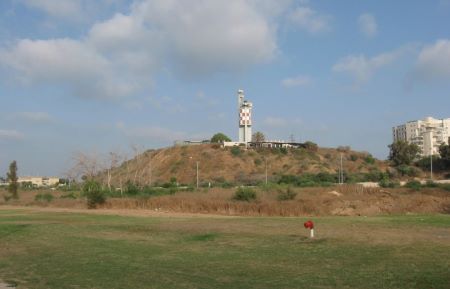
According to many sources, Jonah Hill in Ashdod is the burial site of the famous prophet Jonah.
Photo Credit shmulik s. Pikiwiki Israel – Creative Commons Attribution 2.5 Generic

One of several advantages of using a tour guide in Israel, is that you will visit places that many people have never even heard of! One of these super off-the-beaten track sites, where I have brought many of my tourists, is Givat Yonah (Hill of Jonah) in Ashdod. This site is believed by many (though not all) to be the burial site of one of the most interesting prophets in history. It also strategically overlooks arguably one of Israel’s most important locations in terms of national security and the economy, the Port of Ashdod!

Aerial Shot of the Port of Ashdod. Approximately 60% of all goods imported into Israel first pass through here. Photo Credit: Amos Meron – Creative Commons Attribution-Share Alike 3.0 Unported

The Hill of Jonah, which rises 53 Meters (174 feet) above Sea Level (and is the highest point in this flat coastal city) has a beautiful panoramic view of the city and surrounding area. The hill is also a beautiful park, filled with trees, benches, historical monuments, and sculptures. This lovely, serene area is perfect for a picnic, or just to get away and relax from the hustle and bustle of the surrounding city.

As this is the assumed burial spot of Jonah, it makes sense that sculptures (like the fish that swallowed him) would be found here.
Photo Credit: Bukvoed – Creative Commons Attribution 4.0 International

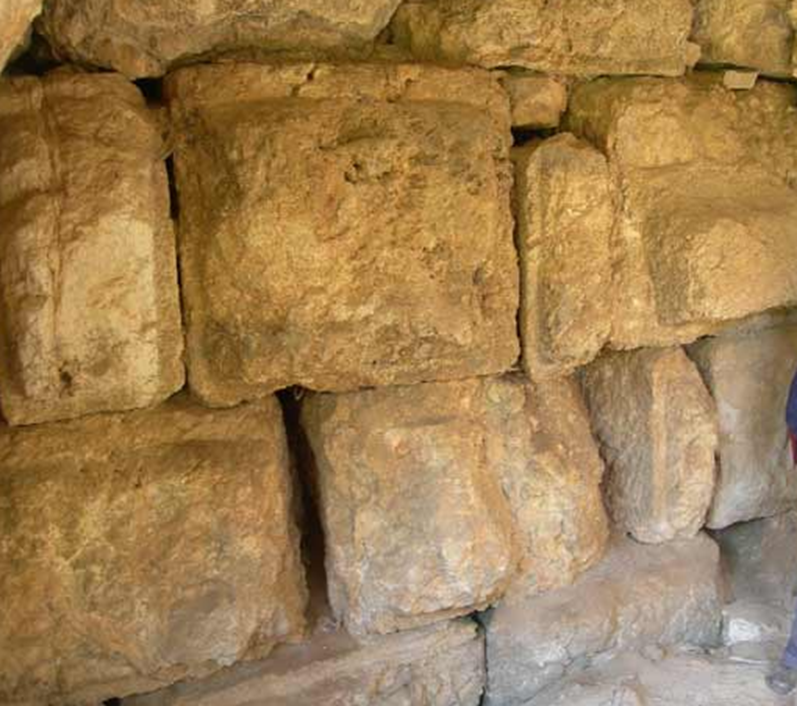
In Biblical times, the hill was controlled by the Philistine ruler of nearby ancient Ashdod (see Joshua 13:3 and 15:47). Eventually the Jews were successful in throwing out the Philistines during the First Temple Period, and they built a fortress here (which continued to be inhabited during the time of Jonah). This fortress has thick walls which may have been built by King Uzziah, who threw out the Philistines from Ashdod, or one of his successors (see 2 Chronicles 26:6). The logistical advantages of having a panoramic view of the sea and entire surrounding region, made this an important place to protect.

A Fortress likely built by one of the Judean Kings in Biblical times, which towered over the region. It offers a truly breathtaking view! Photo Credit: Israel Antiquities Authority

The fortress was destroyed by the Babylonians, although it continued to be used in Hellenistic, Roman, and Byzantine times, and even during the early Muslim period. Part of the attraction of this site, was that it was believed to be the burial spot of the prophet and it became a holy site where people came to pray. Some, however, believe that Jonah’s burial spot was in Northern Iraq (that site was sadly destroyed by ISIS in 2014). In fact, in the world-famous Byzantine (circa 5th century) Madaba map (the oldest contemporary map of the Holy Land ever found) this site was identified in Greek as the “Holy Jonah”.

The Madaba map is today in a monastery in Jordan. It is the oldest contemporary map of the Holy Land (circa 5th century). Ashdod and the Hill of Jonah is circled in Red
. Photo Credit: Dosseman- Creative Commons Attribution-Share Alike 4.0 International
The Tombstone on Jonah’s Grave

During the British Mandate period, this hill was used as an observation point to keep ships bringing Jewish refugees from entering Israel (in 1939 after the Arabs had rioted for three years, the British issued the infamous white papers, which made almost all Jewish immigration illegal).

The hill was used as a lookout point in the 1940s by the British to spot and prevent “illegal” Jewish ships from entering. The checkered lighthouse tower has a powerful light, which goes 27 km out to sea.
Photo Credit: Ori

By the 1950s, most of modern Ashdod was nothing but sand dunes.  In 1954, then Prime Minister David Ben Gurion tasked Oved Ben Ami (an early Zionist leader who, in addition to other accomplishments, founded Netanya and was responsible for bringing the Diamond industry to Israel) with finding a good place to build a major deep-water port.  Although Haifa and Eilat had deep-water ports, they were not large enough for the increasing volume of imports and exports.  Rather than expanding them, they decided to build a new port on the Southern coast in order to develop the southern part of the country (rather than just keep everything concentrated in the center like Tel Aviv).  Additionally, Israel’s main exports in the 1950s consisted of Jaffa oranges grown in Rehovot, Potash from Mount Sodom, and Dead Sea products like Magnesium and Bromine.  Haifa’s port was considered too far to make this feasible for the long term, so something closer was needed.  Ben Ami drove along the coast and saw Jonah’s hill. Standing on top, he saw the desolate sand dunes below and decided this would be the best place to build.  In the mid-1950s, construction on the port (and a major electrical station nearby which would power homes in a large portion of Israel) was approved. Around these projects, Ashdod was founded as a planned city from the beginning (as opposed to a city which organically grew out of a pre-existing town or village).  The first neighborhood of Ashdod was built at the foot of the hill and was appropriately called Givat Yonah (the Hill of Jonah).  In 1956 the first 22 families moved in (today Ashdod is Israel’s fifth largest city).  In 1965, the port of Ashdod was completed, and today 60% of all goods coming into Israel enter through here (in addition to the tens of thousands of tourists who enter from international cruise ships).

Since the first 22 families moved into the Givat Yonah (Hill of Jonah) neighborhood in 1956, Ashdod has grown into a flourishing city of 226,000 residents.
Photo Credit: Shutterstock

In addition to the Hill of Jonah, there is plenty to do in Ashdod. On your next trip to Israel, if you are looking for something a little different, this special hill and city will not disappoint!

For a sample tour itinerary which can include visiting the Hill of Jonah in Ashdod, see our Gaza Envelope Tour and our off-the-beaten track Biblical sites tour itineraries.

Nosson Shulman is a journalist and Licensed Tour Guide in Israel specializing in Biblical toursTo allow tourists to experience Israel during the Corona era, he created the new hit Israel tour video series which brings Israel to the home of viewers by simulating actual tours. To check out his free sneak preview tour videos, click here. To view sample tour itineraries or to inquire about private tour opportunities with a personalized itinerary on your next trip to Israel, click here. 

Nosson Shulman

BREAKING: Israel is Heading Towards Elections in October

The Knesset is set to officially dissolve on Monday, June 27

By Nosson Shulman: Licensed Tour Guide of VIP Israel Tours Authentic Virtual Tours (click here to check out his free trailer videos)

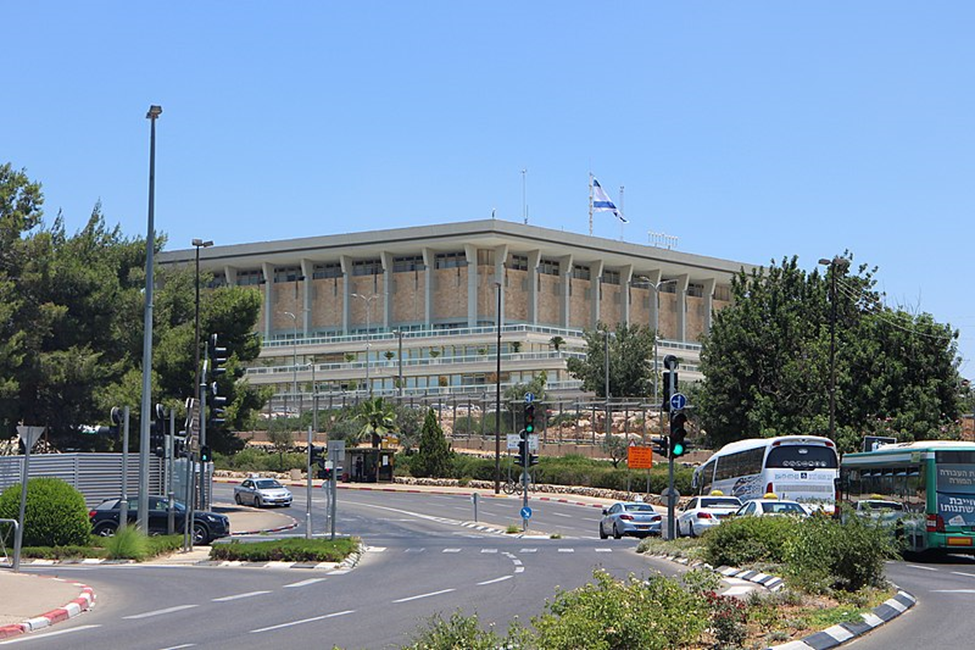
The Knesset, Israel’s Parliament, in Jerusalem.
Photo Credit: Wikicommons

After only one year in power, Prime Minister Naftali Bennett and alternative Prime Minister Yair Lapid have decided to dissolve the current government and hold new elections. The bill to officially disband the Knesset will be brought for a final vote on Monday, June 27 and is expected to pass (being that the bill is supported by both the coalition and opposition). When this happens, elections will be immediately called for October 25. Until the country heads to the polls, Bennett has announced that he will step down as Prime Minister and Yair Lapid will be appointed Prime Minister in his place (as per their coalition agreement) with Bennett assuming the title of Alternative Prime Minister. This will make Naftali Bennett the shortest reigning Prime Minister in Israeli history (though Yair Lapid will likely break that record shortly).

The fact that this coalition lasted as long as it did, took many by surprise. Composed of 8 parties (including from the right wing, extreme left, center-left, and for the first time ever an Arab party) who had nothing in common with one another, except for their mutual hatred of Israel’s longest serving Prime Minister, Benjamin Netanyahu. They disagreed on practically everything including Judah and Samaria, Religion and State, the economy, national security, the justice system, Corona, and education. In fact, in the last election many of them promised never to serve together if elected, and then quickly folded when given the opportunity. Only two days before the election, Naftali Bennett was asked if he would ever serve with Lapid, and responded, “Never, and under no circumstances, will I ever lend a hand to the establishment of a government led by Yair Lapid, not in a rotation or any other way, for the simple reason that I’m a man of the right and he’s a leftist, and I don’t act against my values.” Because many who voted for these various factions last time felt betrayed that their party would join this unusual coalition, polls indicate that several of these parties are going to have a hard time passing the threshold in the next election (in Israel, a party must gain at least 3.25% of the vote nationally in order to get any seats).

For the top 10 fascinating things you need to know about Israeli elections, click here.

Nosson Shulman is a journalist and Licensed Tour Guide in Israel specializing in Biblical toursTo allow tourists to experience Israel during the Corona era, he created the new hit Israel tour video series which brings Israel to the home of viewers by simulating actual tours. To check out his free sneak preview tour videos, click here. To view sample tour itineraries or to inquire about private tour opportunities with a personalized itinerary on your next trip to Israel, click here.

Nosson Shulman

Tel Motza

By Nosson Shulman: Licensed Tour Guide of VIP Israel Tours Authentic Virtual Tours (click here to check out his free trailer videos)

And the cities of the tribe of the children of Benjamin according to their families, were; … Mizpeh, and Chephirah, and Motza. (Joshua 18:21-26)”

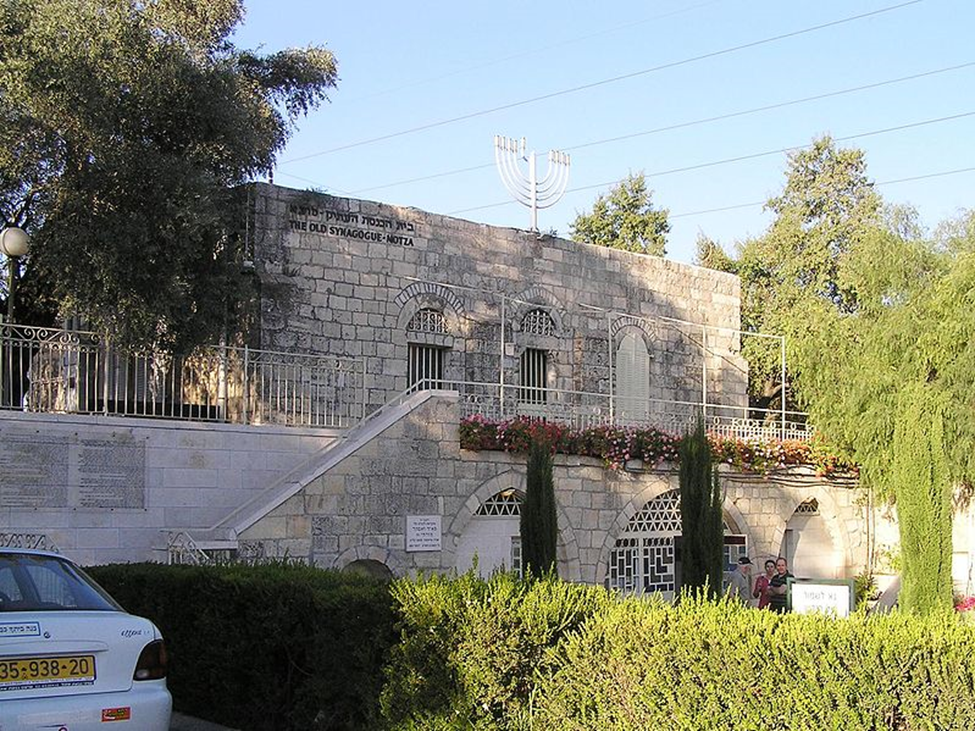
The Old Synagogue of Motza, built in 1905, is still active
Photo Credit: Eman

As a tour guide, not only do I have the privilege of sharing Israel’s beauty at so many wonderful sites we visit, but also picking out incredible spots along the way while travelling between them. One of the most fascinating roads, is highway one between Jerusalem and Tel Aviv. Motza (a Biblical town which later played a large part in the development of modern Israel) is located just outside Jerusalem, and is one of these places I like to speak about.

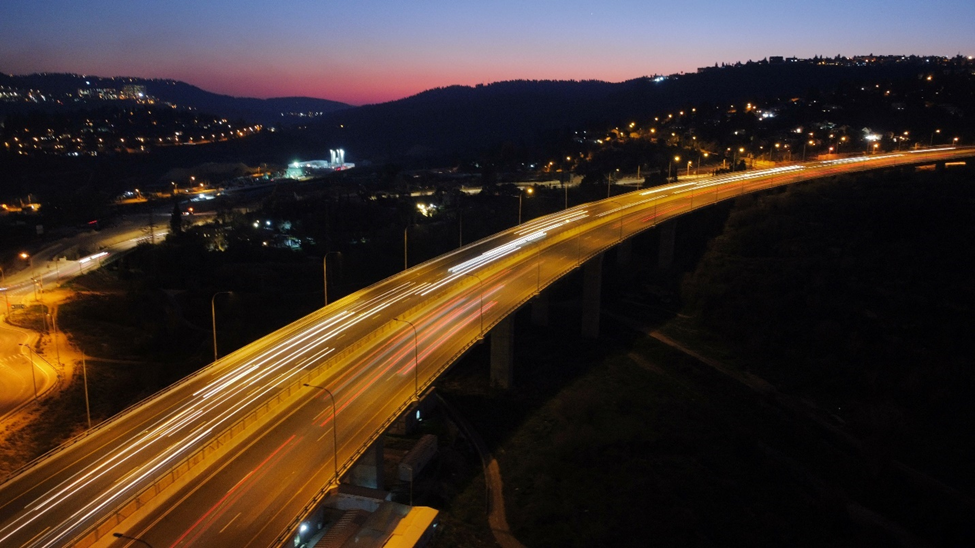
Highway one as seen right above Motza. Driving through here is always beautiful, day or night.
Photo Credit: Shutterstock

Motza was first settled during the Canaanite period. When the Israelites conquered the Holy Land under Joshua, the land was given to the tribe of Benjamin (see Joshua 18:26). The town was very desirable due to being on the main road (highway one is located on an ancient route), its proximity to the capital city of Jerusalem (7 kms in ancient times) and its fertile soil and abundance of springs. One of the major crops was wheat, and the city was actually labeled, “A royal grainary specializing in grain storage”. Indeed, dozens of grain silos and two storage buildings were found here.

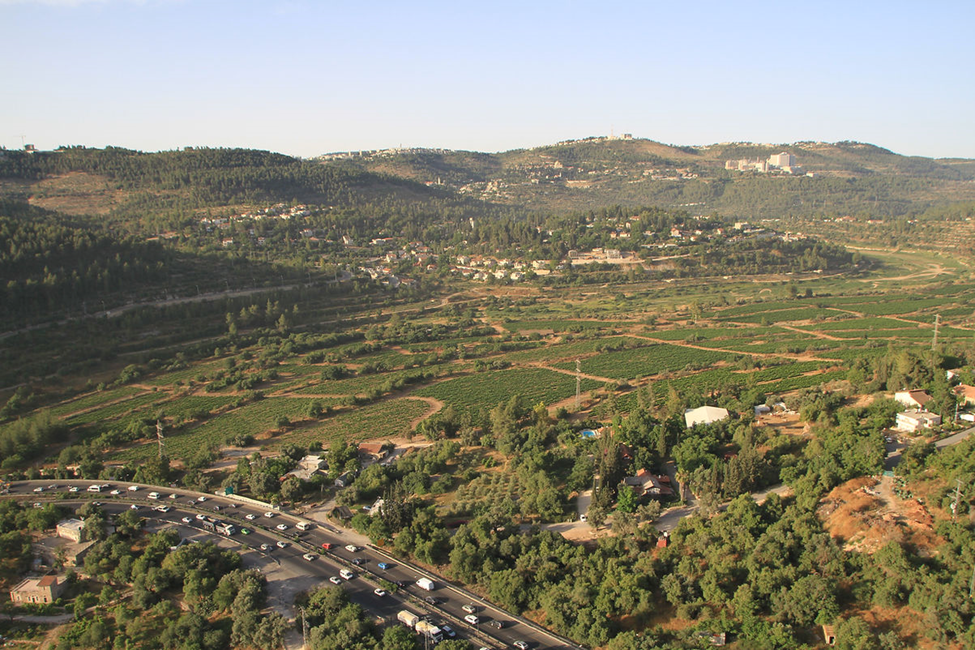
The vineyards surrounding Motza today. Just as in the past, Motza continues to generate delicious produce.
Photo Credit: Tel Moza Expedition Project

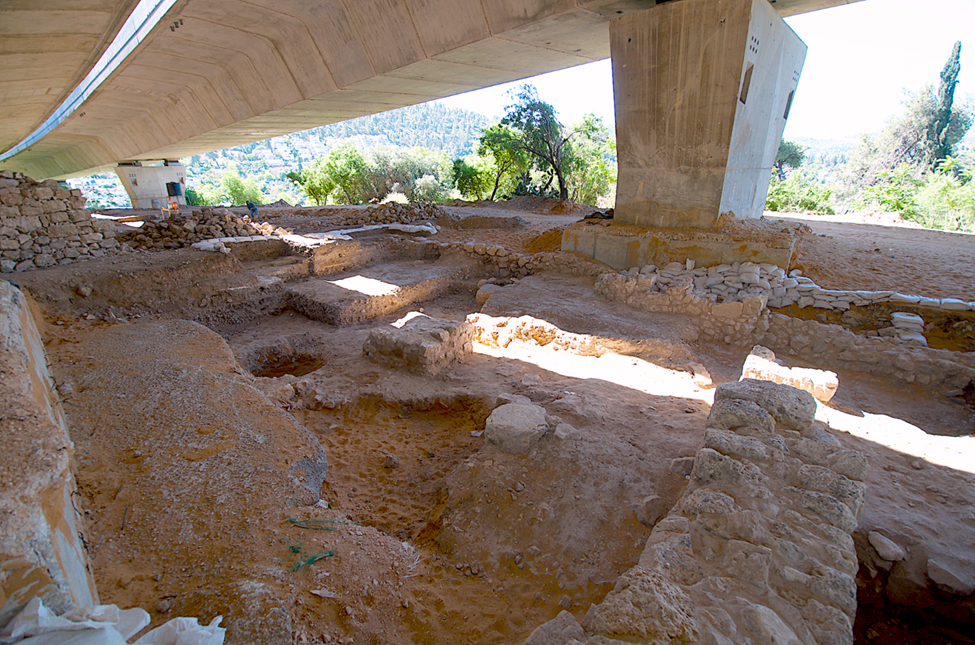
In 2012 a major (idol worshipping) temple from the first Temple period was discovered during renovations of Highway One. This temple was destroyed by Hezekiah in his quest to rid the land of false deities (see 2 Kings 18:4 and 2 Chronicles 31:1).

Ruins of a Biblical era temple located directly underneath highway one.   
Photo Credit: Natritmeyer – CC BY-SA 4.0

During the Second Temple Period, according to Jewish sources, Motza was where the willow branches (which grow in abundance here) were cut and brought to Jerusalem as part of the Temple Service of Sukkot.

In the days of the holy Temple, the willow branches were taken from here to Jerusalem.
Photo Credit: Ovedc – Creative Commons Attribution-Share Alike 3.0 Unported

During the Great Jewish Revolt, Motza was destroyed by the Romans and resettled (circa 71 CE) as a colony for 800 Roman Soldiers called Colonia.  During Islamic times the Arab town of Qalunya, which preserved the Roman name, stood here.

In 1859, a wealthy Jew from Baghdad, Shaul Yehuda, gave money to start a new Jewish agricultural settlement in the Holy Land.  The Arab town of Qalunya was filled with springs and fertile land. Since they had recently fallen on hard times, they were happy to sell land, although not to Jews.  In order to be able to purchase land, Shaul Yehuda gave the money to British Consul James Finn (a Christian and ardent proponent of Jews resettling in Israel) who bought the land for them. They renamed the town Motza (its ancient name).  Although the land was fertile, it was also in a valley surrounded by hostile Arab villages.  Getting residents to come and settle was nearly impossible, so Rabbi David Yellin moved alone with his family and began plowing the land.  While planting orchards, he discovered an ancient Byzantine inn.  In 1869, highway one (which went through Motza) was paved between Jaffa (Israel’s port city at the time) and Jerusalem. Realizing the commercial potential of having a hotel along the way between Israel’s two most important cities, Rabbi Yellin built an inn on top of the Byzantine Inn foundation in 1871.

With the assistance of Jewish organizations like Bnai Brith, more land was bought, and Jews were encouraged to move here and build homes with generous financial terms.  Four families ended up moving in 1894, including the Maklef family.

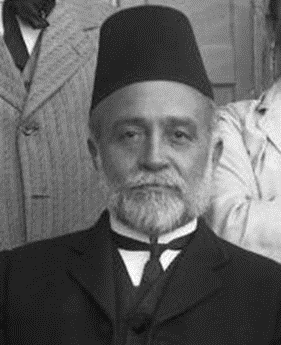
Rabbi David Yellin, the first resident of modern Motza.  He started many neighborhoods in Jerusalem and Jewish settlements in Israel.

In early 1905, due to hard times and drought, there were not sufficient funds to build a proper synagogue.  Later that year, a wealthy Hungarian Jewish visitor to the Inn provided the money needed to build the synagogue, which is still active to this day.

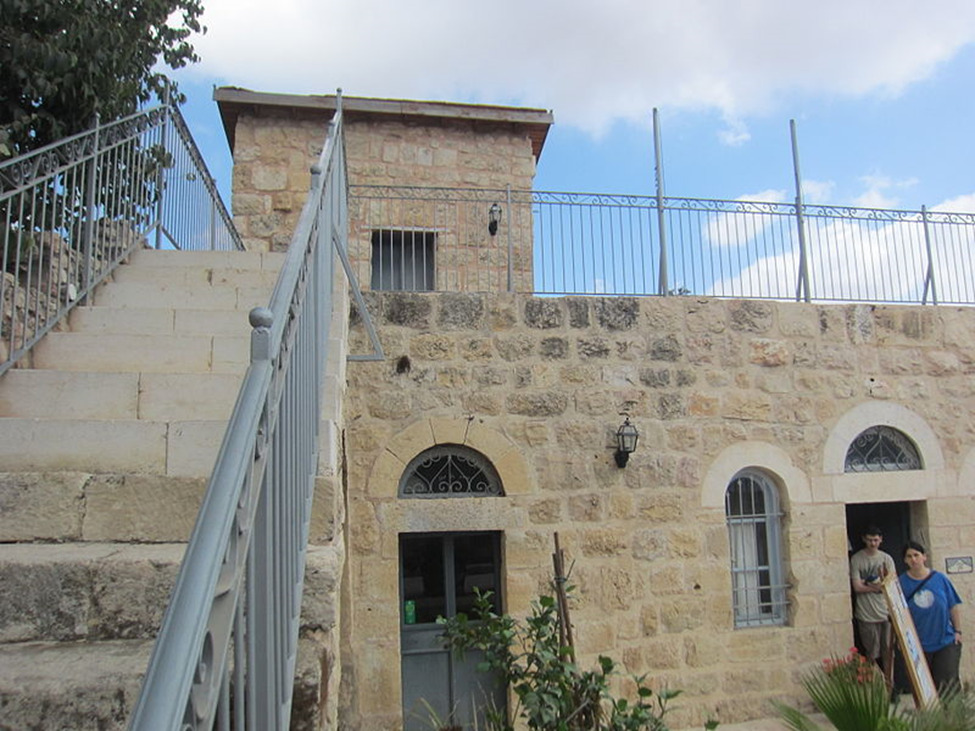
The house that Rabbi Yellin built, today a cute little museum which is open to tourists.   
Photo Credit: Ovedc –  Creative Commons Attribution-Share Alike 3.0 Unported

In 1929, Arabs from across the country began rioting around the country to kill Jews and stop them from returning to their ancestral homeland.  Hundreds were murdered and assaulted. During the rioting, the leader of Qalunya (the adjacent Arab town) swore on the Quran that no one from Motza would be attacked, although the next day Arabs from that very town swarmed down the hill, attacked the town and killed most of the Maklef family (including the parents and three brothers).  Two visiting Rabbis were also killed.  During the assault, 18-year-old Chaim Maklef had slipped out with a shot gun to try and get help from his friends in Qalanya.  When he returned and saw his home on fire, he shot at the murderers, repelling them temporarily, allowing just enough time for his younger sister Chana and 9-year-old brother Mordechai to escape (later, General Mordechai Maklef would become the third chief of staff of the IDF). Motza and its synagogue was now in ruins!

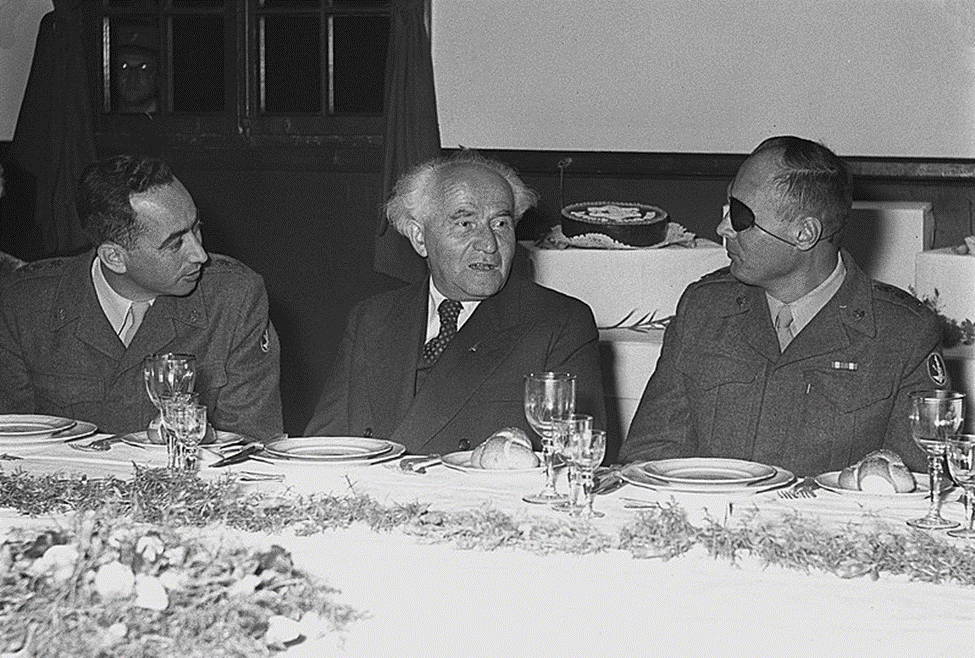
General Mordechai Maklef (on the left), sitting with then Prime Minister David Ben Gurion and soon-to-be Chief of Staff General Moshe Dayan (circa 1953).  In 1929, when nearly his entire family was massacred in Motza, he escaped death by jumping out of a second story window while his brother shot at the attacking mob.

In 1933, Jews returned to Motza and rebuilt the town on the other side of the highway where it remains today.  In 1948 residents of Qalunya and nearby villages like Qastel, fought tooth and nail against the formation of the Jewish State.  Israel, however, was the ultimate victor and these hostile towns were abandoned (although the nearby Arab town of Abu Gosh which was friendly to the new state of Israel, continues to exist and flourish to this day).

The town of Motza today is a well-to-do suburb of Jerusalem.
Photo Credit: Hagai Agmon-Snir – CC BY-SA 4.0

Motza, today a well to do town of about 1200 inhabitants, is flourishing. In 1980, the synagogue (severely damaged in 1929) was restored and still in use today. In addition to the historic sights, an amazing winery and a world class jewelry design center make this town a site that should definitely be included on your next itinerary!

Please visit the author’s Israel tour guiding site: https://guidedtoursofisrael.com

Nosson Shulman is a journalist and Licensed Tour Guide in Israel specializing in Biblical toursTo allow tourists to experience Israel during the Corona era, he created the new hit Israel tour video series which brings Israel to the home of viewers by simulating actual tours. To check out his free sneak preview tour videos, click here. To view sample tour itineraries or to inquire about private tour opportunities with a personalized itinerary on your next trip to Israel, click here.

Nosson Shulman

© 2020 All Rights Reserved – Unauthorized Duplication is prohibited

BREAKING: Saudi Arabia to Allow all Israeli Flights to Fly Over its Airspace!

This concession is part of a larger deal, also involving Egypt

By Nosson Shulman: Licensed Tour Guide of VIP Israel Tours Authentic Virtual Tours (click here to check out his free trailer videos)

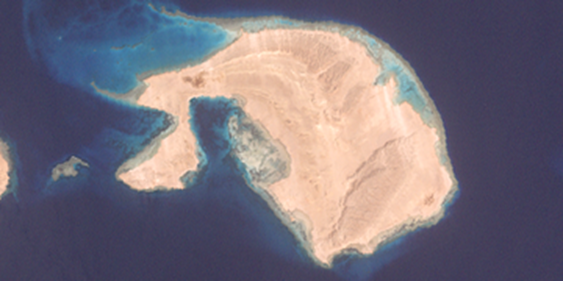
View of Sanafir Island from outer space. The Island is one of two controlled by Egypt which will be returned to Saudi Arabia in exchange for foreign aid. Israel (who must consent to this agreement due to its 1979 peace treaty with Egypt) will sign off on this in exchange for its airlines being allowed to use Saudi airspace.
Photo Credit: Nasa

In a move that will positively affect Israel’s tourism, Saudi Arabia will reportedly allow incoming and outgoing flights from Israel to cross over Saudi Airspace. As of now, only Israel flights going to (or coming from) the UAE or Bahrain are permitted to use this space. Air India also has permission to fly to the Jewish State over Saudi Arabia (although until now, EL Al did not). Being able to fly over Saudi Arabia will cut down on a significant amount of travel time to certain locations, while reducing ticket prices.

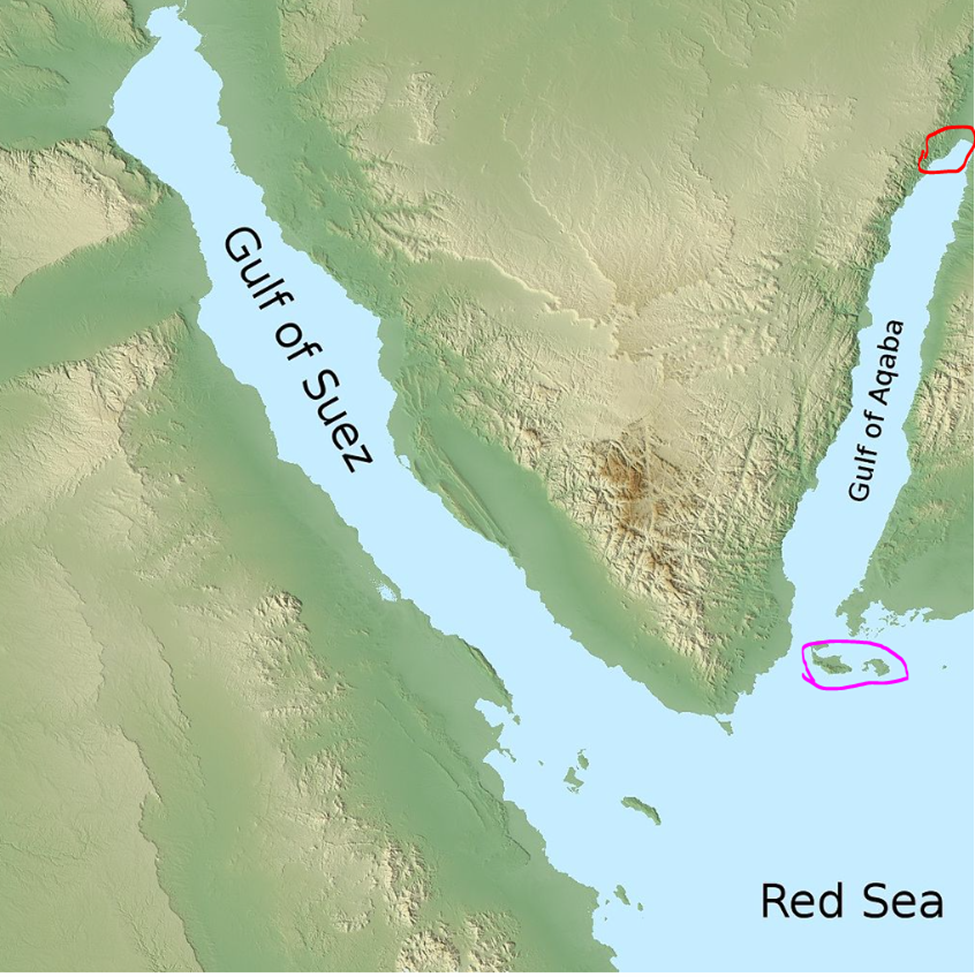
In exchange, Israel will greenlight the transfer of sovereignty of the Sanafir and Tiran Islands from Egypt to Saudi Arabia. The two islands control movement in and out of the narrow Straights of Tiran, the only sea passage to Israel’s important port of Eilat in the Sea of Aqaba (a large gulf at the Northern tip of the Red Sea). Originally controlled by Saudi Arabia, in 1949 they handed over sovereignty to Egypt because they lacked a strong navy to control it. In May 1967, Egypt built military bases on these islands and used them to block all Israeli ships from entering the Gulf of Aqaba (an official act of war according to international law). This led to the 6-day war, and with it, Israel’s incredible defeat of the Egyptian army, which included Israel taking over these very strategic islands.

The two islands (seen in the purple circle) control all movement from and into the Gulf of Aqaba, where Israel’s Southern port city of Eilat is located (see red circle).
Photo Credit: Odie5533- CC BY-SA 3.0

In the 1979 peace treaty between Israel and Egypt, the Jewish State agreed to return the islands (this deal was completed in 1982) providing that a multi-national force (led by the US) would remain in place to ensure freedom of navigation for Israeli ships. This new deal (which would have the multi-national force leave the Islands) needs to be approved by Israel according to the terms of the peace treaty. If reports are correct, Israeli planes will soon be flying over Saudi Arabia, which is a step closer to full normalization.

Nosson Shulman is a journalist and Licensed Tour Guide in Israel specializing in Biblical toursTo allow tourists to experience Israel during the Corona era, he created the new hit Israel tour video series which brings Israel to the home of viewers by simulating actual tours. To check out his free sneak preview tour videos, click here. To view sample tour itineraries or to inquire about private tour opportunities with a personalized itinerary on your next trip to Israel, click here.

Nosson Shulman

HUGE: Israel Signs First Trade Deal with an Arab Country!

This unprecedented deal grants Israel tariffs free access to Arab markets in the Gulf (including countries without diplomatic relations) via the UAE.

By Nosson Shulman: Licensed Tour Guide of VIP Israel Tours Authentic Virtual Tours (click here to check out his free trailer videos)

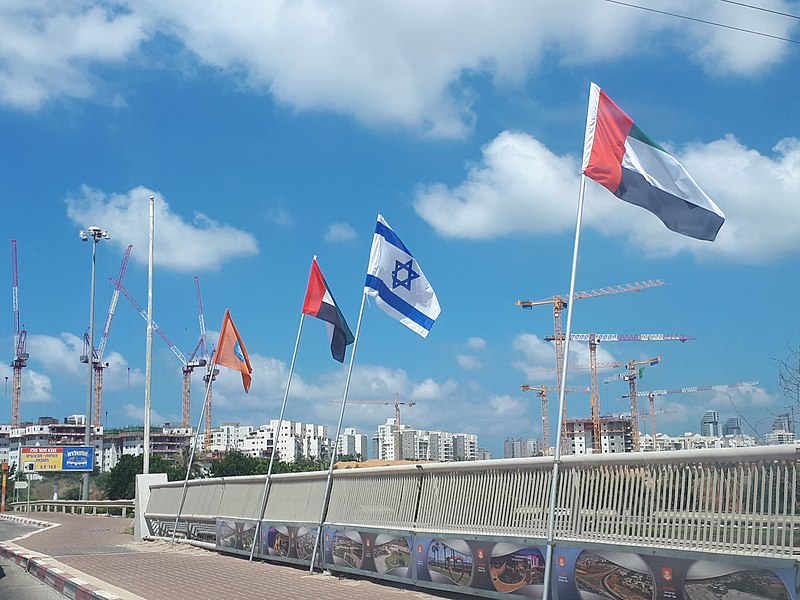
The flags of Israel and the UAE, proudly flying together in the Israeli city of Netanya just after the peace treaty was announced in August 2020.
Photo Credit: TaBaZzz – CC BY-SA 4.

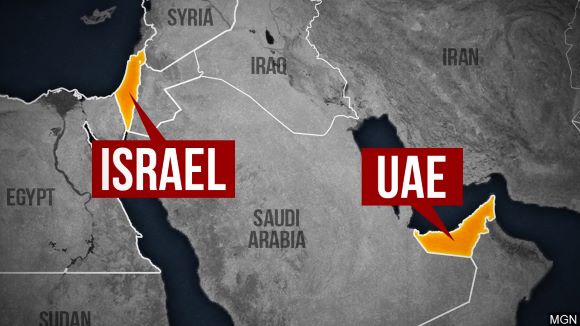
In August 2020, the world was shocked when then President Donald Trump announced that Israel and the United Arab Emirates (UAE) were to sign a peace treaty, a deal he was instrumental in negotiating. In quick succession, the Trump administration would then go on to broker a deal between the Jewish State and Bahrain, Sudan, and Morocco. For the first 72 years, only Egypt and Jordan had made peace with Israel, and those deals led to nothing more than a cold peace between governments, practically limited to (important) security cooperation (the rank-and-file population of Israel’s two neighbors have largely rejected the treaty and being identifiably Jewish is still very dangerous in those countries). However, this particular treaty has turned out to be a game changer and has now been solidified with a new free trade deal that has just been signed between them. The deal removes tariffs on 96% of goods traded (including food, agriculture, pharmaceuticals, medical equipment, cosmetics, and more). Within five years, trade between the nations is expected to reach 10 billion dollars annually.

Merely 20 months into the deal, in addition to excellent government relations, there is general goodwill towards Israelis on the streets of Dubai and Abu Dhabi. Israelis can travel freely to the UAE. In the first 18 months alone, more than 130,000 visited (impressive considering that it was during the travel restrictions of the covid pandemic). No particular attempts were made to hide their identity (on the contrary, Israelis regularly reported being invited for tea and lunch by locals when they found out where they come from). For Torah observant Jews, wearing a clearly visible yarmulka, black hat, or exposed Tzitzit on the streets is the new norm (certainly a rarity in most of “civilized” Western Europe today). There are also Kosher restaurants opening, including a new one inside of the Burj Khalifa (the world’s tallest building). Synagogues, too, are being built with the encouragement of the Royal family, who have excellent relations with the fast-growing Jewish community. Recently, some antisemitic content has been removed from school textbooks and curriculum, although that is still a work in progress. Trade has been flourishing between the nations (already more than a billion dollars) and this free trade deal will accelerate business cooperation to a level no one could have ever imagined. Aside from the Gulf countries and EFTA (Ireland, Norway, Liechtenstein, and Switzerland) this is the first free trade deal the UAE has ever signed.

The benefits of this new free trade agreement are not limited to these two nations. Since the UAE has a free trade agreement with other (wealthy) gulf countries, including those who do not yet have relations with the Jewish state, Israel will now have access to these countries’ markets (and can have longer term implications in relations between Israel and the larger Arab world).

In truth, the entire world stands to benefit from this deal. Because Israel is a world leader in scientific research (including in the creation of life saving medicine and medical devices) and technological innovation (including instruments which make clean drinking water more accessible to the wider world) the partnership between these two nations in these important fields have the potential to make the world a better place!

Nosson Shulman is a journalist and Licensed Tour Guide in Israel specializing in Biblical toursTo allow tourists to experience Israel during the Corona era, he created the new hit Israel tour video series which brings Israel to the home of viewers by simulating actual tours. To check out his free sneak preview tour videos, click here. To view sample tour itineraries or to inquire about private tour opportunities with a personalized itinerary on your next trip to Israel, click here.

Nosson Shulmah

Biblical Mei Neftoach (Abandoned town of Lifta)

By Nosson Shulman: Licensed Tour Guide of VIP Israel Tours Authentic Virtual Tours (click here to check out his free trailer videos)

And the border circled from the top of the mountain to the fountain of the Mei (water of) Neftoach, and went out to the cities of Mount Ephron; and the border circled to Baalah, which is Kirjath-jearim (Joshua 15:9)”

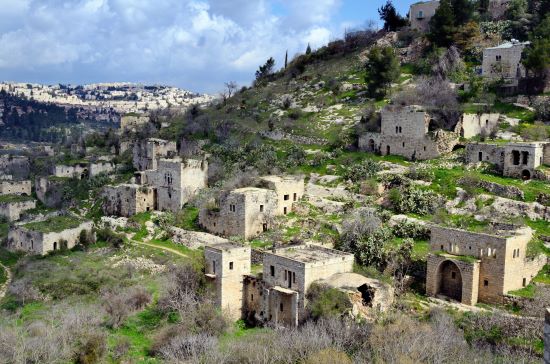
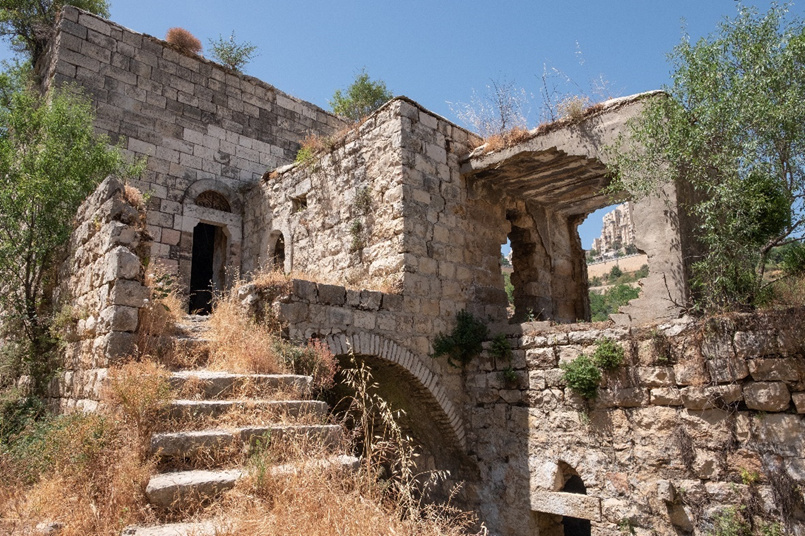
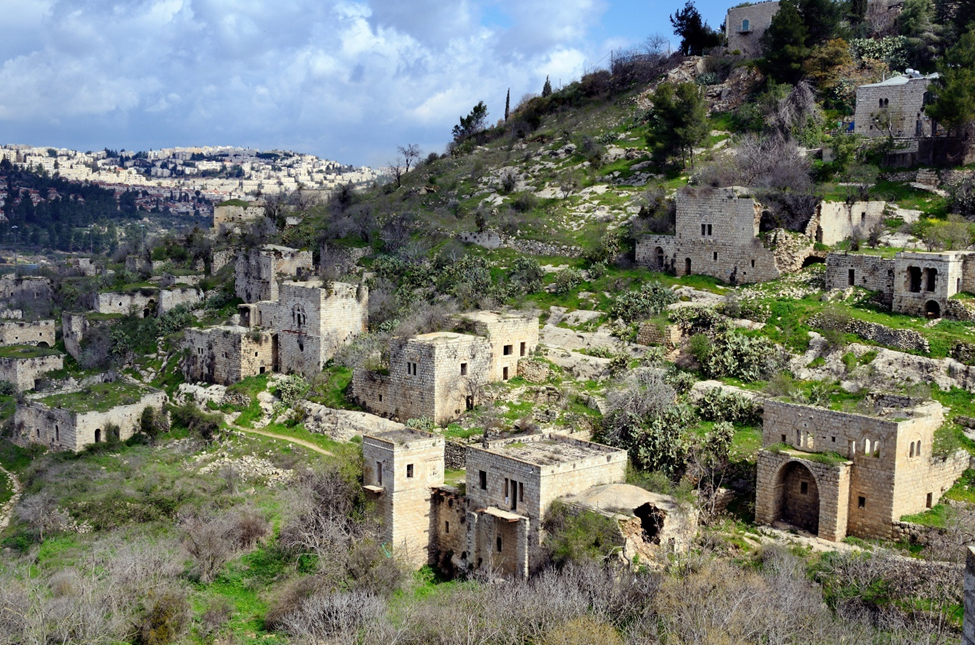
An abandoned home (one of about 60 homes still standing at its original height) in this long-abandoned ghost town of Lifta (near the entrance to Jerusalem). This was the location of Biblical Mei (water of) Neftoach.
Photo Credit: Shutterstock

As a veteran tour guide specializing in off-the-beaten-track sites of Israel, I often have the privilege of touring with visitors who have been so many times, that they feel they have seen most of the mainstream sites and want me to bring them to places rarely included in an itinerary. One site checking that box, is the (almost perfectly) preserved ancient town of Lifta, right by the entrance to Jerusalem. In addition to its central location, this site offers everything from Biblical heritage, a rich history, great swimming, pastoral quiet, and an abandoned village where the buildings still stand at their original height.

The abandoned Ottoman Village of Lifta is almost like a time portal into the past. Since Biblical times, this area has been settled for most of its history, due to the vast amount of water found here.
Photo Credit: Shutterstock

In Biblical times, the town was called Mei Neftoach (literally translates to Waters of Neftoach) and was a border town between the tribes of Judah and Benjamin (see Joshua 15:19 and 18:15). It got its name because of the many springs and an abundance of water found here.

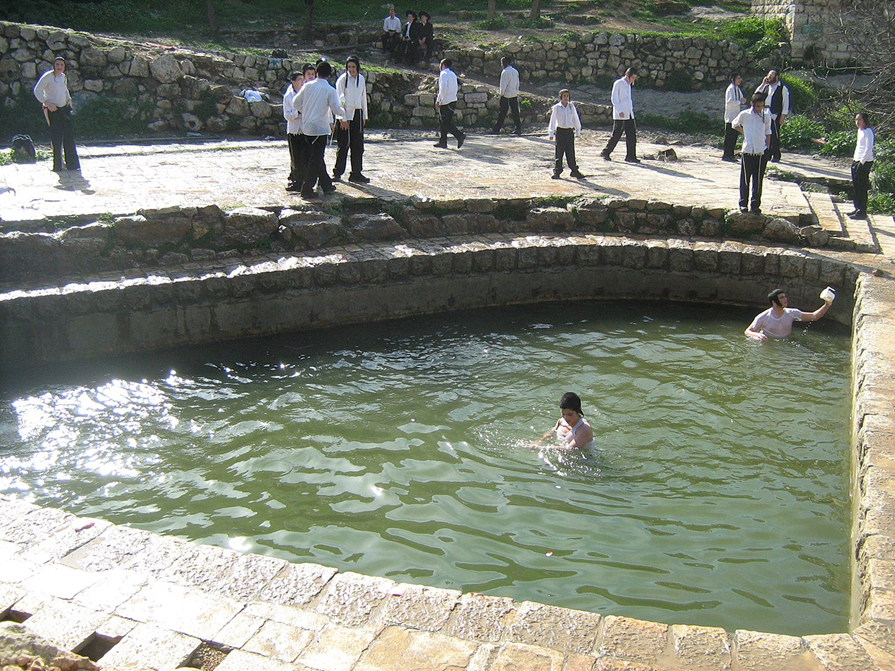
The ancient pools, naturally filled with refreshing, underground spring water, are still being swum in by tourists on a hot summer’s day! The abundance of water is the reason for its Biblical name.

During the Great Jewish revolt (which climaxed with the destruction of the holy Second Temple, circa 70 CE) the city was destroyed by future Emperor Titus. In later Roman and Byzantine times, the town was rebuilt and called Neptho. During the Crusader times the town was called Clepsta, and impressive finds from this period were found.

Crusader structure. Later a large Ottoman house was built upon it, with the Crusader structure continuing to be used as a basement.
Photo Credit: Israel Antiquities Authority

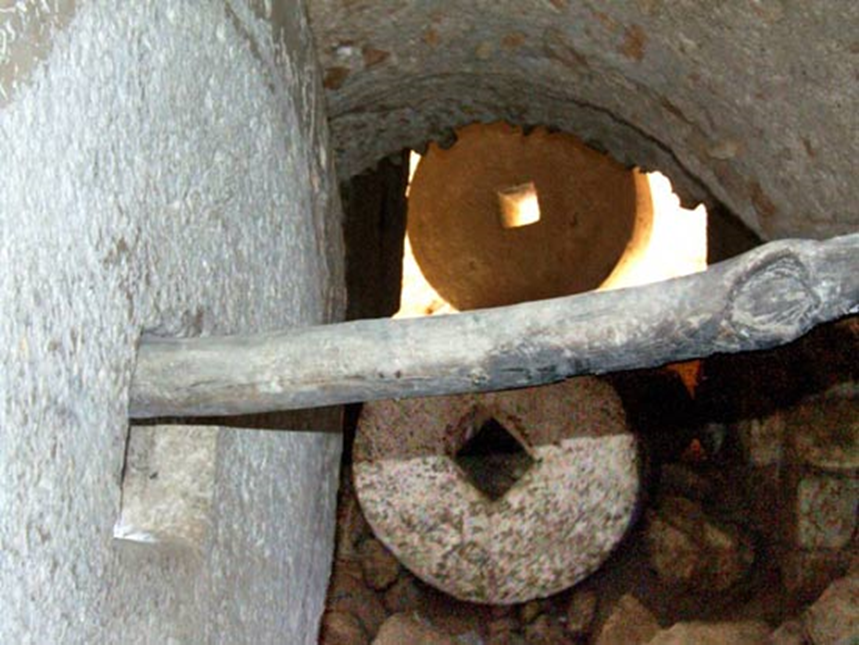
Inside the crusader structure was found a well a preserved Olive Oil Press, which was in use until the middle of the 20th century.

Olive Oil Press found in near pristine condition inside of the Crusader room.  
Photo Credit: Israel Antiquities Authority

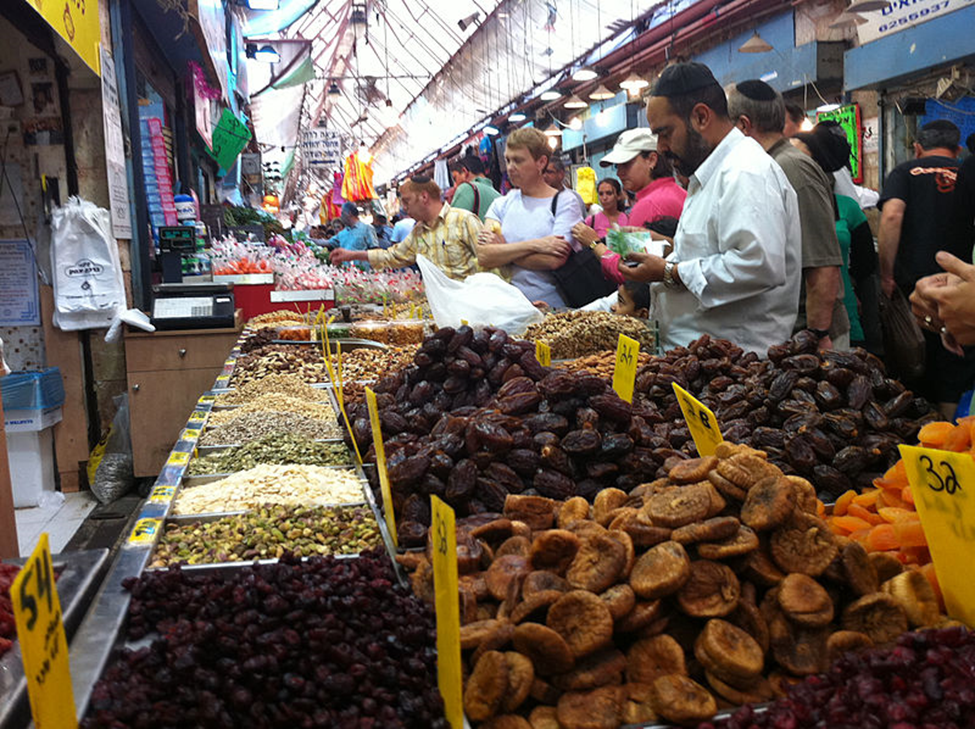
Most of the still standing homes we see now were once homes of wealthy Arabs during the Ottoman period. Besides the many orchards and olive oil industry, the town’s inhabitants owned an abundance of land which the Jewish community of Jerusalem bought up bit by bit in the late 1800s and early 1900s. They bought from the owners who were usually unaware that they were selling to Jews (many of them would not have otherwise sold the land if they had known the religion of the buyers). One of the neighborhoods built during this time was the iconic (and still flourishing) Nachlaot neighborhood and Jerusalem’s ultra-trendy Machane Yehuda food market.

Jerusalem’s trendy Machene Yehuda food market is a must see for tourists!
Photo Credit: Mahane Yehuda Market- Creative Commons Attribution 2.0 Generic

Unfortunately, the inhabitants of Lifta regularly took part in organized riots (often resulting in massacres) against unarmed Jews. An example was the massacre of 1929, where hundreds of Jews were killed or injured. When the UN voted to form an independent Jewish state in November of 1947, Lifta became a major sniping post at Jewish civilians entering Jerusalem (Lifta sits right beside the entrance to Jerusalem, a position which allowed its controllers to severely limit Jewish movement in and out of the city). In early 1948, the Arab Supreme Council asked the civilians to leave the town so that they could eliminate the Jews quickly (the inhabitants were told it would take about 6 weeks) after which they could return (many had winter homes located throughout the Middle East such as in Amman and Beirut and chose to “wait” out the war there). In place of the civilians, armed Arab militias entered the homes, using the town as a forward position to lay siege to Jerusalem. Due to the dangers such a town posed, it was taken over by the Jewish forces and then deserted of inhabitants (who were very hostile to the concept of a Jewish State). Since 1948, the well-preserved town was all but abandoned, although in 2017 it was declared a national park. In 2021, plans were announced to built 259 new home units and a luxury hotel in this amazing and beautiful location.

Many beautiful wild flowers can be seen today in Lifta.
Photo Credit: RonAlmog – Creative Commons Attribution 2.0 Generic

On your next trip to Israel, if you are looking for something off the beaten track, Lifta should definitely be on your itinerary!

Relive Biblical Mei Neftoach with Nosson Shulman on your very own private luxury Israel tour.

Nosson Shulman is a journalist and Licensed Tour Guide in Israel specializing in Biblical toursTo allow tourists to experience Israel during the Corona era, he created the new hit Israel tour video series which brings Israel to the home of viewers by simulating actual tours. To check out his free sneak preview tour videos, click here. To view sample tour itineraries or to inquire about private tour opportunities with a personalized itinerary on your next trip to Israel, click here.

Nosson Shulman

© 2020 All Rights Reserved – Unauthorized Duplication is prohibited

HUGE NEWS! Suriname to move their embassy to Jerusalem!

This South American nation becomes the 5th country to move their embassy!

By Nosson Shulman: Licensed Tour Guide of VIP Israel Tours (click here to book a tour of Israel and see sample itineraries) Authentic Virtual Tours (click here to check out his free trailer videos)

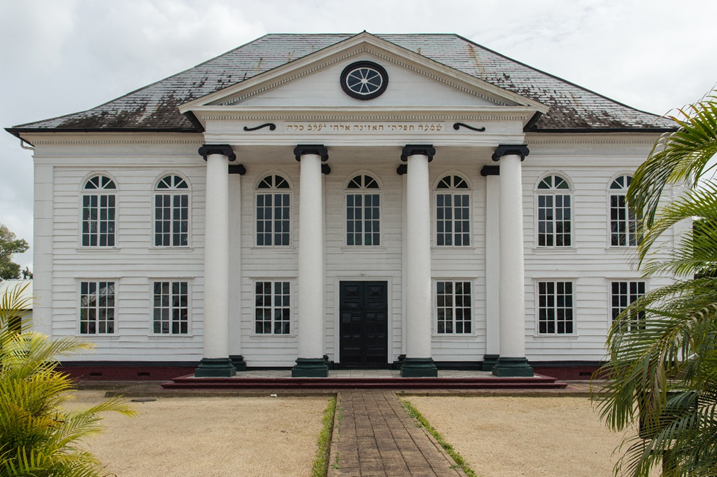
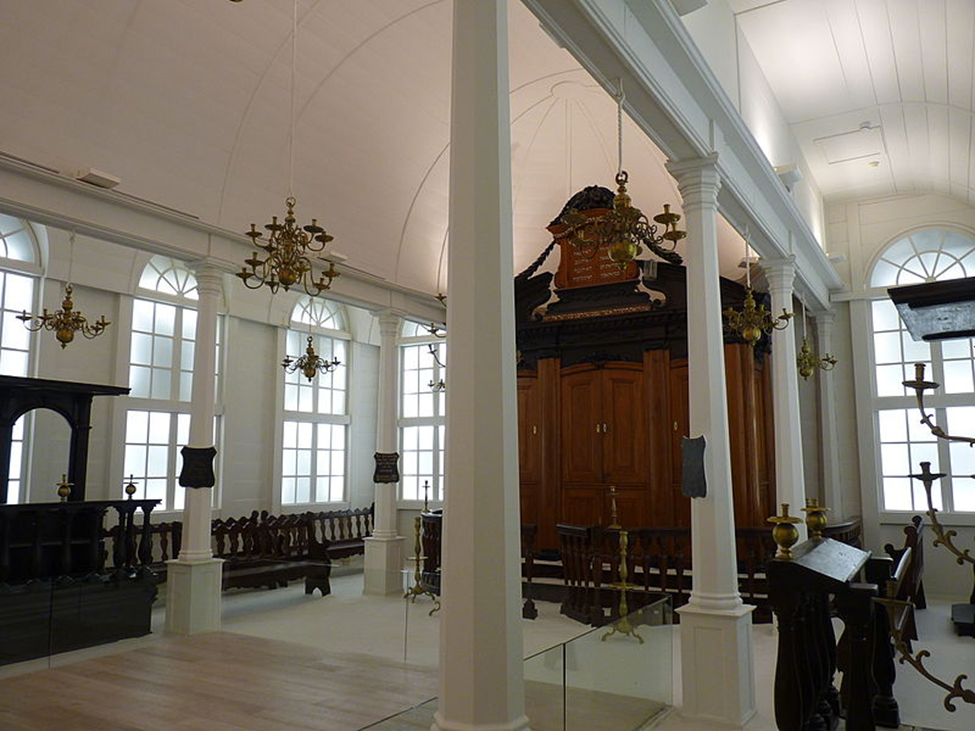
The historic Neve Shalom Synagogue in Paramaribo, Suriname serves the tiny Jewish community of this South American nation. This Jewish community is one of the oldest in the Americas.
Photo Credit: Shutterstock

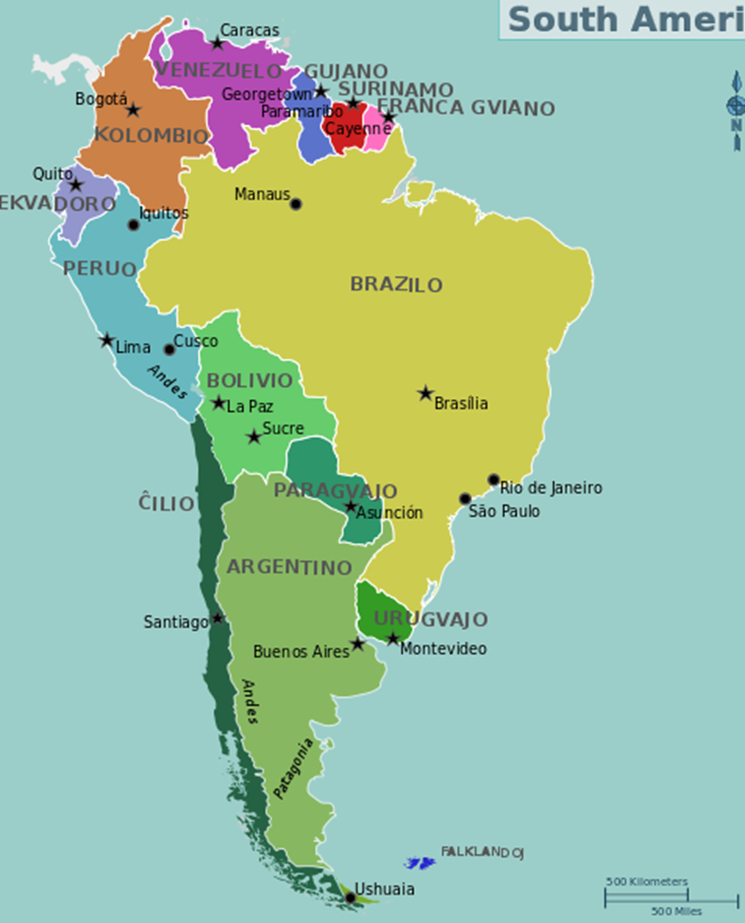
In a major diplomatic victory for Israel, Suriname is set to move their embassy to Jerusalem, becoming the latest country to recognize the Holy City as the eternal capital of the Jewish people! According to Surinamese foreign minister Albert Ramchand Ramdin in a meeting with his Israeli counterpart Yair Lapid, this move is to happen in the near future. Currently, the South American nation operates a mission in Tel Aviv.

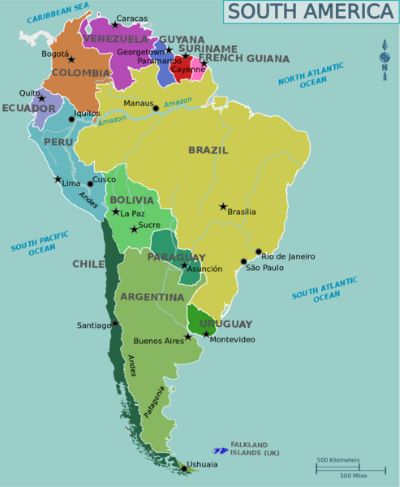
The coastal South American nation of Suriname (shaded in Red) is located in in the northern part of the country.
Photo Credit: Cacahuate – Creative Commons Attribution-Share Alike 3.0

Suriname has a rich Jewish history. Portuguese and Spanish Jews from Holland (who fled due to their persecution at the hands of the infamous Inquisition) came to South America in the 17th century. They were offered very favorable terms to settle there by the Dutch (and also the British who controlled the land for a short time). They were given equal rights (unheard of at that time), the right to build synagogues and Mikvehs (ritual baths) and were even given full autonomy to govern their own community without outside interference from the government. Prior to the founding of Israel in 1948, the Surinamese Jewish community was the only diaspora community in the world where Jews had full political autonomy. The Jews became instrumental in developing Suriname’s economy, particularly in trade and the production of sugar. Three synagogues were built, two of which are still owned by the community (although only one of them, Neve Shalom, is still active). The synagogues were famous for their custom of covering the floors in sand (according to tradition, this was both as a reminder of the Children of Israel who spent 40 years in the desert and to muffle the sounds of their prayers, a remnant from the days where they had to pray in secret away from the prying eyes of the Inquisition). In the 19th century, due to economic crises in the country (which significantly affected the nations Jews) the community significantly dwindled. When Suriname received its independence in 1975 from Holland followed by a civil war in the 1980s, most of the remaining Jews left. According to the latest census, there are currently 181 Jews left in the country.

Reconstructed interior of the Surinamese “Tzedek ve-Shalom Synagogue” located in the Israel Museum in Jerusalem. In the area between the glass partition and the wooden Holy Ark, the floor is covered in white sand. In Suriname, the synagogue ceased operations in 1999 when the tiny Ashkenazi and Sephardi communities combined congregations together (although the building is still owned by the Jewish community).
Photo Credit: Ricardo Tulio Gandelman – CC BY 2.0

With this move, Suriname will become the fifth country to move their full embassy to Jerusalem (after the United States, Guatemala, Kosovo and Honduras). Other countries have opened embassy branches in Jerusalem (giving de facto recognition of Israel’s claim to its Holy City) such as Hungary, the Czech Republic and Slovakia. Brazil and Columbia have opened diplomatic missions in the capital city, while Equatorial New Guinea and Malawi have pledged to move their embassies to Jerusalem.
To inquire about booking a one of a kind, personalized tour of Israel with popular tour guide Nosson Shulman: click here.

Nosson Shulman is a journalist and Licensed Tour Guide in Israel specializing in Biblical toursTo allow tourists to experience Israel during the Corona era, he created the new hit Israel tour video series which brings Israel to the home of viewers by simulating actual tours. To check out his free sneak preview tour videos, click here. To view sample tour itineraries or to inquire about private tour opportunities with a personalized itinerary on your next trip to Israel, click here.
Nosson Shulman

BREAKING: Israel Removes Two More Covid-19 Restrictions for Travelers

Tourists are no longer required to provide a negative test in order to board their flight to Israel, while the mask mandate on the plane is abolished
By Nosson Shulman: Licensed Tour Guide of VIP Israel Tours Authentic Virtual Tours (click here to check out his free trailer videos)

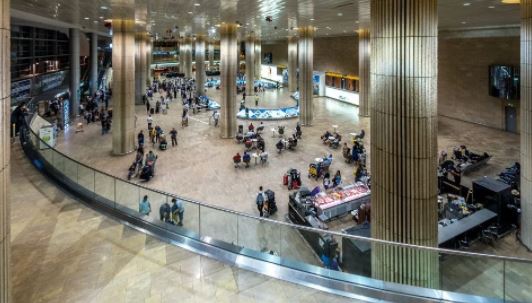
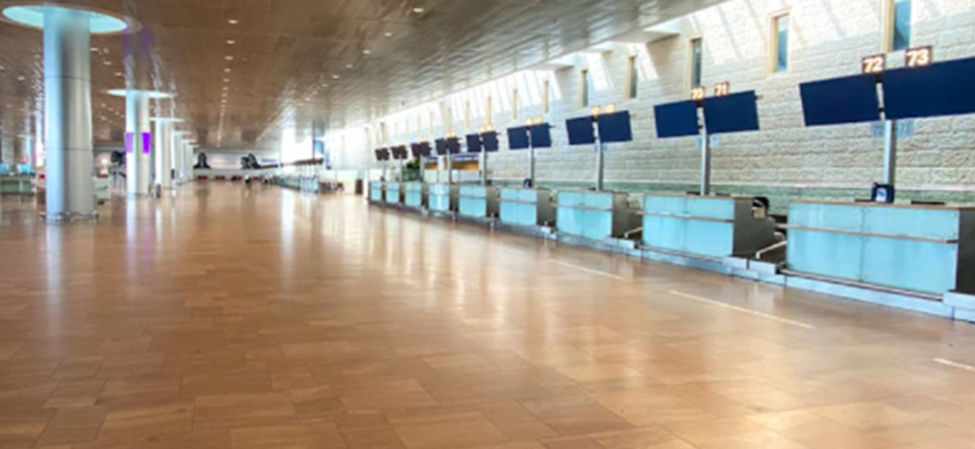
Ben Gurion Airport

It once seemed as though this day would never come, but Israel has removed the requirement to present a negative test (either PCR or Antigen) prior to boarding a flight to Israel. This comes on the heals of Israel removing the requirement to take an (expensive and time consuming) test when landing at Ben Gurion airport (for more on that, click here).

Additionally, as of Monday May 23, masks will no longer be required on flights to and from Israel unless the country of origin/departure requires it (for example, this requirement still exists for the European Union for now, although it appears they will soon remove this as well). The indoor mask mandate has already been abolished at several places frequented by tourists, including museums, restaurants, national parks, galleries, hotels, and public transportation. The only place where the indoor mask mandate remains in effect is in hospitals, medical clinics, and senior’s residences.

For now, there is still a requirement to fill out an entry statement online within 48 hours of your flight. To fill out this form, click here. To book a tour of Israel, click here.

Disclaimer:

The author of this article is not an attorney, and this article should not be construed as legal advice or an authoritative source. This article is for informational purposes only and should never be relied upon. The author takes no responsibility for the content or accuracy of this article. It is highly recommended (and the sole responsibility) for anyone wanting to enter Israel to do their due diligence and independently verify that they are indeed qualified to enter the country, and to ensure that they have the appropriate documents to successfully do so.

Nosson Shulman is a journalist and Licensed Tour Guide in Israel specializing in Biblical toursTo allow tourists to experience Israel during the Corona era, he created the new hit Israel tour video series which brings Israel to the home of viewers by simulating actual tours. To check out his free sneak preview tour videos, click here. To view sample tour itineraries or to inquire about private tour opportunities with a personalized itinerary on your next trip to Israel, click here.

Nosson Shulman

BREAKING: Israel to Remove Two Covid-19 Restrictions for Travelers

Beginning on May 20, visitors to Israel will no longer be required to take a PCR test upon landing in Israel

By Nosson Shulman: Licensed Tour Guide of VIP Israel Tours Authentic Virtual Tours (click here to check out his free trailer videos)

Ben Gurion Airport

In a stunning development, the Ministry of Health, in conjunction with Prime Minister Naftali Bennett, declared that starting on May 20, tourists landing in Ben Gurion airport will no longer be required to take a PCR Test before entering the Jewish State. This decision was made in light of the decline in morbidity data, although the ministry of health will maintain the suitability of the testing system at the airport in order to allow it to be re-activated, should it be necessary, either partially or fully.

Additionally, beginning on Tuesday May 10, tourists will be able to take an antigen test in lieu of a PCR Test prior to boarding their flight to Israel. If one chooses the antigen option, they are required to take it within 24 hours of the flight (as opposed to the PCR Test which can be taken within 72 hours of the flight).

This announcement comes just after Israel recently removed the indoor mask mandate at most places of interest to tourists including malls, museums, stores, restaurants, leisure centers and hotels. Of course, people visiting these sites can still certainly choose to wear a mask if they would like to. However, on the airplane (and possibly at the airport as well) masks are still mandatory at this point. On March 1, Israel removed the green passport mandate (vaccination status) as a requirement to enter the country, meaning almost everyone can enter (although anyone who currently has Covid 19 will not be allowed to board).

At this time, there is still a requirement to fill out an entry statement online within 48 hours of your flight. To fill out this form, click here.

Disclaimer:

The author of this article is not an attorney, and this article should not be construed as legal advice or an authoritative source. This article is for informational purposes only and should never be relied upon. The author takes no responsibility for the content or accuracy of this article. It is highly recommended (and the sole responsibility) for anyone wanting to enter Israel to do their due diligence and independently verify that they are indeed qualified to enter the country, and to ensure that they have the appropriate documents to successfully do so.

Nosson Shulman is a journalist and Licensed Tour Guide in Israel specializing in Biblical toursTo allow tourists to experience Israel during the Corona era, he created the new hit Israel tour video series which brings Israel to the home of viewers by simulating actual tours. To check out his free sneak preview tour videos, click here. To view sample tour itineraries or to inquire about private tour opportunities with a personalized itinerary on your next trip to Israel, click here.

Nosson Shulman